





 Portuguese
  English
  Spanish
  3 min of reading
  0 comments


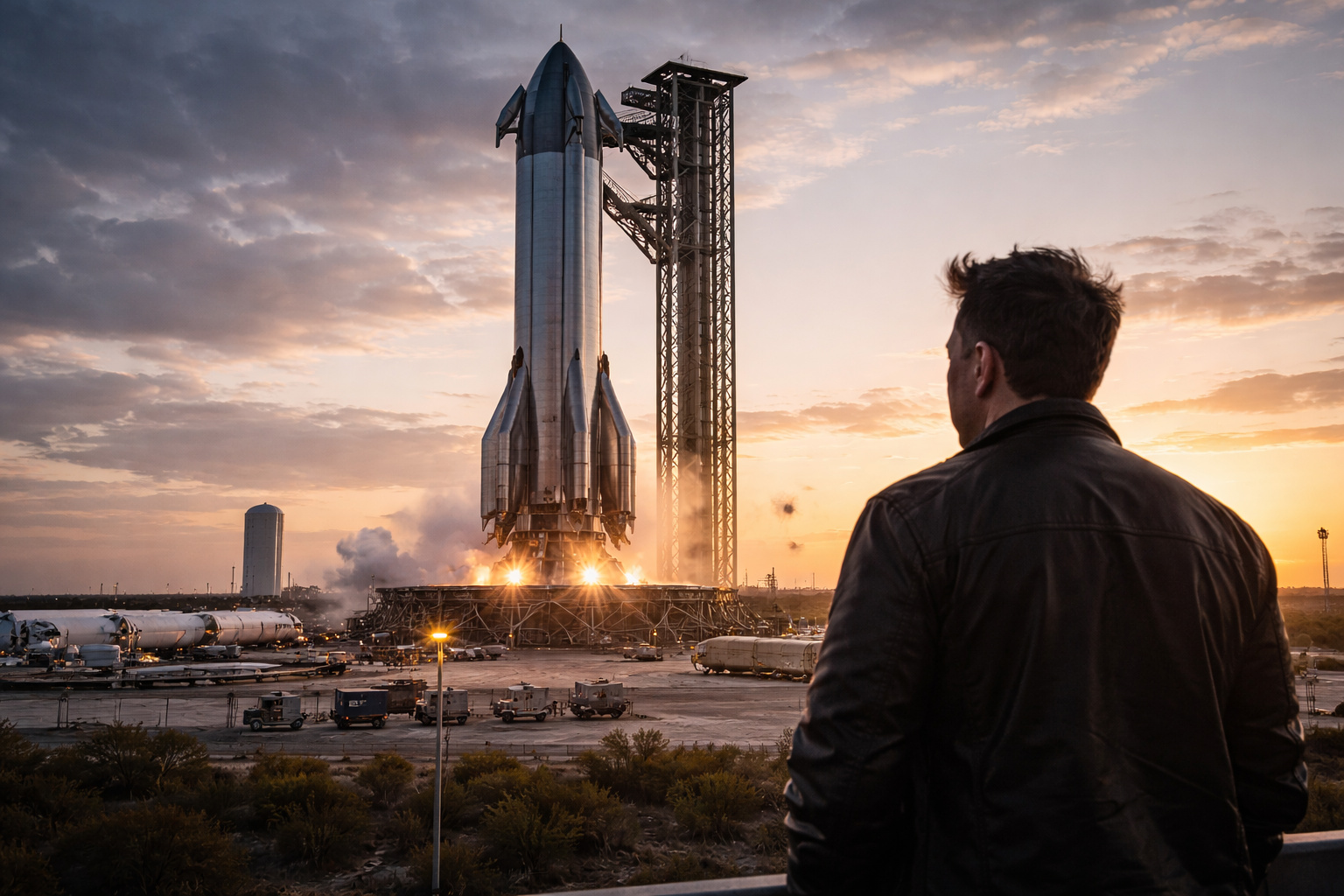
Lunar Project Prioritizes Sustainable Human Base, Use of Starship, and Integration with NASA Missions Until the End of the Decade
A strategic shift in the space sector was announced by Elon Musk throughout 2024 and 2025, putting the Moon at the center of SpaceX’s plans. The entrepreneur stated that he aims to establish a permanent human city on Earth’s natural satellite within less than 10 years, changing the order of priorities that previously favored Mars.

According to public statements reproduced by agencies such as Reuters and official announcements from the company, the goal is to create a base capable of growing autonomously. Additionally, according to Musk, the construction of this lunar city would focus on ensuring greater safety for the future of civilization, serving as a starting point for a human presence beyond Earth.
The proposal represents a significant inflection in the company’s strategy, which previously prioritized Martian colonization as its main goal. However, aerospace industry experts emphasize that the announced timelines are considered ambitious and depend on consistent technological advancements.
-
Something was orbiting Earth before any human launched a satellite into space: scientists have found thousands of unexplained flashes in old photos of the sky, and a NASA researcher says the evidence points to non-human intelligence.

-
There is a gap of hundreds of kilometers between weather observation points in the United States, and now drones flying at 6,000 meters altitude in strong winds are filling this gap to predict tornadoes before they kill.

-
The most famous volcano in the world could paralyze one of the largest metropolises on the planet: Japan accelerates emergency plans for the eruption of Mount Fuji, which could bury Tokyo in ash for over two consecutive weeks.

-
The United States has a serious problem with its F-35s: China is already producing fighters at a pace that exceeds American capacity and could manufacture up to 300 aircraft per year before the end of the decade, shifting the global military balance.


Strategic Advantage of the Moon Accelerates Timeline
The main justification for the new priority lies in the logistics of space missions, especially the difference in time between destinations. While a trip to Mars can take about six months and depends on orbital alignment that occurs approximately every 26 months, the journey to the Moon takes only a few days.
This operational advantage allows for greater launch frequency and facilitates technical adjustments in the event of failures. Moreover, the proximity of the natural satellite reduces risks associated with long interplanetary journeys and enables quicker responses to emergencies.
For this reason, as Musk highlighted in recent presentations, the lunar project can advance with greater predictability in the short term. Nevertheless, creating permanent infrastructure will require robust life support systems, energy generation, and continuous transportation.
Starship is the Central Piece of the Space Plan
Even with the emphasis on the Moon, the Mars colonization plan remains active within SpaceX’s long-term strategy. Elon Musk stated that the first steps towards the red planet could begin within five to seven years, provided that tests progress as expected.
The execution of this project is directly dependent on Starship, the large reusable rocket developed to transport cargo and crews on long-duration space missions. The spacecraft is still in an intensive testing phase and faces technical challenges before becoming fully operational.
According to official statements released by the company between 2024 and 2025, new structural tests and performance adjustments are still being conducted. These advancements are considered crucial to enable both lunar missions and future plans for Mars exploration.
Integration with NASA and Human Return to the Moon
The lunar city plan is also connected to NASA’s program, which aims to bring astronauts back to the Moon’s surface by the end of this decade. It is worth noting that the last crewed mission occurred in 1972 during the Apollo program.
Since then, no new permanent human presence has been established on the lunar surface. SpaceX has billion-dollar contracts related to future missions, reinforcing the partnership between the private sector and the U.S. space agency.
However, experts note that timelines depend on positive results from Starship tests and essential complementary systems. If the planned stages are fulfilled, the next decade could mark the beginning of a more enduring human presence beyond Earth.
In light of this scenario, do you believe humanity should prioritize consolidating a permanent city on the Moon before definitively advancing to Mars?









-

-

-

6 pessoas reagiram a isso.