





 Portuguese
  English
  Spanish
  5 min of reading
  0 comments


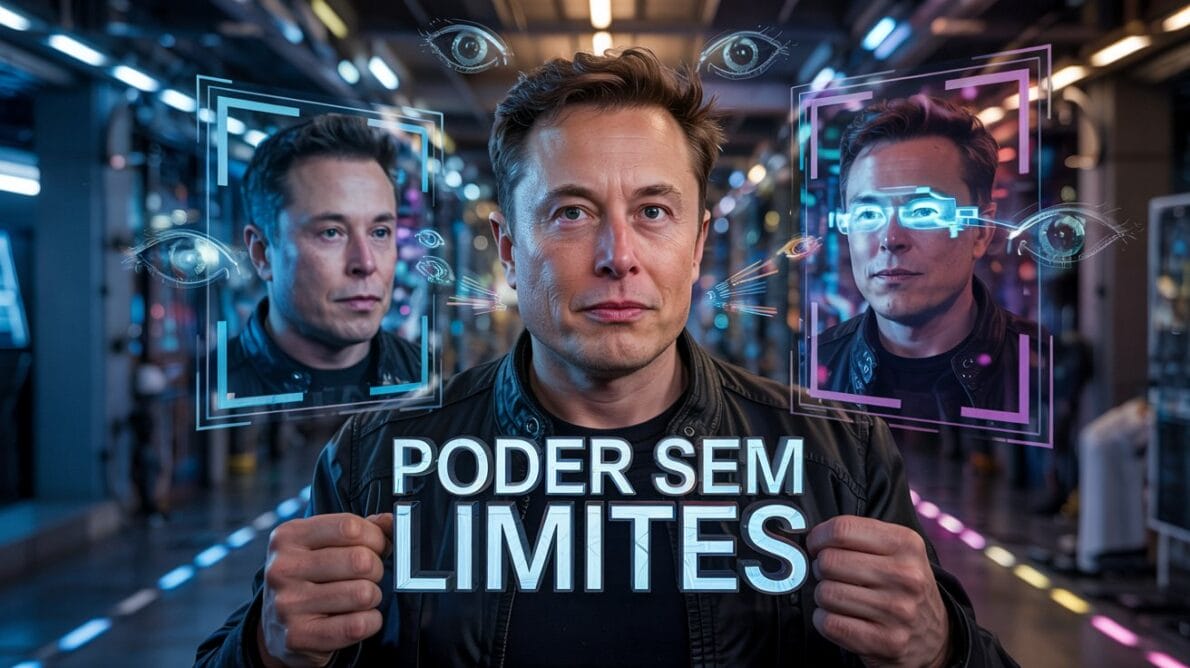
Grok 3 Is Elon Musk’s New AI Capable of Editing Images with Simple Text or Voice Commands, Sparking Enthusiasm and Polemics About Ethical Use, Misinformation, and the Future of Digital Manipulations in Times of Deepfakes and Artificial Intelligence.
Elon Musk has returned to the spotlight with the launch of Grok 3, the new generation of artificial intelligence developed by xAI, the billionaire’s company that also runs the social network X (formerly Twitter).
Officially presented on March 24, 2025, Grok 3 promises to change the way we create and manipulate digital images—while reigniting debates about the ethical limits of technology.
The main novelty of Grok 3 is a feature that allows users to edit images with simple text or voice commands, eliminating the need for complex programs like Photoshop.
-
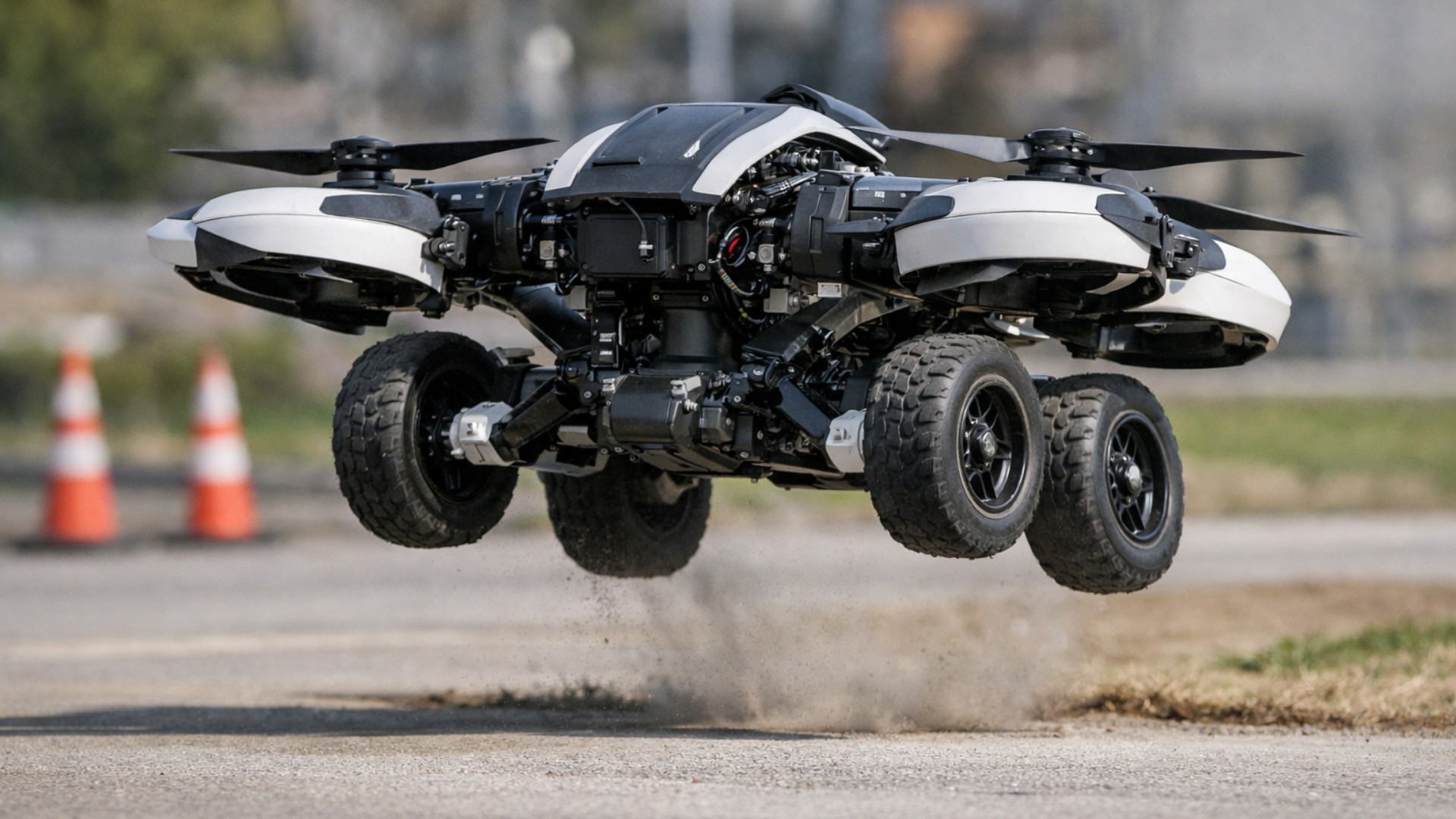
Researchers in the U.S. have created a flying robot that transforms into a land vehicle while still in the air. The technology, based on aerodynamic transition, converts landing into a scene worthy of Transformers and redefines mobility between sky and ground.
-
A rare storm transformed part of the Gulf into an unlikely scene of hail, extreme rain, and tornado risk in the middle of the desert, with volumes that exceeded the annual average in a single day.

-
Spread across two continents, with 197 parabolic antennas in South Africa, 131,000 2-meter antennas in Australia, and a range of up to 150 km, the SKA begins to “listen” to the Universe on an unprecedented scale and accelerates the search for black holes, primitive galaxies, and nearly invisible radio signals.

-
Brazil catches the world’s attention with ships powered by ethanol and biodiesel that have lower emissions, an unprecedented certification with advantages in chartering, and a revolution in cabotage.

With just a descriptive sentence, the AI can change the background of an image, remove unwanted elements, or even apply artistic filters.
However, such ease brings with it a series of ethical and legal dilemmas that have concerned experts and the public.
Accessible Technology, But Controversial
The feature called “Edit Image” positions Grok 3 as one of the most advanced generative AI systems on the current market.
While tools like DALL-E, Midjourney, and Stable Diffusion had already amazed with the creation of images based on descriptions, the differential of xAI’s solution lies in manipulating existing images, with an interface accessible even to novice users.
According to information from the company itself, Grok 3 can perform everything from simple adjustments—like brightness, contrast, saturation, or background removal—to more elaborate transformations, such as replacing entire backgrounds, adding objects, and reconstructing damaged parts of an image.
Musk’s intention, according to him, is to democratize access to resources previously restricted to design and editing professionals.
For now, the feature is available exclusively on the X platform and the Grok AI app for iOS, which restricts access to a portion of the public.
There is still no release date for Android or desktop versions, which raises criticism about the limitation imposed by this closed ecosystem.
Ethics in the Background?
Despite the enthusiasm surrounding the innovation, Grok 3 is already being accused of ignoring fundamental ethical issues related to image manipulation and copyright protection.
Tests conducted by journalists, such as Naïm Bada from the French site Clubic, revealed that the system is capable of removing watermarks from protected images— a function that, while technically impressive, may encourage the misuse of others’ content.
Competitors like Claude 3.7 Sonnet and GPT-4o have strict policies against this type of manipulation, refusing to perform tasks that may violate intellectual rights.
The absence of similar barriers in Grok 3 fuels concerns about digital integrity and the risk of the proliferation of visual forgeries—especially in a context already marked by the spread of fake news and deepfakes.
Furthermore, digital ethics experts warn that tools like this can undermine trust in images circulating online.
If any photo can be altered with a few clicks and without leaving traces, how will it be possible to distinguish what’s real from what’s fabricated?
Grok 3 and the Impact on Content Creation
Despite the criticisms, it is undeniable that Grok 3 represents a technological leap with significant potential impact in areas such as advertising, journalism, education, entertainment, and social media.
Content creators, for instance, can benefit tremendously from the speed and accuracy of the AI in generating personalized images for videos, blogs, and posts.
The ability to quickly transform ideas into images can accelerate creative processes, reduce costs, and increase access to visual content production.
However, the lack of an in-depth debate about the moral implications of this tool remains a weak point in xAI’s discourse.
According to industry analysts, the key to Grok 3’s sustainable success will be balancing innovation and responsibility.
This means implementing verification mechanisms, restricting certain types of editing, and establishing clear guidelines for the use of AI—something that, so far, Musk’s company has not detailed.
Elon Musk and the Strategy Behind Grok 3
This is not the first time Elon Musk has been involved in controversies surrounding artificial intelligence.
In 2023, he founded xAI in response to concerns about the alleged political bias of other AIs, such as ChatGPT.
Since then, the entrepreneur has sought to position his company as a more “free” and less regulated alternative—which for some is an advantage, but for others represents a risk.
Musk’s provocative stance, combined with his control over the X network, transforms Grok 3 into not just a technological product, but a tool of influence.
By integrating AI with his own social platform, the entrepreneur creates a closed ecosystem in which content, information, and technology intertwine in unprecedented—and potentially dangerous—ways.
According to experts in digital law and artificial intelligence, the lack of clear regulation for this type of technology in Brazil and much of the world exacerbates the scenario.
While there are bills being discussed, the speed at which new tools emerge makes it difficult to keep pace with their impacts using adequate legislation.
The Future of Generative AI and the Role of Society
The advancement of generative artificial intelligence, such as Grok 3, demands a collective discussion about limits, responsibilities, and acceptable uses.
Companies, governments, technology professionals, and civil society need to participate in the debate so that progress does not come at the expense of ethics.
The central question is not to prevent innovation, but to shape it in a way that respects fundamental human values, such as the truthfulness of information, intellectual property, and the integrity of visual communication.
In times of misinformation and mass digital manipulation, tools like Grok 3 have the power to amplify both good and bad.
And in this context, omission in the face of risks cannot be considered neutral.
With the rise of artificial intelligences that are as powerful as they are controversial, do you believe that the responsibility for truth should be delegated to machines, or will it continue to be a human duty? Share your thoughts in the comments!




Seja o primeiro a reagir!