





 Portuguese
  English
  Spanish
  6 min of reading
  0 comments


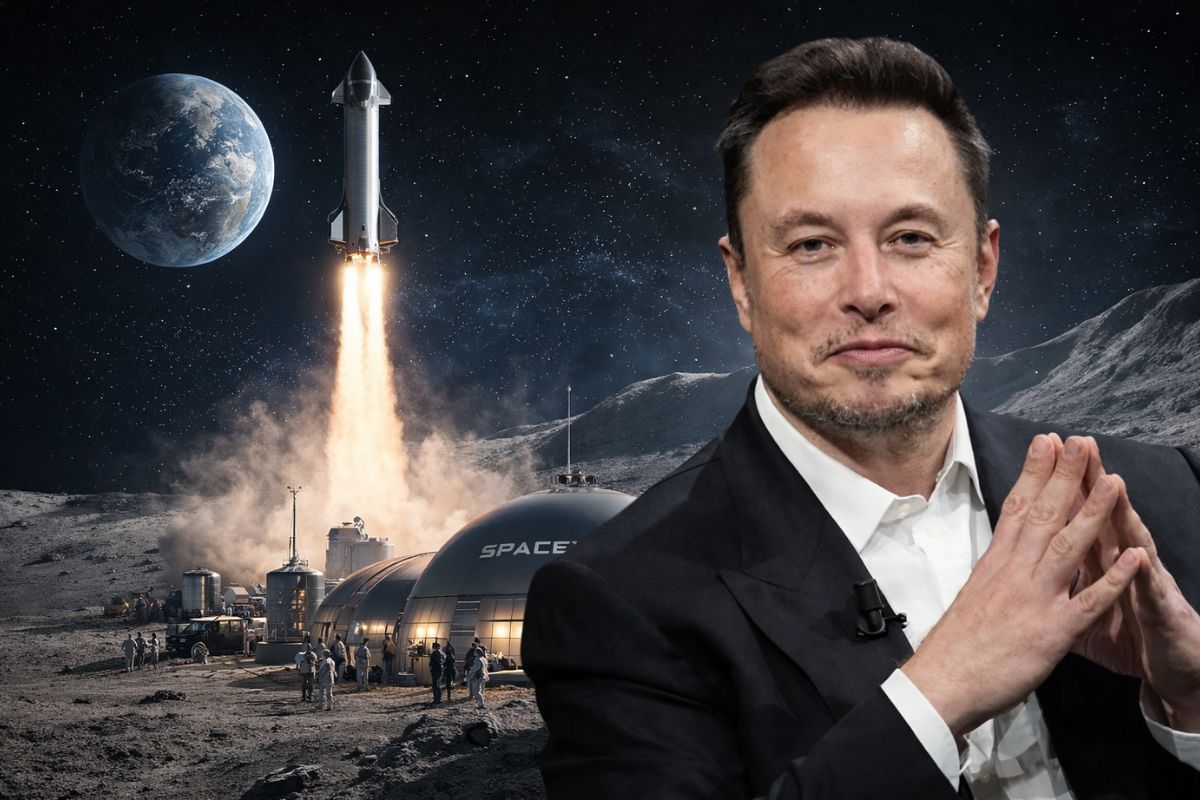
Elon Musk Repositions SpaceX By Prioritizing Lunar Missions, Defending A Continuous Base For Science And Tourism And Using Starship As A Technology Bridge For Greater Objectives. The Decision Repositions US Interests In The Dispute With China And Reopens The Debate On Viable Space Colonization In This Decade In Progress.
Elon Musk has put the Moon back at the center of SpaceX’s space planning and, with that, has changed the public logic of a project that seemed to aim for Mars as an immediate destination. The new priority is to build a sustainable human presence on the natural satellite, using Starship as a platform for transportation and testing for permanent operations outside Earth.
The change does not eliminate Mars but redefines the order of the steps. Instead of a direct leap to the red planet, a progression strategy gains strength: consolidating lunar infrastructure, validating systems in extreme environments, and only then expanding the reach. In practice, the focus becomes less about distant promises and turns into gradual execution.
From Martian Narrative To Lunar Laboratory

For years, the future image associated with SpaceX was linked to the colonization of Mars. Now, Elon Musk’s move indicates another cadence: first the Moon, then more ambitious objectives. This reversal of priority changes the “where” of the first continuous presence and also alters the “why” of the initial stage, which now becomes technological validation in a closer scenario.
-
Researchers in the U.S. have created a flying robot that transforms into a land vehicle while still in the air. The technology, based on aerodynamic transition, converts landing into a scene worthy of Transformers and redefines mobility between sky and ground.

-
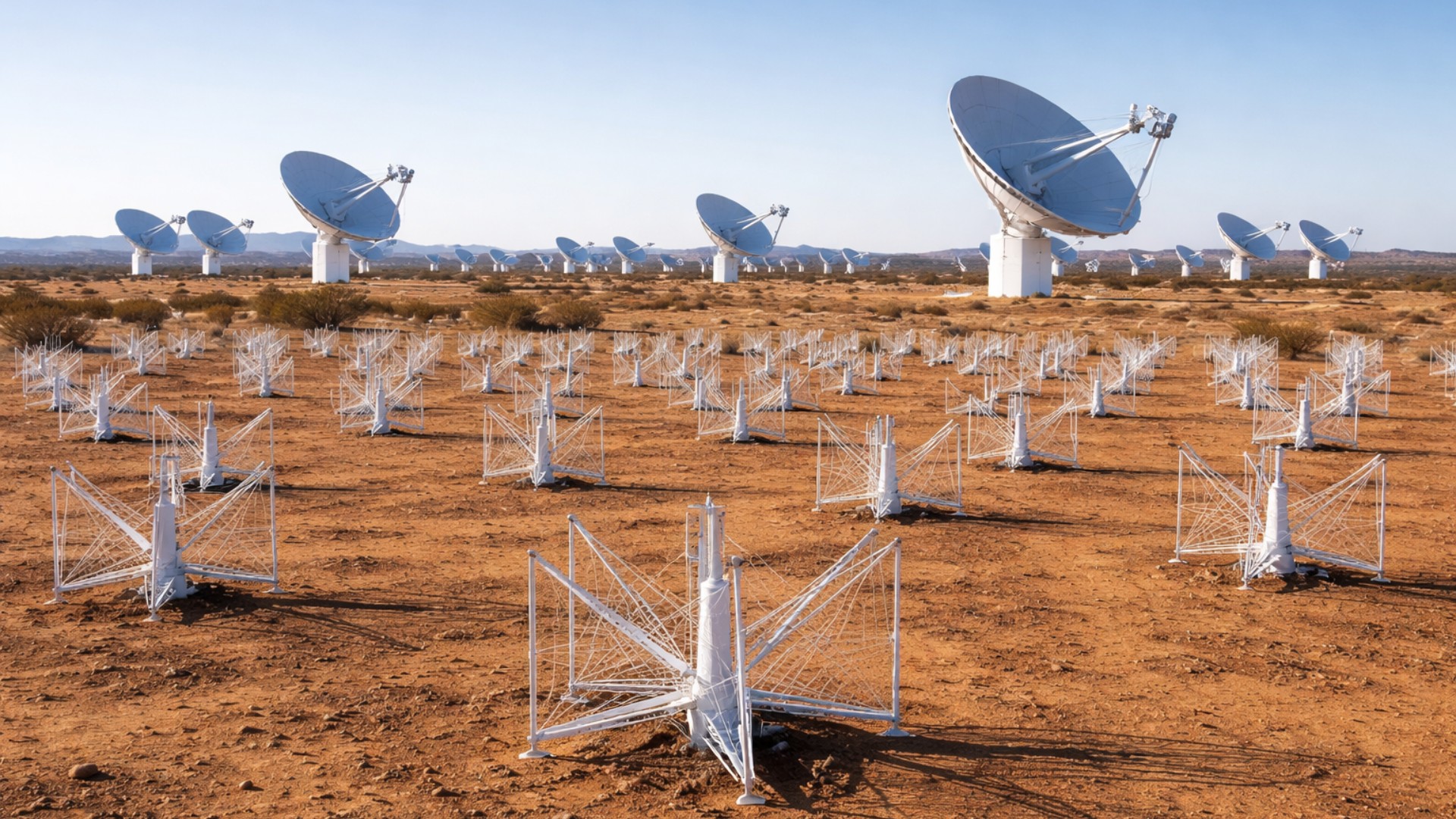
Spread across two continents, with 197 parabolic antennas in South Africa, 131,000 2-meter antennas in Australia, and a range of up to 150 km, the SKA begins to “listen” to the Universe on an unprecedented scale and accelerates the search for black holes, primitive galaxies, and nearly invisible radio signals.
-
Goodbye batteries: a new sensor created by Japanese scientists uses sweat as an energy source and points to a promising path for more sustainable devices, with greater autonomy and less need for frequent recharging.

-
The Brazilian Army inaugurated the assembly line for the Guaicurus armored vehicle with a contract for 420 units by 2033, and the same vehicle has already been tested in combat in Afghanistan and Lebanon by European armies.


The signs of this redirection appear in recent statements and in the context of investors, who see the Moon as an operationally more useful intermediate phase. The strategic reading is simple: building a functional base in a hostile but still accessible environment compared to Mars can reduce uncertainties and shorten the learning curve for future missions.
By adopting this route, Elon Musk also brings the discourse and political timeline of current space exploration closer. The ongoing decade concentrates governmental and private goals for human return to the lunar surface, which increases pressure for concrete results and reduces space for excessively abstract timelines.
What Would The Permanent Space City Of SpaceX Look Like
The SpaceX proposal revolves around Starship as the main logistics vector for transporting cargo and people to the Moon. The initial design does not point to a city open to the public from the very beginning, but rather to a technical core of research, engineering, and operation, with systems planned to support radiation, isolation, and the need for total environmental control.
At this stage, the base would have a functional profile: habitable modules, robust communication, structure for experiments, and support for long missions. The mention of possible data centers off Earth, a theme already associated with Elon Musk’s future projections, adds a technological layer that connects space, processing, and artificial intelligence.
The idea of a “city” exists, but it starts as critical infrastructure. This means that the urban form, in the common sense, would come later. Before mass tourism, there would be a prolonged phase of operational reliability, remote maintenance, redundancy testing, and survival protocols in extreme conditions.
The human adaptation factor also weighs: living on the Moon requires entirely artificial environments, continuous supply, and risk engineering at a permanent level. Therefore, even with acceleration rhetoric, the construction of a stable presence depends on successive performance trials, not on a single announcement.
Who Could Live There First And How Long This Transition May Take
In the short term, the first inhabitants of a lunar base would tend to be scientists, engineers, and astronauts linked to specific programs. This profile directly responds to the “who” of the initial occupation: professionals trained for research, technical operation, and response to contingencies in high-risk environments.
As systems mature, the expectation is to make room for commercial activities and tourism. But “how long” this takes is still a question without a definitive answer. There is no concrete date for the lunar city, and experts remind us that space goals evolve with tests, funding, and geopolitical priorities.
The central point is that public accessibility is not phase one. Before any civil expansion, it will be necessary to prove long-term safety, stability of supplies, habitat resilience, and logistical efficiency. In other words, the frontier between a viable project and an experience open to the market still passes through relevant technical barriers.
Moreover, costs and transport capacity directly influence the pace of the transition. Even without consolidated official numbers for a functional city, it is possible to assert that the initial scale will be limited and highly selective, with growth conditioned to the performance of successive missions.
Why The Moon Became Priority In The Race Between The US And China
The new direction of Elon Musk does not occur in a vacuum. The United States and China have intensified plans to return humans to the lunar surface in this decade, a move that repositions the Moon as a territory of technological innovation and strategic influence. The return gains historical weight because the last manned lunar mission was Apollo 17 in 1972.
In this scenario, SpaceX’s participation in NASA’s Artemis program reinforces the convergence between public goals and private capacity. The Moon ceases to be merely a symbol and starts to function as an operational platform for testing technologies that can later be transferred to Martian missions.
The lunar priority, therefore, combines science, strategy, and political timing. Whoever consolidates continuous presence first tends to define technical standards, supply chains, and practical experience in extraterrestrial operations. This helps explain why the current race is not just about arriving, but about staying.
The dispute also reorganizes national narratives of space leadership. By positioning Starship at the center of this cycle, Elon Musk places SpaceX as an execution piece in an agenda that surpasses corporate interest and connects to long-term geopolitics.
What Changes For SpaceX And For Elon Musk’s Ecosystem
When SpaceX prioritizes the Moon, the impact is not limited to the flight calendar. There is a reordering of engineering, testing, contracts, and public communication, focusing on delivering verifiable stages. This tends to favor progressive goals and integration between hardware, software, and automation at multiple levels of operation.
At the same time, other fronts associated with Elon Musk, such as artificial intelligence and robotics, gain complementary relevance. In a lunar environment, operational autonomy, remote diagnosis, and intelligent systems are not accessories but central components of survival and efficiency.
The practical consequence is a more systemic strategy. Instead of isolated projects, the logic of a technological ecosystem grows: ship, infrastructure, data, automation, and continuous support functioning as a single architecture. This changes the course of space planning and alters the perception of the viability of “the future beyond Earth.”
Still, the industry’s own history recommends analytical caution. Ambition and execution coexist with route revisions, delays, and scope changes. Therefore, the most relevant news is not a final date, but the change of priority with immediate effects on the design of upcoming missions.
Elon Musk’s shift from the Martian narrative to lunar priority redefines the map of contemporary space exploration: less distant promise, more step-by-step construction. The Moon appears as a test bed, geopolitical showcase, and possible embryo of a permanent city for science, technology, and, in the future, tourism.
If this first city outside Earth really begins on the Moon, what scenario do you consider more realistic for the next decade: a scientific base still restricted to specialists or a gradual opening for commercial missions with civilian visitors?







-

-

3 pessoas reagiram a isso.