





 Portuguese
  English
  Spanish
  4 min of reading
  0 comments


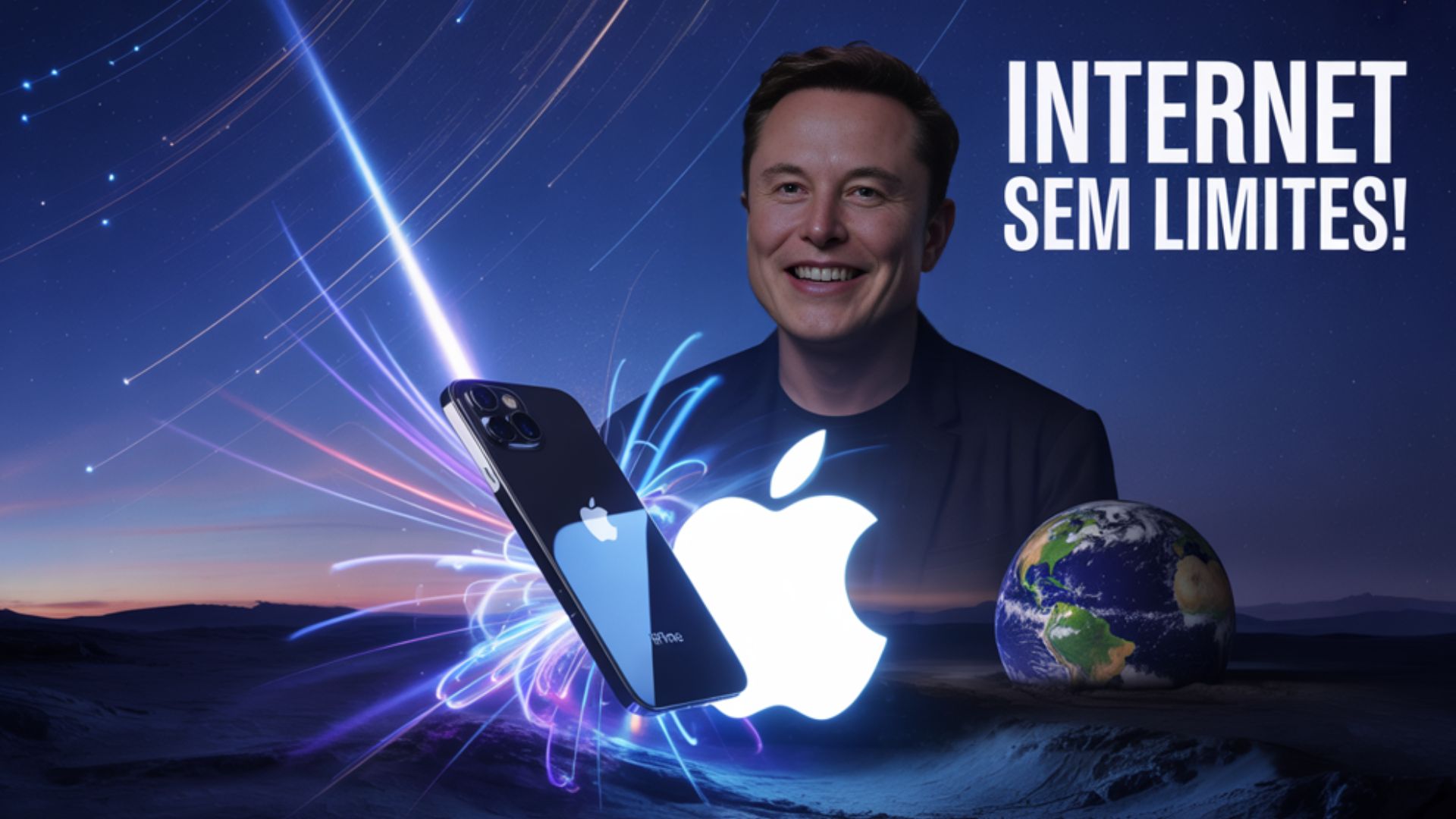
Partnership Between Tech Giants Promises to Change Global Connectivity, Enabling Internet Access via Satellite on iPhones, with Potential to Reach Areas Where Mobile Networks Do Not Reach.
Apple and Starlink, the satellite internet company founded by Elon Musk, announced an unprecedented partnership that expands internet access on iPhones, utilizing satellite technology to connect users in areas without traditional mobile network coverage.
The innovation, already available to T-Mobile customers in the United States with the iOS 18.3 update, represents a milestone for global connectivity, allowing Starlink’s signal to be accessible directly on Apple devices.
With the new feature, iPhone users now have an alternative in situations of total absence of land coverage.
-
How the terraforming of Mars can transform the planet: artificial aerosols can increase the temperature by up to 35°C in 15 years, creating conditions for liquid water.

-
Scientists drilled nearly 8,000 meters into the ocean floor above the fault that caused the 2011 tsunami in Japan and discovered that a layer of clay 130 million years old was responsible for making the wave much worse than any model had predicted.

-
Thousands of years after causing the largest eruption of the Holocene, one of the world’s largest supervolcanoes is rebuilding itself beneath the sea south of Japan, receiving new magma and alarming scientists with its transformation.

-
China has activated a magnet 700,000 times more powerful than the Earth’s magnetic field that operates for over 200 consecutive hours while consuming little energy, and now the world wants to know what Beijing plans to do with this technology in 2026.

Whenever they are out of range of conventional antennas, the devices can automatically access the internet via the Starlink network, without the need for additional accessories or configurations.
The feature, currently restricted to U.S. territory and T-Mobile customers, is expected to expand to other carriers and countries in the coming months, according to information from Apple.
Starlink on the iPhone: Technology That Expands Internet Access
The integration was made possible thanks to advancements in low Earth orbit satellite networks, technology developed by SpaceX, Elon Musk’s company.
Starlink already has thousands of satellites in operation, covering nearly all continents and oceans.
Apple adapted its operating system to recognize and connect to this network automatically, optimizing the use of the iPhone in remote regions, rural areas, international travel, or disaster zones.
Among the main differentiators of this partnership is the promise of stable connectivity even in areas considered “dark” for conventional telecommunications infrastructure.
Sectors such as tourism, maritime transport, aviation, healthcare, research, and emergency operations may benefit directly from the innovation.
The technology also expands digital access in isolated communities, without relying on land towers, further democratizing access to information.
To enjoy Starlink connectivity, the user needs a compatible iPhone — initially, starting from model 14 — with a carrier chip enabled for the experimental service.
The expectation, according to an official note from Apple, is that compatibility will reach other devices in the coming years, including the Apple Watch Ultra 2 by the end of 2025.
This reinforces the companies’ commitment to popularizing satellite internet technology.
How the Satellite Connection Works on the iPhone
The connection process was designed to be transparent to the user.
Upon detecting the absence of mobile network signal, the iPhone automatically enables access to the Starlink network, using the already integrated communication hardware in the device.
Access occurs only in authorized areas, complying with the telecommunications regulations in each country.
During the testing phase, the service is focused on users enrolled in T-Mobile’s beta program, but Apple has confirmed expansion plans.
Among the functions already available are web browsing, sending messages, and accessing multimedia content like music and images.
Soon, video streaming and other high-bandwidth applications are expected to be enabled.
Benefits of Satellite Internet on Apple Devices
The benefits for consumers are evident.
The ability to access stable internet from anywhere on the planet is seen as one of the greatest recent advancements in mobile telephony, reducing dependence on local infrastructures and expanding digital inclusion.
Professionals in remote areas, rescue teams, travelers, researchers, and residents of remote regions are among the primary beneficiaries.
Another highlight is Starlink’s ability to provide stable audio and video transmissions, even away from major urban centers.
According to recent data, the Starlink constellation already covers over 70 countries and serves millions of users in households, businesses, and vessels, establishing itself as a robust alternative to land networks.
On the other hand, the technology still faces challenges.
These include the natural latency of satellite communication, the cost of deployment and maintenance, as well as specific regulatory issues in each nation.
For end users, the experience may vary depending on local conditions, satellite density, and operator policies.
Apple Keeps Various Solutions in Satellite Connectivity
In addition to the partnership with Starlink, Apple maintains a strategic collaboration with Globalstar, focused on emergency satellite services.
Since 2023, iPhones enable sending distress messages in areas without conventional signal, increasing user safety in critical situations.
This dual investment reinforces Apple’s commitment to total connectivity, diversifying suppliers and avoiding exclusive dependence on a single technology.
The choice of multiple partnerships reflects the telecommunications sector’s trend towards hybrid solutions between land and satellite networks to ensure availability, resilience, and global access expansion.
Experts say that the future of smartphones necessarily involves this integration, given the increase in mobility and the need for constant connection.
The Future of Starlink on the iPhone and Global Connectivity
The agreement between Apple and Starlink could accelerate the global adoption of satellite internet.
Major telecommunications operators have already shown interest in similar solutions, aiming to fill gaps in rural areas, border regions, or places affected by natural disasters.
For the industry, this represents a break from the traditional business model, requiring investments in space infrastructure and international regulation.
As of June 2025, Starlink accounts for more than 6,000 satellites in orbit and continues to expand, making the promise of global internet increasingly close to reality.
Organizations such as the International Telecommunication Union (ITU) and national agencies are closely monitoring the impacts of this new phase, seeking to harmonize the interests of companies, governments, and consumers.
Although the technology represents an undeniable advancement, issues like latency, costs, and universal access remain under discussion.
The future of connectivity depends on a balance between innovation, regulation, and inclusion.
With the arrival of this partnership, the pressing question is: do you believe that satellite internet will truly transform the way the world connects, especially in the most isolated places?









-

-

4 pessoas reagiram a isso.