





 Portuguese
  English
  Spanish
  7 min of reading


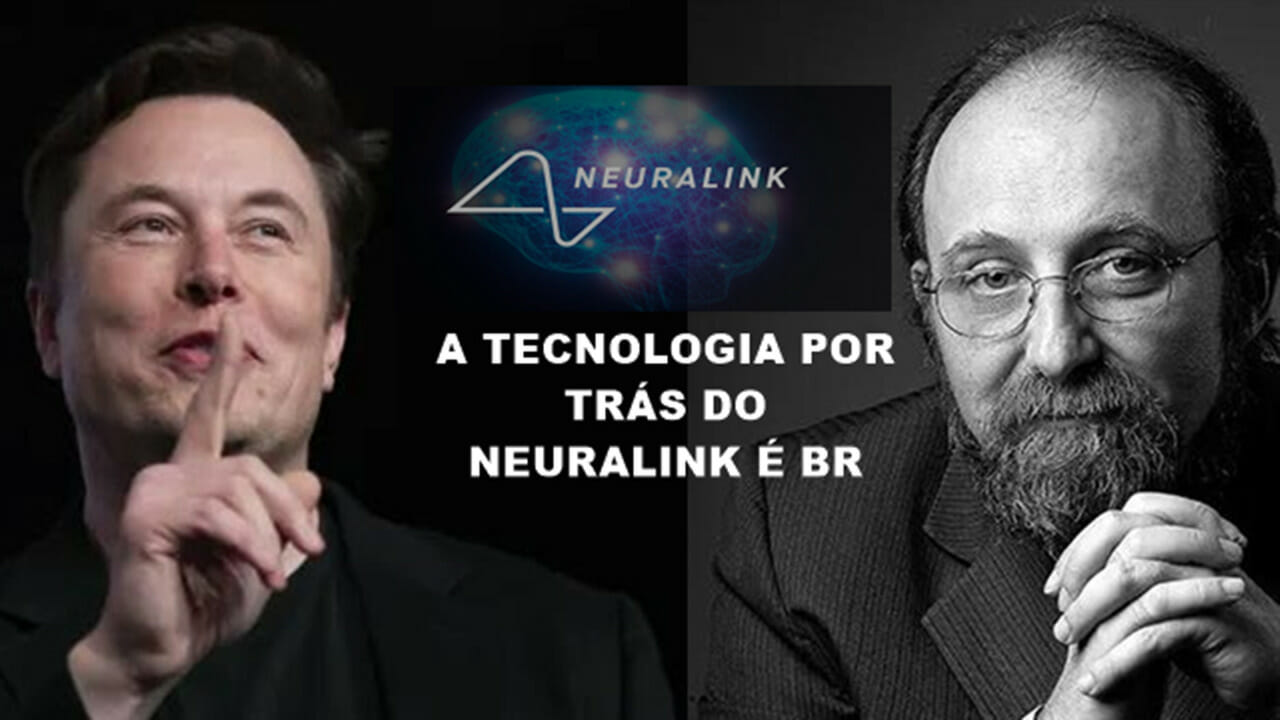
The Brazilian Neuroscientist Miguel Nicolelis Had His Brain-Machine Interface Idea Stolen by One of His Students, Which Was Later Bought by Billionaire Elon Musk
In recent years, the name Elon Musk has become associated with a visionary entrepreneur who bets on risky yet revolutionary and controversial businesses. In addition to globally recognized companies like SpaceX and Tesla, the South African billionaire is also the owner of Neuralink, a neurotechnology company.
Despite all credit going to Elon Musk, the Neuralink project was completely based on a study by the Brazilian doctor and neuroscientist Miguel Nicolelis, who is considered one of the pioneers in researching the relationship between the brain and machines.
Watch the Interview of the Brazilian Who Had the Idea for Neuralink on the YouTube Channel Ciência Todo Dia
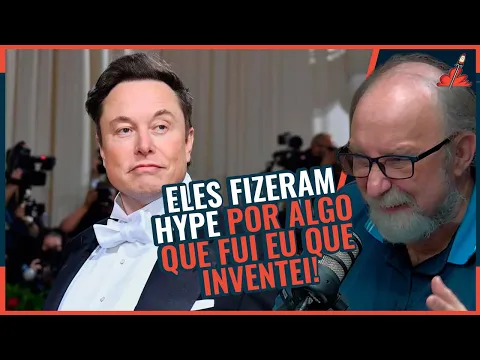

Today, Neuralink is a billion-dollar company and one of the major bets of the entrepreneur for the coming years. Despite little progress in humans, Musk believes that the company will fundamentally change our relationship with electronic devices and the internet.
-
They were brilliant! Scientists discover that our ancestors in China were already making super advanced tools 160,000 years ago, changing everything we knew.

-
Scientists unveil 3 million years of climate secrets hidden in the ice of Antarctica.

-
Ancient farmers created “aggressive plants” that changed nature forever.

-
Astronomers find a “backward” solar system that ignores all the rules of space and leaves scientists scratching their heads!


However, we need to explain who Miguel Nicolelis is and what his connection is to the emergence of Neuralink.
Who Is Miguel Nicolelis
He is a Brazilian doctor and scientist who gained fame and worldwide recognition for his achievements in neuroscience, specializing in research on the brain-machine interface, assisting in the rehabilitation of people with mobility difficulties and even paraplegics.
Miguel graduated in medicine from the University of São Paulo, where he also obtained his doctorate in sciences. After this period in Brazil, he went to the United States to study physiology and biophysics at Hahnemann University.
The Brazilian stood out in American lands, becoming a tenured professor of neurobiology and biomedical engineering at Duke University. It was there that he led a team of researchers in developing robotic exoskeletons controlled by brain signals, something completely innovative and never seen in the scientific community until that moment.
In 2014, during the opening of the World Cup in Brazil, Nicolelis led a project called Walk Again, which developed a robotic exoskeleton fully controlled by brain activity.
On that occasion, Juliano Pinto, 29 years old, entered the field at Arena Corinthians to deliver the symbolic kick-off of the World Cup using an exoskeleton controlled entirely by brain activity.
Although it was aired on TV for only a few seconds, the world began to understand that it would be possible to perform previously unimaginable actions solely by the power of thought. Perhaps this was the starting point for Elon Musk to heavily invest in this segment.
What Neuralink Does
Neuralink is a neurotechnology company founded by Elon Musk in 2016. Unlike Nicolelis’s studies, Musk’s company develops interfaces that directly connect the human brain to electronic systems.
The idea of Neuralink is to allow humans to communicate with machines more quickly and efficiently. The main difference is that Neuralink wants to make this connection by implanting a chip directly in the brain.
Ultimately, if this connection is successful, it will allow people to send and receive information through the chip, enabling the control of all types of electronic devices, such as cell phones, computers, TVs, and much more.
How Miguel Nicolelis Influenced the Creation of Neuralink
The studies led by Miguel Nicolelis were fundamental to the creation of the billionaire’s company. Controversially and indirectly, Neuralink used many of the Brazilian scientist’s discoveries, presenting all of this as something innovative and revolutionary developed by Elon Musk’s company.
However, in 2003, Miguel made the results of his work public, proving the viability of interfaces that enable direct communication between the human brain and machines, such as robots and electronics.
In other words, it was with the publication of Nicolelis’s results that the world learned it was possible to control movements and send and receive sensations through electrical signals sent to and from the brain.
Nicolelis’s idea is that it should be possible to help people with little or no mobility regain sensitivity and even walk again with the help of exoskeletons. Thus, just by thinking about moving an arm, the exoskeleton would perform that movement.
As Miguel Nicolelis is one of the pioneers and references when it comes to brain-machine interfaces, former students of the Brazilian joined together to create Neuralink.
Contrary to what is said in the media, Neuralink was created before Elon Musk entered. In an interview with Flow Podcast in 2022, Miguel detailed that it was his former students who created the company, with Elon Musk joining the project some time after its emergence.
Nicolais Critiques Elon Musk’s Neuralink
In an appearance on the podcast Ciência sem Fim, hosted by Sérgio Sacani, Nicolelis provided more details about Musk’s company. Additionally, he detailed how the discoveries about the brain-machine experience came about.
Miguel did not hold back in criticizing Neuralink, stating that he had already published the same studies over 20 years ago, and that Elon Musk’s proposal does not represent any new advancement in science and innovation.
“They are copying what I did 20 years ago, but in a much worse, much more rudimentary, much more dangerous way,” complained the researcher. Furthermore, the scientist detailed that Neuralink has no scientific basis for what it is promising.
“They have no scientific basis for what they are promising. Neuralink has no data, no results, no experiments,” he said.
The Brazilian researcher also criticized the fact that Elon Musk is promising that Neuralink will be used to connect the human brain to the internet. According to Miguel, this idea is unethical, as it can manipulate people and even invade privacy, for instance.
The main target of the researcher’s criticisms is the fact that Neuralink wants to implant the chip directly into people’s brains. He highlighted that there is a great risk of infection, not to mention that there is no way to prove the efficacy and safety of the devices in the long term.
“They are risking a lot. Neuralink is messing with the most complex and sacred organ. They are putting individualism, privacy, freedom, and dignity at risk,” he said.
Miguel Nicolelis Critiques Elon Musk
The researcher also made direct criticisms of the South African billionaire. For Miguel, the entrepreneur knows nothing about neuroscience, and his company has no scientific basis to fulfill what it promises.
The Brazilian also emphasized that Musk’s dangerous promises are very difficult to fulfill, potentially creating a negative image regarding neuroscience, harming an entire sector that has been working for decades for greater recognition.
What Are the Main Challenges for Neuralink in the Future
As this is one of the most controversial technologies of recent times, the success of this project will depend on several factors, such as: trust, safety, and price.
One of the main challenges of Elon Musk’s chip is the fact that the procedure requires surgical action. Who in their right mind would undergo a complex and costly surgery to have a chip in their head with a high likelihood of causing health problems?
The implantation process will be performed by highly trained robots from Neuralink itself. This robot will operate needles so tiny that they are difficult to see with the naked eye. To date, no human has been tested with Musk’s company’s chip.
Risks of Hacker Attacks
Since the chip is an electrical device connected to the network, it can suffer from hacker attacks and cause harm to the person themselves. Imagine if this chip is used by someone with bad intentions to direct the individual’s actions.
Moreover, other modern problems will certainly be present in the new technology. Even though the company guarantees that it is working tirelessly to ensure the maximum possible security, certainly criminals will be trying to find ways to access information sent to the chip to commit illicit acts.
Religious Barriers
Another major problem that Elon Musk’s chip will undoubtedly face in growing in the market is religious barriers worldwide.
The possibility of installing a chip in the human body is viewed very negatively by various religions. Unless it is genuinely necessary, many people will prefer something less invasive.
Possible Health Issues
According to Nicolelis, Neuralink researchers caused the death of 17 out of 23 monkeys used for testing in the company’s laboratories. Because of this, it is easy to imagine that the human body may not accept this chip very well.
And in the case of mass health problems among clients, major lawsuits could be opened, leading to the financial failure of the project due to the compensations that will need to be paid by Neuralink.
Price
Since the primary consumer market for Neuralink is the United States, the cost of implementing such a system will certainly be very high, limiting the target audience even further.
Initially, it is expected that the price will be very high, where only very wealthy entrepreneurs and celebrities will be able to implement it. After the idea matures, it is expected that the price will begin to decline gradually.
As the United States is known for having one of the most expensive healthcare systems in the world, implementing a chip that can cause serious health problems and numerous doctor visits may not be a good idea.
Finally, Neuralink is a technology that may be very useful for people with health problems. Because of this, it is very difficult to say whether it will be a commercial success or not.
In any case, Brazilians now know that this innovative project has a strong influence from a scientist from the state of São Paulo. Miguel Nicolelis invested years of study to create a technology that could improve people’s lives in a responsible and safe manner without health risks.





Seja o primeiro a reagir!