Portuguese
  Spanish



Japanese plan foresees more than a thousand kamikaze drones and cheap missiles, with a range of over 1,000 km, to expand regional power
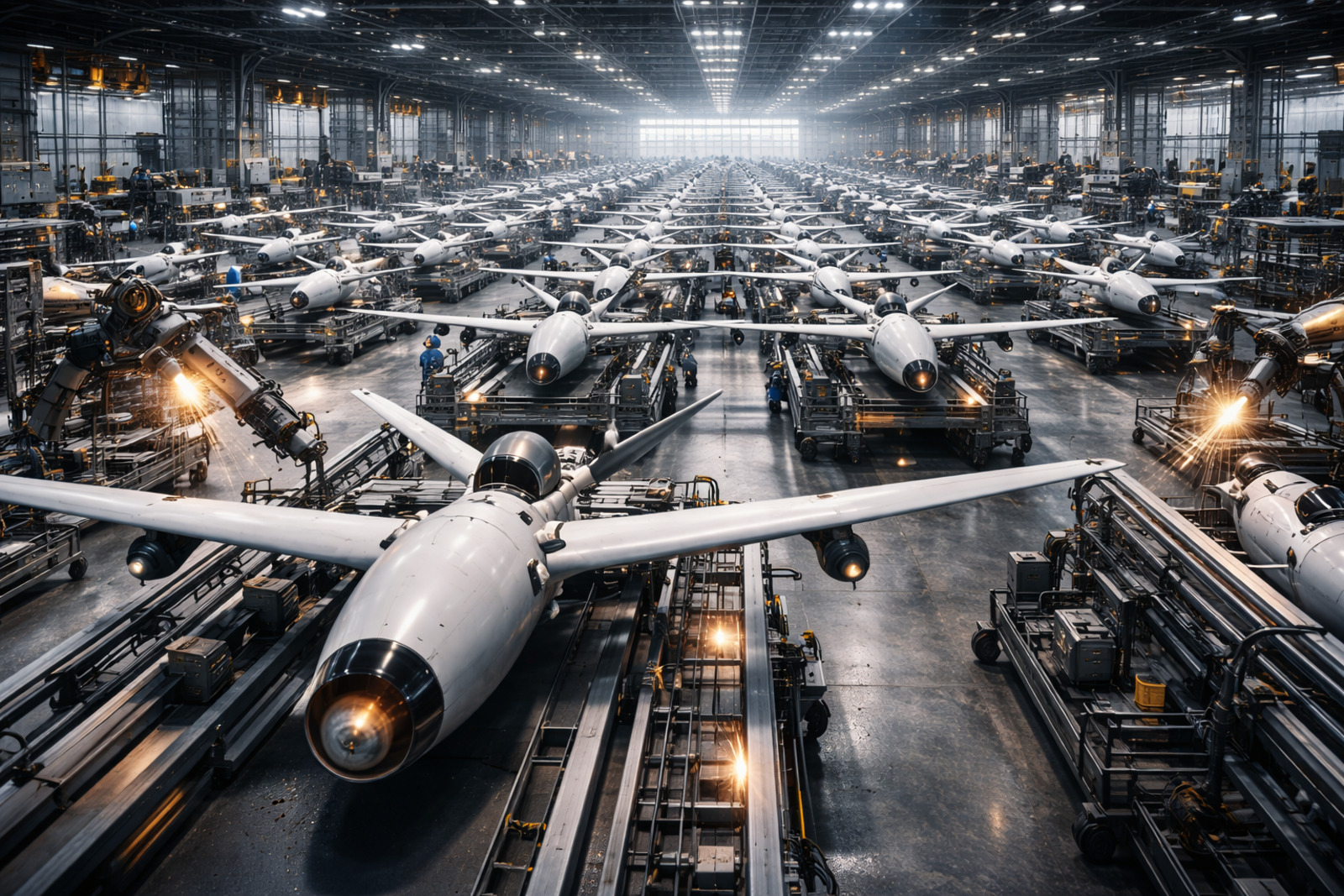
Japan has announced plans to form a fleet of long-range kamikaze drones and low-cost missiles, with a range of over 1,000 km, as part of an integrated attack strategy aimed at neutralizing threats from China and other regions.
Change in the Japanese plan
The proposal envisions the creation of a large number of cheap, long-range weapons capable of surpassing any potential rival in the future.
Instead of employing ten very expensive missiles, the plan bets on more than a thousand drones and low-cost missiles.
-
Detectorist found a 900-year-old silver coin

-
A newly discovered caterpillar in Hawaii wears the remains of its prey that it devoured as a macabre armor, stitching bones and insect shells to its own back for camouflage.

-
She heard for decades that space was not a place for women, became a pioneer in aviation, was part of the Mercury 13, and at 82, finally traveled with Jeff Bezos before dying at 87.
-
Scientists investigate microplastics in the airways of patients with sleep apnea and reveal a new focus for research on environmental pollution, human exposure, and possible impacts on breathing quality.



This move also draws attention for indicating a departure from the strictly defensive military posture that has characterized Japan for 80 years.
At the same time, it reinforces a line of military thinking where quantity can surpass quality under certain circumstances.
The role of kamikaze drones
Kamikaze drones, or kamikaze munitions, are small drones capable of traveling long distances.
These devices can actively seek targets, track them, and collide with them, detonating their explosive payloads upon impact.
Examples mentioned include the Iranian Shahed-136 missile, American Switchblade drones, and Russian Lancet drones.
These systems are described as cheap, difficult to intercept, and proven effective in operation.
Cost appears as the main differentiator. An estimate points to around $35,000 for a decent kamikaze drone. A cruise missile, on the other hand, can cost over $1 million per unit.
In practice, for the price of a single cruise missile, it would be possible to buy 28 to 30 drones. In large numbers, these kamikaze drones could, in theory, overwhelm the adversary’s air defenses.
Range and deterrence
The reported range of 1,000 km is seen as decisive because it would place areas like Shanghai or Taiwan within the reach of mainland Japan.
This would considerably enhance Japan’s counterattack capability in a critical scenario.
This range would also serve as a deterrent factor should China decide to attack Japan or its allies. Still, kamikaze drones represent only a part of a broader plan.
How the integrated attack would work
The concept of an integrated attack is described as the foundation of the strategy. In an attack, Japan would first send swarms of cheap drones to overwhelm and degrade radars and air defenses.
After that, missiles would be employed against key targets. The plan also includes drones launched from submarines, surface drones, and other submerged drones, expanding the possibilities for saturation.
These systems would be harder to detect and would also add new attack angles, making defensive reactions more complex.
Japan also intends to strengthen its more conventional premium attack capabilities.
Ships and Tomahawk missiles
According to reports, Japan wants to modernize its surface ship fleet with Tomahawk cruise missiles, with a range of 1 to 1,600 km.
If the plan advances, the fleet could directly threaten mainland China and other regional actors, such as North Korea.
With information from Interesting Engineering.