





 Portuguese
  English
  Spanish
  6 min of reading
  0 comments


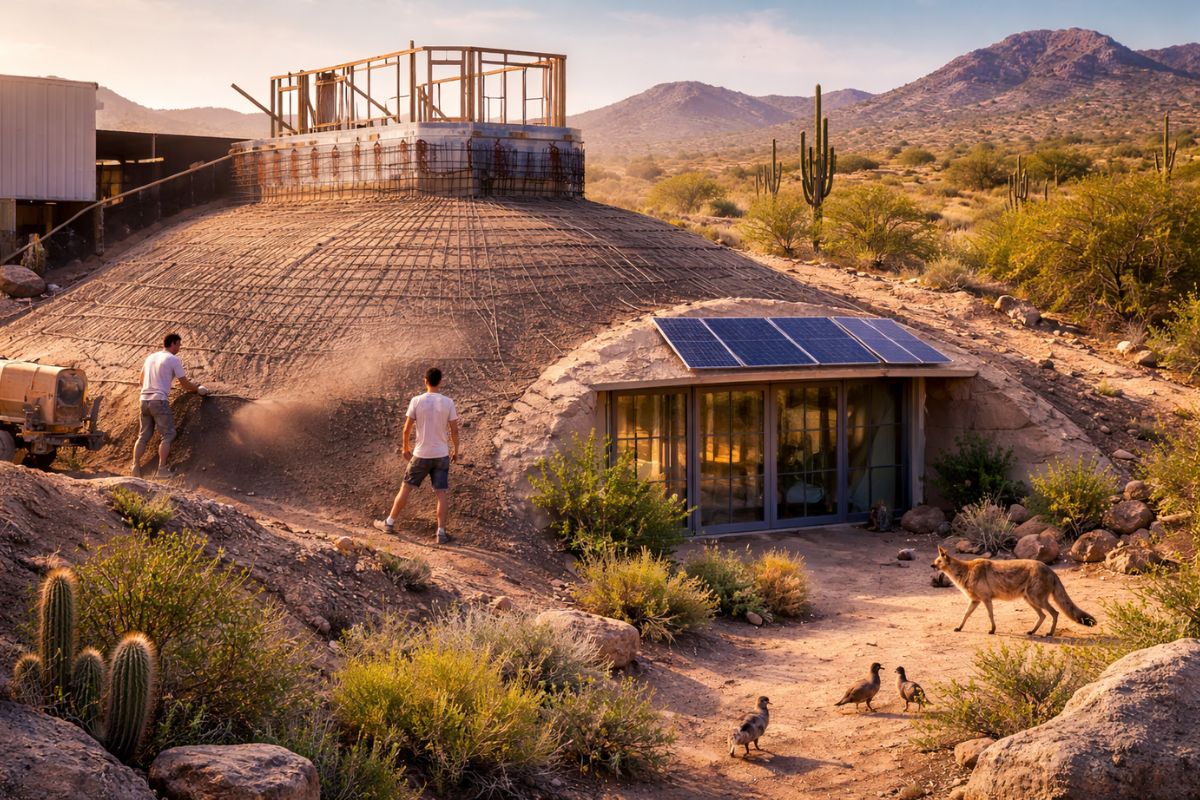
Engineer Greg Reinhart Dug the Sonoran Desert in Arizona and Used His Own Earth as Insulation Over a Steel Dome, Creating a Home That Keeps a Stable Temperature Without Yelling Modernity. Four Decades Later, the Almost Invisible Structure Coexists With Monsoons, Energy Economy, and Wildlife at the Door.
Engineer Greg Reinhart did not start with a futuristic model, but with an empty lot, a generator, and a practical question: how to live in the Sonoran Desert without becoming a hostage to heat and air conditioning bills? His answer was radical: to dig down and turn the earth into insulation, with a steel dome designed to provide stable temperatures year-round. The house was treated as a system, not as an object.
The address, in Arizona, does not have the grandeur of a gated community but has a rare type of coherence: the house seems to disappear when viewed from afar, and around it the routine includes tracks of coyotes, visits from bobcats, and birds nesting near the door. The landscape is the same, but the thermal sensation changes dramatically. The scene is beautiful, but what sustains this image is engineering, method, and persistence.
A Lot in the Sonoran Desert and the Decision to Dig Where Nobody Looks

Before the steel dome existed, there was the basics: the engineer bought a lot in the Sonoran Desert, set up a mobile home to manage the start, and built minimal infrastructure to not rely on everything being ready.
-
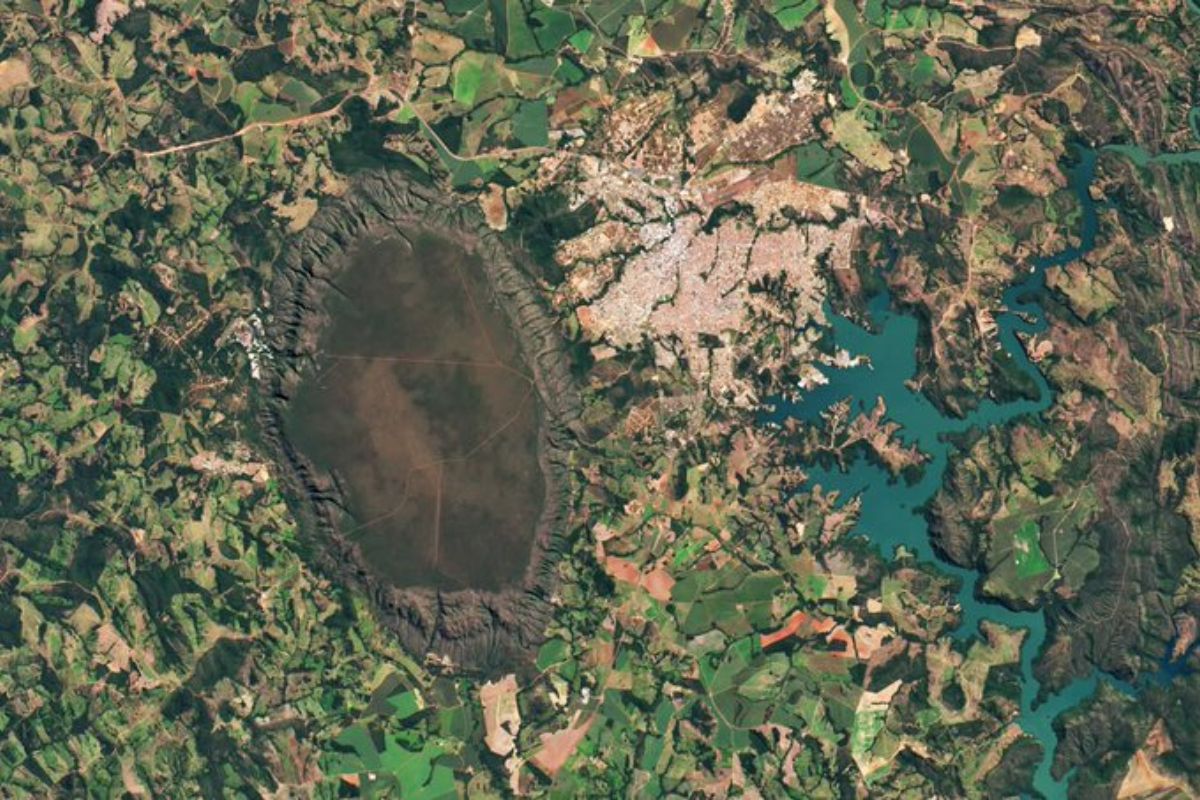
NASA published a photo taken from space of a mountain range in the interior of Goiás, and the whole world wanted to know what it was: beneath it lies the largest hot water spring on the planet, with temperatures reaching 70 degrees in the middle of the Cerrado.
-
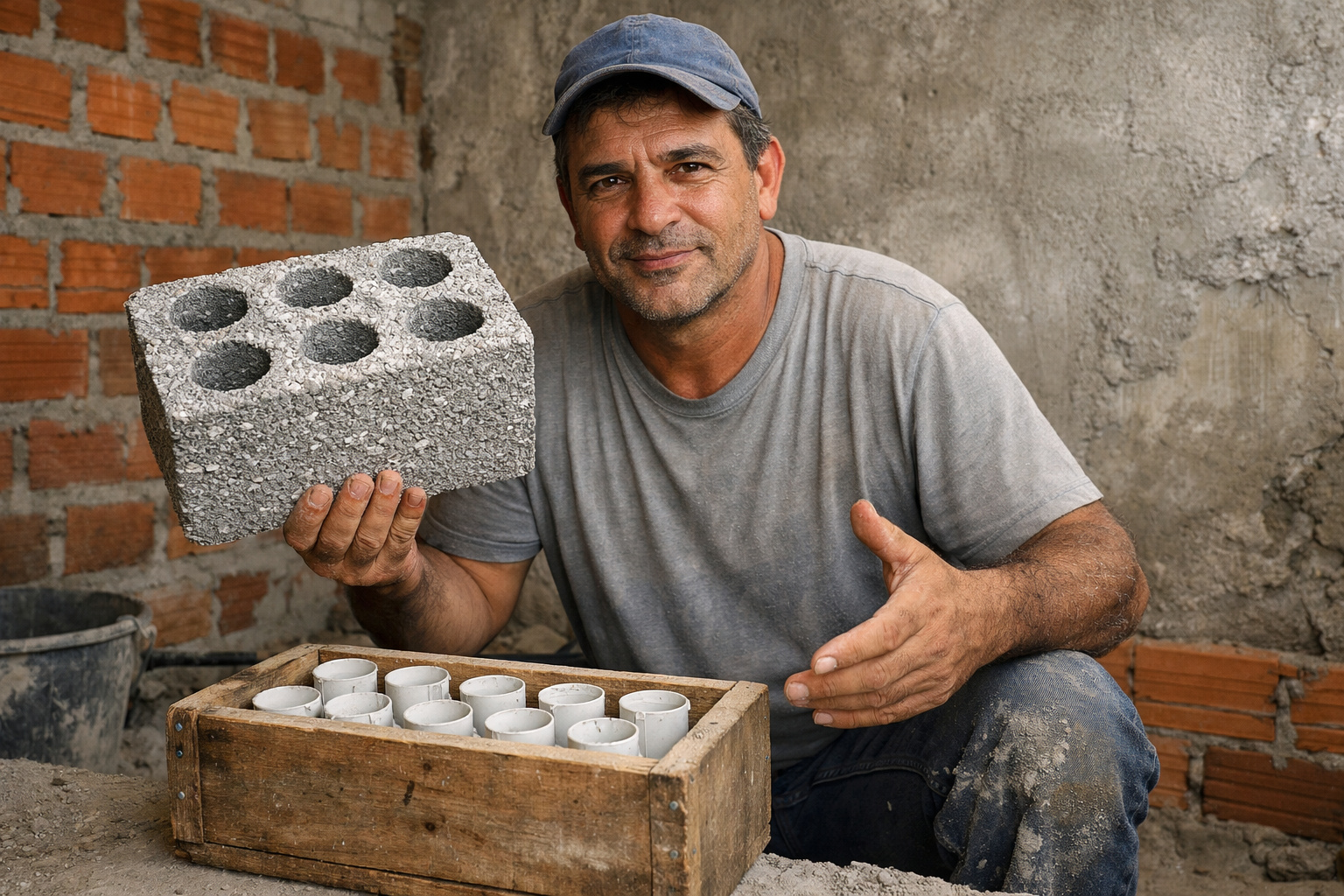
A thermal block costing only R$ 0.40 catches attention by reducing heat by up to 80% using recycled styrofoam, a common kitchen ingredient, and a manual technique capable of producing 50 blocks from a single bag of cement.
-
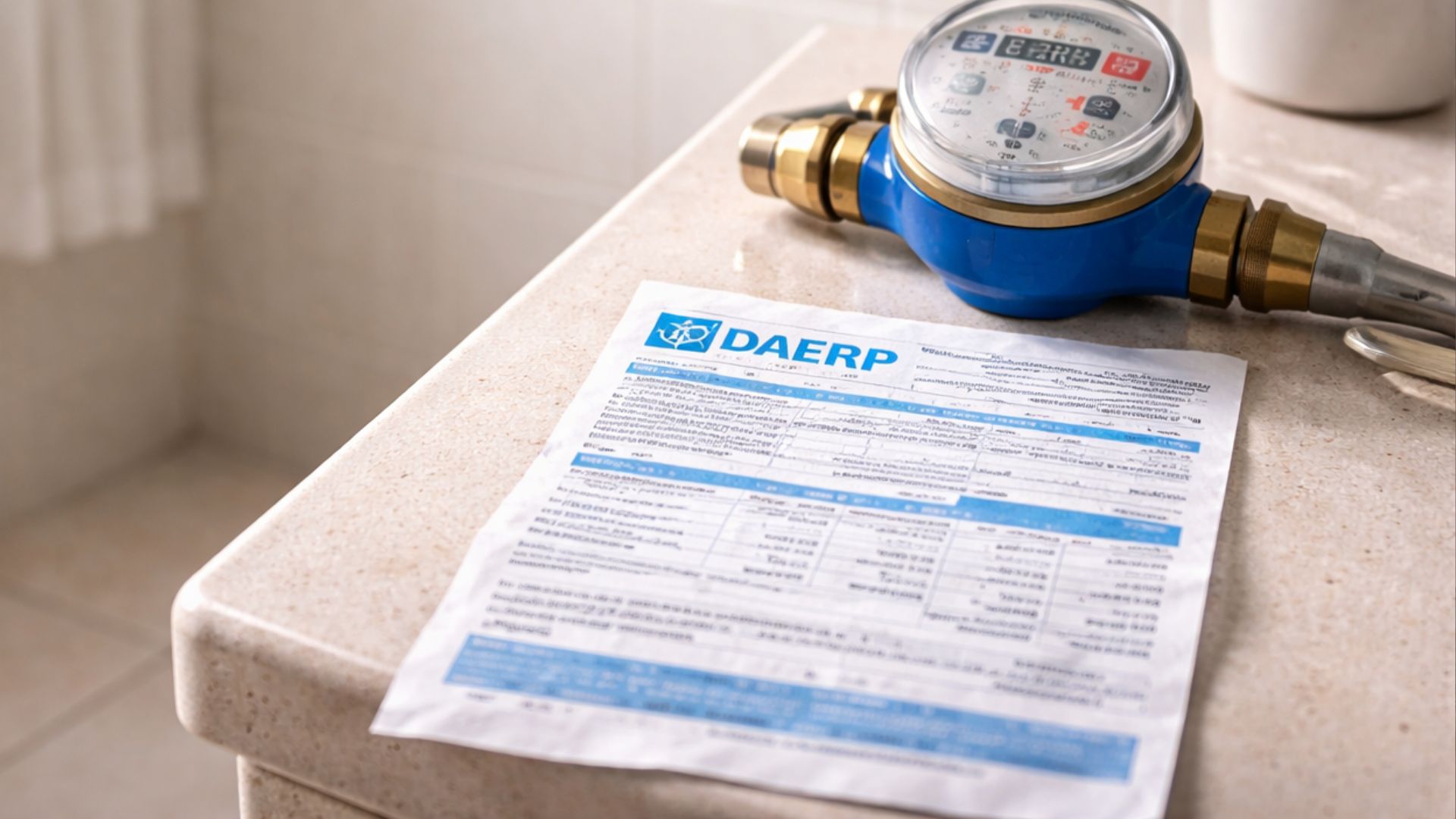
The item in the house that consumes the most water is not in the kitchen; it is in the smallest room of the house and can account for up to 30% of the expenditure on its own.
-
While Argentina relies on the USA to provide communications, data transmission, and electronic warfare for the F-16, Brazil is accelerating with the Gripen and integrating the Link-BR2, a national technology that strengthens air defense.


With around 5 acres, the plan was to gradually gain autonomy, including using the construction itself as a laboratory for material choices, solar orientation, and thermal comfort. It is a story of logistics before it became architecture.
This beginning also helps to answer how much it cost in human effort: he reported over a year of excavation and assembly of the main structure, often with the help of friends, working at night and on weekends.
In a place where the urban sprawl of Phoenix “comes slowly,” the decision to use the underground as insulation was, at the very least, a bet against the local standard of sun-exposed houses. The weather, here, is part of the project.
How an Underground Steel Dome is Born and Why It Does Not Sink Into the Landscape

The structure started from a kit from Earth Systems, which provided the backbone of the project: steel posts, rebar, forms, and embedded anchoring points in the concrete slab.
From there, the engineer did most of it alone, raising the circular skeleton, closing the “shell,” and finishing the interior with his own labor, from framing to finishes and installations. Almost everything depended on planning and manual execution.
Then came the decisive stage for the house to “disappear” in the Sonoran Desert: waterproofing, covering with earth, and chromatic camouflage. He sought an external tone compatible with the local sand, even collecting soil samples to match the color, and with that, the steel dome ceases to look like an object and starts to resemble a relief.
The visual effect is seductive, but it is also functional, because the earth becomes a continuous insulator and protects the shell against sudden temperature fluctuations. The invisible, here, is a thermal choice.
Earth as Insulation and the Trick of Stable Temperature Without Appliances All the Time

The central technical argument is not “magic,” it is thermal mass and thermal delay: underground, heat does not enter or exit at the same speed as on the surface.
Dry earth works as insulation and, throughout the seasons, creates a buffer that helps maintain stable temperatures, cooler in the desert summers and warmer in the local winters. It is comfort by inertia, not by consumption.
This logic appears in the design of the openings. The engineer sought to orient the main windows to the south, to take advantage of the low sun in winter and reduce the gain in summer when the sun is higher.
In practice, he describes that often it is enough to open curtains to capture solar energy in the cold and that heating tends to be minimal, in blocks of 10 to 15 hours during overcast periods, while the rest of the winter follows with comfort sustained by the combination of the steel dome and earth insulation. The sun enters as free fuel.
What Architecture Does Not Show: Drainage, Electricity, and the Test of Monsoons

An underground house requires discipline in planning. The engineer needed to decide in advance where pipes would run and where it would be possible to pass through the structure, as drilling a steel dome and concrete after it is completed is not like opening a lightweight wall.
In his case, part of the challenge was to install drainage under the slab and lead the outlet to ground level, with a pumping system for effluents from the lower floor. The “beneath the earth” also needs predictable maintenance.
The climate also factors into the design. During the monsoon season, when heavy storms shake conventional houses, life underground tends to be quieter and more stable.
The same applies to power outages during extreme heat: while neighbors measure their suffering inside warm homes, the promise of stable temperature becomes a criterion of resilience, not a luxury. The idea of “using the desert as insulation” appears, here, as a choice of safety and continuity. A house can tremble outside and remain calm inside.
When the House Disappears, Wildlife Arrives, and the Engineer Becomes Part of the Ecosystem

The long-term result is curious: a construction designed for energy efficiency has also become a sort of transit point for animals.
Bobcats have been seen resting near the patio; coyotes frequently pass through; greater roadrunners and quail appear as seasonal residents, sometimes requiring simple improvisations like water and ramps to ensure that pups do not get stuck in the uneven ground. Engineering does not drive life away; it reorganizes the surroundings.
Four decades later, the engineer and his wife decided to move to Japan, attracted by another type of construction, in reinforced concrete, but with a nostalgic longing for the thermal comfort of the Sonoran Desert.
The buried steel dome, with the earth as insulation, then becomes a portrait of an era in which efficiency was built with tools, books, and trial and error, not with apps. There is a type of learning that only appears after decades.
What This Domestic Experiment Teaches About Housing, Climate, and Choices
It is tempting to treat the story as eccentricity, but it is more useful as a case of applied engineering. An engineer took a hostile environment and sought predictability: stable temperature, low heating and cooling demands, and physical protection against winds and storms.
The solution did not depend on rare technology, but rather on geometry, materials, and the principle of using the surroundings as insulation. When the climate tightens, the form of the house becomes a matter of survival.
At the same time, the experience suggests limits and questions. Burying a house requires a compatible lot, licensing, heavy excavation, and a rigorous plan for waterproofing, drainage, and maintenance.
Still, the fact that a steel dome “disappears” in the Sonoran Desert while maintaining a stable temperature makes the comparison inevitable: how many houses in extreme regions continue to ignore the earth as insulation, out of habit, market forces or aesthetics? And how many pay the price for that choice every summer?
If you could redesign a house for your climate, would you choose to dig for stable temperature or would you prefer to rely on appliances and the power grid? And which detail seems riskier to you, the work of a buried steel dome or daily life in a desert that changes rapidly with monsoons?







-

-

-

8 pessoas reagiram a isso.