





 Portuguese
  English
  Spanish
  4 min of reading
  0 comments


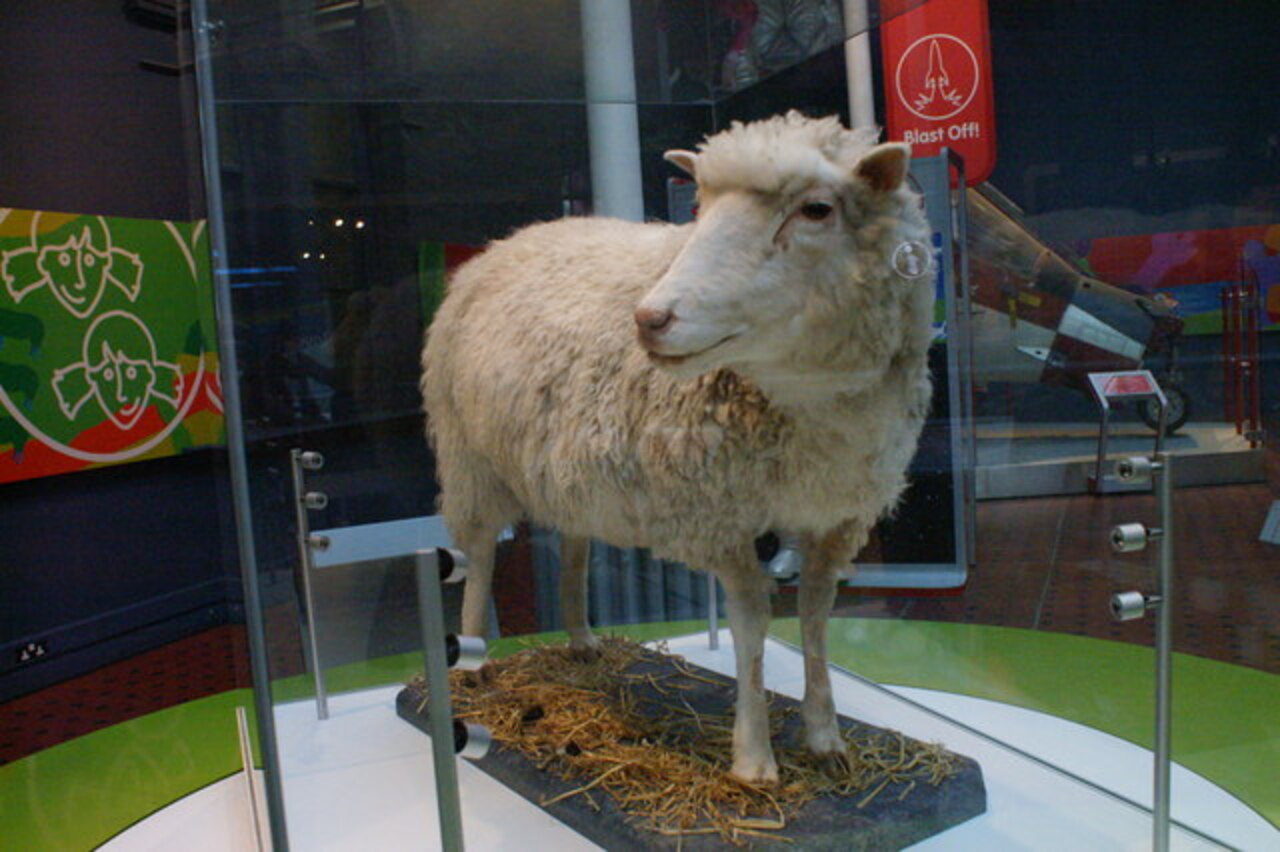
The Birth of Sheep Dolly in 1997 Marked the First Cloning of an Adult Mammal and Reignited Debates About the Limits of Science
In 1997, the world watched in astonishment at a news story that seemed straight out of a science fiction movie: the birth of sheep Dolly. It was the first time that a mammal was cloned from an adult cell.
The revelation dominated the press and sparked heated debates about the limits of science. The question that quickly arose was inevitable: if it was now possible to clone a sheep, how long would it take until human cloning?
This expectation, however, did not materialize. There are still no cloned humans, and there is no forecast for that to happen. But the achievement of creating Dolly was an important milestone in itself.
-
China creates hypersonic engine that can make planes and missiles fly more than 6 times the speed of sound with less weight, more range, and without system change.

-
Mysterious object on Mars divides NASA and Harvard after Curiosity image reignites suspicions about what was really found on the planet.
-
Giant structures 14 meters beneath Egypt are revealed by satellites and expose a millennia-old secret buried in Buto.
-
Children have been making clay pieces for 15,000 years in Southwest Asia, and fingerprints preserved on 142 ornaments helped archaeologists prove this.

How Dolly Was Created
The technique used, called nuclear transfer, involved removing the nucleus from an egg and replacing it with the nucleus from a donor adult cell. This process had already worked in simple animals, such as amphibians, but never in mammals.
Before Dolly, most cloning experiments used embryonic cells. They are more flexible since they can transform into any type of cell in the body.
Using adult cells was much more challenging. The team at the Roslin Institute in Scotland, led by geneticist Ian Wilmut, decided to face this challenge. They wanted to “reprogram” the nucleus of the adult cell to revert it back to an embryonic stage.
The chosen nucleus came from a cell in the mammary gland of an adult sheep. It was inserted into an enucleated egg, which was then placed into another sheep that served as a surrogate.
The first attempt happened in 1995. After 276 failures, the 277th attempt succeeded. There was born Dolly, named after the singer Dolly Parton.
Worldwide Repercussions
The official announcement of the cloning was made in February 1997 in the journal Nature. The repercussions were immediate. Scientists, journalists, and the general public debated for months the ethical and scientific implications of cloning. The following month, Dolly appeared publicly, and the debate intensified.
The experience was so remarkable that it even inspired a soap opera. The author Gloria Perez created the story of O Clone, broadcast by TV Globo in 2001. According to her, the idea came from Dolly herself.
Advances and Limitations of Cloning
With the success of the technique, other animals were cloned in the following years. Cows, goats, pigs, cats, rabbits, horses, and even monkeys made it to the list.
However, the process has always been criticized. It is expensive, time-consuming, has a high failure rate, and causes suffering to animals.
Many embryos do not survive or are born with serious health problems. Additionally, clones do not generate genetic diversity, which is essential for the survival of a species.
Despite the criticisms, cloning has brought significant gains to science. It allowed for a better understanding of how an adult cell can be reprogrammed to generate a new organism.
It also enabled the study of specific genes in genetically identical clones to the donor. And it opened doors for applications such as the preservation of endangered species and the use of cloned animals for the production of organs compatible with humans.
Dolly’s main contribution, however, was in the area of therapeutic cloning. Using the same nuclear transfer technique, scientists began developing embryos to produce stem cells.
The goal was not to create new beings but to regenerate tissues and treat diseases like Parkinson’s, diabetes, and spinal cord injuries. Being compatible with the patient, these cells avoid the rejection issues of traditional transplants.
The End of the Sheep and Its Legacy
Dolly also had a lamb, named Bonnie. This showed that clones could reproduce normally.
In 2003, at the age of six, Dolly was euthanized due to a lung disease and arthritis. Although her life lasted the expected time for a sheep of her breed, doubts arose about whether the issues were linked to cloning.
Today, Dolly is embalmed and can be seen at the National Museum of Scotland. An eternal symbol of an experiment that forever transformed modern biology.
With information from Revista Galileu.





Seja o primeiro a reagir!