





 Portuguese
  English
  Spanish
 7 min of reading
  0 comments


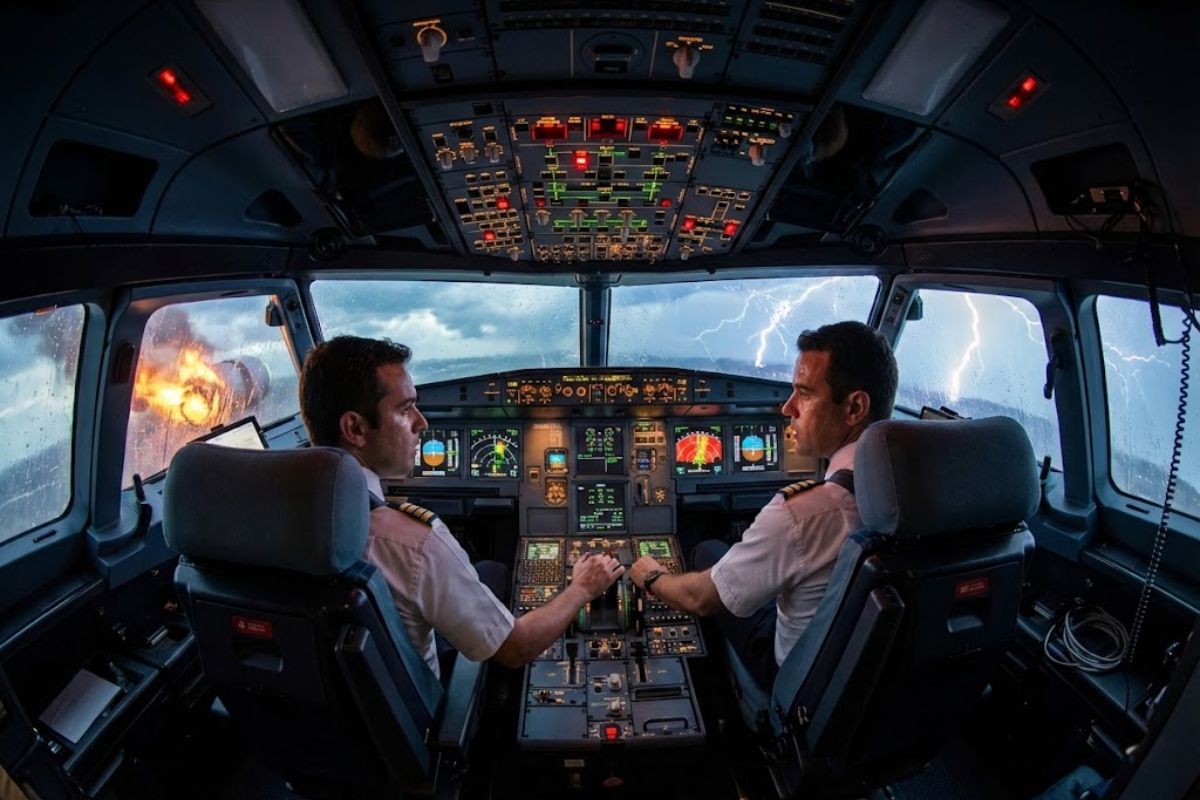
In The Azul Simulator In Campinas, Pilots Spend 60 Hours Facing 50 Emergencies, From Engine Failures To Severe Storms, In Day And Night Scenarios, To Reach The Cabin Of The Airbus A320 Ready, Confident, And Trained So That No Passenger Is Caught Off Guard On A Real Flight On Commercial Routes In Brazil
Inside The Azul Simulator In Campinas, The Question That Opens The Report Is Simple And Direct: What Happens On A Flight When The Pilot Faces A Serious Unexpected Situation In Mid-Air? The Answer Does Not Appear In A Manual But In A Cabin That Faithfully Reproduces Reality, Where Each Alarm, Noise, And Vibration Is Programmed To Test The Technical And Emotional Limits Of The Professionals Who Command Commercial Aircraft In The Country.
It Is In This Controlled Environment That The Airline Concentrates The Most Sensitive Part Of Its Safety Policy. There, Before Taking Control Of A Real Aircraft, The Pilot Goes Through An Intense Training Script, Facing Situations That No Passenger Would Like To Experience, But That Must Be Exhaustively Rehearsed In The Azul Simulator So That In Real Life, Everything Seems Just A Routine Smooth Flight.
How The Training Center In Campinas Works

The Training Center Of The Azul Airline Is Located In Campinas And Was Designed To Replicate The Routine Of A Modern Cockpit.
-
Chaos On Airplane Could Be Expensive: Proposal Aims To Prevent Disruptive Passengers From Flying For Up To 1 Year In Brazil And Face Fines Of Up To R$17,500
-
Man Arrested After Halting Takeoff of Fire Department Helicopter During Child Rescue in Guaratuba
-
With 37 Tons of Cargo, Over 8,000 km Range, and Ability to Land on Unpaved Runways, the Airbus A400M Demonstrates How Europe Created a Military Giant That Transports Armored Vehicles, Aerially Refuels Fighters, and Operates in Conflict Zones and Humanitarian Missions Worldwide
-
Emergency Landing in Campos Amarais After Bird Strike on Small Plane

In The Same Building, The Company Brings Together Static Simulators In Rooms, Complete Cabins, And Panels That Replicate The Instrumentation Of Different Aircraft, With A Focus On The Airbus A320, A Model Widely Used In Domestic Flights In Brazil.
The Report Shows Instructors And Pilots Circulating Between Briefing Rooms, Computers, Models, And The Azul Simulator Itself, Where Each Session Is Treated Like A Real Flight.
The Approach To São Paulo, For Example, Can Be Repeated Multiple Times, With Variations In Weather, Visibility, And Air Traffic, Until Each Procedure Is Precisely Aligned.
Nothing Is Improvised: Each Movement Of The Control Stick, Each Response To An Alarm Follows A Defined Protocol.
From January To June Of This Year, 1,971 Pilots Underwent Training At This Center, In Refresher Or Initial Training Journeys, According To The Company.
They Are Newly-Hired Professionals, Experienced Captains, And Co-Pilots In Different Stages Of Their Careers, All Required To Prove Their Performance In Scenarios That Go Far Beyond The “Clear Blue Skies” That Passengers Typically See Out The Window.
60 Hours Of Training And 50 Critical Situations


In The Azul Simulator, A Pilot’s Script Is Not Limited To Perfect Takeoffs And Landings.
Only In The Main Course Stage Are There 60 Hours Of Sessions, In Which The Professional Faces 50 Real Scenarios That May Occur During A Flight.
In Each Of These Situations, The Instructor Has The Freedom To “Mess Up” The Flight And Observe How The Crew Reacts.
Among The Challenges Are Unstable Weather, Severe Turbulence, Approaches With Heavy Rain, Tailwind, Sudden Visibility Changes, Instrument Failures, And System Failures, Always Combined To Require Quick And Coordinated Responses.
The Azul Simulator Allows Switching Between Day And Night Flights, Forcing The Pilot To Deal With The Different Visual Perception And Workload In Each Environment.
One Of The Most Critical Moments Of The Training Is The Engine Failure Module.
In Seconds, The Azul Simulator Cuts Power To One Side, Lights Up Alerts On The Panel, And Alters The Aircraft’s Behavior, Forcing The Pilot To Acknowledge The Failure, Execute Checklists, And Decide Whether To Continue, Return To The Departure Airport, Or Divert To A Safe Alternative.
Everything Is Recorded, Reviewed, And Discussed Later In Debriefing Sessions, Minute By Minute.
Repeated Emergencies Until They Become Reflex
The Logic Of The Azul Simulator Is Simple: Repeat The Unexpected Until It Becomes A Reflex.
In Each Session, The Instructors Change Details Of The Scenario To Prevent The Pilot From Simply Memorizing The Situation.
The Goal Is To Train Reasoning, Decision-Making Under Pressure, And Cabin Discipline, And Not To Create “Robots” That Follow Commands Automatically.
On The Panel, The Parameters Of The Airbus A320 Operate Like In A Real Flight: Speed, Altitude, Pitch Angle, Engine Thrust, Fuel Consumption, And Flap Position React To Each Action Of The Crew.
Warning Lights Illuminate If A Procedure Is Executed Out Of Order Or At The Wrong Time.
In Parallel, The Cabin Vibrates, The Sound Of The Engines Changes, And The Storm Simulation May Include Lightning In The Visual Display In Front.
For The Company Management Itself, The More Critical Situations Are Exhaustively Experienced Inside The Azul Simulator, The Lesser The Chance Of Improvisation On A Flight With Passengers On Board.
The Idea Is That, In The Face Of Intense Turbulence Or A System Alert In The Real World, The Pilot Feels That “He Has Seen That Scene” Dozens Of Times In Training.
Technology, Fidelity, And Development Of Pilots
One Of The Points Highlighted By The Responsible Parties Is The Fidelity Of The Equipment.
The Azul Simulator Is Described As Being Capable Of Technically Reproducing, With A High Degree Of Precision, The Behavior Of The Aircraft, The Electronic Systems, And The Responses In Different Configurations Of Weight, Weather, And Runway.
This Fidelity Allows Each Technical Adjustment To Have An Immediate Impact On The Simulation.
This Technology Does Not Serve Only To “Pass Pilots To The Next Stage”.
The Training Center Is Also Used To Develop New Routines, Test Procedure Improvements, And Update The Crew As Changes In Manuals, Routes, Or Regulations Arise.
By Concentrating This Activity In Campinas, The Company Transforms The Azul Simulator Into A Permanent Laboratory For Operational Safety.
For The Pilots, Constant Exposure To This Environment Reinforces Technical And Emotional Training.
Many Report That After Experiencing Multiple Failures In The Simulator, They Approach The Real Flight With More Calm, Just Because They Have Already Experienced, In A Controlled Environment, What Can Go Wrong.
The Virtual Cabin Becomes A Kind Of “Testing Ground” For Brazilian Commercial Aviation.
From Training In The Simulator To Commanding The Airbus A320
The End Of The Training Cycle Is Also The Beginning Of A New Responsibility.
Once The 60 Hours Of Training Have Been Completed And The 50 Critical Situations Proposed In The Azul Simulator Have Been Overcome, The Pilot Is Authorized To Command Flights Of An Airbus A320 On Commercial Routes In Brazil, Always Within The Rules Set By The National Civil Aviation Agency.
None Of This Means That The Process Ends There.
The Pilot Periodically Returns To The Azul Simulator For Mandatory Refresher Sessions, Evaluation Sessions, And New Modules That Keep Up With Technological And Operational Changes.
In Some Stages, Minimum Performance Is A Requirement To Continue Flying; In Others, The Goal Is To Anticipate Risk Trends And Incorporate Best International Practices.
In The End, The Passenger Only Sees The Result Of This Cycle: A Smooth Takeoff, Turbulence Managed With Clear Information Over The PA System, And A Landing That Seems Routine.
Behind The Apparent Normality, There Are Dozens Of Hours Inside The Azul Simulator In Campinas, Dedicating Themselves Precisely To Prevent Serious Surprises From Occurring On A Real Flight.
Safety For Those In The Cockpit And For Those In The Seats
The Logic Of The Company In Investing In This Level Of Preparation Is Direct: The More Structured The Training In Emergency Situations, The Greater The Safety For Those In The Cockpit And For Those In Seats 10A, 20C, Or 30F.
The Azul Simulator Allows For Placing The Pilot And Co-Pilot Under Pressure That, During Normal Operations, Rarely Presents Itself, But Must Be Practiced.
In Practice, The Training Center In Campinas Functions As An Additional Barrier Against Incidents.
A Weather Instability That Could Scare Passengers Is Treated As Routine By Those Who Have Already Experienced Much More Severe Scenarios Inside The Azul Simulator.
An Instrument Misreading, Which In Other Contexts Could Generate Doubt, Is Quickly Identified And Corrected By Those Who Have Been Trained To Follow Checklists Even In A Stressful Environment.
While Most Brazilians Only See The Boarding, The Buckled Seatbelt, And The Request To Fold The Tray Table, Commercial Aviation Operates Supported By Invisible Structures Like This Training Center, Where Failures Are Purposefully Provoked So They Never Materialize For Real.
It Is There That The Concept Of “In-Flight Emergency” Ceases To Be A Spectacle And Becomes Technical Routine, Measured In Simulator Hours, Checklists, And Performance Reports.
What The Simulator Reveals About Flying In Brazil
The Routine Inside The Azul Simulator In Campinas Shows That Behind Each Apparently Ordinary Flight, There Exists A Gear Of Continuous Training, Cutting-Edge Technology, And Performance Demands.
Pilots Are Exposed To 50 Possible Emergencies In 60 Hours Of Sessions Precisely So That The Passenger Never Notices Anything Beyond A Slight Bump Of Turbulence And The Announcement Of “Normal Procedures” Coming From The Cabin.
In A Country Of Continental Dimensions, Where The Airplane Is Increasingly Used As A Means Of Connecting Regions, The Existence Of Specialized Centers Like This Helps To Explain Why Commercial Aviation Maintains High Safety Rates Even With Full Flights, Tight Schedules, And Often Challenging Weather Conditions.
And You, As A Passenger, Had You Ever Imagined That The Pilot Of Your Flight Had Spent So Many Hours In The Azul Simulator Before Taking The Cabin, Or Does Any Emergency Situation In An Airplane Still Make You Feel Insecure When Thinking About Traveling?






Seja o primeiro a reagir!