





 Portuguese
  English
  Spanish
  3 min of reading


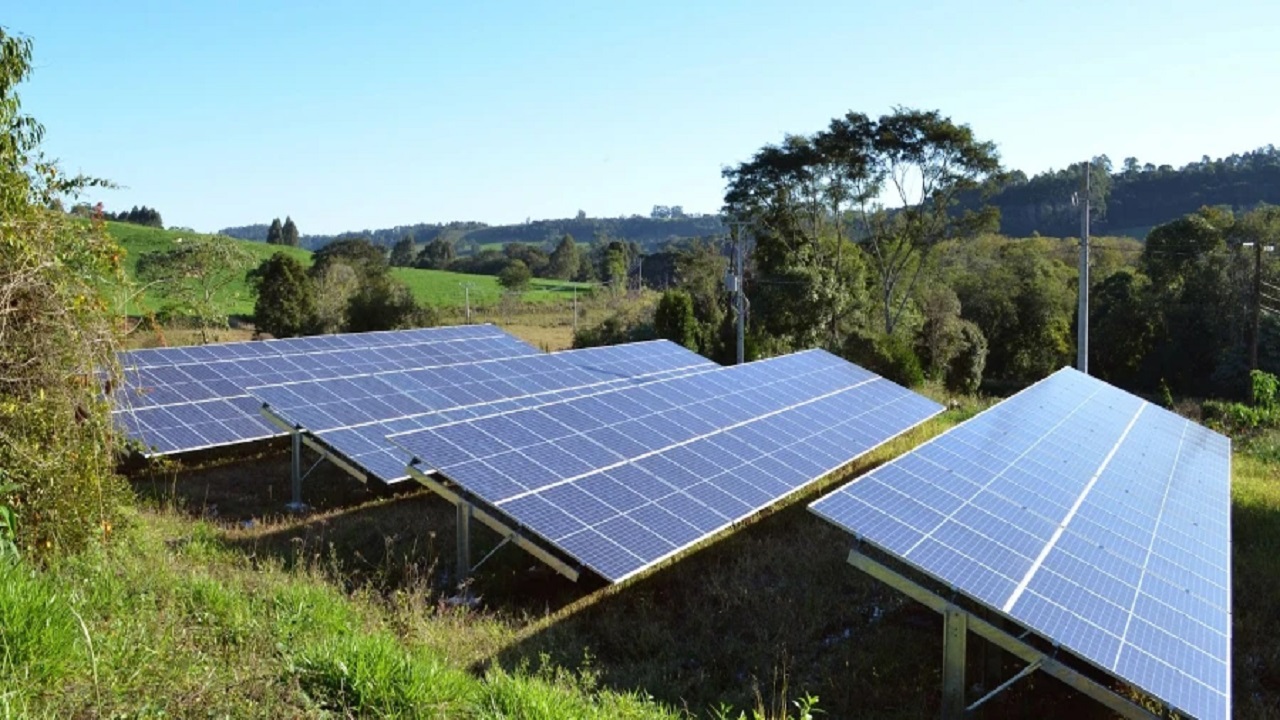
Shortly After Bringing New Technology to the National Market, Risen Energy Breaks Its Own Record with Its HJT Solar Panel, Achieving an Efficiency of 23.89%.
Risen Energy, a Chinese company operating in the clean energy sector, recently achieved the world record for solar panel efficiency with the new value of 23.89%, with a maximum power output of 741.456 W. The results were verified by TUV SUD, a technical testing and certification company. The company’s results are linked to the technology present in the Hyper-ion (which relies on heterojunction cells), with modules tested and certified by TUV SUD in Munich, Germany.
Risen Energy Solar Panel Can Maintain 90% Capacity Over a 30-Year Period
The value achieved by Risen Energy currently exceeds the 23.65% established by the company, attained in December 2021. In a press release, Risen Energy states that the power modules of the Hyper-ion solar panel have the capacity to maintain more than 90% of their efficiency over a period of three years, especially due to a high bifaciality of up to 85% and an extremely stable temperature coefficient.
The company also highlights the use of ultrathin cells, with a thickness of less than 100 microns, along with a low-temperature process, as well as a total carbon footprint of less than 400 kg of harmful gases to the atmosphere (CO2 equivalent) per kWc (kilowatt cost).
-
With a cost per shot close to zero, the DragonFire laser could change naval warfare in 2027 and provide British ships with nearly unlimited defense against drones.

-
A British startup creates tires that generate electricity in electric vehicles when passing over potholes, speed bumps, and cracks.

-
Scientists have created robots made with living cells that have their own nervous system, swim on their own, explore the environment, and self-organize without any genetic engineering, and now they want to do the same with human cells.

-
Students create a solar-powered ambulance that operates without a plug, without fuel, and still keeps medical equipment running in remote areas.


The record-breaking solar panels currently rely on heterojunction solar cells, which, in basic terms, can be said to utilize the fact of having a solar panel with up to three layers of photovoltaic material to ensure greater capture and retention of sunlight, having better efficiency and performance at high temperatures, among other technological characteristics.
Risen Energy Launches HJT Technology for the National Market
The solar energy market in Brazil continues to evolve steadily, and evidence of this is the new production processes for solar cells, aimed at improving technologies and the performance of photovoltaic modules. For this year, one of the technologies that promises to make a more significant impact in the Brazilian market is heterojunction (HJT) solar panels.
According to the product manager of Risen Energy for Latin America, Vanderleia Ferraz, these solar panels are produced with ultrathin Type-N 210 mm cells, allowing for the production of cells with high efficiency, as well as generating a lower BOS cost for plants. The Risen HJT modules have high power, ideal for utility scale, and high efficiency (22.5%). Furthermore, the energy generation per installed kW is up to 6% greater than other technologies.
Other advantages include the low temperature coefficient, the lowest in the market, making it ideal for tropical climates, and the low linear degradation coefficient, allowing that after 30 years the module still presents 90.75% of its maximum power, 40% lower than the degradation coefficient of other technologies like TOPCon and PERC.
Risen Explains Its Idea with This New Module
Risen Energy aims to provide the national market with HJT technology, of which it has been a market leader since 2020 abroad, so that the country can benefit from the advantages of this technology that achieves low cost per kWh with low CO2 emissions.
The product is already being sold through the company’s distributors. The company states that it is opening an era of modules that seek lower costs per kWh generated in balance with low carbon emissions. These are modules produced with state-of-the-art materials and resistant to extreme weather conditions.








Seja o primeiro a reagir!