






 Portuguese
  Spanish


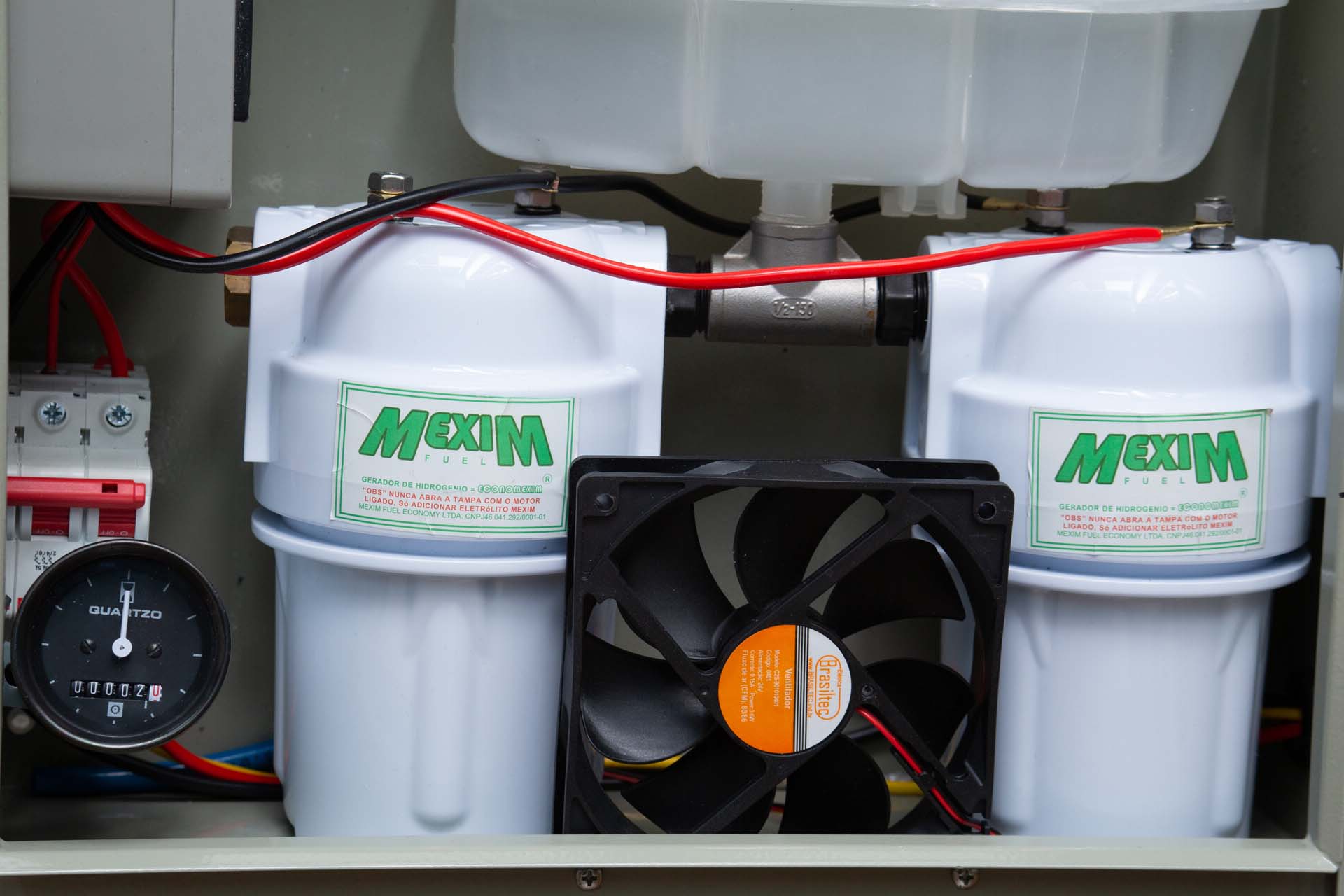


Brazilian Hydrogen Generator Promises to Reduce Diesel Consumption by Up to 43% in Trucks and Agricultural Machines, with Patented Technology and Results Already Registered in Real Fleets.
A national innovation ignites a new chapter in the heavy transport sector. In a market pressured by rising fuel costs and increasingly narrow margins, a Brazilian company claims to have developed a technology capable of reducing diesel consumption by between 15% and 43% in trucks, urban buses, harvesters, excavators, tractors, and heavy machinery used in both agribusiness and construction. The equipment — a patented onboard hydrogen generator in Brazil — is already operating in real fleets and has been gaining attention for promising something rare: immediate savings, improved performance, and reduced mechanical wear in a single solution.
The technology, presented in a report by Petronotícias, is developed by Mexim Fuel Economy. The system, called ECONOMEXIM, works as a hydrogen generator attached to the vehicle, capable of injecting small amounts of gas into the combustion chamber, altering the diesel burning process. The company claims that this intervention improves combustion efficiency, reduces energy losses, decreases residue buildup in the engine and, as a direct consequence, generates significant fuel savings.
Although the concept of “dual fuel” engines — combining diesel and hydrogen — is being discussed globally in academic and industrial environments, few countries present an onboard, patented, and commercially tested solution like the one Mexim is promoting. This places Brazil, historically dependent on diesel to drive its logistics, at a strategic point in the development of energy efficiency technologies.
-
Scientists Convert Food Waste into Aviation Fuel, Successfully Test 50% Blend with Conventional Kerosene to Cut Emissions and Promote Sustainable Flights

-
OnePlus N6 Smartphone to Launch in India with 8,000mAh Battery and 45W SuperVOOC Charging, Lasting Up to Three Days
-
Scientists Plan to Release Air Bubbles Underwater to Protect Antarctica’s “Doomsday Glacier” from Melting

-
Chinese R6000 Drone Combines Airplane and Helicopter Features, Carries Up to 12 People for Multiple Missions



The Onboard Technology: How a Hydrogen Generator Alters Diesel Combustion
The technical principle of ECONOMEXIM is relatively simple, but its application requires precision and safety. The equipment generates hydrogen through small-scale electrolysis, using the vehicle’s own electrical energy. This hydrogen is immediately directed to the combustion chamber, where it mixes with the air that feeds the engine.

This addition modifies three critical phenomena:
- Flame Propagation Speed — hydrogen burns faster than diesel, resulting in more complete combustion.
- Reduction of Incomplete Combustion — less soot, sludge, and carbon deposits produced.
- Better Utilization of Diesel Energy — less fuel needed to generate the same power.
According to Mexim, the combined effect produces:
- Savings between 15% and 43% in consumption.
- Greater available power.
- A cleaner engine that is less prone to wear.
- Reduction of emissions and increased lifespan of the mechanical assembly.
These values were measured, according to the company, in real fleets of urban buses, harvesters, excavators, bobcats, paving trucks, and heavy agricultural machines.
Although researchers have studied the impact of hydrogen as a combustion catalyst in diesel engines for decades, the biggest challenge has always been to transform this theory into a safe and economically viable onboard solution. It is exactly at this point that Mexim tries to differentiate itself: offering a patented technology with broad application and low operational risk.
Why This Technology Attracts So Much Interest in Transport and Agribusiness
Brazil is a country that depends on diesel. Its logistics matrix of roads, trucks, heavy machinery, and harvesters — mainly operates with this fuel.
Diesel accounts for:
- up to 40% of the operating cost of a transport fleet.
- up to 35% of the direct harvesting cost in agribusiness.
- a significant portion of public and private construction operations.
Reducing consumption by 15% to 43%, even in the most conservative scenario, creates monumental economic impact. In large fleets, every percentage point of savings means millions of reais per year.
In addition, there are two strategic factors:
Immediate Competitive Advantage
As declared by Paulo Roberto Athie Piccelli, the company’s legal director:
“Efficiency is not a trend. It is a competitive advantage.”
For companies with tight margins, fuel savings mean the ability to operate with greater commercial aggressiveness, expand routes, and increase productivity per vehicle.
Environmental and Regulatory Pressures
With the advancement of decarbonization policies, cleaner fleets become a differential not only economically but also regulatory and reputationally.
A system that reduces emissions without requiring engine replacement, without changing diesel, and without reinventing energy infrastructure has the potential for rapid and widespread adoption.
The Brazilian Innovation in a Market Seeking Alternatives to Traditional Diesel
While countries develop electric trucks, hybrid engines, or fuel cell systems, emerging markets face a challenge: how to reduce dependence on diesel without compromising productivity?
The answer may lie in transition technologies, intermediate solutions that reduce consumption and emissions without requiring immediate replacement of the existing fleet. The onboard hydrogen generator fits exactly into this category.
The promise is clear:
- does not require changing the engine.
- does not require technological alteration to the fleet.
- does not depend on external infrastructure.
- delivers immediate savings.
- acts as a bridge between conventional diesel and a future cleaner matrix.
If confirmed on a large scale, this solution could position Brazil as an international reference in efficiency technologies for heavy transport.
Challenges, Proving Factors, and What is Needed for the Technology to Consolidate
Even though the company presents significant results, there are still important steps for extensive validation:
- independent audits.
- academic validation.
- international tests.
- long-term durability studies.
- comparisons between different types of engines.
The claim of savings of up to 43% is promising, but needs to be evaluated in multiple scenarios, different fleet profiles, and real operating conditions.
Even so, the progress is remarkable: few Brazilian technologies reach this stage with patents, field tests, and efficiency reports on such diverse equipment.
The future of energy efficiency in Brazilian transport may be starting now, and it does not only involve electrification or green fuels, but smart solutions capable of extracting the most from what already exists. What today seems merely like innovation may soon become standard in fleets seeking financial survival in an increasingly competitive market.







Excelente, onde posso instalar?
Gostei
Essa tecnologia eu já tinha desenvolvido em 1990, mas não levei em frente porque não tive condições finaceirae e incentivo do governo e nem empresarial na época. Porém, é uma excelente tecnologia.