





 Portuguese
  English
  Spanish
  4 min of reading
  0 comments



Company Born During Military Regime Became a Global Power, the Third Largest Manufacturer of Commercial Aircraft in the World, and Today Combines Regional Jets, Executive Jets, and Defense Platforms to Sustain Growth
The third largest manufacturer of commercial aircraft in the world did not arise in an aerospace Silicon Valley, but rather in Brazil in the 1960s. Founded in 1969, Embraer transitioned from a state-owned enterprise to a private company and consolidated a portfolio that places it right behind Boeing and Airbus in commercial aviation. From the Bandeirante to the E-Jets E2, the strategy was clear: dominate the niche of up to 150 seats with efficiency, range, and support.
Today, in addition to commercial aviation, the company operates in executive jets, defense, and services. Embraer projects robust demand for its segment and has been announcing investment plans in the country until 2030, with industrial and technological expansion. The combination of proprietary engineering, global presence, and servicing over 100 airlines in 60 countries supports long-term ambition.
From Origins in the Military Regime to Privatization

Embraer was born on August 19, 1969, as a State project led by the Aeronautics branch, supported by institutions such as CTA and ITA.
-
How 5,000 Indian dabbawalas manage to deliver around 200,000 lunchboxes a day in Mumbai for over 130 years using bicycles, crowded trains, and a manual system that continues to operate with impressive accuracy.

-
While restoring a historic mansion from 1910, a brick structure with an old turbine that generated energy from the Rio do Testo emerged, along with a hidden door and a rare floor concealed under layers of wax.

-
Italian researchers have detected what appears to be a second Sphinx buried under the sands of Egypt, and satellite scans reveal a gigantic underground megastructure hidden beneath the Giza Plateau for over 3,000 years.

-
There are 4,223 drums and 1,343 metal boxes concreted with 50-centimeter walls that store the radioactive waste from Cesium-137 in the worst radiological accident in Brazil, just 23 kilometers from Goiânia, with environmental monitoring every three months.


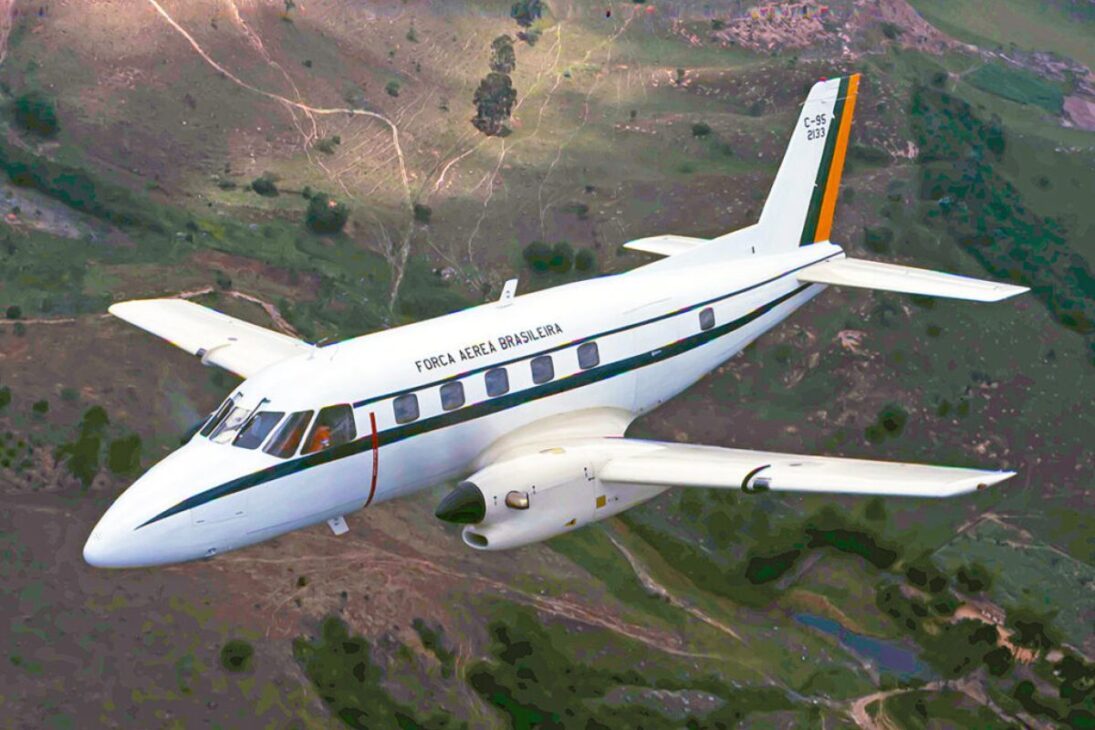
The first step was the turboprop EMB 110 Bandeirante, which paved the way for a viable national aerospace industry.
The public genesis provided technical strength; the engineering discipline became a trademark.
In the 1990s, the company was privatized (1994) and reoriented toward global markets. The focus on larger regional jets and smaller executive jets unlocked revenue, scale, and commercial reach.
The strategic shift placed Embraer on the path to leadership in its niche and credentialed it as the third largest manufacturer of commercial aircraft in the world.
How Embraer Dominated the Niche of 70 to 150 Seats
The leap came with the E-Jets (E170/E190) family and later with the E2 generation. The design prioritized fuel efficiency, comfort, and cost per seat, decisive factors for regional routes and medium-density trunk lines.
By occupying the space between turboprops and larger narrowbodies, the company consolidated market share without unnecessary direct confrontations.
Today, over 100 companies in 60 countries operate jets from the brand, validating the model.
For commercial aviation, Embraer operates precisely where the third largest manufacturer of commercial aircraft in the world needs to be: at the optimal point between cost, range, and frequency, with support and maintenance on a global scale.
Four Fronts That Support Leadership
In commercial aviation, the company dominates the market for around 130–150 seats, offering flexibility for point-to-point networks and feeding hubs.
The value proposition is fleet productivity with lower occupancy risk.
In executive aviation, the Phenom family and the Praetor positioned the brand among the most desired.
The Phenom 300 has ranked among the best-selling light jets worldwide for years, supported by range, performance, and well-designed cabin. It’s the same logic: efficiency without sacrificing comfort and technology.
In defense and security, platforms like the A-29 Super Tucano and the KC-390 Millennium expand revenue and technological reputation.
The KC-390, for example, delivers multimission capability with competitive operational costs. Presence in this segment diversifies the revenue cycle and strengthens engineering.
In the services and support axis, the company offers maintenance, parts, training, and upgrades. Robust after-sales is a competitive differential and a barrier to entry for those trying to compete in the same space.
Innovation, Sustainability, and Global Presence
Embraer maintains R&D as a priority, historically between 7% and 10% of revenue, and operates with centers and factories in Brazil, the USA, Portugal, China, and Singapore.
Continuous innovation sustains margins and extends the lifecycle of aircraft.
On the environmental pillar, the company invests in sustainable aviation, from the Ipanema certified for ethanol to projects with sustainable fuels (SAF) and new propulsion architectures.
The company also advances in urban air mobility (eVTOL) through dedicated initiatives. Long-term climate goals shape the technological and commercial roadmap.
Size, Money, and Growth Path
After recent revenue records and high deliveries, Embraer announced investments in Brazil until 2030, in addition to operational expansion abroad.
There is also a dedicated move towards leasing and freighters, expanding monetization alternatives for the portfolio.
Scale and diversification are the cushion to navigate cycles and keep the third largest manufacturer of commercial aircraft in the world at the top of the game.
Future demand also works in favor: the company itself projects a global need for about 10,500 aircraft up to 150 seats in the next two decades.
This pipeline, if converted into firm orders, tends to stabilize production, supply chain, and skilled jobs.
Competition is intense, with products that overlap in the same niche. Operational efficiency and constant upgrades of the E-Jets E2 are essential to protect margins against rivals seeking the same customer. Success goes to those who deliver lower cost per seat, availability, and a support network.
Another sensitive point is the global supply chain, with hundreds of suppliers in dozens of countries. Any bottleneck affects deadlines and costs.
Industrial discipline and long-term contracts mitigate risks but do not eliminate volatility, especially in a cyclical sector like aerospace.
Embraer’s trajectory shows how focus on niche, engineering, and services can place a Brazilian company among the giants, the third largest manufacturer of commercial aircraft in the world.









-

Uma pessoa reagiu a isso.