





 Portuguese
  English
  Spanish
  5 min of reading
  0 comments


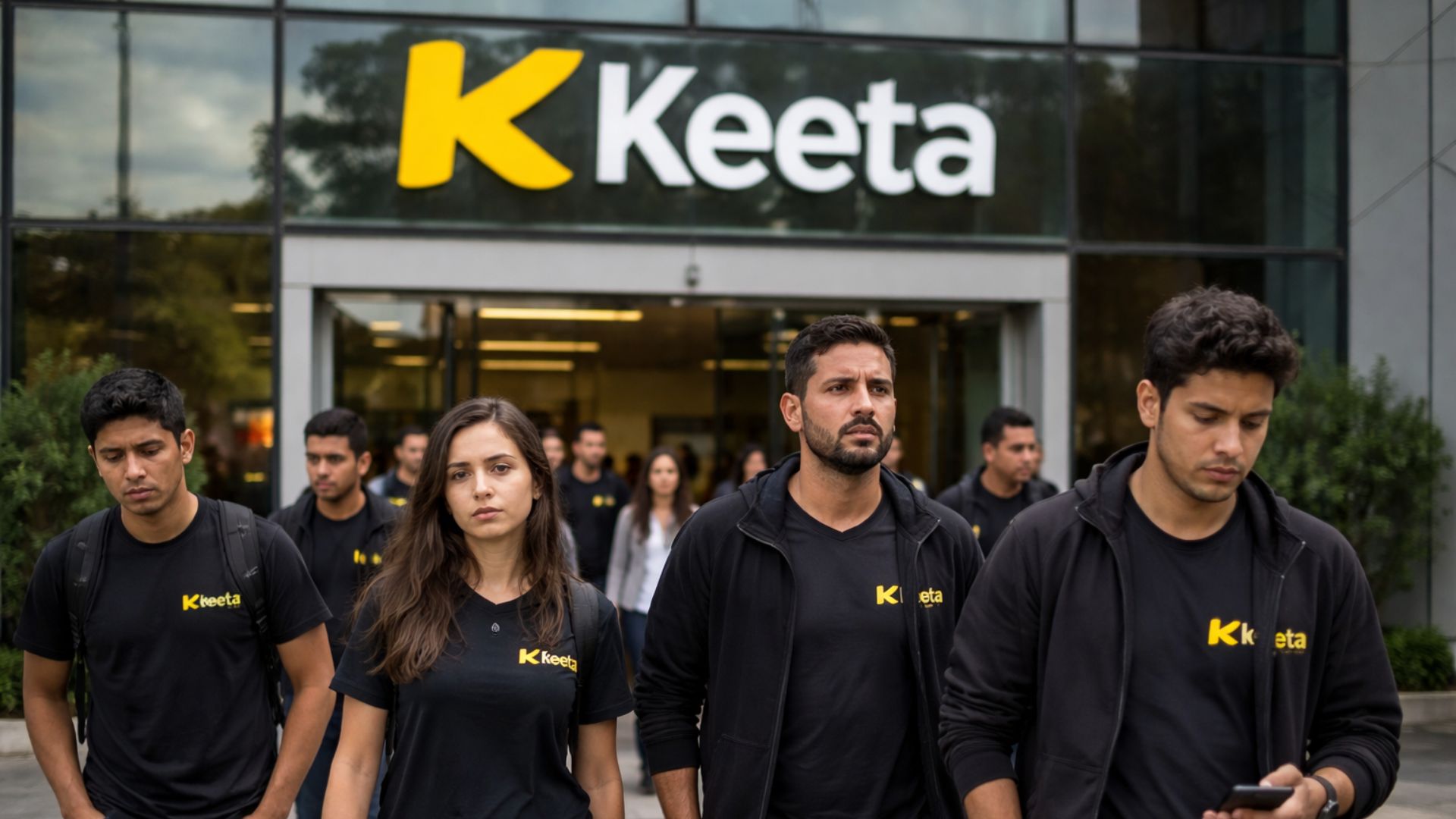
Billionaire Expansion, Unexpected Layoffs, and a Market Stalled by Commercial Disputes Put Keeta’s Brazilian Operation Under Pressure Just When the Company Was Trying to Gain Scale Outside São Paulo and Consolidate Its Entry into the Delivery Sector in the Country.
Keeta, the delivery platform of the Chinese group Meituan, laid off about 200 employees in Rio de Janeiro just days after indefinitely postponing the start of its operation in the state capital.
The company claims it will maintain 1,200 jobs in the country, concentrated in São Paulo, and insists that its plan to invest R$ 5.6 billion over five years in the Brazilian market is still in effect.
The layoffs affect a significant part of the local structure set up for the debut in Rio.
-
The largest food company on the planet, JBS, has just opened a 4,000 square meter laboratory in Florianópolis to develop customized proteins that modulate muscle mass gain, immune response, and metabolic performance.

-
After nearly 30 bids and competition among industry giants, a Spanish company purchases one of the largest airports in Brazil for almost R$ 3 billion and takes over the management of Galeão in a concession that will last until 2039.

-
The Federal Revenue Service now automatically cross-references everything you declare with data from banks, credit cards, brokerage firms, and insurance companies, and any discrepancy between your income and your expenses triggers an alert in seconds.

-
Amid global tensions, Brazil blocks the United States’ proposal at the WTO and paves the way for a trade crisis and possible retaliations.


Considering the 1,200 jobs that the company itself claims to maintain in Brazil, the cut of 200 people represents approximately 16.7% of that workforce.
In a statement, Keeta linked the measure to the postponement of the expansion and stated that it decided to review its operation before moving into new areas.
The company announced on February 26 that it would suspend the launch in Rio, which was considered an important step in its offensive to expand its presence in the country.
Since then, it has begun to indicate that it intends to prioritize improving service standards for consumers, restaurants, and delivery workers, as well as addressing what it calls structural obstacles to competition in the delivery sector.
Keeta Postpones Operation in Rio and Cuts 200 Employees
In practice, Keeta attributes much of the downturn to exclusive contracts signed by competitors with restaurant networks.
When justifying the postponement, company executives stated that they found a market more closed than expected and said that a significant portion of establishments in Rio was hindered from operating simultaneously with the new platform.
Keeta’s Vice President of Strategic Partnerships in Brazil, Danilo Mansano, stated that the company gathered evidence of the “complexity and dysfunctionality” of this model.
According to him, over 50% of the restaurant networks evaluated in Rio had some type of contractual blockage.
The company also argues that these clauses specifically affect networks considered essential for scaling the operation from the first day.
Exclusivity in Delivery Becomes the Center of the Dispute
The discussion takes place in an environment already tense due to the sector’s history.
In 2023, Cade signed an agreement with iFood that prohibited new exclusive contracts with networks of 30 restaurants or more and imposed additional limits on smaller brands.
Keeta claims that, despite this precedent, it still encountered significant barriers in its attempts to establish a commercial base in Rio.
Meanwhile, the episode triggered an immediate reaction among affected workers.
Reports published this week noted protests and moments of tension during meetings called in hotels in Rio, where the layoffs were reportedly announced collectively.
Former employees stated they were attracted by promises of growth in an operation that presented itself as one of the main foreign bets to compete with iFood and 99Food.
Protests Expose Impact of Layoffs at Keeta


After the repercussions, the company stated that it conducted the process “in total compliance with local laws and requirements” and declared that it had offered a compensation package to support the professional transition of those laid off.
Keeta also said it will continue working with restaurants, authorities, and local partners to advocate for a more open, competitive, and sustainable market in the country.
Keeta’s Brazilian operation began experimentally on the São Paulo coast and gained scale in São Paulo starting on December 1, with an initial investment of R$ 1 billion.
In addition to the capital, the platform has already expanded to cities like Guarulhos, Osasco, Barueri, Diadema, Santo André, São Bernardo do Campo, São Caetano do Sul, and Itaquaquecetuba.
For Rio, the disclosed plan foresees R$ 400 million in investments.
Billion-Dollar Investment in Brazil Remains in Place
The company entered the country with an aggressive expansion pitch and a long-term goal that caught the market’s attention.
According to its executives, the commitment to invest R$ 5.6 billion in Brazil remains “firm and unchanged,” despite the pause in Rio.
Still, the pullback in the second most symbolic location of the Brazilian plan represents the first major public test for Meituan’s strategy in the country.
This movement coincided with additional pressure on the Chinese parent company.
On March 4, 2026, S&P Global Ratings downgraded Meituan’s credit rating from A- to BBB+, with a negative outlook, and assessed that the company would need to slow down the pace of Keeta’s expansion.
The agency cited increased competition in the Chinese market, margin pressure, and reduced cash generation capacity.
Downgrade of Meituan Intensifies Pressure on the Operation
However, Keeta is trying to separate the two pressure plans.
Publicly, the company maintains that the pullback in Rio is due to local difficulties in structuring a competitive operation, and not a withdrawal from the Brazilian market.
The official discourse is to focus resources in São Paulo, mature the service, and only then resume geographical expansion under more favorable conditions.
For the sector, the episode exposes the size of the entry barrier in the Brazilian delivery market, even for a group with global muscle, significant cash reserves, and willingness to subsidize the operation.
For the laid-off workers, the rupture came before the growth promise could be realized in Rio.
For restaurants and competitors, Keeta’s pause puts the focus back on the competition for scale, exclusivity, and distribution power in a market where expansion depends less on announcements and more on execution.







-

Uma pessoa reagiu a isso.