





 Portuguese
  English
  Spanish
  5 min of reading
  0 comments



California’s Grid Aero Unveils the Lifter-Lite, an Autonomous Long-Range Cargo Drone. With US$ 6 Million in Seed Funding and an AFWERX Contract, the Aim Is to Support Missions in Contested Areas of the Indo-Pacific. Ground Testing Starts in September 2025.
The California startup Grid Aero emerged from secrecy introducing the Lifter-Lite, a project for an unmanned aircraft to carry “thousands of pounds of cargo over thousands of miles” with low operating costs. The proposal is to serve long routes and remote airstrips where manned logistics are expensive, slow, or vulnerable. According to the company, the model was designed for resilience in contested environments, prioritizing mechanical simplicity and autonomy.
The announcement was accompanied by US$ 6 million in seed investment and a contract in the AFWERX program of the U.S. Air Force, which accelerates technologies of military interest. The team consists of professionals with backgrounds at Joby Aviation, Xwing, and Northrop Grumman, reinforcing the ambition to scale a distributed network of cargo aircraft.
This is an autonomous aircraft designed to safely deliver supplies to islands and advanced bases in the Indo-Pacific, aligned with a trend of military asset dispersion that reduces vulnerability to attacks. The company also sees opportunities for civilian uses in regional short-range, humanitarian response, and e-commerce.
-
China is testing a train that will operate at 400 km/h in daily service, which is 80 km/h faster than the French TGV, and uses carbon fiber, magnesium alloys, and more than 4,000 sensors to become the fastest commercial train on the planet.

-
Forget about having an air fryer, electric oven, and steam pot taking up space in your kitchen because a 30-liter smart oven combines all these functions, automatically selects the ideal temperature, and even turns off by itself when cooking is done.

-
Engineers rewrote all the apps from scratch and bet everything on a buttonless screen: now the creator of the iPhone says that Apple needs to make the same revolution again because of AI.

-
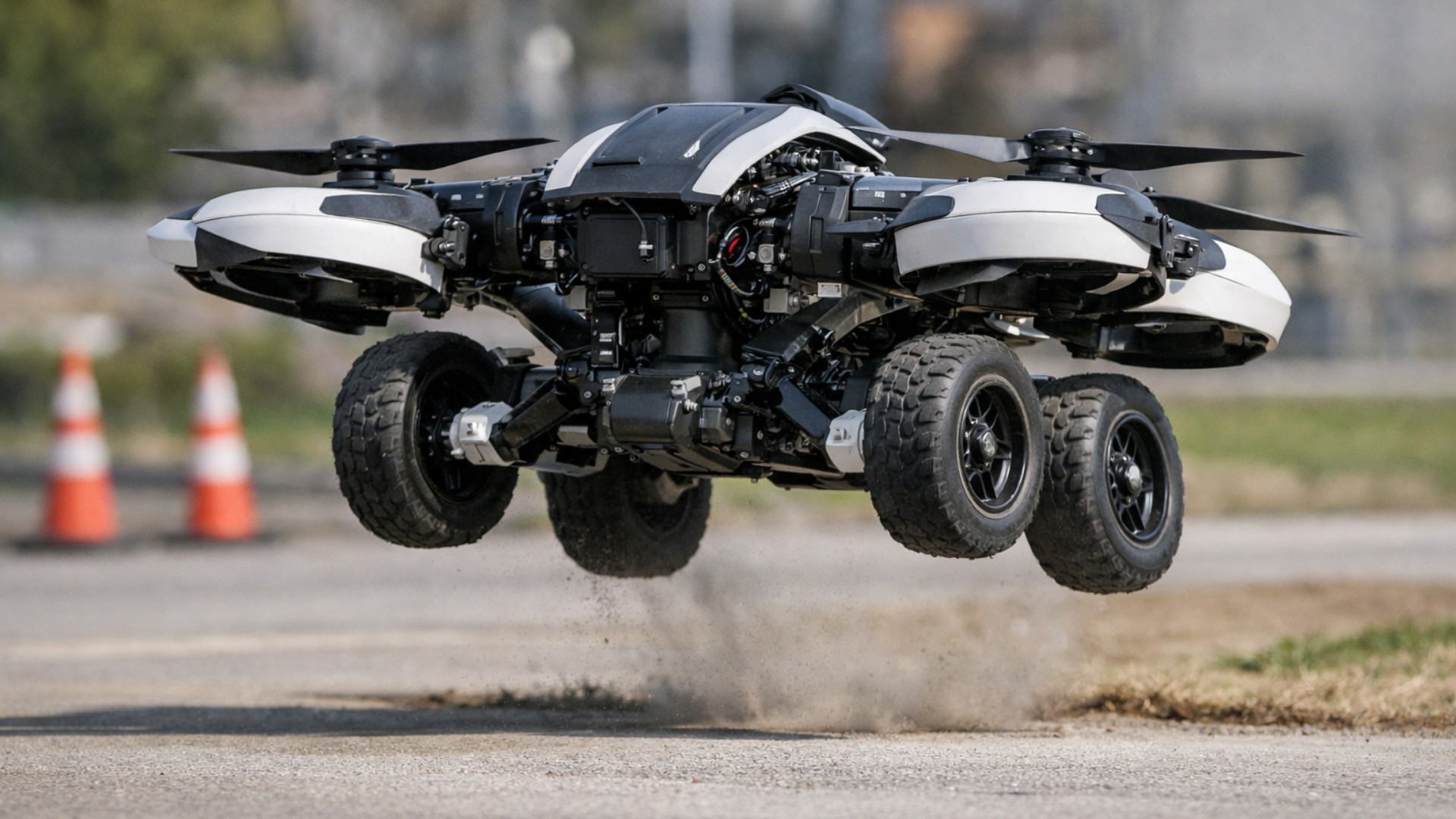
Researchers in the U.S. have created a flying robot that transforms into a land vehicle while still in the air. The technology, based on aerodynamic transition, converts landing into a scene worthy of Transformers and redefines mobility between sky and ground.

Lifter-Lite, the Autonomous Cargo Drone Made for the Indo-Pacific
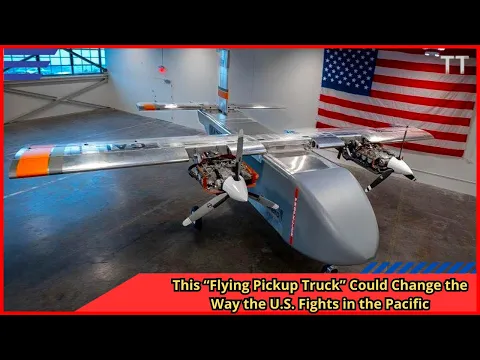

The Lifter-Lite emerges to tackle the problem of “tyranny of distances” in the Pacific, where islands and limited infrastructure demand robust and economical solutions. Grid Aero defines the project as the “pickup of the sky”, a concept focused on what matters: carrying critical cargo with low cost per pound-mile.
The platform prioritizes simple and robust architecture. The idea is to reduce failure points, facilitate maintenance in locations with scarce resources, and maintain the mission even in the face of partial failures, through redundancies and a proven powertrain. For the operator, this means availability and more predictable turnaround time.
At the heart of the concept is AI-supported autonomy for route planning, obstacle avoidance, and supervision of a distributed fleet with “human on the loop.” In contested airspace scenarios, removing the human from onboard reduces risk and enables scaled employment.
Capacity and Range: 1,000 to 8,000 Pounds for Up to 2,000 Miles
According to company executives, the target envelope is to carry between 1,000 and 8,000 pounds for up to 2,000 miles. In approximate measures, we are talking about 450 to 3,600 kg for about 3,200 km. As a reference, Guam to Japan is around 1,500 miles, fitting within the described ambition. Heavy cargo, long distance, and low cost are the triad the company aims to prove.
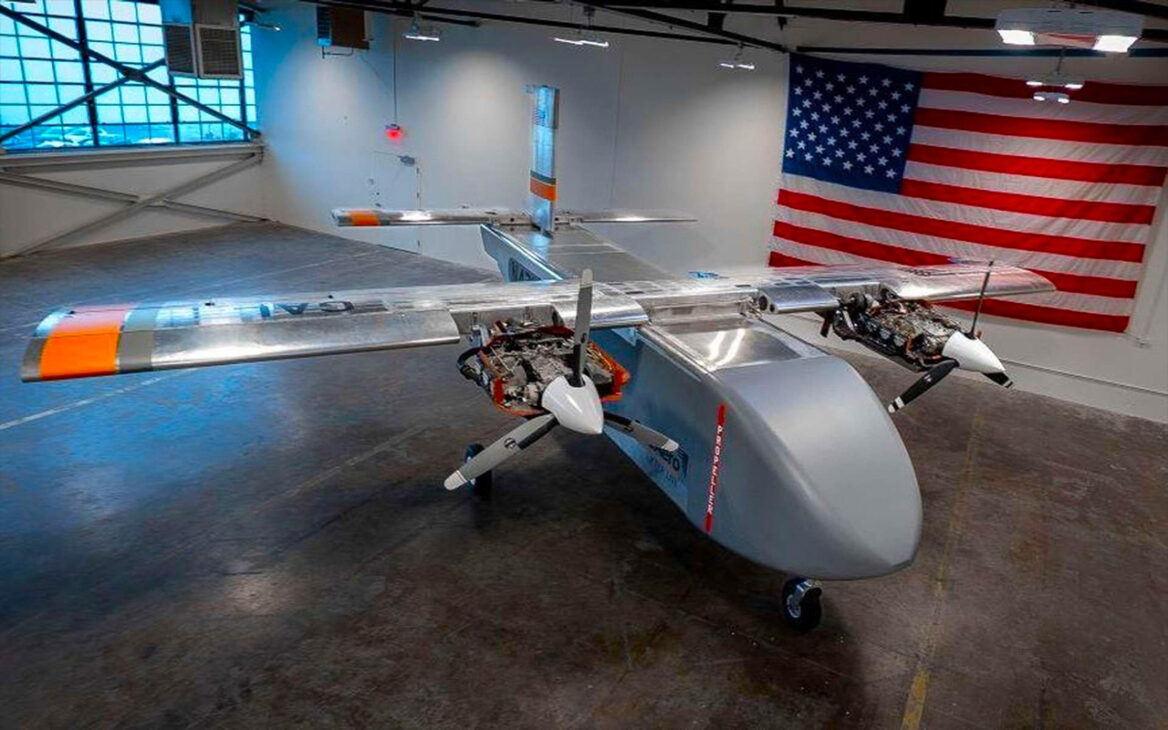
The wide range of payload suggests mission modularity. The same airframe could carry anything from general supplies to sensitive equipment, adapting the center of gravity and pallets as needed. The range projects logistical communication lines that bypass maritime chokepoints and the scarcity of prepared runways.
Grid Aero compares the proposal to fragmenting cargo across many smaller aircraft. In a distributed chain, losing a vector does not disrupt the operation, which is valuable when the adversary attempts to deny access through anti-aircraft missiles and asymmetric threats.
How the Lifter-Lite Fits into ACE Doctrine and Contested Logistics
The Agile Combat Employment (ACE) is the doctrine that encourages dispersing aircraft and teams across remote airstrips, reducing exposure to attacks against large hubs. The Lifter-Lite fits as a resilient “loader” to keep resupply flows running between forward points.
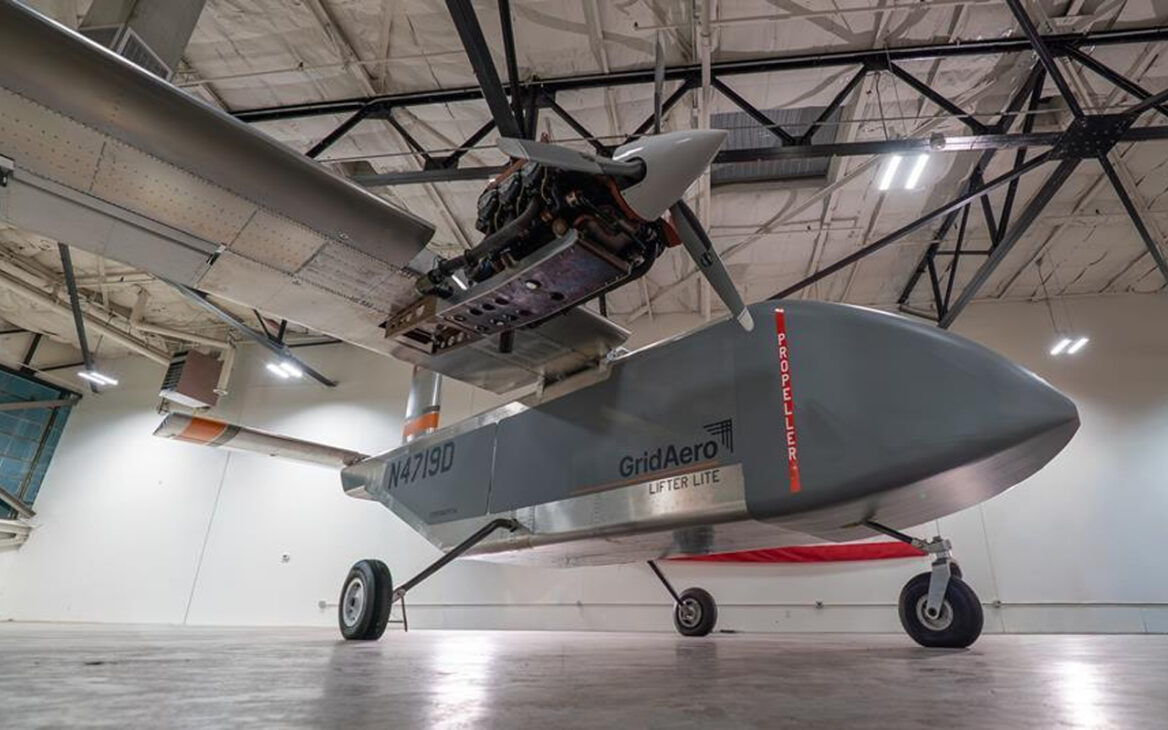
With autonomy, structural robustness, and operation on uneven runways, the drone seeks to sustain bases that would otherwise rely on expensive and scarce manned aircraft. The philosophy is to massify more accessible means, creating redundancy and flexibility.
Experts note that the size of the Pacific and the scarcity of infrastructure complicate daily sustenance of fuel, parts, and munitions. By reducing the cost of each logistical “leg,” Grid Aero aims to lower the cost of the last aerial mile in a contested environment.
Money, Contract, and Team: US$ 6 Million, AFWERX, and Veterans from Joby, Xwing, and Northrop
The company raised US$ 6 million in seed from Calibrate Ventures and Ubiquity Ventures and signed a Direct-to-Phase II SBIR contract with AFWERX, the innovation arm of the U.S. Air Force. The focus of the current contract is on the ground system and fleet operation, that is, the tools that ground teams will use to command, refuel, and reload multiple aircraft.
This arrangement provides a validation path with the military customer even in the early phase, shortening the path between prototype and operational use. Unlike projects that depend solely on private capital, the presence of a government customer early on increases the chances of real-world testing.
The team brings experience in eVTOLs, autonomy, and military programs, with backgrounds from Joby Aviation, Xwing, and Northrop Grumman. For investors, this weighs as human capital capable of accelerating engineering, certification, and integration.
Testing in September 2025, Upcoming Flights, and Operational Goal in 2027
The prototype was designed and assembled in about six months and is scheduled for ground testing in the second half of September 2025, according to recent interviews. The next step is to begin flight trials when the team deems the technical maturity suitable.
The company states that the priority is to deliver a useful capability into the hands of the military in the Pacific theater by 2027, subject to evolving requirements and validations. It is an ambitious timeline, but consistent with AFWERX support and the urgency of the subject for U.S. defense planning.
Industry sources also highlight that the 2027 goal aligns with broader trends in logistical drones and distributed operations, which are now the focus of various initiatives in defense. This may open doors for partnerships and integrations with other programs.






-

Uma pessoa reagiu a isso.