





 Portuguese
  English
  Spanish
  3 min of reading
  0 comments


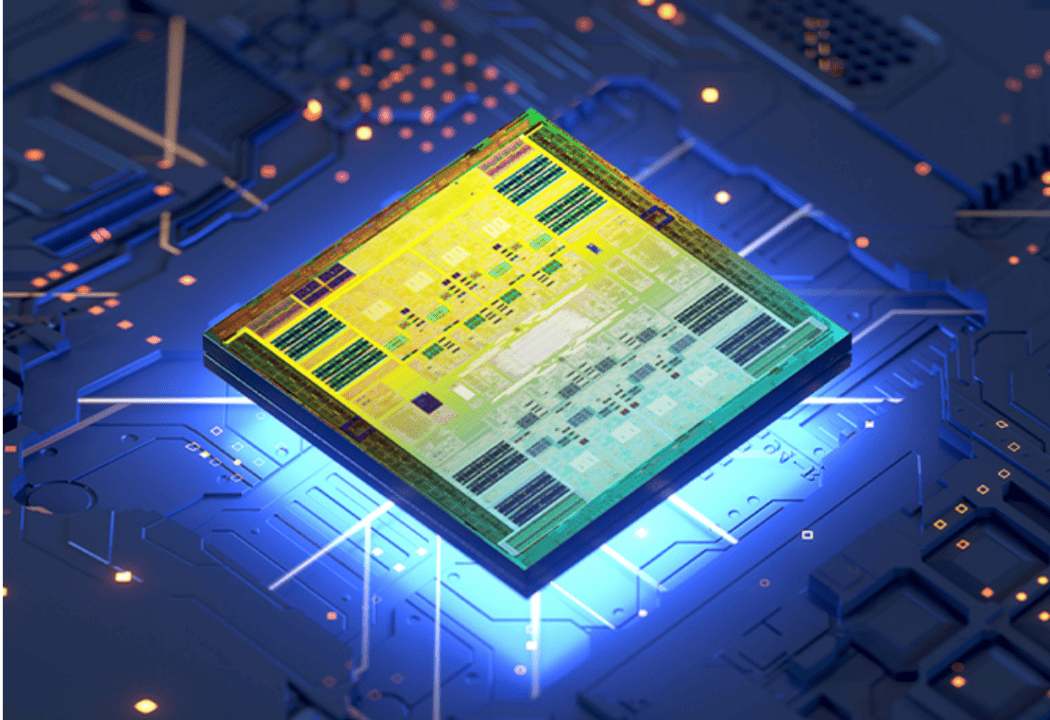
Launch Places Taiwan at the Forefront of Global Technology and Marks a New Milestone in the Semiconductor Industry
The Taiwanese manufacturer TSMC revealed, on April 1, 2025, the world’s most advanced chip: the 2-nanometer (nm) microchip.
Mass production is scheduled for the second half of this year, and the innovation could redefine performance and energy efficiency standards in the global industry.
A Leap in Chip Performance
The 2 nm microchip marks a significant advancement over previous models. These chips promise up to 15% more speed with the same energy consumption or up to 30% energy savings while maintaining current performance.
-
Something is happening around the Earth: Inside the huge explosion of fireballs in 2026

-
A hot air bubble coming from Argentina expands over Brazil, causing thermometers to exceed 38 degrees with a thermal sensation of 40 degrees in late March, affecting 6 states at once.

-
The radish leaf that almost everyone throws away has more polyphenols, flavonoids, and fiber than the consumed root, and a 2025 study showed that the leaf contains compounds that protect the intestine, combat inflammation, and may inhibit the growth of cancer cells.

-
A planet that seemed to defy the laws of physics has intrigued scientists for decades, until the James Webb revealed what is really affecting Saturn’s rotation.


In addition, they have about 15% more transistor density than 3 nm chips.
These transistors, tiny components that act as switches controlling the flow of electricity, are the basis for the operation of any modern electronic device.
The more transistors in a chip, the greater its processing capacity.
The goal of the semiconductor industry has been precisely that: to fit more transistors into increasingly smaller spaces, creating faster, more powerful, and efficient chips.
Impact on Everyday Devices
The 2 nm technology is expected to benefit a wide range of equipment. Smartphones, tablets, and laptops are expected to gain more performance and longer battery life. These gains could result in lighter and smaller devices without a loss of power.
The chips also have the potential to enhance artificial intelligence applications, such as voice assistants, automatic translators, and autonomous systems.
Data centers, in turn, may reduce energy consumption and expand processing capacity, contributing to sustainability goals.
In addition, sectors such as robotics and autonomous vehicles may benefit from the increased reliability and speed of these chips, allowing for the advancement of complex technologies more safely.
Global Manufacturer, Strategic Influence
Founded in 1987, TSMC (Taiwan Semiconductor Manufacturing Company) dominates the contract chip manufacturing sector, accounting for 60% of the world’s outsourced semiconductor production. Most of this volume comes exclusively from the company.
It is responsible for producing Apple’s A-series processors, used in iPhones, iPads, and Macs. It also manufactures GPUs for NVIDIA, AMD’s Ryzen and EPYC processors, and Qualcomm’s Snapdragon chips, found in brands like Samsung, Xiaomi, OnePlus, and Google.
The advancement in chip miniaturization began in 2020 with the 5 nm technology. In 2022, TSMC launched the 3 nm chips, used, for example, in Apple’s latest processors. Now, the 2 nm chips represent the new pinnacle of innovation.
Complexity and Challenges
Despite being promising, 2 nm chips bring new technical obstacles. Manufacturing relies on a process called extreme ultraviolet lithography (EUV), which requires high precision and is extremely costly. This raises production costs and limits large-scale manufacturing capacity.
Another issue is heat dissipation. Even with more efficient chips, the high transistor density increases the risk of overheating. This can affect performance and device lifespan.
Moreover, traditional materials like silicon may struggle to meet performance requirements at such small scales, which could necessitate the adoption of new materials in the future.
Security and Geopolitics
TSMC has signed a US$ 100 billion agreement to build five factories in the United States. Nevertheless, it is still unclear whether the production of the 2 nm chips can occur outside of Taiwan.
The chip industry is considered strategic for Taiwan’s security, being nicknamed the “silicon shield.” TSMC’s economic relevance helps attract international support amid regional tensions.
A Milestone in the History of Semiconductors
The launch of 2 nm chips by TSMC represents a significant milestone in the evolution of modern technology.
With greater processing power, lower energy consumption, and the potential to transform areas such as AI, mobility, and sustainability, these chips point to a new era in computing.
Even with technical challenges, the advancement is already impacting global companies and paving the way for the next generation of more powerful and efficient devices.







Seja o primeiro a reagir!