





 Portuguese
  English
  Spanish
  3 min of reading


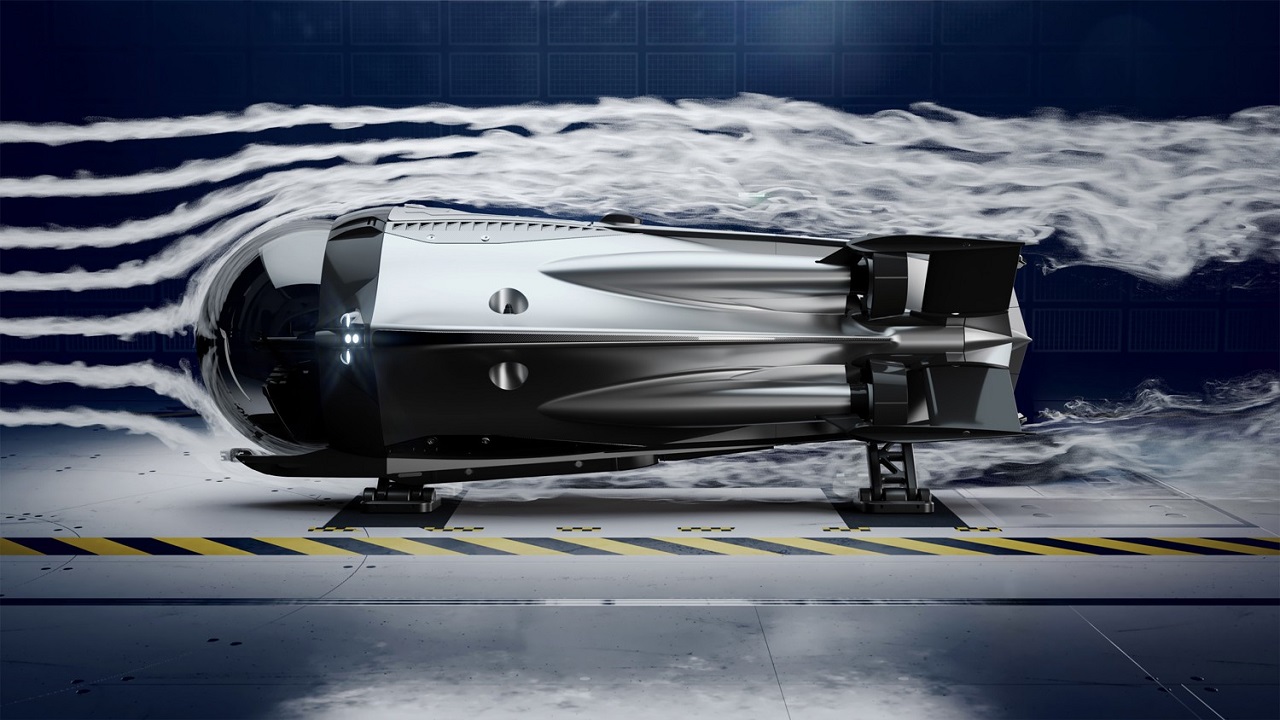
U-Boat Worx Developed An Electric Super Submarine Capable Of Being Up To 3 Times Faster Than A Common Model.
A Dutch company specialized in submarines developed in the last year a Super Submarine, its first fully customizable model. Now, U-Boat Worx’s electric submarine has received new upgrades. According to the company, its electric-propelled submersible is the fastest ever developed in the world, capable of reaching up to 10 knots, equivalent to about 35 km/h underwater.
Although it may seem little, it is already three times faster than an average submarine, which hardly reaches 4 knots, the equivalent to just over 7 km/h.
Electric Super Submarine Can Reach Up To 300 Meters Deep


The model even surpasses the maximum speed of a bottlenose dolphin, according to U-Boat. This was only possible due to an optimization in the vehicle’s flow dynamics with the help of the Dutch maritime research institute, MARIN.
-
Made with recycled plastic, a Lego-inspired brick builds a 180 m² house in 15 days, providing thermal comfort, preventing moisture, and turning waste into income, kits, and accelerated construction in the country.

-
A robot with a silicone face and 26 facial motors learns to move its lips accurately by observing its own reflection like a child, then analyzes hours of videos on YouTube to reproduce how humans speak and sing, now articulating words in several languages, has already recorded a music album generated by AI, and is beginning to cross the uncanny valley that causes people to reject almost human robots.

-
Iron foundry in Senegal reveals a pile of 100 tons of slag, 35 furnace bases, and a rare technique that has remained stable for centuries.

-
The only man-made structure in the world that can be clearly seen from space is not the pyramids of Egypt nor the Great Wall of China.

According to the CEO of U-Boat Worx, Bert Houtman, it is something the company has worked hard on to achieve the submarine with the highest possible dynamic flow. Therefore, the company couldn’t be more satisfied.
Besides being fast, the submarine is luxurious, featuring 360-degree visibility through the acrylic bubble that covers the entire cabin and offers seating for three people (two passengers and the pilot). Its maximum diving depth is 300 meters.
The manufacturer compares the interior of the electric submarine to that of a supercar. The model is powered by 4 electric motors that provide it with 80 horsepower. The company has not yet disclosed the price; however, it is expected to exceed several million dollars. The first sea tests are scheduled for next year, while deliveries are expected to begin by the end of the same year.
Hydrogen Propulsion Arrives In The Submarine Market
In addition to the electric submarine, the British Transport Secretary announced 55 winning projects from an Eco Marine Research and Development competition. Among the projects was the world’s first sustainable submarine.
The submarine is named Esmeralda 01 and is entirely powered by green hydrogen and batteries. The model could help clean the oceans by collecting microplastics during cargo transportation.
The hydrogen-powered model features a three-phase microplastics filtration system. The company behind the model, called Oceanways, is preparing the project for its pilot route between Belfast, Northern Ireland, and Glasgow, Scotland.
According to sources, a fleet of these hydrogen models could guarantee a saving of up to 27 tons of CO2 emissions during cargo transport in its inaugural year, with a goal of reducing 300 million tons of CO2 as the fleet expands.
In Brazil, Navy Aims To Develop Submarine Using Nuclear Sources
In the interior of the state of São Paulo, the Brazilian Navy is about to test the first submarine powered by nuclear technology, which was entirely manufactured in Brazilian territory, as part of the renewal project for the Brazilian submarine fleet. The model’s engine uses technology already mastered in six countries.
The propulsor is being developed at full scale so that it is possible to simulate the reactor’s operation and make the necessary modifications before engineers finally build it.
The technology was installed in the last of the five underwater vehicles being built in Rio de Janeiro. The first nuclear-powered engine is expected to begin operations in a submarine later this year, with deliveries projected by 2034.






Seja o primeiro a reagir!