





 Portuguese
  English
  Spanish
  4 min of reading
  1 comment


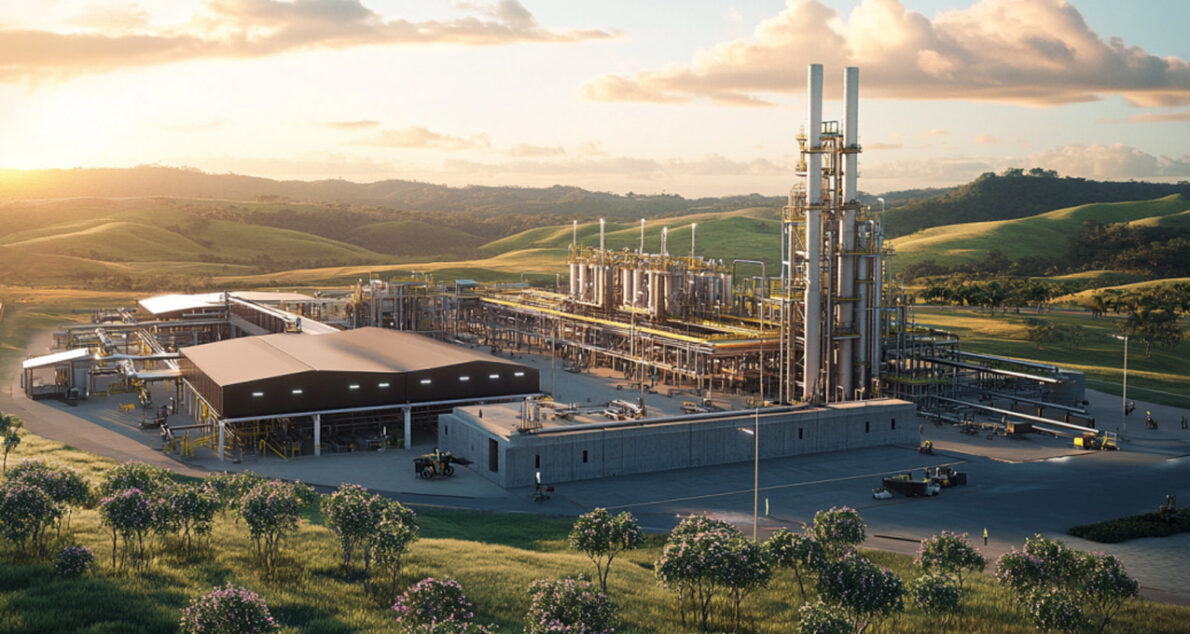

Did You Know That a Middle Eastern Giant Is Ready to Transform the Energy Landscape in Brazil? Yes, Acelen, a Company Linked to the Mubadala Capital Fund from the United Arab Emirates, Is About to Start a Massive Investment in Bahia, and the Numbers Are Impressive.
A Acelen, created by the investment fund Mubadala Capital, is about to kick off one of the largest investments in the renewable energy sector in Brazil.
The company announced that by December of this year, it will begin investing in its first biorefinery in the country, a grand project valued at US$ 3 billion, or approximately R$ 16.5 billion.
Located in Mataripe, in Bahia, the new biorefinery will be close to the refinery that Acelen acquired from Petrobras over two years ago.
-
Brazilian city bets on the business environment to generate jobs and attract investments in the energy sector — secretary reveals strategy at Macaé Energy 2026.

-
50 viaducts, 4 tunnels, 28 bridges, and 40 kilometers of bike paths: BR-262 in Espírito Santo will receive 8.6 billion reais for the largest engineering project in the state’s history, inspired by the Immigrant Highway in São Paulo.

-
Brazil produces too much clean energy and doesn’t know what to do with it: over 20% of solar and wind capacity was wasted in 2025 while investors flee and 509 renewable generation projects were abandoned in the last year.

-
Piauí will produce a new fuel that replaces diesel without needing to change anything in the truck’s engine and reduces pollutant gas emissions by half: truck drivers from all over the Northeast are already celebrating the news that will arrive later this decade.


According to industry sources, the biorefining complex will feature a technology center called Acelen Agripark.
The company is in the final stages of negotiations with Banco Nacional de Desenvolvimento Econômico e Social (BNDES) for a loan of R$ 250 million, which has already been approved and is expected to be released in the coming weeks.
The goal is to ensure that the project is fully operational by 2027, with an initial production of 1 billion liters of biofuel per year.
The Biorefinery: Technology and Sustainability
The Acelen biorefinery will produce biofuels primarily using macaúba, a native plant of Brazil. The vegetable oil extracted from this plant will be mixed with diesel to create green diesel, and it will also be used in the production of sustainable aviation fuel (SAF).
To ensure a continuous supply of raw material, Acelen plans to acquire 180 thousand hectares of degraded land between Minas Gerais and Bahia, divided into five equal lots.
The production of macaúba, which takes about four years to yield its first harvests, will gradually be increased to meet the demand of the biorefinery.
In the early years of operation, while macaúba is still developing, Acelen will use soybean oil and animal fat to initiate the biofuel production process.
Additionally, the company is already in talks with aircraft manufacturers and airlines to ensure that the SAF produced meets the needs of the aviation sector.
This is especially relevant, considering that the Brazilian Congress is discussing the National Sustainable Aviation Fuel Program, which will require airlines to reduce emissions by 1% per year starting in 2027.
Petrobras’ Interest and the Future of the Project
The new project by Acelen emerges at a time of significant movements in the Brazilian energy sector.
Mubadala Capital is in talks with Petrobras to resell the majority of the shares in the Mataripe Refinery, which currently accounts for about 14% of Brazil’s fuel production capacity.
However, the due diligence process conducted by Petrobras, which involved over 8,000 inquiries, has delayed negotiations. The new president of Petrobras, Magda Chambriard, recently stated that repurchasing the refinery is not a priority, although she indicated that the company would accept a donation.
Despite this uncertain scenario, Acelen’s shareholders remain committed to investment plans in energy transition, regardless of Petrobras’ involvement.
The strategy of Mubadala Capital, according to close sources, is to use the Acelen project as a test to evaluate the feasibility of building four other biorefineries in Brazil.
The focus would be on exporting the biofuels produced in these units, which could position Brazil as a global leader in renewable energy production.
Regulatory Challenges and the Dispute with Petrobras
As Acelen moves forward with its plans, Petrobras has been facing regulatory and competitive challenges. Acelen has filed a lawsuit with the Administrative Council for Economic Defense (Cade), questioning the oil sale prices charged by Petrobras, arguing that these prices do not allow for the purchase of oil at competitive rates.
Additionally, the sector association, Refina Brasil, recently criticized letters sent by the Ministry of Mines and Energy to Cade and the National Agency of Petroleum (ANP), alleging anti-competitive practices by private refineries.
These disputes highlight the complexity of the fuel market in Brazil and the difficulties faced by new entrants, like Acelen, who must contend with industry giants and the regulations imposed by regulatory agencies.
Investments in Renewable Energy and the Creation of a Solar Park
While awaiting a decision on whether to sell the Mataripe Refinery, Acelen is not idle. The company announced an investment of R$ 500 million in the construction of a solar park that will supply the refinery with clean energy.
The expectation is that the park will be fully operational by 2026, contributing to the reduction of carbon emissions and the overall sustainability of the project.
Since the acquisition of the refinery in Bahia, the Arab fund has already invested about R$ 2 billion in improvements and modernization, reflecting a long-term commitment to the development of the country’s energy infrastructure.
A New Era for Energy in Brazil?
With a billion-dollar investment, cutting-edge technology, and a focus on sustainability, Acelen promises to transform the renewable energy sector in Brazil.
However, regulatory issues and ongoing negotiations with Petrobras still bring uncertainties for the future of the project.
Is Brazil ready to lead a new era of biofuel and renewable energy production? And how will the entry of international players like Acelen impact the national market? Leave your opinion in the comments!








Se for para o desenvolvimento do país, que sejam bem vindos, desde que não afete a nossa soberania, todo investimento é sempre bem vindo!