





 Portuguese
  English
  Spanish
  3 min of reading
  0 comments


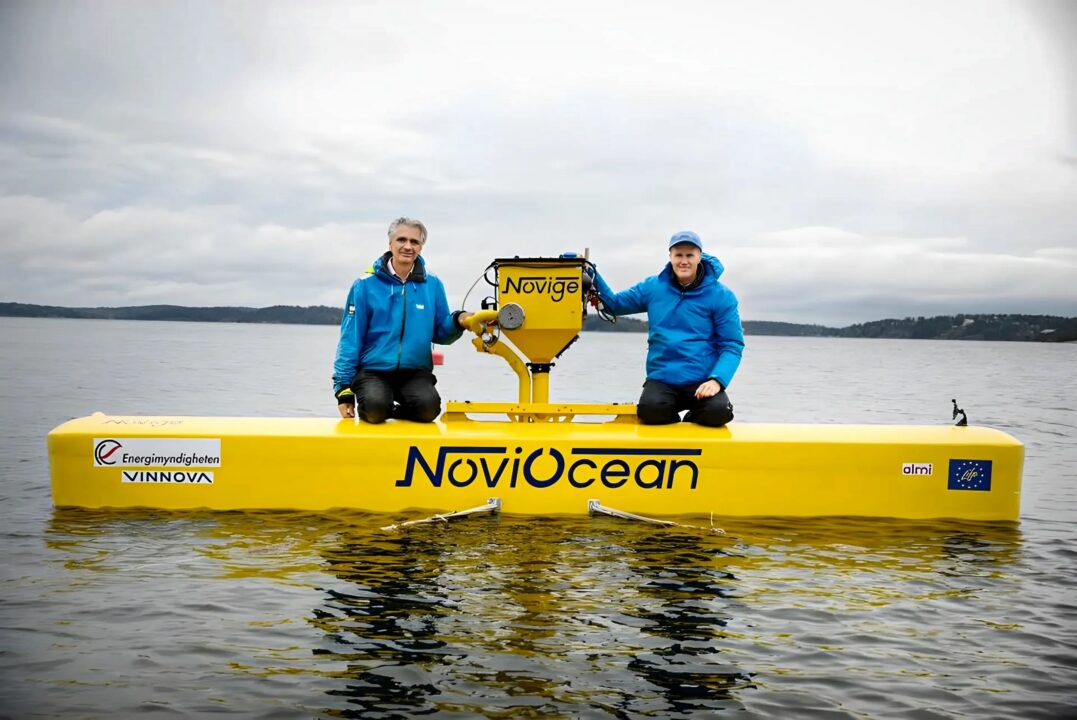
Swedish Company Develops Innovative Floating Platform That Combines Solar, Wind, and Wave Energy Into A Single System, Guaranteeing Continuous Clean Energy Generation 24 Hours A Day.
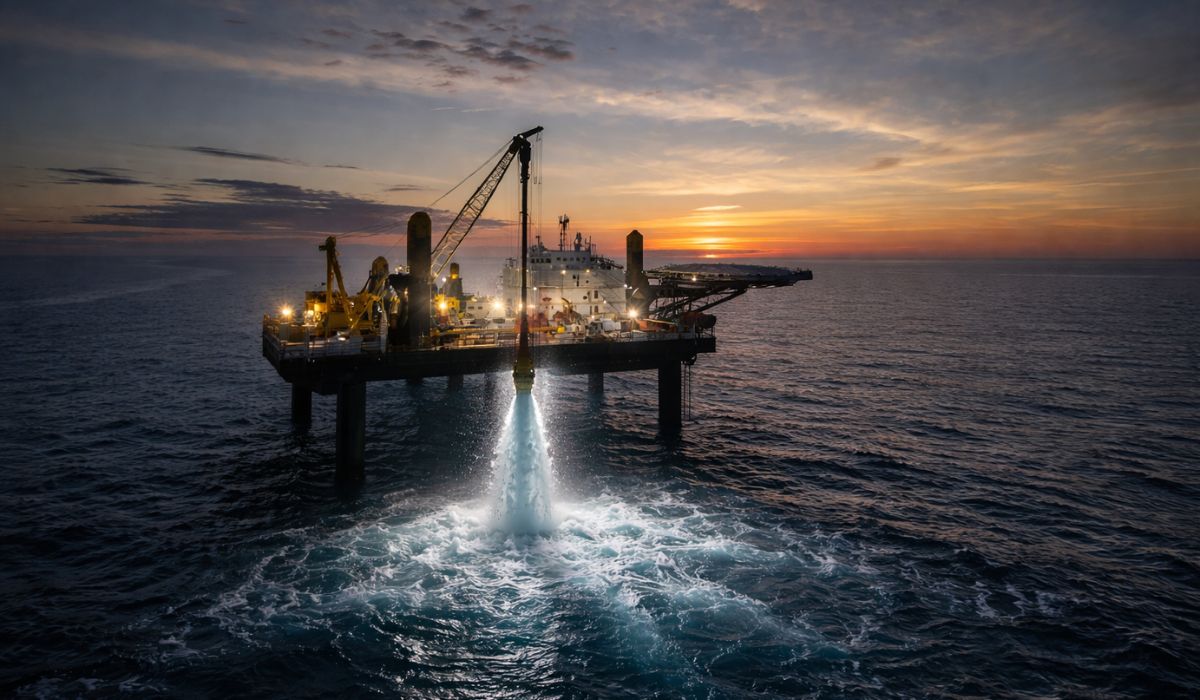
The Swedish company NoviOcean is working on a new floating platform that combines solar, wind, and wave energy into a single system, generating clean energy 24 hours a day. Powered by an innovative floating mechanism, the project has already undergone testing with prototypes and is about to advance to a pilot phase at full scale.
How Does The Floating Platform That Generates Clean Energy 24 Hours A Day Work?
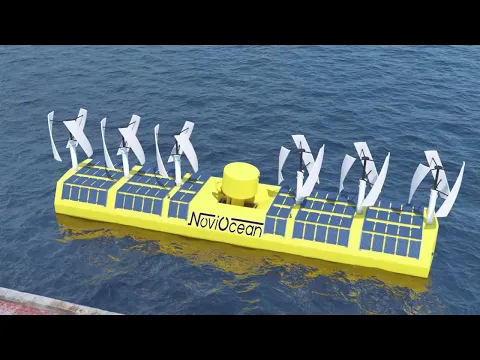

Measuring 38×9 meters, the floating platform with solar, wind, and wave energy in a single system will be relatively small compared to large offshore wind turbines, such as the 20 MW MingYang, the largest in the world.
However, the system is designed to generate up to 1 MW of clean energy 24 hours a day, using three generation sources: solar, wind, and wave.
-
Renewable energy advances over protected areas in Brazil, and a survey by the Energy Transition Observatory reveals silent impacts that challenge environmental conservation and pressure sensitive traditional territories.

-
Rio Grande do Sul accelerates energy transition: State invests in renewable technologies and consolidates decarbonization strategies and pathways to attract billions in new industrial investments.

-
With 160,000 m² of collectors, an area larger than 20 football fields, Silkeborg, in Denmark, hosts a solar thermal plant that heats 19,500 homes and could become the largest solar heating plant in the world.

-
A study reveals the expansion of renewable energy procurement in Brazil and shows how companies are taking advantage of opportunities to reduce expenses, ensure energy efficiency, and strengthen strategic environmental commitments.


The floating platform utilizes 700 m² of solar panels that generate up to 50 kW when there is sunlight. On windy days, a set of six vertical axis wind turbines (VAWT) comes into play. These turbines have significant advantages, such as the fact that the generator is positioned at the base, making the platform more stable without the need for heavy support structures. Additionally, they can capture wind from any direction.
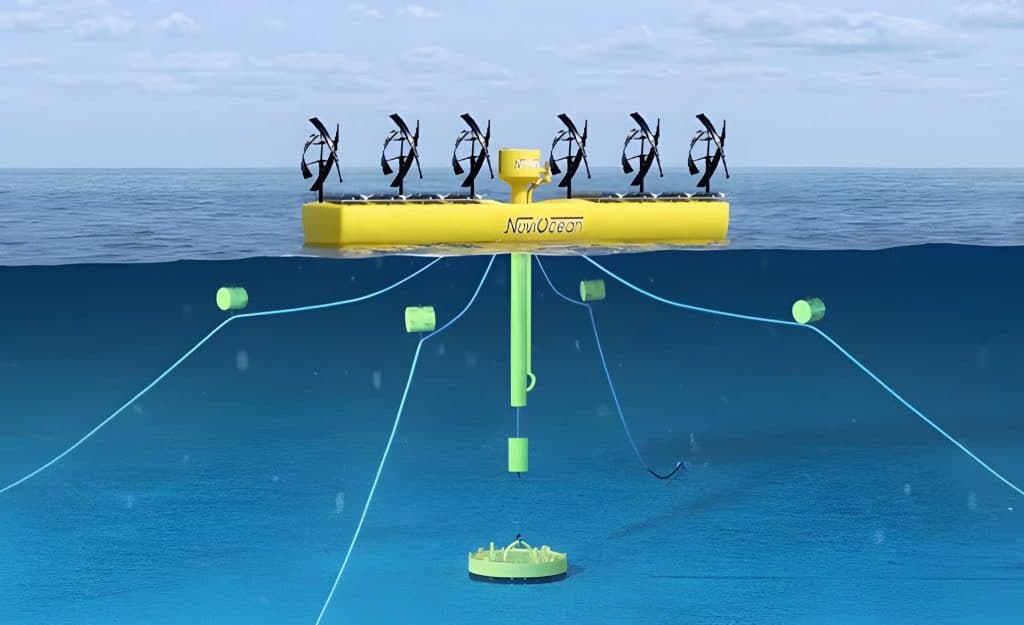
The third source of clean energy generation 24 hours a day is the force of the waves. The platform utilizes a piston system that creates a lifting force of up to 600 tons, directing water to a generating turbine, which can produce up to 650 kW of instantaneous clean energy.
Challenges Faced By The Company
According to the company, a single full-scale floating platform with solar, wind, and wave energy in a single system could operate at a capacity factor of 40-70%, generating an average of 3.5 GWh per year. This would be sufficient to supply about 324 homes per month. Furthermore, the maintenance and installation of the system will be simpler compared to conventional wind turbines.
Three prototypes of smaller-scale floating platforms have already been successfully tested, and the company plans to develop the first full-scale pilot between 2026 and 2027.
The aim is to reach a pre-commercial phase by 2030, with the sale of the 24-hour clean energy generation platform expected in 2031 and 2032.
The biggest obstacle to the viability of the floating platform project with solar, wind, and wave energy in a single system will be the levelized cost of energy (LCoE), which is initially estimated at US$ 275/MWh. However, the company expects that, with production at scale, this value could be reduced to around US$ 110/MWh.
Objective of NoviOcean
Despite these challenges to generate clean energy 24 hours a day, NoviOcean sees a great opportunity to contribute to the diversification of renewable energy sources, especially in a scenario of growing electricity demand due to the electrification of transportation and the expansion of sectors such as cryptocurrency mining and artificial intelligence (AI).
The company emphasizes that its goal is to provide stable ocean energy at a more economical rate than offshore wind energy, contributing to a sustainable and resilient future. It also aims to produce 4 GW by 2030 with 14 million euros contracted. Between now and 2050, the company will transition from 20% electrification across the economy to 70%.





Seja o primeiro a reagir!