





 Portuguese
  English
  Spanish
  5 min of reading
  0 comments


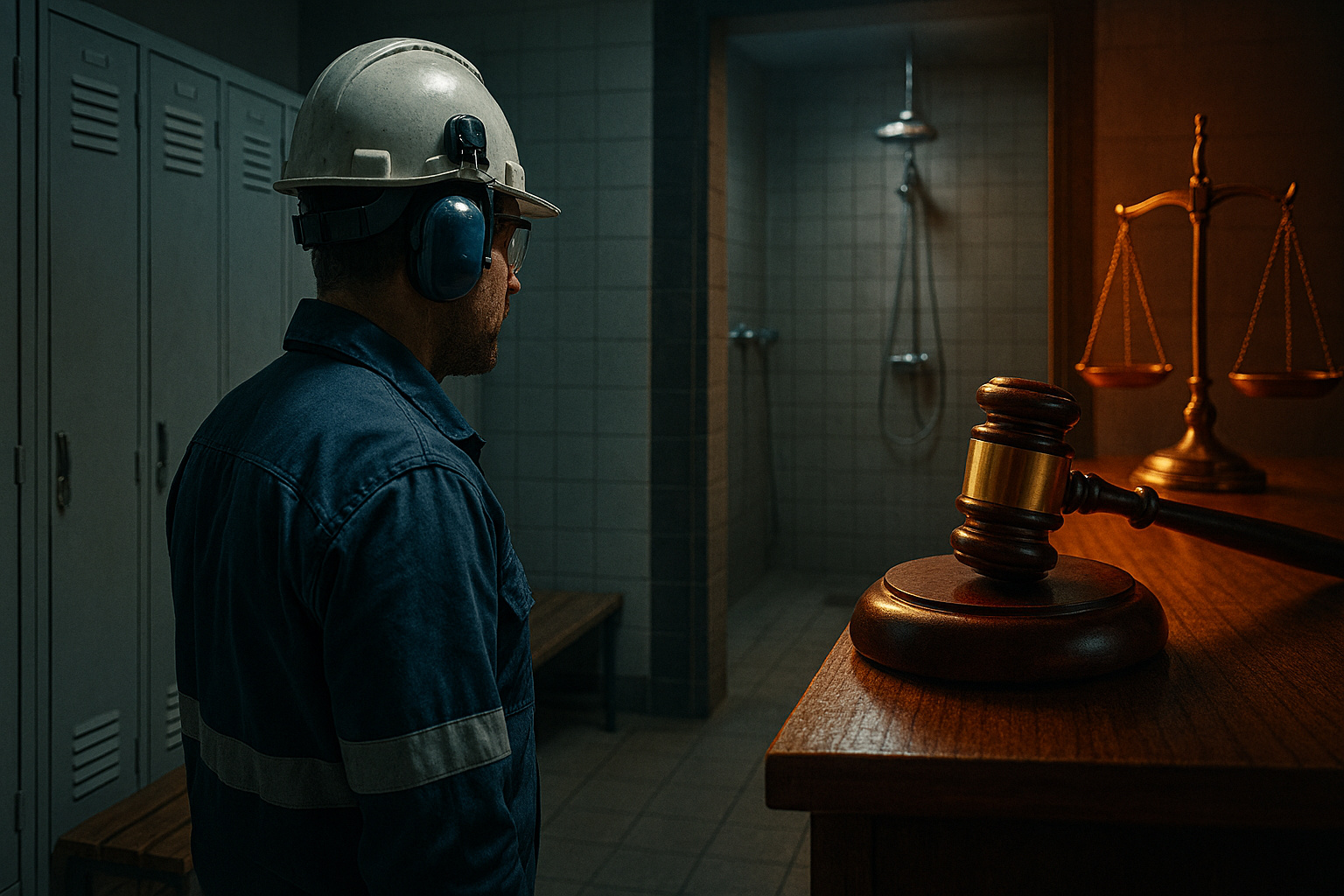
CLT and Summary 366 of the TST Ensure Overtime for Time Spent Changing Uniforms and Showering within the Company; Industries Accumulate Million-Dollar Liabilities.
Few workers know, but the time spent daily to change uniforms, wear PPE, and shower within the company’s facilities is not neutral from a legal standpoint. In the food, chemical, steel, metallurgy, meat processing, paper and pulp, mining, and heavy construction industries, this period is increasingly recognized by the Labor Court as time available to the employer, giving rise to the right to payment for overtime. This understanding is anchored in Article 4 of the CLT and consolidated by Summary 366 of the Superior Labor Court (TST).
The discussion gained strength because, in many industrial sectors, changing uniforms and showering are not optional. They are employer requirements, a condition for access to productive areas, and part of safety, hygiene, and sanitary control protocols. When this occurs within the company and before or after the work shift, the legal clock begins to count.
What the CLT Says about Time Available to the Employer
Article 4 of the CLT defines as time available to the employer all periods in which the worker is waiting for or executing orders, even if not producing directly. The modern interpretation of this provision is clear: if the company imposes rules, controls procedures, and requires the employee’s presence, that time is considered part of the working hours.
-
Government enacts new law: paternity leave increases from 5 to 20 days with gradual increases until 2029, and Social Security pays the paternity salary; companies no longer bear the absence cost, estimated at R$ 5.4 billion.

-
End of the 1-hour lunch break in the CLT? Current labor law maintains the break, allows for negotiated reductions, and defines rules for working hours and home office in Brazil.

-
Employee Fired After Accumulating 114 Days of Medical Leave in One Year, Labor Court Upholds Company’s Decision

-
Employee Fired While Treating Depression Wins in Court and Vale Is Required to Rehire Him Following Decision Based on the CLT and INSS Benefits


In practice, this means that changing uniforms and showering cease to be seen as personal acts when they are determined by the company, carried out in a specific location, and essential for the performance of the function. It does not matter if the worker “arrives earlier on their own” — if the routine is mandatory, it is part of the work hours.
Summary 366 of the TST and the Limit of Residual Time
Summary 366 of the TST reinforces this understanding by addressing the so-called “residual time.” It establishes that small variations in hours, up to five minutes before and after the work shift, do not generate additional payment. However, exceeding this limit, all time must be compensated as overtime.
This is where many industries become vulnerable. In meat processing plants, for example, the process of changing uniforms, cleaning, and showering can easily exceed 15, 20, or even 30 minutes per day. Added up over the month and the contract, this time becomes significant overtime, with implications for vacations, thirteenth salary, FGTS, and notice periods.
When Changing Uniforms Generates Overtime
The Labor Court has been straightforward in analyzing cases. Payment for overtime is due when certain recurring elements are present: the uniform is mandatory; the change must occur within the company; there is access control to productive areas; and the procedure is essential for starting or ending work.
It is not necessary for the company to record the time during the uniform change. It is enough to demonstrate that the employee did not have the freedom to arrive already uniformed from home or to leave without fulfilling the imposed ritual. Witnesses, internal regulations, service orders, and operational routines are usually sufficient for proof.
Showering within the Company Also Counts as Working Hours
Another sensitive point is the mandatory shower. In unhealthy activities, with contact with waste, chemicals, blood, grease, dust, or biological agents, showering at the end of the shift is not a personal choice but a safety and occupational health measure.
In these cases, the Justice understands that the shower primarily serves the company’s interest, including to prevent contamination, sanitary liabilities, and risks to public health. Therefore, when the shower is imposed and takes place on the company’s premises, the time spent is also considered time available, generating overtime.
Consolidated Jurisprudence Against the Corporate Thesis
Companies often attempt to avoid liability by claiming that the time spent changing is “minimal” or that the employee could organize better. This thesis has been consistently rejected by Regional Labor Courts and the TST.
The prevailing jurisprudence states that internal regulations cannot override rights provided in the CLT, and that the obligation of the procedure is enough to characterize the time as part of the working hours. Even agreements or collective conventions have limits when they attempt to suppress rights related to health and the dignity of the worker.
Financial Impact on Industries
The economic impact of this understanding is significant. In industrial plants with hundreds or thousands of employees, the daily sum of unpaid minutes can generate million-dollar labor liabilities. Internal audits and inspections have increasingly identified this risk, especially in high turnover sectors.
In addition to overtime, judgments often include legal repercussions and, in some cases, compensation for collective moral damages, when it is demonstrated that the practice was widespread and repeated.
What the Worker Can Do to Ensure Their Rights
A worker who faces this routine can seek protection even after the end of the contract. The Justice accepts witness evidence, internal records, schedules, and even the description of the company’s standard operating procedure. Formal timekeeping during the uniform change is not necessary for the right to exist.
The statute of limitations follows the general labor rule: it is possible to claim the last five years, respecting the two-year limit after the end of the contract.
The strengthening of this understanding accompanies a broader change in the Labor Justice system, which has begun to pay more attention to the actual time dedicated by the worker, and not just the formal record of the working hours. In increasingly regulated industrial environments, changing uniforms and showering have become natural extensions of work.
By recognizing this time as part of the work hours, the Judiciary sends a clear message: productivity cannot be achieved at the cost of uncompensated time.
Today, in the Brazilian industry, the time spent putting on the uniform, donning PPE, and showering within the company is not an operational detail. It is labor rights. And ignoring it can be costly.
And you, reader: in your company, is this time treated as part of the working hours or does it remain invisible on the paycheck?










Seja o primeiro a reagir!