Portuguese
  Spanish


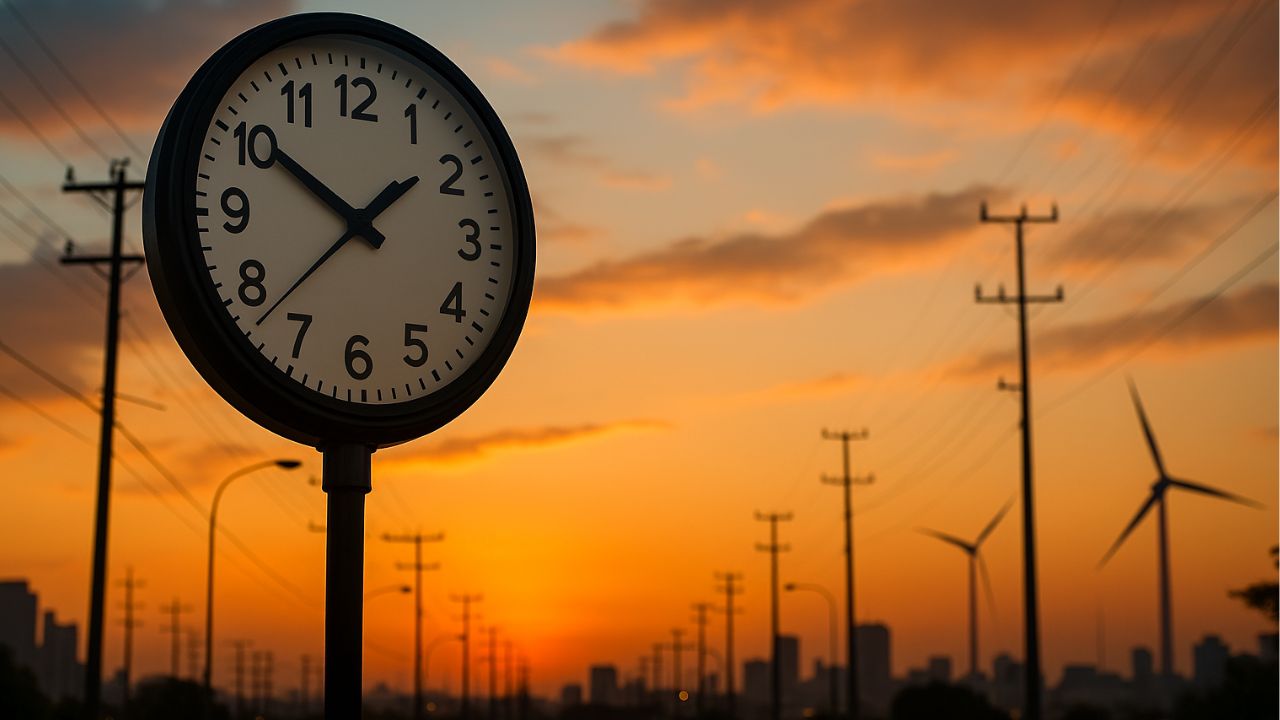


Daylight Saving Time Should Not Return to Brazil: Studies and ONS Show That There Is No Energy Savings and the Country Already Produces Clean Energy in Abundance.
Every year, as the end of spring approaches, the debate returns: should daylight saving time be resumed in Brazil? According to the Minister of Mines and Energy, Alexandre Silveira, the answer is clear — and definitive.
In a recent interview on the program Good Morning, Minister, he stated that “there is no need to adopt daylight saving time in 2025”, emphasizing that the country is experiencing a moment of “complete and absolute energy security”.
The reason is simple: consumption habits have changed, the national electricity matrix has evolved, and the energy savings provided by changing the clocks has become insignificant.
-
Brazilian Recycling Company Overcomes $200,000 Debt to Process 360 Tons of Plastic Monthly and Produce 27,000 Items Daily

-
The More You Love Someone, the Sleepier You Feel Around Them: Science Explains Why the Body Relaxes and Feels Safe with a Loved One

-
Kenyan Company Recycles Over 10 Million Flip-Flops from Indian Ocean Beaches into Elephant and Giraffe Sculptures Sold for Up to $1,200
-
Kenyan Brothers Recycle Old Newspapers Into 100,000 Pencils Daily, Aiming to Donate to 1 Million Children in Underprivileged Schools




The Myth of Energy Savings Has Collapsed
For decades, daylight saving time was defended as an efficient strategy to reduce energy consumption in the early evening. The logic was that by advancing the clock by one hour, people would make better use of natural light and rely less on artificial lighting.
However, recent studies from the National Electric System Operator (ONS) show that this reasoning no longer holds.
A survey by the institution, conducted in 2024, indicated that the financial impact would be minimal — savings of up to R$ 400 million over the entire duration, which represents about R$ 4 per household.
Moreover, the reduction in the use of lamps is offset by the increase in air conditioning consumption during warmer mornings, when the sun rises later. In other words, the measure merely shifts consumption without reducing the total.
Brazil Now Produces Energy in Abundance
The Brazilian energy landscape is now completely different from that which justified daylight saving time. The country is a powerhouse in renewable energy, with more than 90% of generation coming from clean sources, such as hydropower, wind, and solar.
In several regions, production is so high that the system needs, at times, to temporarily interrupt the operation of turbines and solar parks to prevent overload.
Silveira reinforced this paradigm shift by stating that the current challenge is not generating energy, but storing it efficiently.
“We will literally store wind,” the minister said, referring to new auctions for storage batteries that will allow storing wind and solar energy for nighttime use.
Social Costs Outweigh Benefits
In addition to the low energy savings, the return of daylight saving time would bring health and routine harms to the population. Various international studies indicate that the sudden change in time can affect sleep and concentration.
Research from the University of British Columbia in Canada revealed an 8% increase in the number of traffic accidents on the day following the implementation of daylight saving time, due to drowsiness and disruption of the biological clock.
In Brazil, experts also warn of the negative impact on sectors that rely on fixed schedules, such as air transport and education. The social and logistical discomfort does not compensate for the minimal gain in energy consumption.
Political Debate, Not Technical
Despite the evidence, the topic often returns to the agenda due to pressure from certain sectors and political appeal. Minister Silveira himself admitted that the government would have “complete and absolute courage to implement it,” but emphasized that “we are completely sure that we do not need daylight saving time”.
The National Electric System Operator (ONS), which historically viewed the measure as a tool to balance consumption, now recognizes that changes in usage patterns and the advancement of renewable energies have rendered the program obsolete.
An Outdated Idea in the 21st Century
Daylight saving time emerged in the early 20th century when the world faced a scenario of energy scarcity and total dependence on artificial light.
It was a practical solution for a time without solar panels, smart electrical grids, and modern refrigeration devices.
But in 2025, the reality is different. Brazil has a robust interconnected system that ensures energy supply even in the face of localized failures, such as the fire that recently occurred at the Bateias Substation (PR).
The ONS confirmed that the incident was merely operational and that the load was restored within an hour and a half.
Today, the real challenge is how to store and optimize the use of the clean energy already available — and not “fool the clock” to save a few cents.