





 Portuguese
  English
  Spanish
  3 min of reading
  0 comments


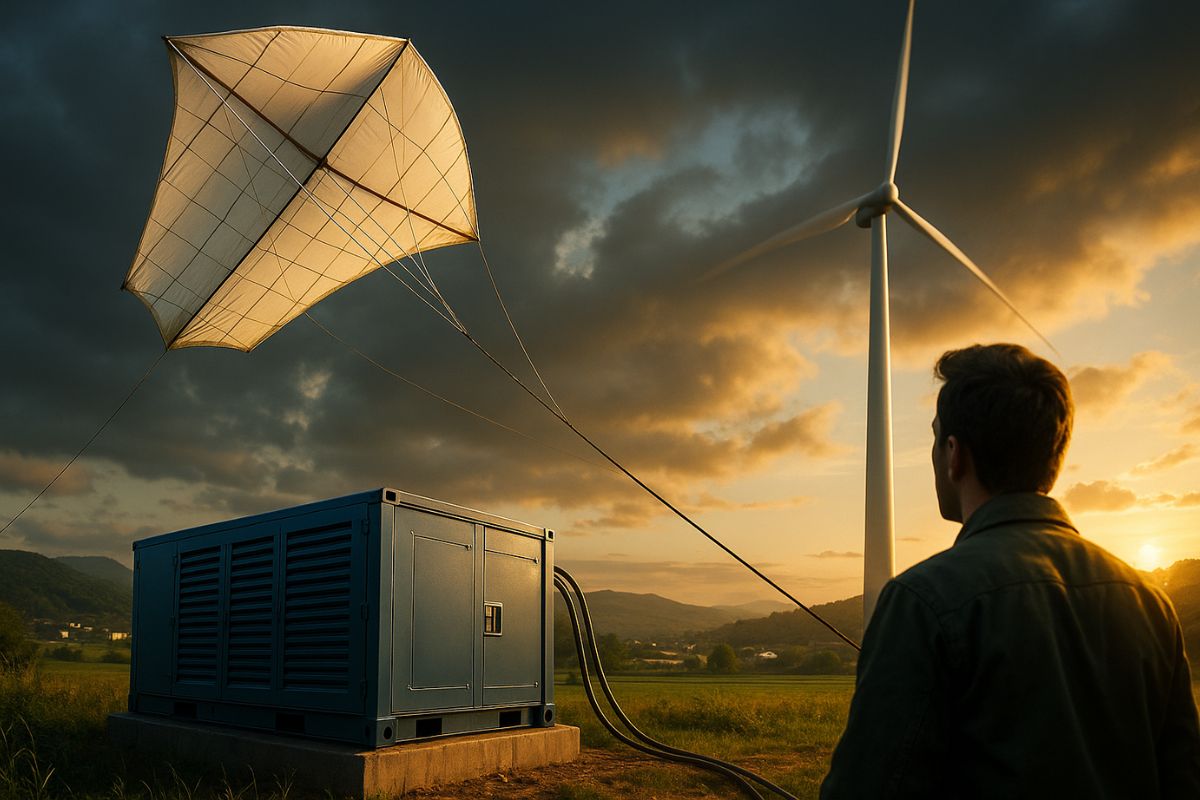
Technology Developed in the Netherlands Is Already Working Off the Irish Coast and Promises to Transform the Wind Sector with Mobility and Low Costs
In the small village of Bangor Erris, in the west of Ireland, an unusual project is gaining traction: the use of giant kites to generate energy from the sky, replacing wind turbines in hard-to-reach areas. The initiative, led by the Dutch company Kitepower, aims to create a lighter, cheaper, and more mobile alternative for renewable energy production.
With a current capacity of 30 kWh per cycle and completely autonomous operation, the system has already been successfully tested during severe storms and can provide electricity to remote islands, mobile bases, and even polar stations. The proposal integrates Ireland’s plans to reduce its dependence on fossil fuels and reach 37 GW of wind energy by 2050.
How Does Energy Generation with Kites Work?
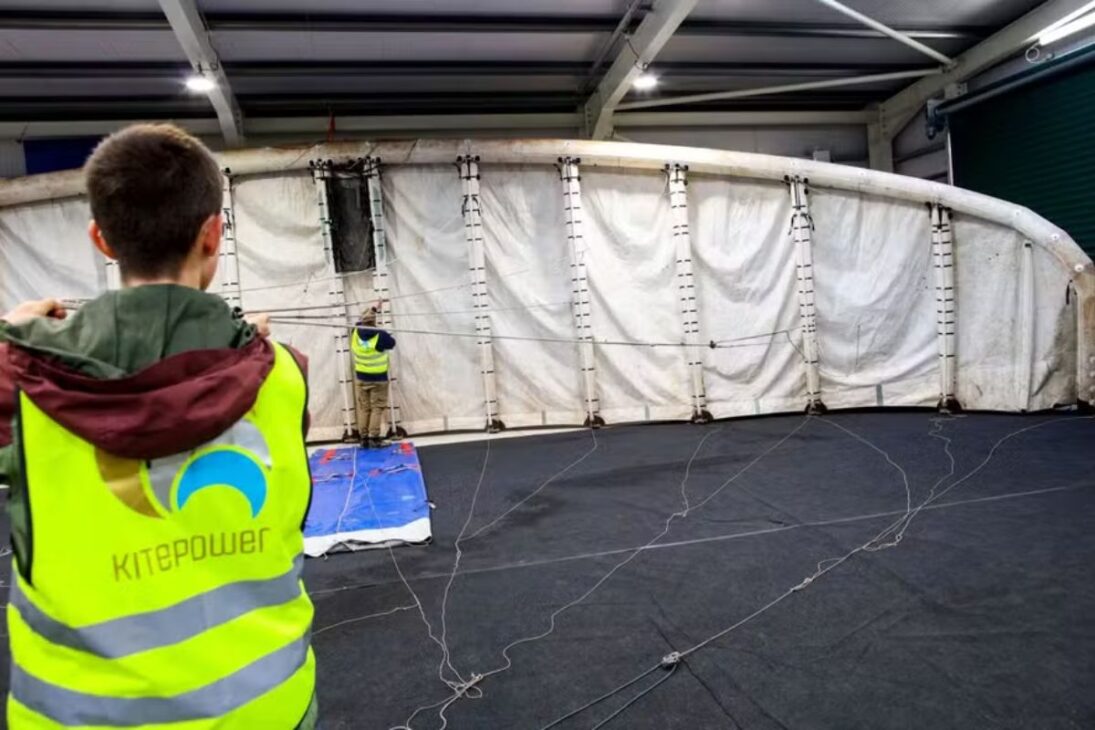
The technology developed at Delft University of Technology functions like a wind yo-yo: a 60 m² kite is launched into the sky, rises to 400 meters in altitude, and when descending to 190 meters, pulls a cable connected to a generator on the ground, which converts the movement into electrical energy.
-
Understand how thermal security has become a key element in the energy transition by ensuring a balance between intermittent renewable energies and thermal sources capable of sustaining the electrical system during critical moments.

-
Billion-dollar investment for the forest: World Bank releases funds to expand renewable energy and create thousands of new green jobs in the Amazon region.
-
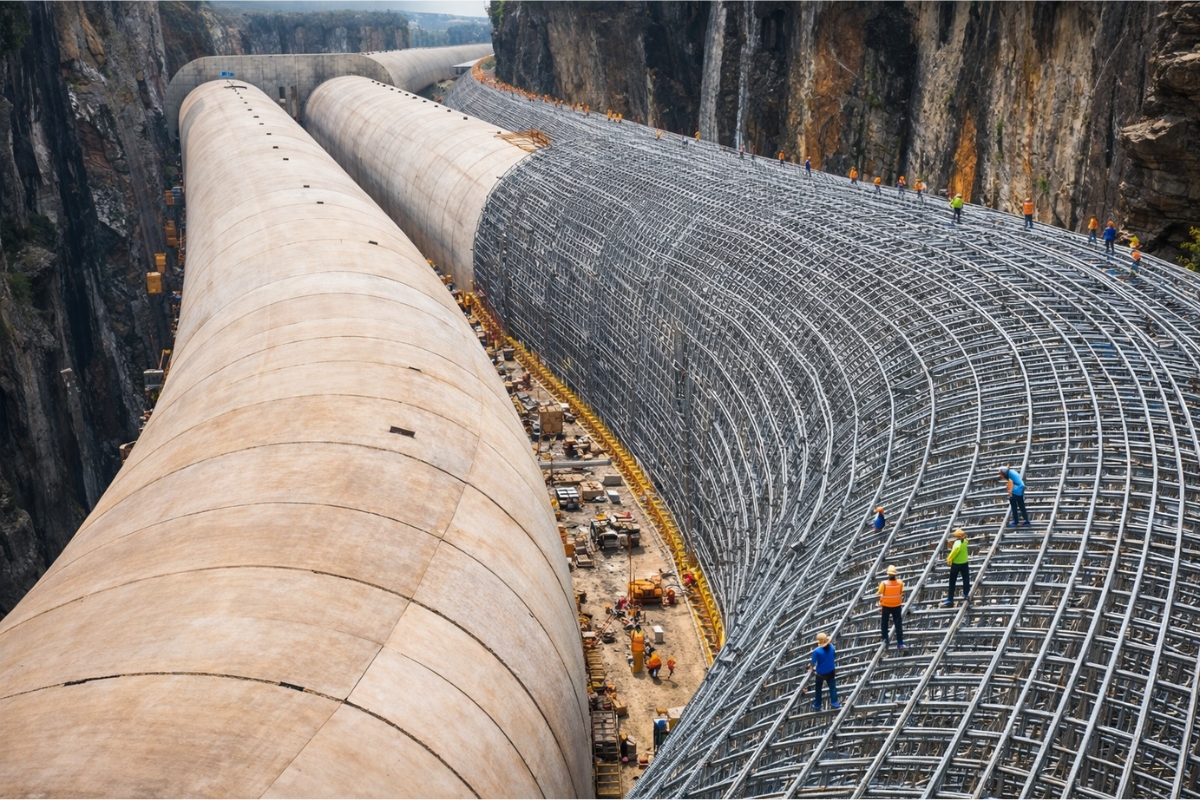
Switzerland invested over $2.3 billion and bet on water, altitude, and solid rock to create a battery in the Alps capable of powering more than 1 million homes.
-
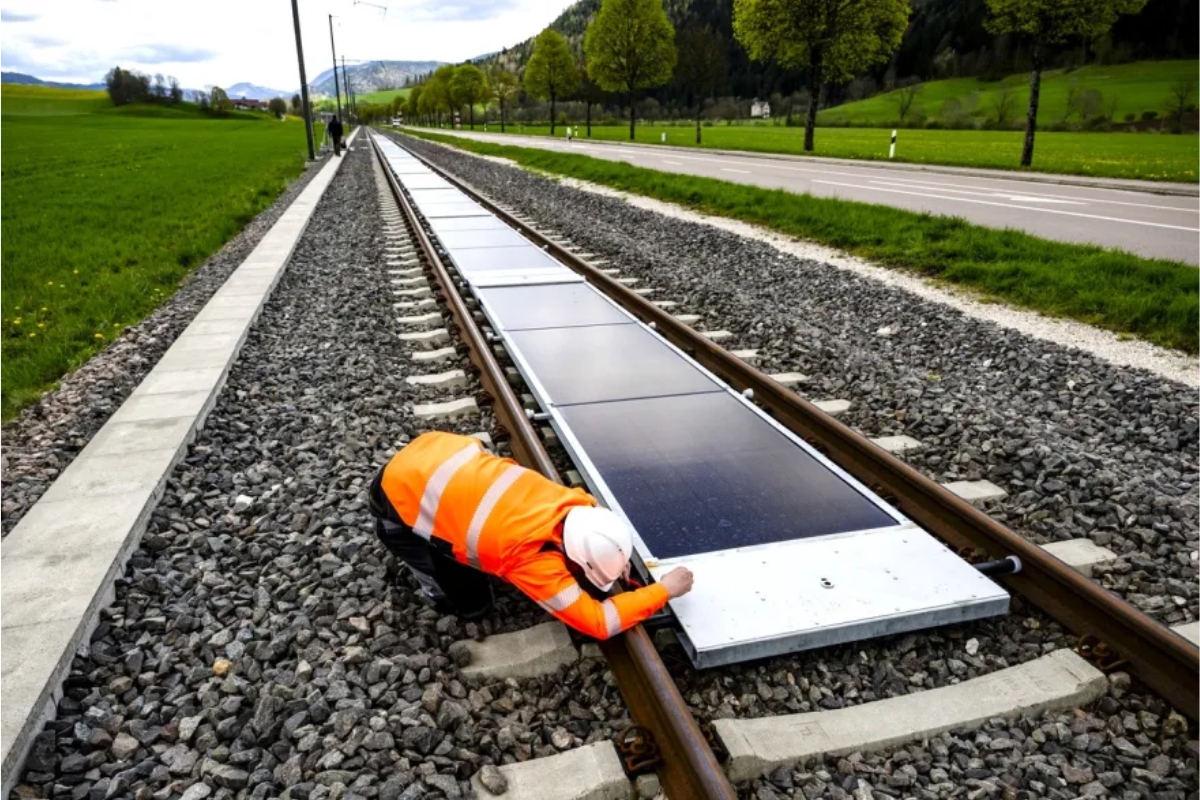
In Switzerland, tracks that previously only accommodated trains are beginning to generate electricity with removable solar panels installed on active railways, paving the way to transform the railway network into a new front for clean energy.

This cycle repeats multiple times, producing about 30 kWh per hour, enough to power isolated structures. The system operates with the help of autonomous software, but can also be manually controlled by a technical operator, nicknamed the “pilot”.
According to the company, each cycle generates the equivalent of two and a half tons of mechanical energy, which is stored in batteries similar to those in photovoltaic systems. Currently, the battery integrated into the system has a capacity of 336 kWh, enough to supply a small construction site or a scientific station.
Why Is Sky Energy Important to Ireland?
Sky energy can help address one of the bottlenecks in the Irish energy sector: the infrastructure limitations in remote areas and the high costs associated with installing conventional turbines. With the ability to be assembled in 24 hours and easily transported, the kite system requires less civil works and does not depend on concrete, cranes, or complex connections to the power grid.
During Storm Eowyn in January 2025, Kitepower’s prototype continued to provide energy before, during, and after the blackouts reported in the region. The performance reinforced the strategic value of the solution for emergency situations and environments where conventional turbines fail or are unfeasible.
Additionally, the system is less visually intrusive, does not require fuel, generates no mechanical noise, and captures high-altitude winds, which are typically more stable and stronger than those harnessed by land-based turbines.
Can the Technology Replace Traditional Wind Turbines?
Not yet. Although promising, the technology is still operating on a small scale and faces regulatory challenges, particularly regarding airspace safety and reliability in continuous operations. According to researcher Mahdi Salari from University College Cork, kites are better suited, for now, for mobile, off-grid, or extreme location scenarios.
Still, experts compare the current stage of kites to the early days of modern turbines: it took 25 years for wind turbines to progress from 30 kW to megawatts, as explained by Andrei Luca, director of Kitepower. The expectation is that kites will progress rapidly with the right incentives.
What Is the Future of Sky Energy?
The Irish government projects 20 GW of wind energy by 2040 and 37 GW by 2050, including hybrid and innovative solutions. Sky energy could broaden access to renewable generation, especially in isolated communities or areas with inadequate infrastructure.
With advances in component miniaturization, greater battery density, and smarter software, it is possible that kites will gain ground alongside turbines as a complementary alternative, especially in an accelerated energy transition scenario.
Do you believe that sky energy can replace turbines in the future? Do you think it’s feasible in Brazil? Leave your opinion in the comments — we want to hear from those closely following the sector.







-

Uma pessoa reagiu a isso.