





 Portuguese
  English
  Spanish
  5 min of reading


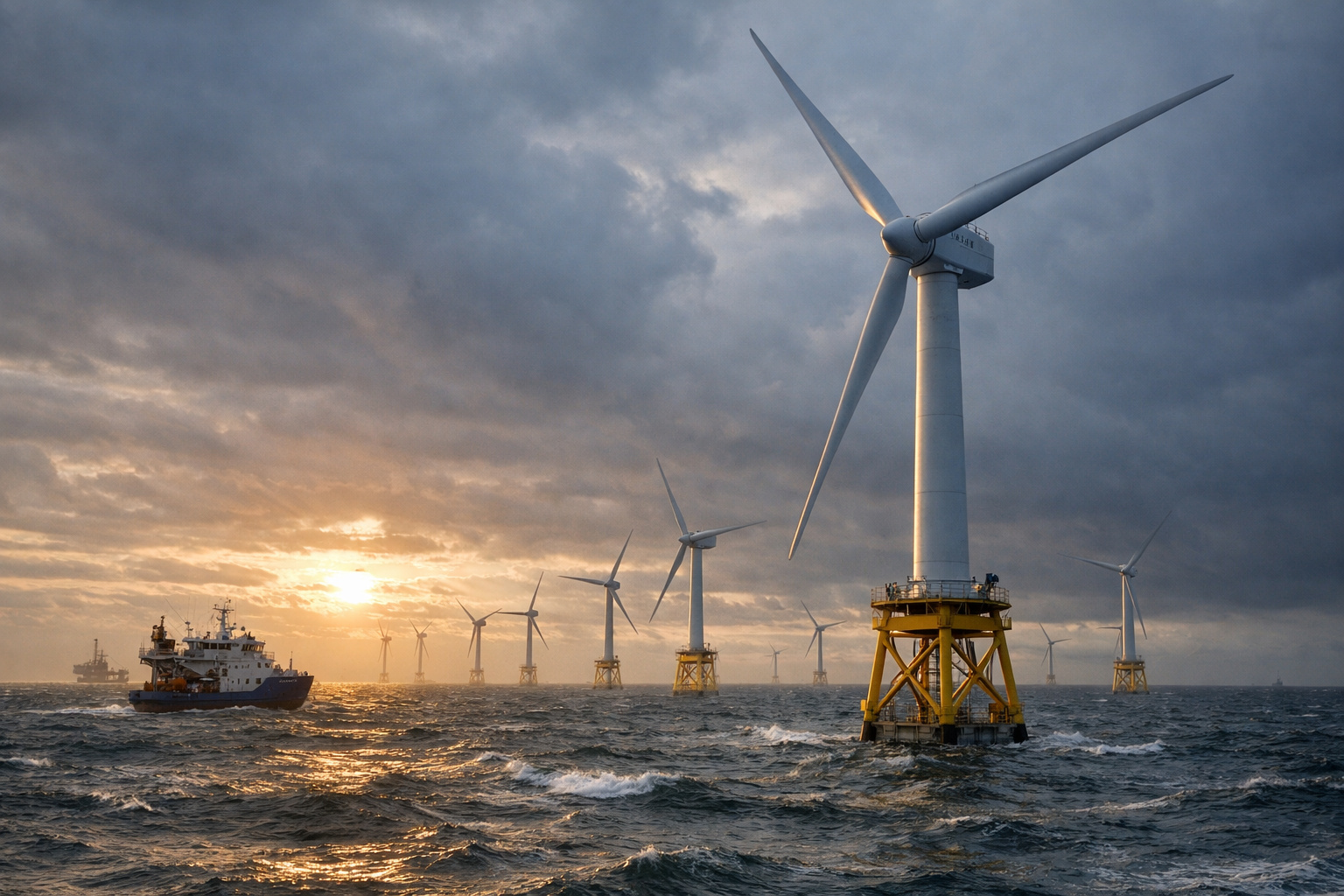
Offshore wind energy has returned to the center of international attention after the White House’s decision to once again suspend projects in U.S. federal waters. The measure affects nearly 6 gigawatts of planned capacity, according to estimates released by the U.S. government itself, and casts doubt on the pace of clean energy expansion in the country.
The decision comes at a delicate moment. In recent years, the United States has sought to accelerate investments in renewable sources, including offshore wind energy, deemed strategic for decarbonizing the electrical sector. Nevertheless, changes in political posture have created uncertainty among investors.
In this scenario, the market reacts with caution. Whenever regulatory decisions halt large-scale projects, the impact goes beyond the short term. It affects planning, financing, and institutional confidence.
-
Urgent energy transition: Greenpeace advocates for massive investments and points to Brazil as a global leader in wind energy production in the coming years.
-
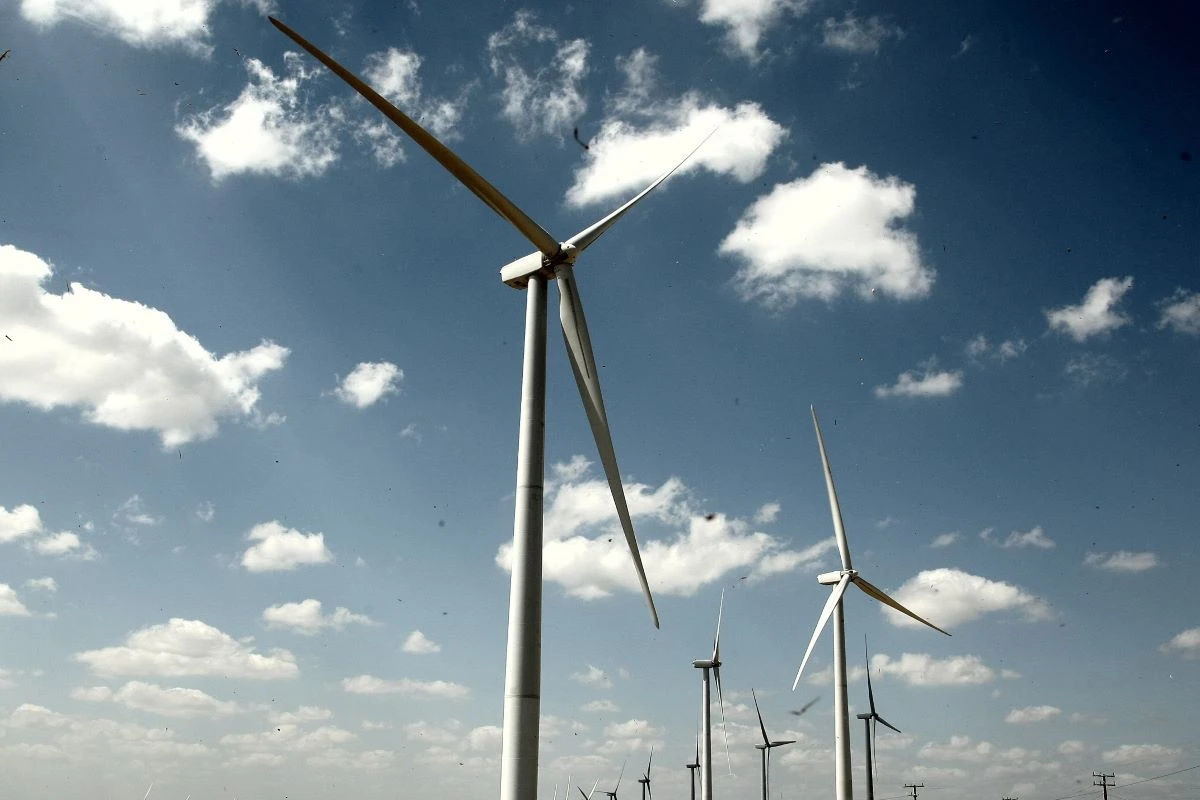
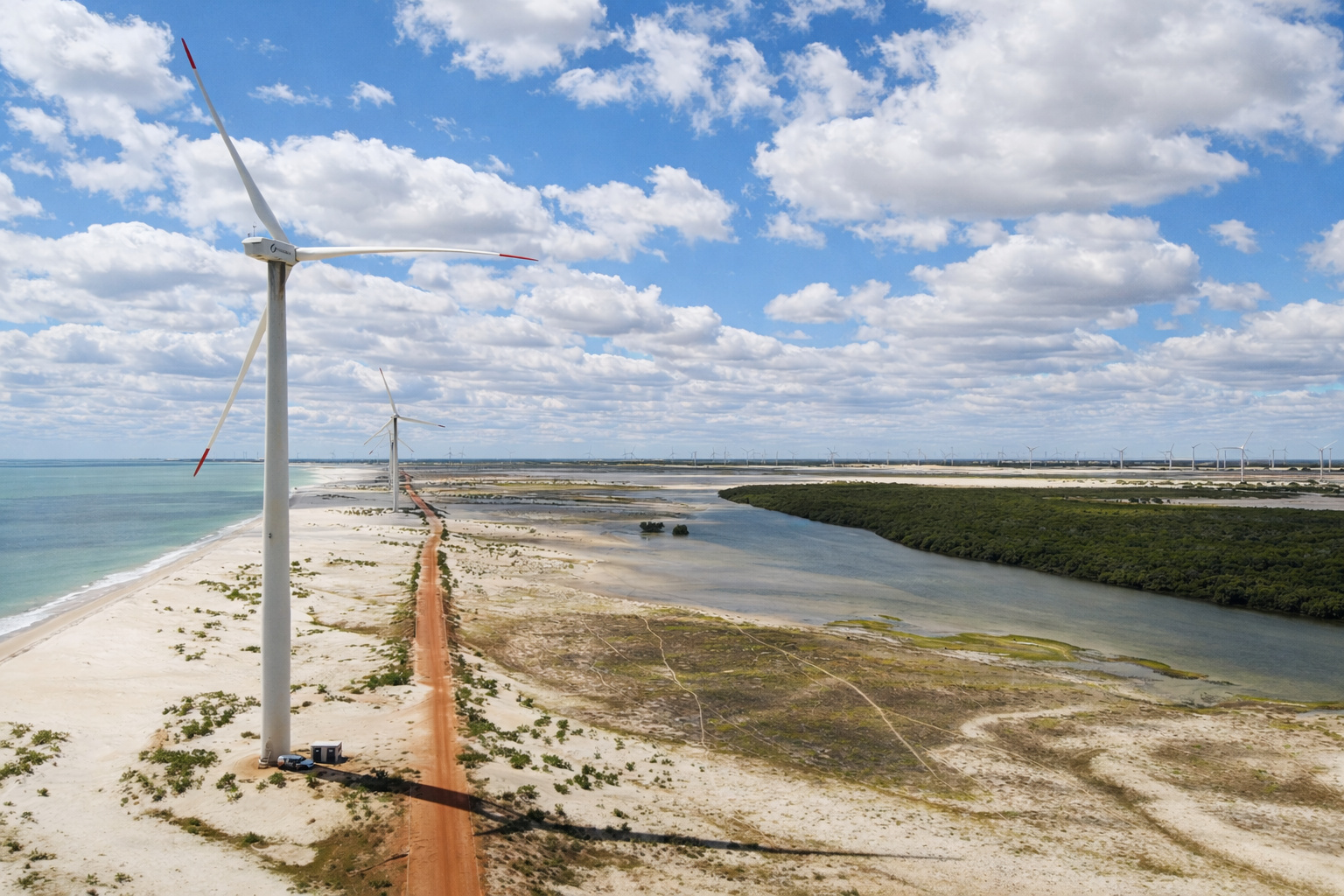
Conflict in the Sertão: Rural communities in Rio Grande do Norte report issues with wind farms and the new challenges of clean energy in the semi-arid region.
-
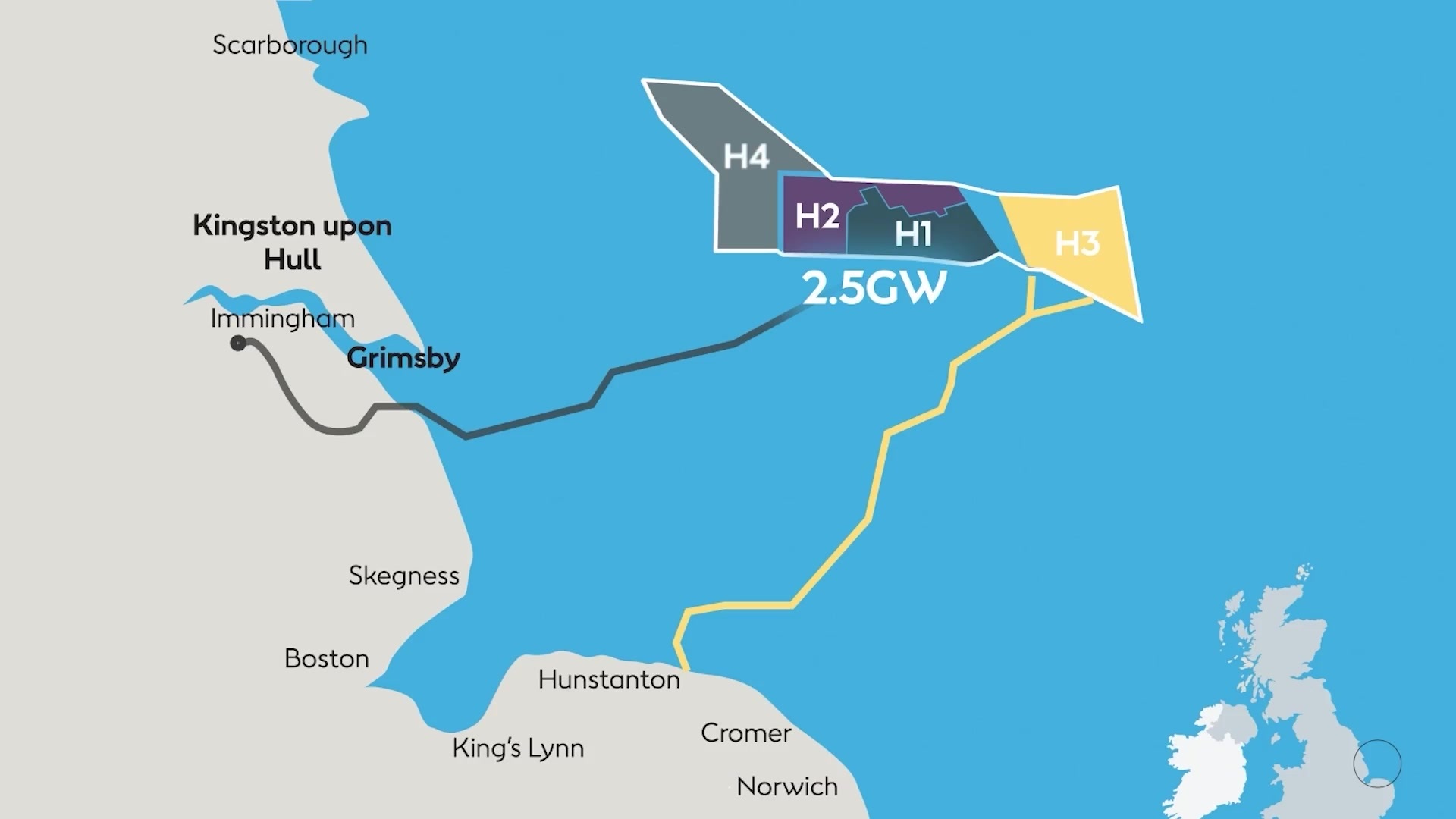
231 turbines of 260 meters at 160 km from the coast, monopiles weighing as much as nine blue whales embedded in the North Sea, and a crane ship taller than the Eiffel Tower: Hornsea 3 will be the largest offshore wind farm on the planet by 2027, and its first components have already arrived in England.
-
International Certification Puts Senai Norte on the Renewable Energy Map and Expands Access to Essential Training for Qualified Wind Power Professionals


Offshore Wind Energy and The History of American Energy Policy
To understand the weight of the decision, it is necessary to look at the trajectory of offshore wind energy in the United States. Unlike Europe, where offshore parks have been operating since the 1990s, the American development occurred more slowly.
For decades, regulatory hurdles, legal disputes, and lack of political consensus limited progress. Only from the 2010s did the country begin to structure specific policies to enable offshore projects. This movement gained momentum in the following decade, with more ambitious climate goals.
According to data from the U.S. Department of Energy, published between 2021 and 2024, offshore wind energy has been identified as a key piece to enhance renewable capacity and reduce emissions.
Offshore Wind Energy and The White House Decision
The suspension announced by the White House impacts projects at different stages of development. In total, nearly 6 GW of capacity will no longer advance, affecting previously established timelines and contracts.
According to official communications from the U.S. government released in 2025, the decision involves administrative and regulatory reviews. Still, the practical impact is the temporary halt of billion-dollar investments.
For the sector, the problem is not just the suspension itself. The greater risk lies in regulatory unpredictability, which complicates long-term decisions on projects that require decades of operation for financial return.
Offshore Wind Energy and Market Reaction
The market’s response was immediate. Investors began to reassess risks associated with offshore wind energy projects in the United States. Even companies with advanced contracts adopted a more conservative stance.
According to analyses released by Reuters in 2025, the sector fears that political decisions could become recurring. This concern raises the cost of capital and reduces the attractiveness of the projects.
Additionally, suppliers in the production chain are also feeling the effects. Turbine manufacturers, maritime logistics companies, and technical service providers face uncertainty regarding future demand.
Offshore Wind Energy and The Role of Regulatory Security
Offshore wind energy projects require high initial investments. Maritime infrastructure, underwater cables, and connection systems demand detailed planning. Therefore, regulatory stability becomes essential.
In Europe, the consolidation of offshore wind energy occurred precisely in predictable regulatory environments. Countries like the United Kingdom, Germany, and Denmark built stable legal frameworks, which attracted private capital.
In the United States, the alternation of policies complicates this process. Each suspension raises doubts about the continuity of energy targets, even when the official discourse advocates for a clean transition.
Offshore Wind Energy and Impacts on Energy Transition
The White House’s decision comes at a crucial moment for the global energy transition. According to the International Energy Agency, offshore wind energy will account for an increasing share of electricity generation in the coming decades.
In the United States, this source represents one of the main opportunities to replace fossil generation in densely populated coastal areas. Suspending projects, therefore, jeopardizes climate and energy security goals.
Additionally, offshore wind energy reduces dependence on imported fuels. In an unstable geopolitical scenario, this characteristic becomes even more relevant.
Offshore Wind Energy and International Comparison
While the United States faces uncertainties, other countries are making progress. In Europe and Asia, new offshore projects are still being implemented. China and the United Kingdom, for example, have expanded installed capacity in recent years, consolidating their leadership in the sector.
According to international reports published in 2024, the difference between markets with stable and unstable policies is reflected in investment volume. Where there is predictability, offshore wind energy grows consistently.
This comparison reinforces the American challenge. Without regulatory continuity, the country risks losing technological and industrial competitiveness.
Offshore Wind Energy and The Impact on Jobs and Industry
Another sensitive point involves jobs. Offshore wind energy projects create thousands of direct and indirect jobs. Shipyards, ports, and factories benefit from the production chain.
With the suspension, these benefits are threatened. Companies are delaying hiring and investments, affecting local economies, especially in coastal areas.
According to the U.S. Department of Energy, the offshore sector has the potential to create a new industrial base. However, this potential depends on consistent political decisions.
Offshore Wind Energy and The Internal Political Debate
The suspension also reflects internal political disputes. In the United States, offshore wind energy faces resistance in some sectors, either due to local environmental concerns or due to economic interests linked to traditional sources.
These tensions make the decision-making process more complex. Still, experts warn that the absence of clear policy hinders long-term energy planning.
According to analyses released by American research centers in 2025, political fragmentation complicates the consolidation of offshore wind energy as a pillar of the electrical matrix.
Offshore Wind Energy and The Future of Investments
Looking at the current scenario, it becomes clear that offshore wind energy in the United States is at an inflection point. The suspension of projects does not eliminate the potential of the source, but delays its realization.
Investors remain attentive to the government’s next steps. Any sign of a clear resumption could reverse the cautious atmosphere. On the other hand, new interruptions tend to drive away capital.
Thus, the White House’s decision reinforces a central point. Offshore wind energy depends less on technology and more on political and regulatory stability.
In a world that is rapidly advancing in the energy transition, the ability to offer predictability becomes a competitive advantage. Without it, even countries with great potential, like the United States, face difficulties in turning projects into concrete reality.








Seja o primeiro a reagir!