





 Portuguese
  English
  Spanish
  5 min of reading
  1 comment


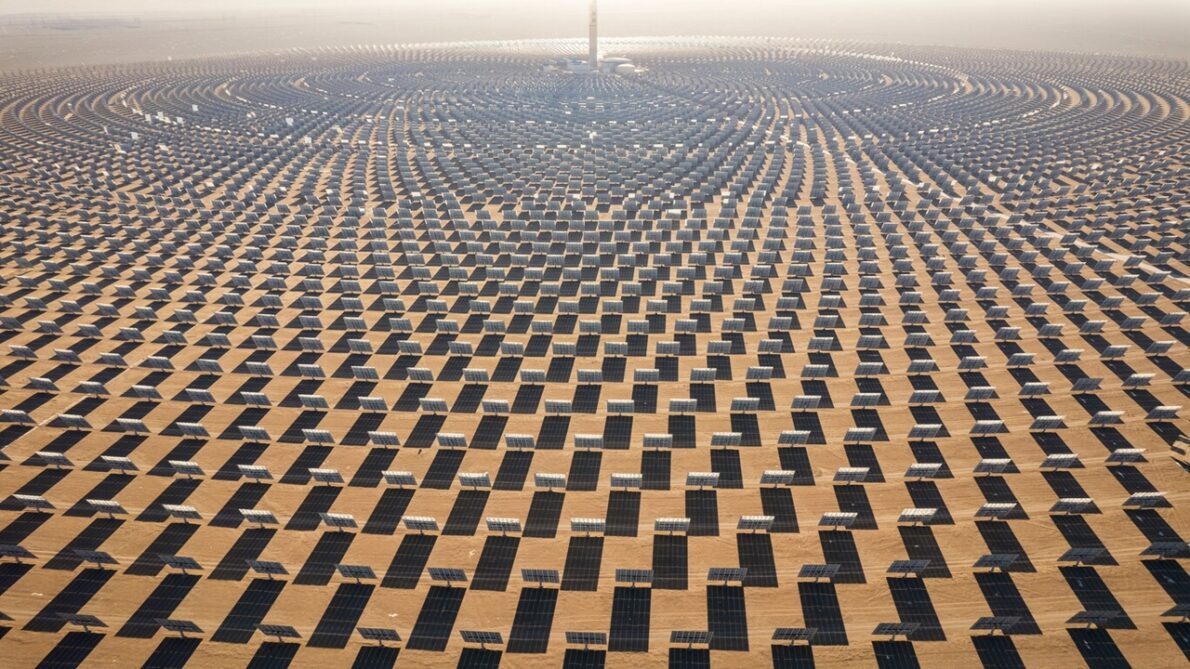


Solar Panels in the Sahara: Sustainable Energy or Environmental Disaster? Explore the Challenges and Impacts of This Idea
The recent energy crisis has caused electricity prices to skyrocket. And this has led to an accelerated installation of solar panels worldwide. Thanks to the growing popularity of this renewable energy, the price of these devices has decreased in recent years. Although the problemthepersistent issue remains the same: where to put all these panels?
To provide enough solar energy to power the entire world, about 51 billion solar panels would be needed, covering an area of approximately 186,000 square kilometers. That is just 3.27% of the US. But logically, one would think the suitable location for such an installation should be somewhere with plenty of sun, rarely shaded by clouds. A place like… a desert?


The Sahara is the largest desert in the world, covering a massive 9.2 million square kilometers. Thus, this solar megafarm would occupy only about 3.25%, a reasonable area of the desert that, if properly configured, would barely force the displacement of some humans and animals. It wouldn’t even require deforestation. Furthermore, as physicist Gerhard Knies pointed out, in just six hours the deserts of the world receive more solar energy (173,000 terawatts) than humans consume in an entire year.
-
Brazil raises alarm to avoid blackout: the country may need 3 Itaipus and is already wasting up to 5,135 MW of energy on days of excess solar.
-
Renewable energy advances over protected areas in Brazil, and a survey by the Energy Transition Observatory reveals silent impacts that challenge environmental conservation and pressure sensitive traditional territories.

-
Rio Grande do Sul accelerates energy transition: State invests in renewable technologies and consolidates decarbonization strategies and pathways to attract billions in new industrial investments.

-
With 160,000 m² of collectors, an area larger than 20 football fields, Silkeborg, in Denmark, hosts a solar thermal plant that heats 19,500 homes and could become the largest solar heating plant in the world.


But the truth is that, despite having enough energy to extensively power our civilization, there are many economic and environmental factors that make it nearly impossible to accomplish this feat. First: the difficulty. Second: the cost would be astronomical. And third: it would destroy ecosystems on the planet.
Indeed, the Desertec initiative was one of those projects that planned to cover the Sahara Desert with solar panels in hopes of meeting the energy needs of the Middle East, North Africa, and 15% of Europe. Although renowned companies in the industry wanted to participate, the plan quickly proved unfeasible.
First Challenge: Maintenance
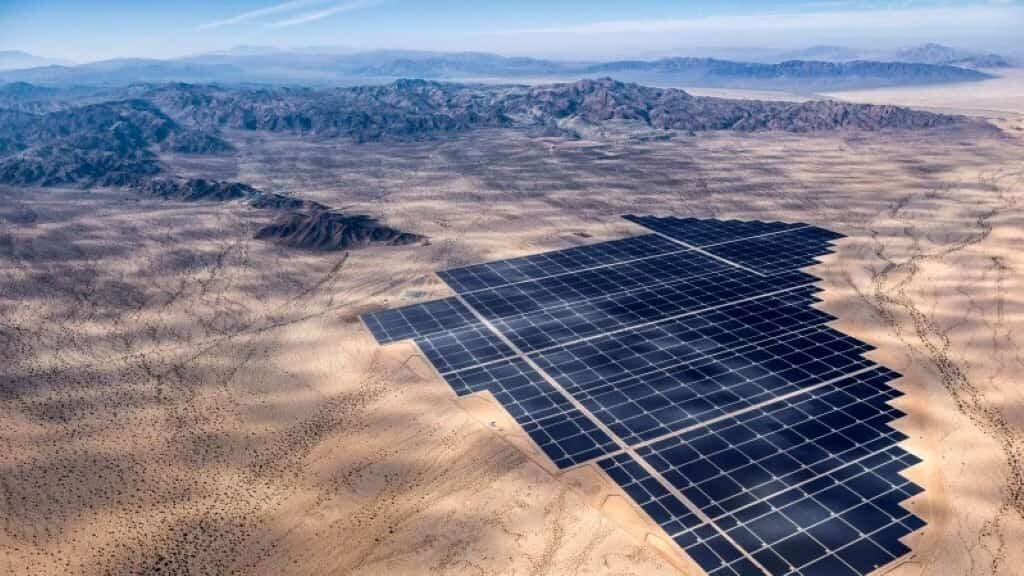
Maintaining a solar farm in the desert is extremely difficult. Primarily because both maintenance and installation are not the same as those in cities. The harsh environment of deserts and the accumulation of dust on solar panels hinder their operation and efficiency. Furthermore, the movement of sand and the arid, scorching winds require a very sturdy installation. And this would mean that the infrastructure would be much more expensive. Much more expensive.
Not only that. The cost of having personnel available 24/7 for constant maintenance and monitoring would be another significant drain on finances and something very hard to achieve.
Second Challenge: The Cost
The installation of a 350W solar panel costs between €200 and €400 in a residential setting. In the desert, it would be more expensive. First, it would be necessary to build supports for the panels, transport them to the middle of nowhere, and create new electrical infrastructure over dunes and rocky terrain. According to calculations by journalist Will Locket in this article on Medium, merely considering the price of the panel, delivery, and installation, it would already cost about €1,000 per unit. If we multiply this amount by the number of panels needed, we would arrive at a total of €514 trillion, 23 times more than the entire US economy.
But there’s more. It must be considered that, if we want to send all that energy anywhere in the world, we would need batteries to store the energy produced during the day and power production during the night (not all countries have the same hours). This would mean adding about 4.2 kWh of battery storage to each panel, increasing the cost by another €900.
And wait, because now comes the most painful part: getting the energy out of the Sahara. Transportation is another concerning problem, as sending energy to its destination requires huge power lines, which are very costly and result in an energy loss of up to 10%. Currently, the longest power line is only 3,200 kilometers. Considering that the longer it is, the more energy is lost along the way, we would need to compensate for those losses by adding even more costs. Something very unfeasible with the technology we have today.
Third and Most Important: The Environment
All of this could be accomplished, albeit with difficulty, in a hypothetical future. But doing so would lead us directly to our extinction. It is essential to keep in mind that deserts are by no means useless, but above all, that any ecosystem plays a fundamental role in the global environment. In the case of transforming the Sahara into a huge solar farm, only 15% of the energy absorbed by the solar panels would convert into electricity. And the rest would be returned to the atmosphere in the form of heat, which would greatly worsen global warming.
Evidence is provided by a 2018 study that used a climate model to simulate the effects on the Earth’s surface of deserts caused by the installation of these solar panels. The research suggests that when the size of the solar farm reaches 20% of the total area of the Sahara, it triggers a feedback cycle. The heat produced by the darker solar panels (compared to the reflective ground) creates a significant temperature difference that ultimately reduces air pressure and humidifies the climate, creating rain.
These rains would make plants grow in the desert, which would then reflect less solar energy, as vegetation absorbs light better than sand and soil. With more plants, more water would also evaporate, creating a more humid environment that would further spread the vegetation. A green desert sounds nice, doesn’t it?
The truth is that many of our ecosystems depend on the Sahara being an arid desert. The Amazon, for example, is fertilized by the dust that blows from the Sahara. The Atlantic is also fertilized by dust from the Sahara. Its nutrient-rich sand favors algae vegetation, which produces a large amount of oxygen on the planet.
However, the most severe effect would be an increase in Earth’s surface temperature. Although it may seem contradictory, water vapor is a powerful greenhouse gas, almost worse than CO2. This would end up warming the planet, triggering the melting of ice layers and altering ocean currents, ultimately resulting in the destruction of biodiversity worldwide. In summary: each ecosystem is connected, and modifying one of them can trigger a domino effect with devastating consequences.








Porque não transformam o deserto em floresta? Talvez seja porque energia traz chuva,vida e uma temperatura agradável vocês não se importam mas quando o último rio secar irão ver que dinheiro não se come