





 Portuguese
  English
  Spanish
  5 min of reading
  0 comments


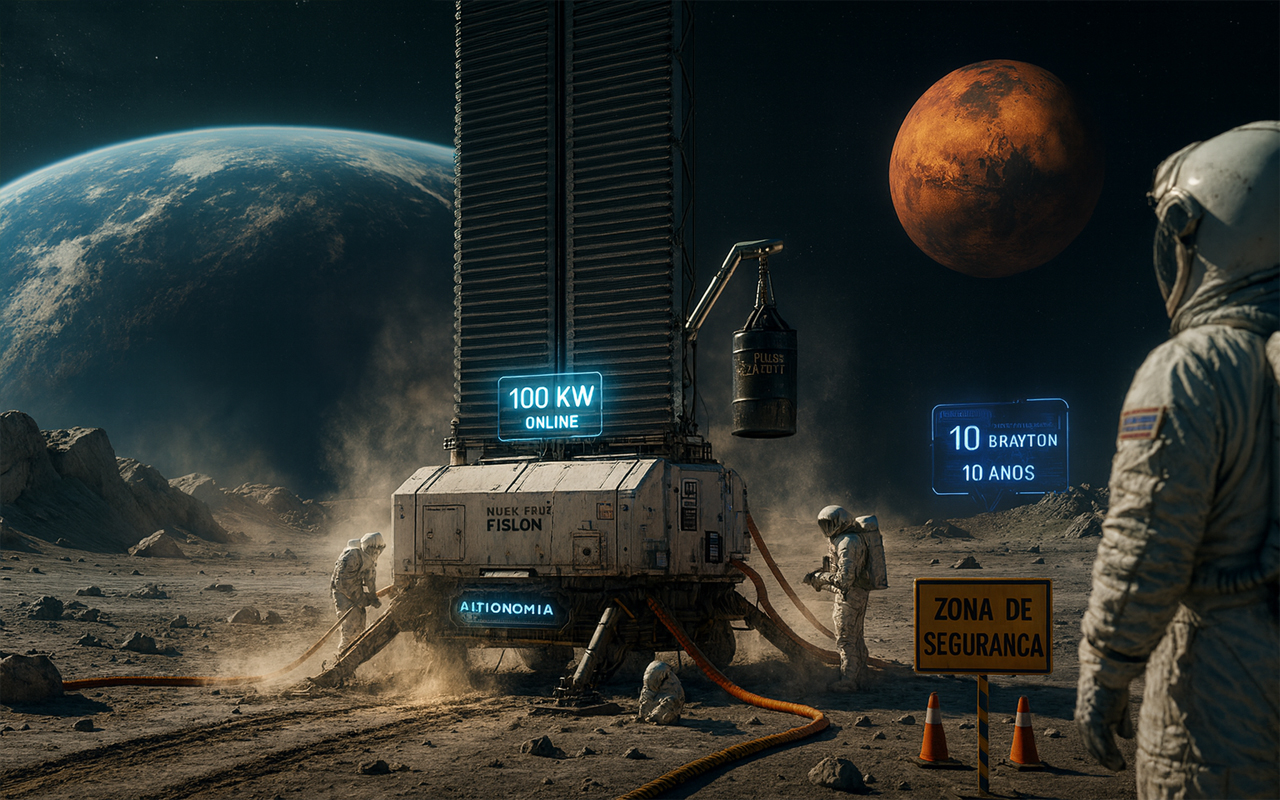
NASA Took The Most Concrete Step Toward A Lunar Nuclear Reactor Of At Least 100 kW, With A Focus On Commercial Partnerships And Energy Sales As A Service. The Timeline Aims To Place The System At The South Pole Of The Moon By The First Quarter Of 2030.
NASA Has Just Opened A New Phase Of The Fission Surface Power Project, Inviting The Industry To Comment On The AFPP Draft That Defines The Outlines Of The Lunar Reactor And The Partnership Model. The Move Includes An Industry Day On September 9, 2025, In Cleveland, To Detail Requirements And Listen To Interested Companies. According To The Agency Itself, The Goal Is To Prepare A ≥100 kW System, Weighing Less Than 15 Tons, And Using Closed Brayton Cycle Conversion.
The Draft Document Comes On The Heels Of A Directive Signed On August 4, 2025, That Orders To Accelerate The FSP And Establish A Clear Governance Structure To Bring The Technology To The Lunar Surface. The Guidance Mentions The Use Of Commercial Microreactors And The Need To Move Quickly To Support The Lunar Economy And Future Mars Missions.
The Official Page Itself Explains That The Goal For Deployment Of The Reactor Is The First Quarter Of The Fiscal Year 2030. In Practical Terms, This Means A Window Starting In October 2029, Maintaining Pressure For The Public-Private Partnership To Finalize Engineering, Safety, And Logistics In A Few Years.
-
The coldest region of Brazil will experience very hot weather in the first days of April, with maximum temperatures reaching up to 35 degrees in Rio Grande do Sul, and only in the last week of the month an intense cold front is expected to finally lower the temperatures in the South and Southeast.
-
Goodbye common refrigerator: essential appliance starts to gain competition with technology that preserves food for longer and reduces waste.

-
Germany discovers how to reuse old window glass without melting anything and can transform 220,000 tons per year into new high-performance panels, using material from nearly 150 million old windows that would be discarded.
-
China creates hypersonic engine that can make planes and missiles fly more than 6 times the speed of sound with less weight, more range, and without system change.

Beyond The Technological Aspect, There Is A Market Message. NASA Wants The Private Sector To Own The Asset And Sell Energy To The Agency And Other Clients On The Moon, Opening A New Segment Of High-Value Commercial Space Infrastructure.
Technical Requirements For The 100 kW Lunar Reactor
The Heart Of The Specification Is The Continuous Delivery Of At Least 100 kW Electrical In A Lunar Environment, A Level Considered Sufficient For Habitable Modules, ISRU (In-Situ Resource Utilization), Communications, And Scientific Operations. The Closed Brayton Cycle Conversion Appears As A Requirement Because It Offers High Efficiency And Power Scalability, Reducing The Total Mass Of The System. 100 kW, Brayton, And < 15 t Are The Three Key Figures Of The Notice.
Another Defined Point Is The Installation At The Lunar South Pole For Up To 10 Years Of Operation. This Region Concentrates Craters In Permanent Shadow, Water Ice, And Complicated Lighting Windows, Making Nuclear Energy A Resilient Solution Where Solar Panels And Batteries Face Severe Limitations. Firm Energy And 24/7 Availability Are Critical Differentiators Of The Reactor Compared To Solar.
The Mass Restriction Below 15 Tons Is Not A Whim. It Connects To The Capacity Of Heavy-Lift Lander Descents, Thermal Integration With Radiators, And The Requirements For Radiological Safety And Shielding That Need To Be Met Without Making Launch Impossible. NASA Indicates That The Choice Of Fuel, Enrichment, And Core Shape Will Also Be Evaluated.
Energy As A Service On The Moon: The Commercial Model

The AFPP Draft Proposes A Partnership Through A Funded Space Act Agreement With A Base Phase And An Option. The Base Part Culminates In An Integrated Nuclear Demonstration On The Ground; The Option Plans The Milestones For The Delivery And Operation Of The Reactor On The Moon, Already In The Format Of Commercial Energy Service. To Compete, The Company Must Present A Commercial Lunar Energy Business Plan And A Credible Funding Plan.
There Are Reference Dates That Organize The Pipeline. The Draft Was Published On August 29, 2025 And Received A Short Comment Deadline, Aligned With The Schedule Of The Industry Day On September 9 And The Individual Meetings On September 10. From This Input, NASA Prepares The Final Version Of The Announcement And Signals Awards In 2026.
If Confirmed, The Energy As A Service Structure Will Open A Market Where Kilowatt Hours Will Be Bought And Sold On The Lunar Surface, Involving Public And Private Clients. In Terms Of Space Economy, This Equates To Installing The First “Utility” Outside Of Earth.
From 40 kW To 100 kW: Timeline And Technical Legacy
The Current Leap Relies On Previous Deliveries. In 2022, NASA And The Department Of Energy Via Idaho National Laboratory Selected Three Teams For 40 kW Reactor Studies For 12 Months And US$ 5 Million Each, With Westinghouse, Lockheed Martin, And IX (Intuitive Machines + X-energy) Among The Chosen. These Proposals Helped To Reduce Uncertainties And Prepare The Commercial Stage.
The FSP Also Inherits The Learning From Kilopower And The Historical SNAP-10A, Which Demonstrated Principles Of Compact Reactors And Electromechanical Conversion For Long-Duration Missions. This Line Of Research Helps To Understand Choices Like The Brayton Cycle And The Modularity Required Now.
The Directive Of August 4, 2025 Reinforces The Escalation Of Ambition And Governance. It Determines The Appointment Of A Dedicated Program Executive, Realigns Funds, And Bridges With National Priorities In Advanced Reactors, Consolidating The Target Of Q1 Of The Fiscal Year 2030 To Be On The Moon With Power Plugged In.
Global Competition And Why Nuclear, Not Just Solar
There Is Also A Geopolitical Component. China And Russia Have Been Articulating The ILRS And Are Ventilating A Lunar Reactor Around 2035, Which Adds Pressure To The Technological And Regulatory Race. Recent Reports From Chinese Authorities And Roscosmos Have Been Reported By International Outlets, Reinforcing The Importance Of NASA Getting There First To Avoid “De Facto Exclusion Zones.”
Technically, The Moon Poses An Obstacle That Solar Alone Cannot Resolve. The Lunar Day Lasts About Four Weeks, With Two Weeks Of Darkness And Regions In Permanent Shadow At The South Pole. Even With Batteries And Thermal Storage, Maintaining Habitats, Ice Mining, And Critical Communications During The Night Requires A Reliable Source, A Natural Role For Fission. NASA Clearly Outlines This Rationale In Its Materials.
The Practical Outcome Is That Nuclear Energy Serves As The Backbone Of A Base, While Solar Can Compose The Matrix. This Combination Tends To Reduce Operational Risk And Increase Availability For Crewed Missions Within The Artemis Program.
Do You Support The Idea Of Buying Energy From A “Nuclear Power Plant” On The Moon Operated By Private Companies Or Do You Prefer This Supply To Be 100% In The Hands Of Public Agencies? What Model Would Bring More Safety And Efficiency To Lunar Bases In The Coming Years? Leave Your Opinion In The Comments.







Seja o primeiro a reagir!