





 English
  Francês
  Alemão
  Italiano
  Japonês
  Norueguês
  Portuguese
  Spanish
  2 min of reading


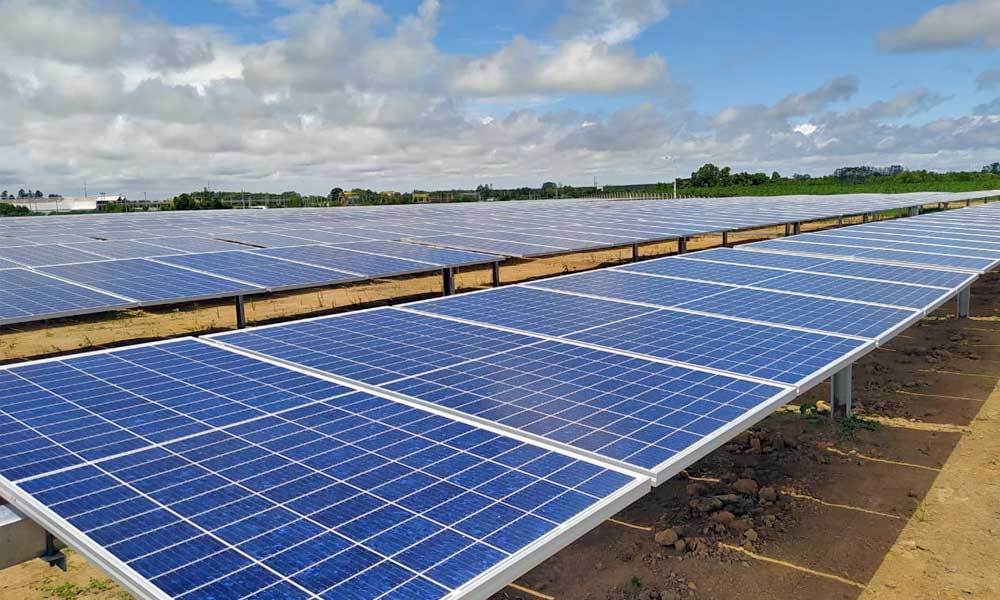
The Operator TIM, Which Already Has More Than Half of Its Energy From Renewable Sources, Plans to Build 36 More Solar Power Plants
Yesterday, on December 7, the telecommunications operator TIM announced that by 2021, it intends to build 36 solar power plants with a monthly capacity of 38GWh, enough to supply energy for a city of 150,000 inhabitants. TIM, which already has more than half of its energy supplied from renewable sources, aims to reach 80% next year.
See Also Other News:
- Petrobras States That the Offshore Oil and Gas Market Will Remain a Leader for Many Decades
- Siemens Gamesa is Developing an Offshore Project to Produce Hydrogen From Wind Energy
- Porsche Strikes Partnership to Open a Factory That Will Produce Gasoline That Doesn’t Require Oil
- Production Assistant, Technician, Welder, and More Called for Positions at the Oleoplan Group’s Biodiesel Plant
According to Bruno Gentil, Business Support Director at TIM, by 2020, 24 projects were implemented, responsible for supplying 15 GWh to over 8,000 user units, such as antennas, telecommunications towers, and company stores.
Currently, the project has partnerships with 30 utilities and 14 suppliers. For example, in a franchise operation, it can achieve 89% of its UC coverage.
-
Renewable energy advances over protected areas in Brazil, and a survey by the Energy Transition Observatory reveals silent impacts that challenge environmental conservation and pressure sensitive traditional territories.

-
Rio Grande do Sul accelerates energy transition: State invests in renewable technologies and consolidates decarbonization strategies and pathways to attract billions in new industrial investments.

-
With 160,000 m² of collectors, an area larger than 20 football fields, Silkeborg, in Denmark, hosts a solar thermal plant that heats 19,500 homes and could become the largest solar heating plant in the world.

-
A study reveals the expansion of renewable energy procurement in Brazil and shows how companies are taking advantage of opportunities to reduce expenses, ensure energy efficiency, and strengthen strategic environmental commitments.

Bruno Gentil said that “Even with the pandemic, we can reach 36 plants, exceeding 78% consumption with energy from renewable sources by December. For 2021, we want to expand solar power and by 2025 reduce energy costs using surplus resources in the constant revitalization of the grid.”
Solar Plants:
The photovoltaic solar power plant (also called solar park or photovoltaic central) is a large-scale solar energy system designed for the production and sale of electric energy, responsible for supplying high-voltage energy for distribution.
The energy production of the solar power plant comes from photovoltaic panels that convert sunlight into electricity to be sold to the grid. Most solar power plants in the world are built on land. They are mostly fixed, but can also be built with so-called “trackers,” solar followers that track the movement of the sun.









Seja o primeiro a reagir!