





 Portuguese
  English
  Spanish
  5 min of reading
  0 comments



Discover How Solar Thermal Energy Transforms Sunlight into Useful Heat for Homes and Industries, Offering a Sustainable, Economic, and Renewable Alternative.
Nowadays, the search for cleaner, renewable, and sustainable energy sources is growing worldwide.
This is mainly due to the negative environmental impacts caused by conventional sources such as oil and coal.
In this context, solar thermal energy emerges as an efficient, accessible, and low-pollution alternative.
-
Argentina debuts its first 100% solar-powered highway and transforms an entire road into a showcase of clean energy.
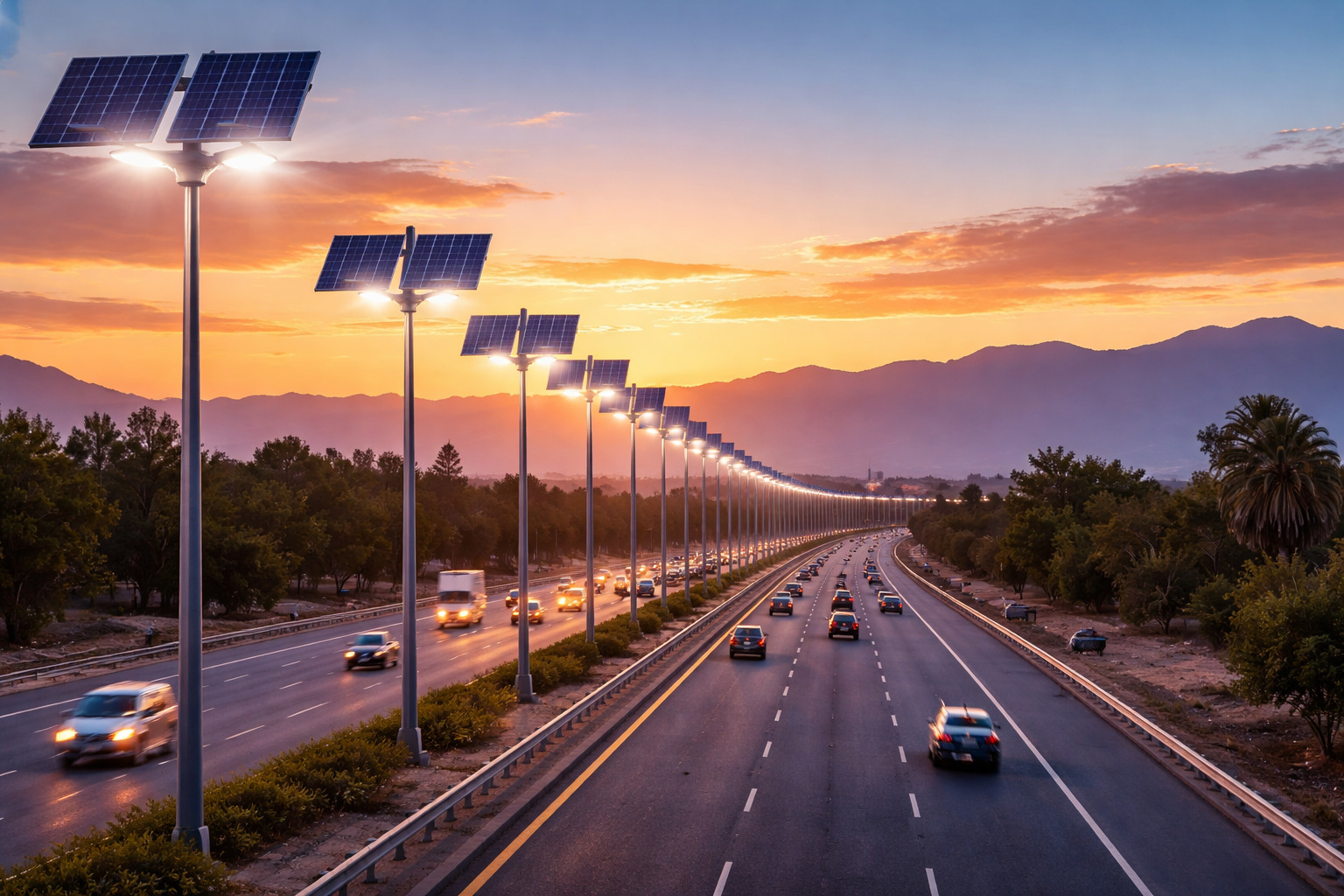
-
Minas Gerais reaches a historic record and surpasses the power of Itaipu, but network costs generate debate: Understand why solar energy in MG impacts the electricity bill of those without panels.
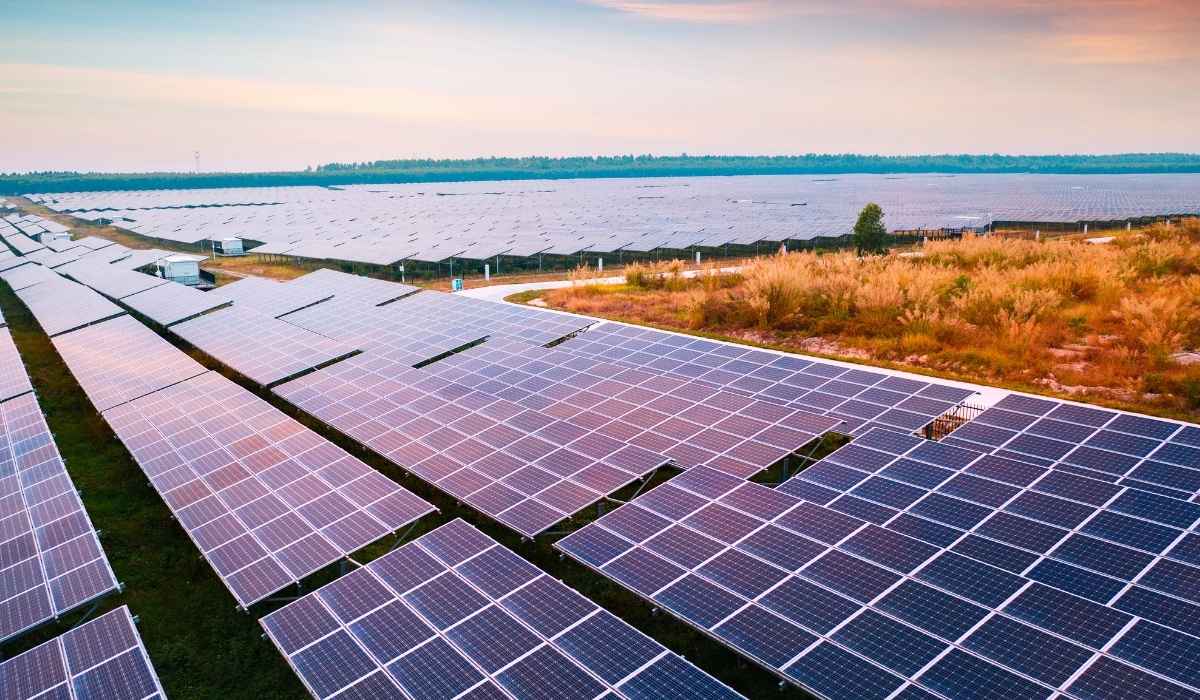
-
Mexico surprises the world by building the future largest solar plant in Latin America, advancing with planned expansion to over 1 GW, and boosting solar energy in the country.
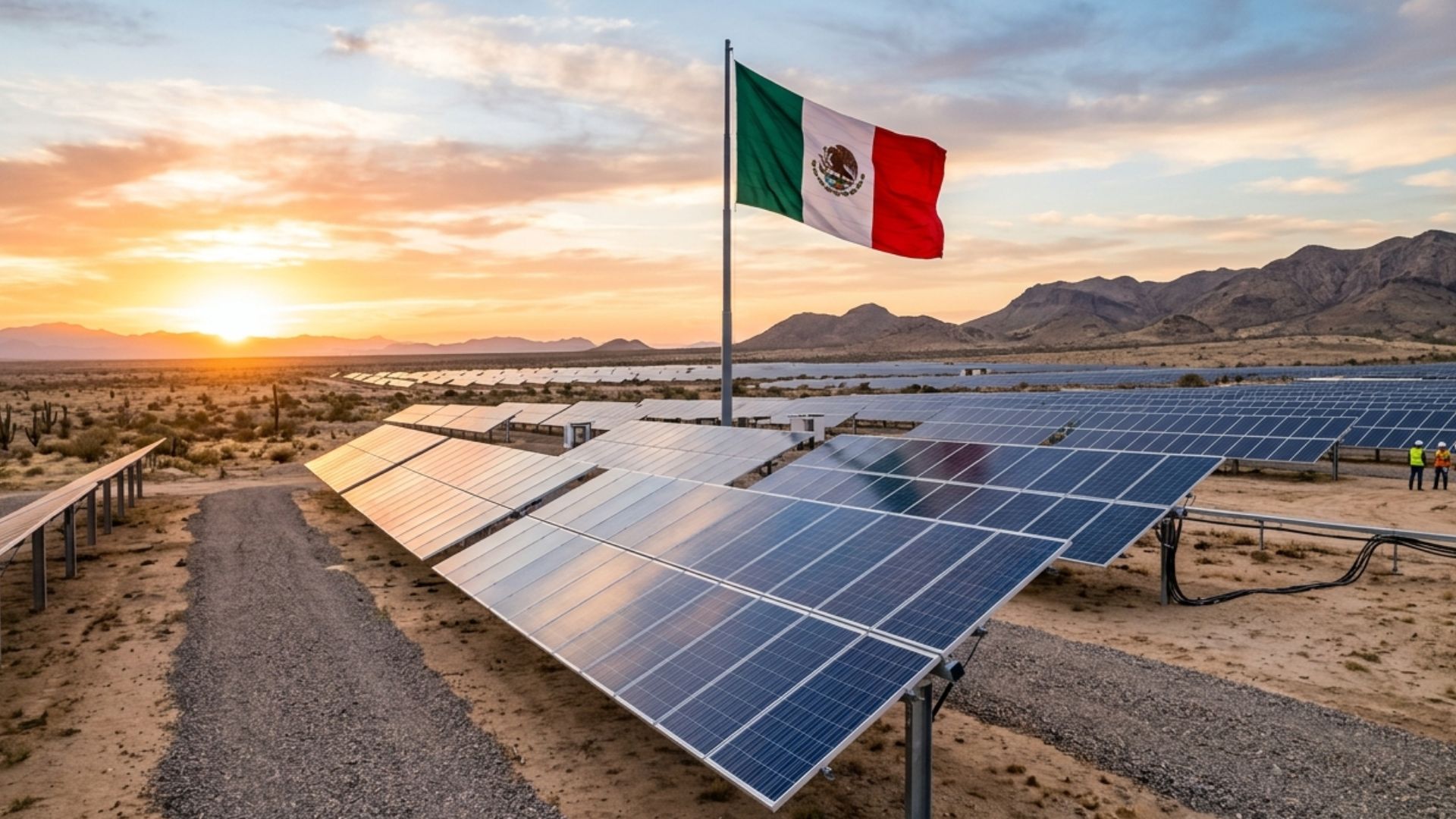
-
Solar cells have just achieved the “impossible” with this 130% breakthrough.


Therefore, understanding what this form of energy is, how it originated, and its current importance becomes essential.
According to the International Energy Agency (IEA) report of 2023, solar thermal energy harnesses sunlight to generate heat.
Unlike photovoltaic solar energy, which converts light into electricity, solar thermal energy heats fluids, usually water, for residential, industrial use, and even for generating electricity.
Although it seems like a modern technology, solar thermal energy has ancient roots. Since ancient times, different civilizations have recognized the benefits of the sun’s heat.
Solar Thermal Energy: Historical Origins and Early Experiments
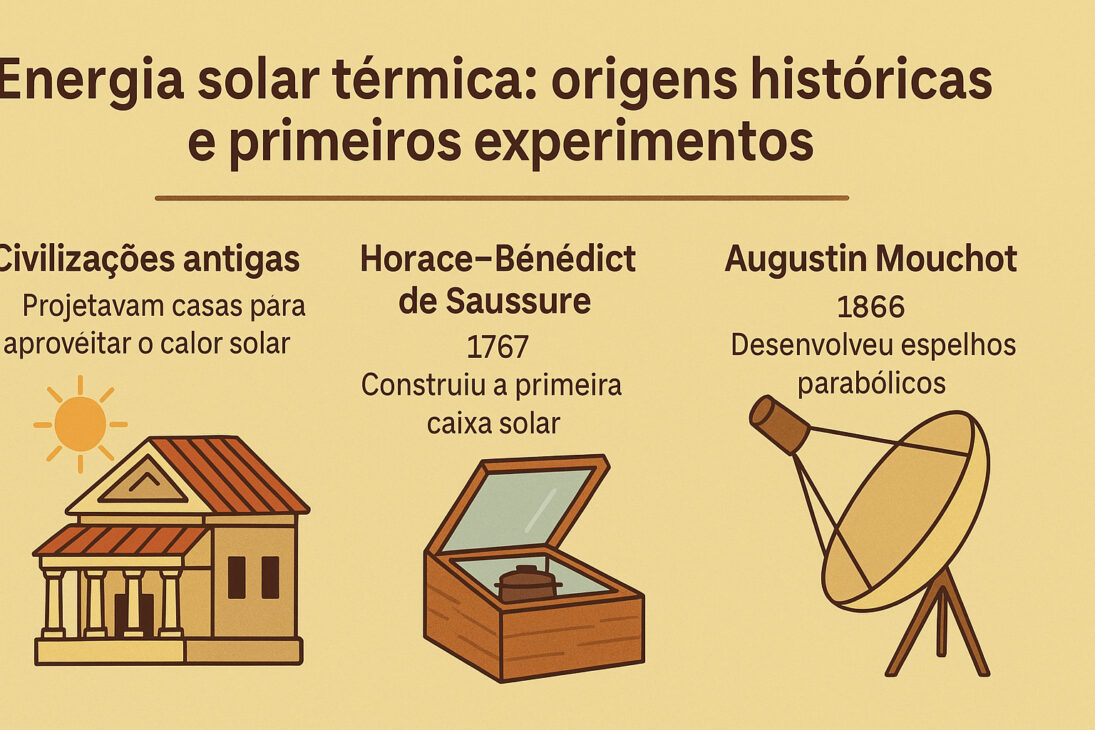
Historically, the use of solar heat for heating dates back to Antiquity.
According to the National Museum of the History of Science in London, Greeks and Romans designed their houses to take advantage of the sun during winter.
Large south-facing windows and thick walls helped retain heat inside.
In the 18th century, Swiss Horace-Bénédict de Saussure innovated by building, in 1767, the first solar box capable of concentrating sunlight to heat objects.
This creation is considered the precursor to modern solar collectors, according to records from the Solar Energy Institute of the Polytechnic University of Madrid.
Later, Frenchman Augustin Mouchot, in 1866, developed parabolic mirrors that concentrated sunlight to boil water and generate steam.
According to the Center for Energy and Environmental Research (CPEA), Mouchot showcased this technology at the 1878 Universal Exposition in Paris, advocating solar energy as a solution to replace coal, the main fuel of the Industrial Revolution.
Despite the initial success, solar thermal energy faced technological and economic limitations that delayed its development until the 20th century. Starting in the 1970s, with the oil crisis, there was renewed global interest in solar energy, including thermal.
The U.S. Energy Information Administration (EIA) highlights that this crisis boosted investments in renewable sources.
Thus, solar thermal energy combines historical tradition with recent technological advancements, preparing for a central role in the global energy matrix.
How Does Solar Thermal Energy Work?
The operation of solar thermal energy is quite straightforward. First, solar collectors installed on rooftops capture sunlight.
These collectors contain tubes through which water or another fluid circulates.
The solar radiation heats this fluid, which is then stored in a thermal reservoir for immediate or later use.
According to the Technical Manual on Solar Energy from the Ministry of Mines and Energy (MME), there are three main categories of systems: low, medium, and high temperature.
Low-temperature systems, widely used in homes, heat water for bathing, cooking, and laundry.
Medium-temperature systems (100°C to 300°C) cater to light industrial processes, while high-temperature systems (above 400°C) generate steam for turbines in solar thermal power plants.
In addition to collectors, many systems include hydraulic pumps and controllers that enhance efficiency and regulate fluid circulation. This makes the technology simple and reliable, as detailed in the report from the National Electric Energy Agency (ANEEL).
Advantages and Accessibility
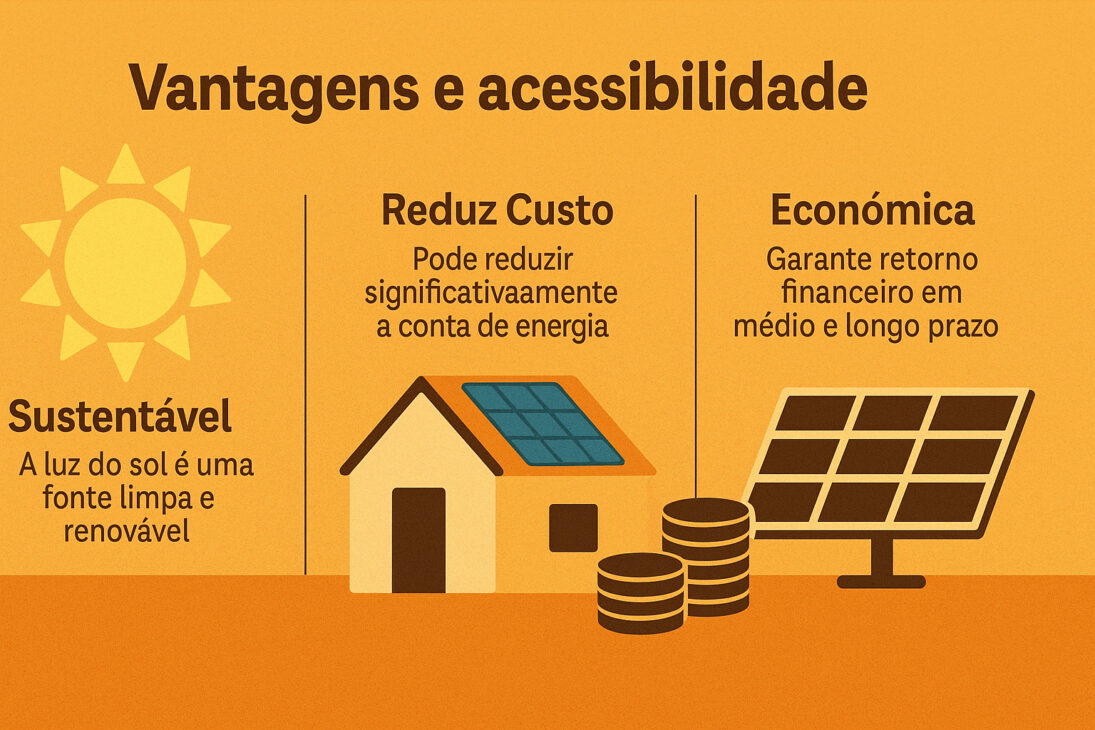
The main advantage of solar thermal energy is its sustainability. Sunlight is a clean, abundant, and free source.
According to the United Nations Development Programme (UNDP), its use does not generate greenhouse gas emissions or airborne pollutants.
Additionally, the adoption of this technology reduces dependence on fossil fuels, strengthening the renewable energy matrix.
Another important benefit is the cost-effectiveness.
According to the National Institute of Metrology, Quality and Technology (Inmetro), solar thermal systems can reduce up to 70% of the electricity bill in homes that use electric showers, especially in sunny regions of Brazil.
Although the initial installation requires investment, the durability of the equipment—often exceeding 20 years—and low maintenance ensure financial returns in the medium and long term.
Therefore, it represents an economically and environmentally responsible solution for families and businesses.
The Outlook for Solar Thermal Energy in Brazil
Brazil stands out for its high solar potential. According to data from the Ministry of Mines and Energy (MME), the average daily solar radiation in the country exceeds 5 kWh/m² in several regions throughout the year.
This scenario makes the country highly suitable for the use of solar thermal energy.
Since 2015, the housing program “My House My Life” has incorporated solar heating systems in thousands of low-income homes, as reported by the National Institute of Metrology, Quality and Technology (Inmetro).
This measure has generated dual benefits: savings on energy consumption and increased thermal comfort.
Companies from various sectors, such as hospitals, hotels, gyms, and laundries, have also adopted this technology to cut costs and present a sustainable image.
In the agricultural sector, solar thermal energy is used for grain drying, tank heating, and other processes requiring heat, as noted by the Brazilian Agricultural Research Corporation (Embrapa).
Therefore, the growth of solar thermal energy in Brazil is consistent and diverse.
Innovation and the Future of Energy
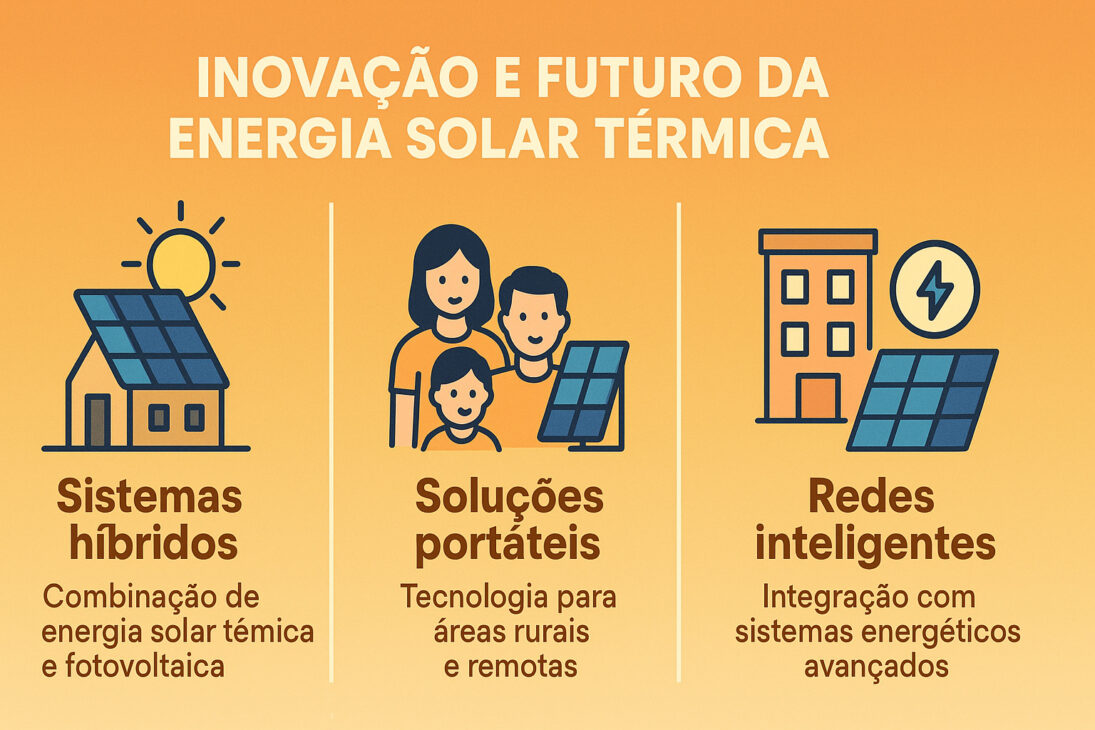
Despite its historical tradition, solar thermal energy continues to evolve constantly.
According to the International Energy Agency (IEA), current research aims to develop more efficient collectors and more durable materials to optimize heat capture and storage.
One of the most significant innovations is the development of hybrid systems, which combine solar thermal and photovoltaic energy to simultaneously generate heat and electricity.
This integration optimizes space usage, especially in urban areas where available roof space is limited.
Additionally, portable and compact solutions are being developed to serve families in rural and remote areas without access to conventional electrical grids.
These technologies contribute to energy inclusion and sustainable development, as highlighted in reports from the United Nations Environment Programme (UNEP).
Finally, the integration of solar thermal energy into smart grids and self-sufficient buildings represents the future of sustainable architecture and engineering.
It represents a smart, accessible, and sustainable alternative for the present and the future.
By harnessing an abundant natural resource, it improves quality of life, reduces environmental impacts, and strengthens the energy autonomy of individuals, businesses, and communities.
Moreover, its growing usage in Brazil and worldwide demonstrates that the technology is mature and ready to meet the demands of modern society.
Therefore, understanding and supporting solar thermal energy is essential for anyone wishing to be part of a cleaner, more conscious, and balanced future.
Whether at home, in the countryside, in the city, or in industry, this form of energy already makes a difference—and can transform even more lives in the coming years.










Seja o primeiro a reagir!