





 English
  Francês
  Alemão
  Italiano
  Japonês
  Norueguês
  Portuguese
  Spanish
  3 min of reading


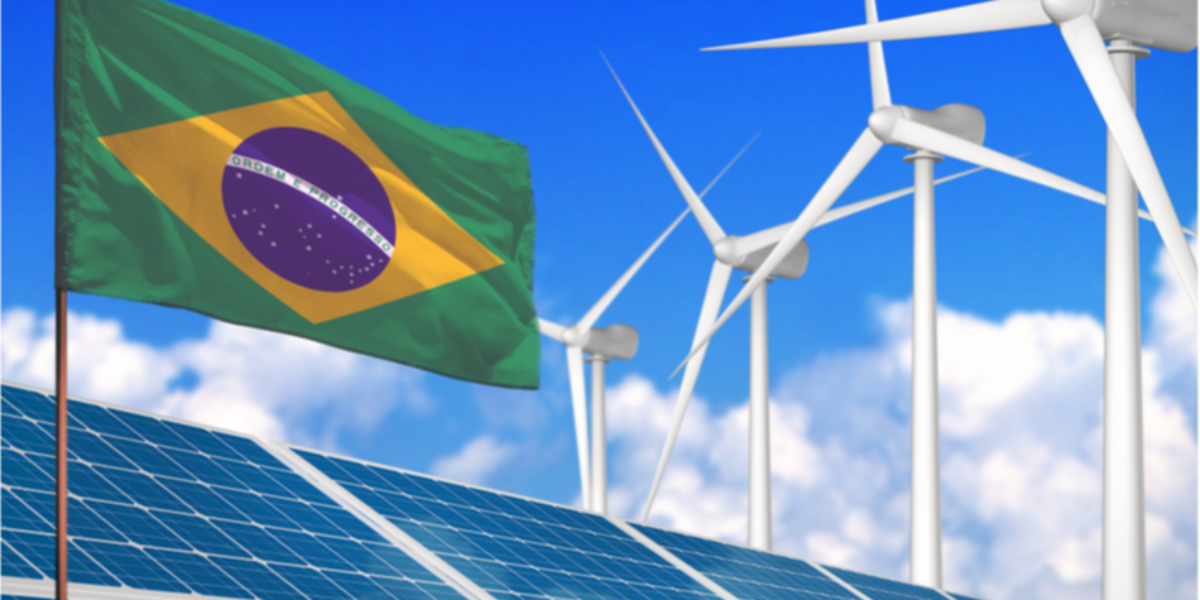
In An Area Of 2 Thousand Hectares, Brazil’s Giant Green Energy Project Includes A Wind Farm And A Solar Farm That Will Generate 3 Thousand GWh/Year
Brazil Green Energy (BGE), one of the largest renewable green energy projects in Brazil, is almost becoming a reality and is expected to require an investment of 6.5 billion reais. Led by Fernando Vilela, the CEO of Maturati Participações and an experienced figure in the energy sector, the project is hybrid and includes the construction of a solar park with a capacity to produce 821 megawatts (MW) and a wind farm with a production capacity of 231 MW.
Additionally, the green energy project in Brazil will also include the addition of six Small Hydroelectric Power Plants (PCHs) in the state of Mato Grosso, as well as studies for the development of a plant for the production of Green Hydrogen.
According to research conducted by NeoFeed, the two parks of Brazil Green Energy, which will be built on a 2 thousand hectare site in the city of Areia Branca, in Rio Grande do Norte, are attracting the interest of major companies from Brazil, China, Canada, and Portugal.
-
With 160,000 m² of collectors, an area larger than 20 football fields, Silkeborg, in Denmark, hosts a solar thermal plant that heats 19,500 homes and could become the largest solar heating plant in the world.

-
A study reveals the expansion of renewable energy procurement in Brazil and shows how companies are taking advantage of opportunities to reduce expenses, ensure energy efficiency, and strengthen strategic environmental commitments.

-
Roraima bets on the sun to escape high tariffs: Amid the energy crisis and price hikes, solar energy is growing in Roraima and transforming consumption in the North region.
-
Mato Grosso do Sul excels in the sugar-energy sector: the state reaches a milestone of 22 operating mills and accelerates the production of clean energy in MS with a focus on sustainability.


According to an exclusive article written by Carlos Sambrana, an executive at the M&A boutique OBB Capital, responsible for the fundraising and currently discussing with investors, is in Europe to present Brazil’s green energy project to various companies. The innovation in green energy had been kept confidential as those responsible were seeking all necessary permits.
What Is Attracting Investors’ Attention?
In this regard, the main factor attracting investors from Brazil and abroad is the fact that the licenses have already been granted. The green energy park has already obtained the Installation Licenses, also known simply as LIs, approved and issued by the National Electric Energy Agency (Aneel), by the Government of Rio Grande do Norte – a state known for its wind energy – and by other environmental agencies. These licenses typically take approximately 6 years to be obtained. In addition to this aspect, Brazil Green Energy presents a completely clean energy model, with solar, wind, and hydrogen sources, considering the ESG movement.
Once the wind and solar parks of Brazil’s green energy are in operation, the renewable green energy production will be able to reach 3 thousand gigawatt hours per year (GWh/year), which corresponds to more than 50% of the total consumed by the entire state of Rio Grande do Norte.
Renewable Energy: Brazil Ranks Sixth In The World For Wind Energy Potential And Achieves Excellent Results With Solar Energy
Published on April 4th, Monday, the report from the Global Wind Energy Council (GWEC) details and analyzes the global wind energy sector thoroughly. As shown by the Brazilian Wind Energy Association (Abeeólica), it is noted that Brazil moved up one position in the Onshore Wind Energy Installed Capacity Ranking in 2021, now occupying the sixth place. In 2012, Brazil was in the 15th position, and last year it was recognized as the third country to install the most wind power plants, according to GWEC.
In the 2021 installed capacity ranking, Brazil reached 21.5 gigawatts (GW) of installed capacity in onshore wind energy plants and ranked number 6, behind Spain (28.3 GW), India (40 GW), Germany (56.8 GW), the United States (134.3 GW), and China (310.6 GW). To learn more, click here to read the full article.





Seja o primeiro a reagir!