





 Portuguese
  English
  Spanish
  5 min of reading
  1 comment


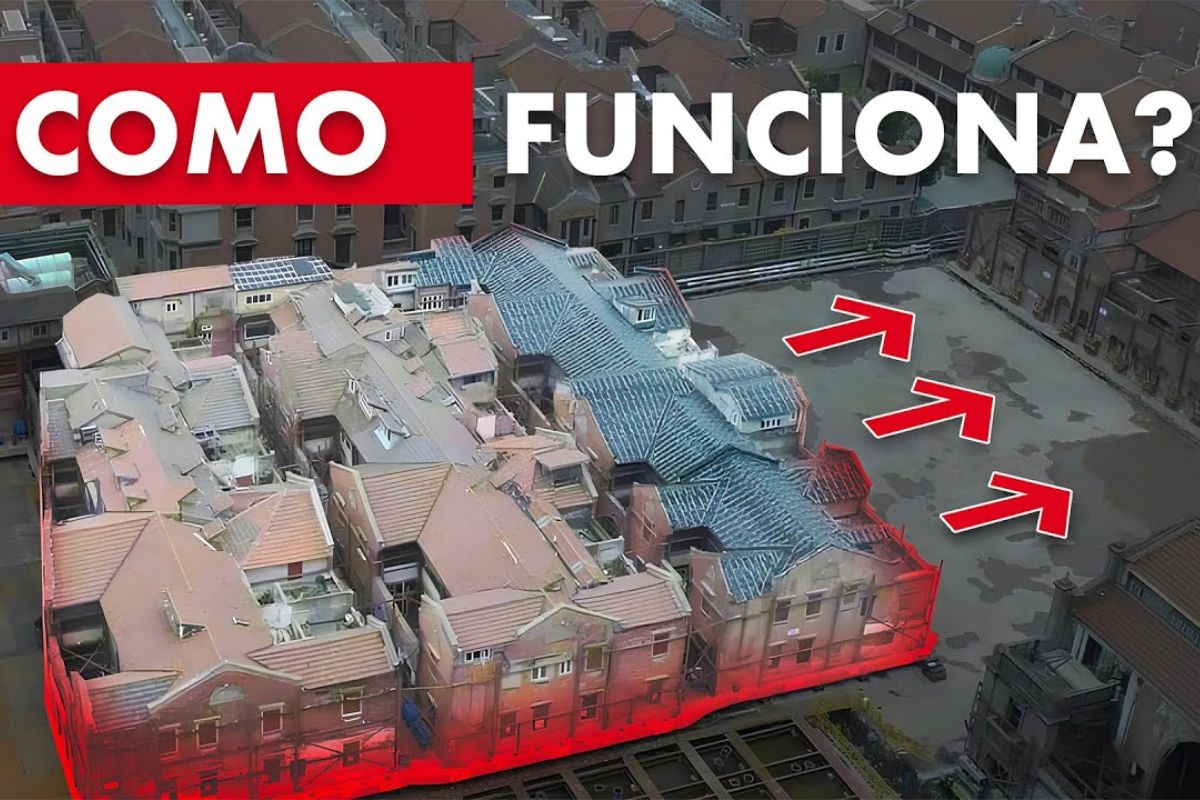


Chinese Engineering Removed An Entire Historical Block From The Path, Kept The Facades Intact And Freed The Exact Area For A 53 Thousand M² Underground Hub With Metro Integration And Service Areas, Combining Digital Modeling, Artificial Intelligence, Hydraulic Jacks And 432 Walking Robots To Move About 7.5 Thousand Tons Of Structures Over 100 Years Old
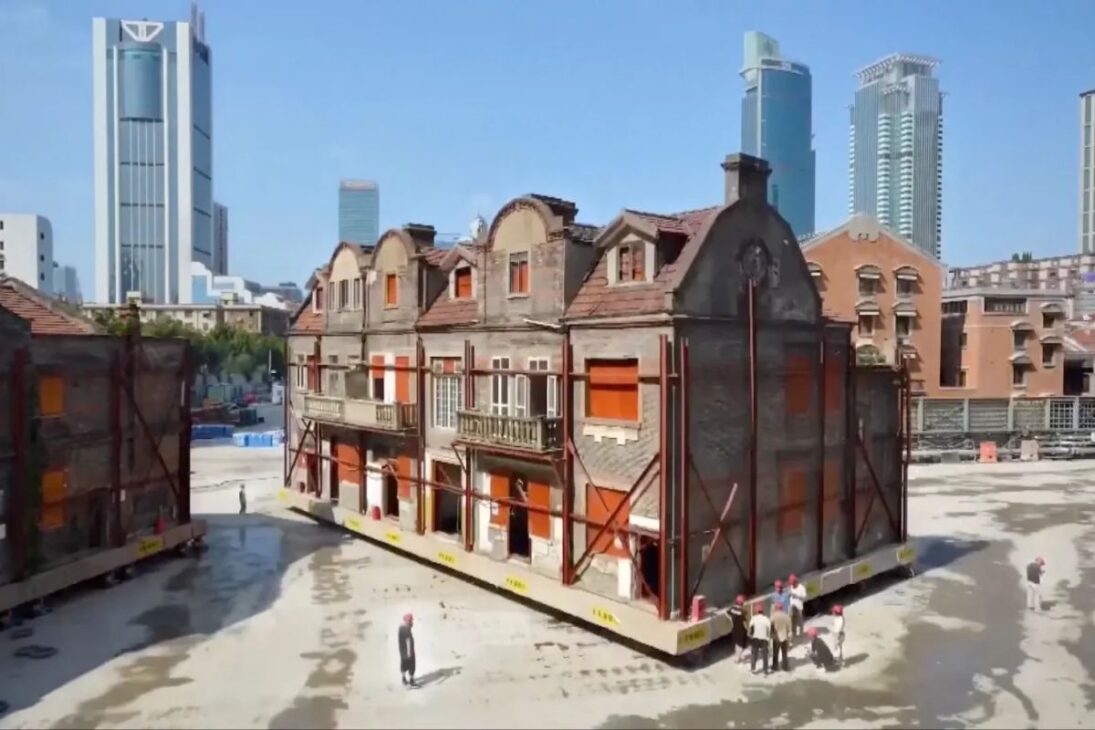
Chinese engineering carried out in May 2025 a structural relocation operation that seemed unfeasible: a set of century-old shikumen-style buildings was lifted and moved about 62 meters to allow the construction of a multi-level underground complex. The movement preserved heritage and maintained the schedule and layout of a major mobility project in Shanghai.
In 19 days, teams integrated BIM, cloud laser scanning, AI-assisted geotechnical analysis and synchronized robotic platforms. The result was a corridor free for deep excavations without demolishing the historical site. The operation became a new landmark of Chinese engineering and reinforced the viability of solutions that reconcile urban modernization and architectural preservation.
The Urban Problem And The Technical Decision
The project required a three-level underground with circulation for people and vehicles, as well as interfaces with existing metro lines.
-
United Kingdom clears 40 tons of shells and concrete into the sea in an innovative project that promises to restore a marine ecosystem lost for over 200 years and improve water quality.
-
With emergency diversion to abandoned mining craters, engineers save villages from a devastating flood that was advancing through the desert and threatening to destroy entire communities in a matter of hours.
-
It seems simple, but it enriches: from R$ 500 to R$ 6,000 per piece and up to 10 days of handcrafted production, how is the couple from Praia Grande making a high income with hyper-realistic miniatures and turning a hobby into a money-making machine?

-
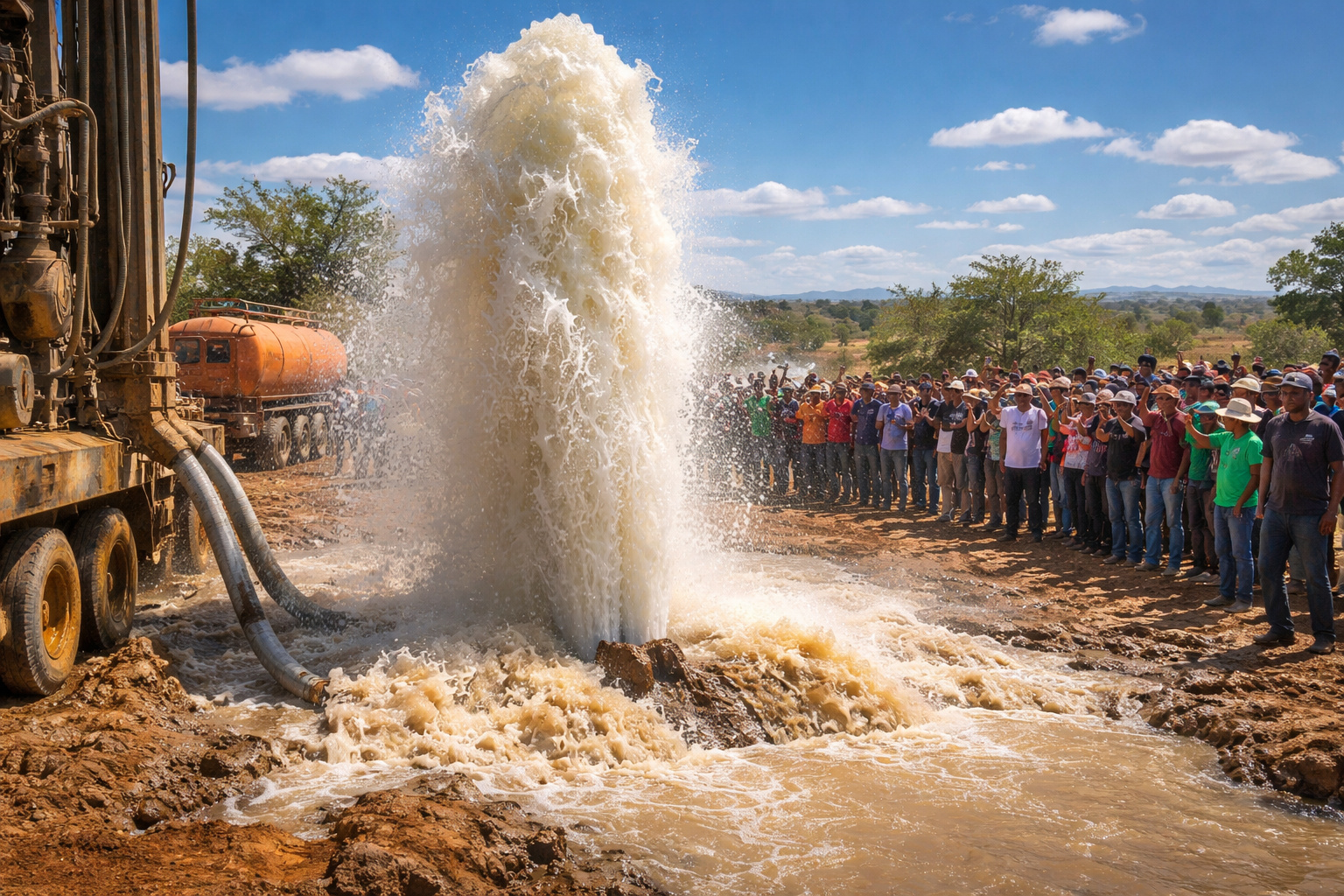
Artisanal well erupts with water in the sertão of Bahia, revealing a surprising flow with six active fissures underground and changing the landscape in the Bahian semi-arid region.

The ideal layout ran directly beneath the historical block, which imposed a classic planning dilemma in dense areas.
Demolishing would be quick, but it would destroy cultural and urban value. Redesigning the hub would entail technical and operational losses.
The defined alternative was the complete and temporary relocation of the set.
The plan anticipated removing the buildings from the excavation radius, executing the underground work and repositioning them at the original site.
The Chinese engineering opted for a precision solution, with controlled steps and redundancies to reduce structural risk.
Digital Modeling And Ground Diagnosis
The first phase created a digital twin of the block.
The team conducted laser scans and integrated data into a high-resolution BIM model, capturing geometries, conservation states, joints, and foundation interfaces. The model was used to plan temporary supports, routes, and interferences.
Meanwhile, compact probing robots navigated narrow corridors collecting samples and classifying materials with the help of learning algorithms.
The objective was to map ahead layers of clay, loose soil, conduits, and obstacles, reducing uncertainties during the excavation of niches under the foundations.
How The Buildings Were Raised And Placed On Robots
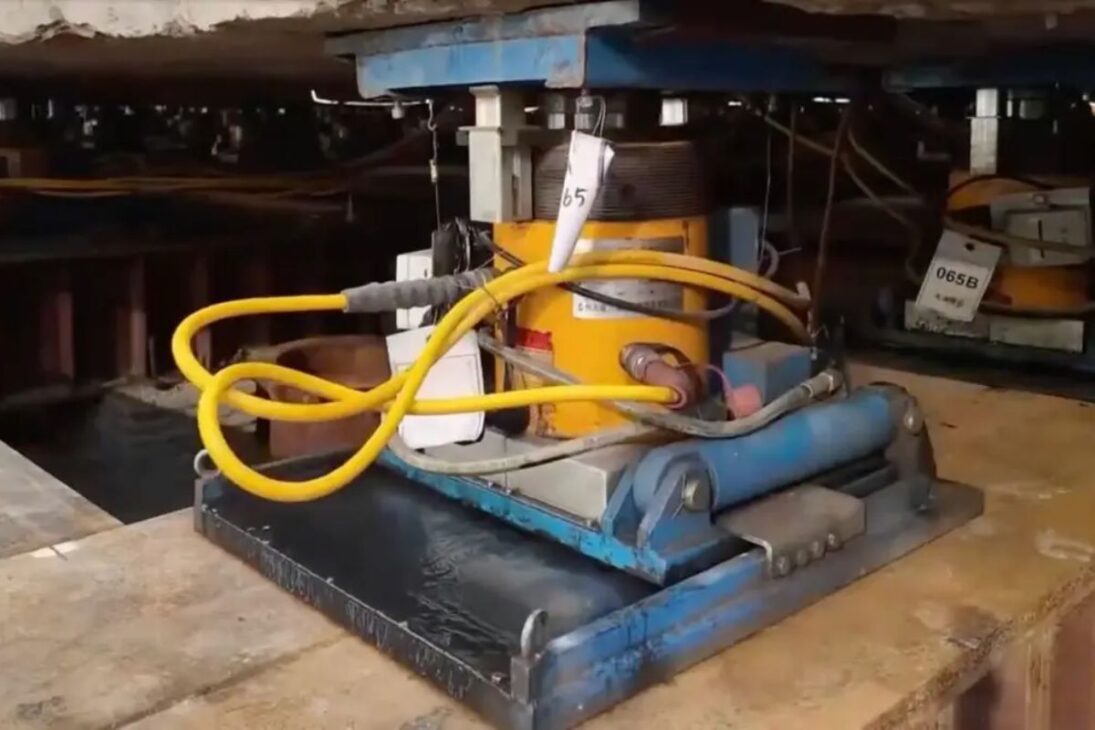
After preparation, synchronized hydraulic jacks lifted the foundations a few centimeters, just enough to install the modular transport system.
The structural set received a mesh of supports that redistributed loads, preserving global behavior while new efforts were applied.
With the technical gap guaranteed, 432 walking robots were positioned under the base.
The arrangement was designed to work at a slow and continuous cadence, with position and deformation sensors feeding the central control.
The goal was to eliminate abrupt accelerations and load asymmetries that could generate cracks in old masonry.
The Logistics Of Relocation And Millimetric Control
The relocation advanced on average 10 meters per day, with scheduled stops for visual inspections, plumb readings, and monitoring of deflections and fissures.
The central team validated each micro-step before authorizing the next cycle of the robots.
The routes included small adjustments to circumvent interferences and maintain the safety envelope.
The translation involved lateral and longitudinal movements to fully clear the work area.
The final repositioning repeated the protocol in reverse, with gradual lowering, recomposition of supports, and final checks of alignment and level.
Schedule, Risks And Mitigation
The schedule consolidated 19 days for the translation, a window chosen to align with critical excavation and containment milestones underground.
The main modeled risks were differential settlements, localized wall stability loss, and vibrations transmitted to masonry panels and wooden structures.
The mitigations included real-time telemetry, safe stop contingencies, support point redundancy, and conservative limits on speed and acceleration.
The team also maintained quick response kits for localized injections and emergency lockings, which did not need to be significantly activated.
Why Preserving Makes Technical And Economic Sense
Besides the cultural value, repurposing historical structures integrates the city and memory and can reduce emissions associated with demolition and reconstruction.
In high-density developments, preserving facades and relevant volumetries improves social acceptance, shortens licensing times and enhances the surrounding area.
In the case of Shanghai, Chinese engineering demonstrated that high-tech solutions can be competitive when compared to complete cycles of demolition, design, and new construction with historical finishing.
The additional benefit is maintaining authenticity, something that reconstruction rarely reproduces.
The Technical Legacy And Possible Standardization
The operation consolidates a replicable repertoire: detailed digital twin, robotic probing, synchronized lifting, and modular transport.
With clear protocols for instrumentation and operational limits, similar projects can enter the standardization phase and gain scale in historical centers.
Previous smaller-scale cases had already indicated the direction, but the coordination of 432 robots under an entire block creates a benchmark.
Chinese engineering adds to the state of the art an execution path that combines urban planning and precision engineering.
What This Solution Signals For Other Cities
Metropolises with relevant historical stocks and underground infrastructure goals may consider temporary relocation as a strategic alternative.
The key is to integrate planning, heritage, geotechnics, and automation from the initial studies, reducing rework and uncertainties during the work.
To gain traction, these programs require performance contracts, objective criteria for acceptable risk, and integrated teams.
The experience in Shanghai indicates that the dialogue between preservation and modernization can be technical, measurable, and scalable.
Chinese engineering turned an urban impasse into a case study.
Moving a century-old block without demolishing and opening space for an underground hub paves a new path for dense cities that cannot afford to choose between memory and future.
The synthesis lies in the method, in measurement and control.
Do you think your city would adopt a solution like this to preserve historical buildings while expanding underground infrastructure?







Enquanto isso no Brasil mal se constrói uma calçada.