





 Portuguese
  English
  Spanish
  8 min of reading
  4 comments




Açaí Seeds Turn Into Biochar: Waste Accumulated in the Streets of the Amazon Can Improve Soils, Sequester Carbon, and Reduce Dependency on Fertilizers
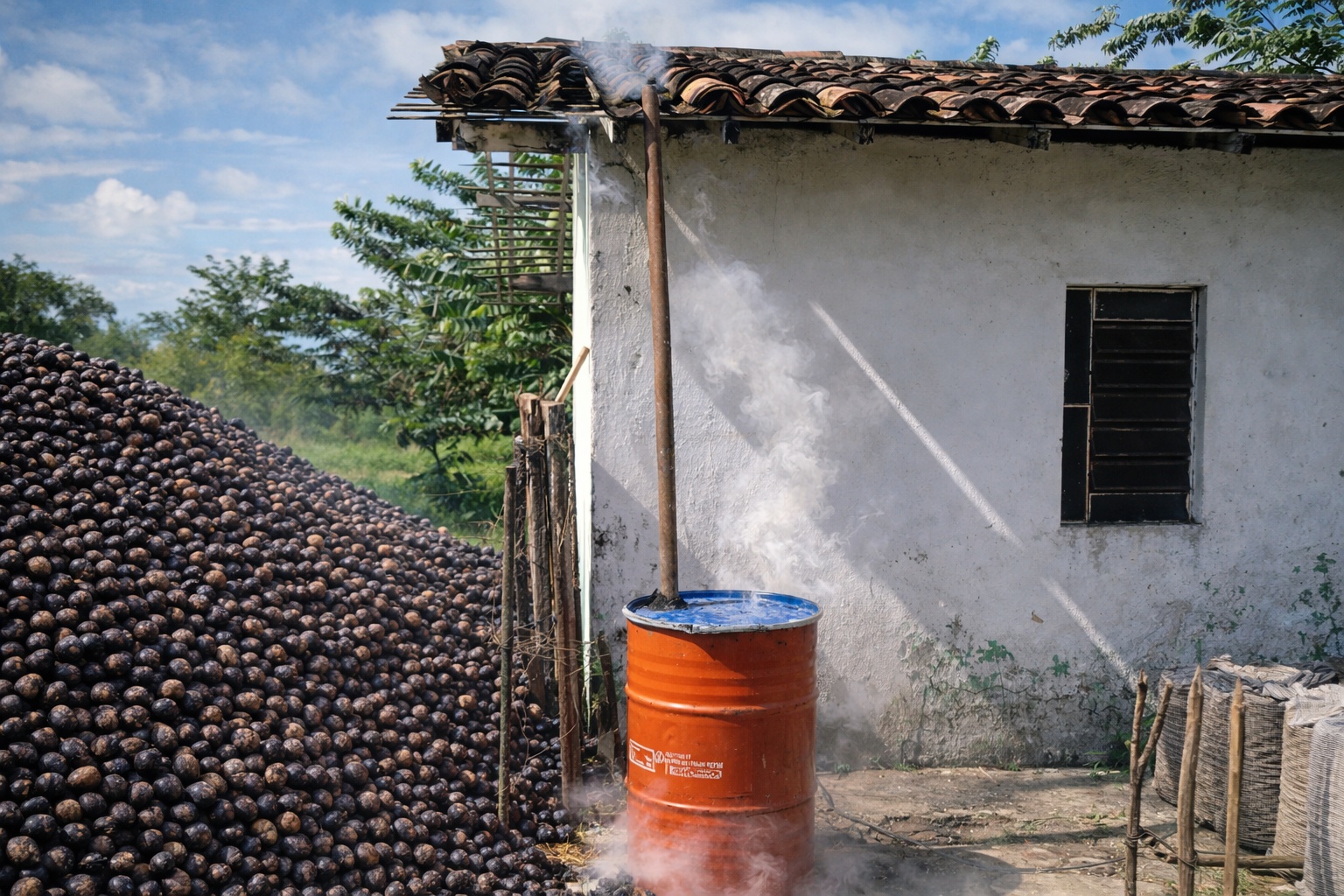
The seeds were everywhere. On the sidewalk in front of the blenders, along the banks of the streams, piled up in vacant lots. For every bowl of açaí consumed in Brazil or exported to the United States, Europe, and Asia, a mountain of hard seeds remained on the other side of the depulping machine. In Castanhal, a city in northeastern Pará that has become one of the main centers for açaí processing in the Amazon, this surplus became part of the urban landscape. The problem has quietly grown as fruit consumption increased in Brazil and abroad.
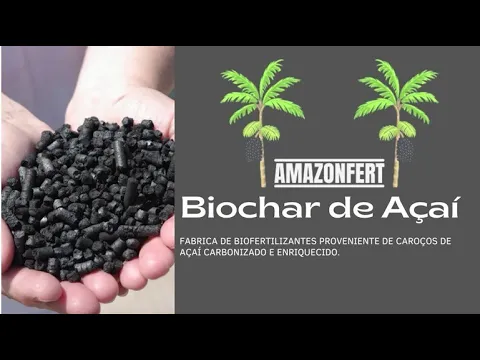
It was in this scenario that agronomist Moisés de Souza Mendonça, a professor at the Federal Institute of Education, Science, and Technology of Pará (IFPA), Castanhal campus, decided to look at what many viewed merely as garbage. What he saw in the discarded seed was not a useless waste, but an abundant raw material to produce agricultural biochar, also known as biochar, a material capable of improving soil fertility and capturing carbon for long periods.
The insight transformed a recurring urban problem—the disposal of açaí seeds—into a technological opportunity aimed at sustainable agriculture in the Amazon.
-
The water that almost everyone throws away after cooking potatoes carries nutrients released during the preparation and can be reused to help in the development of plants when used correctly at the base of gardens and pots, at no additional cost and without changing the routine.
-
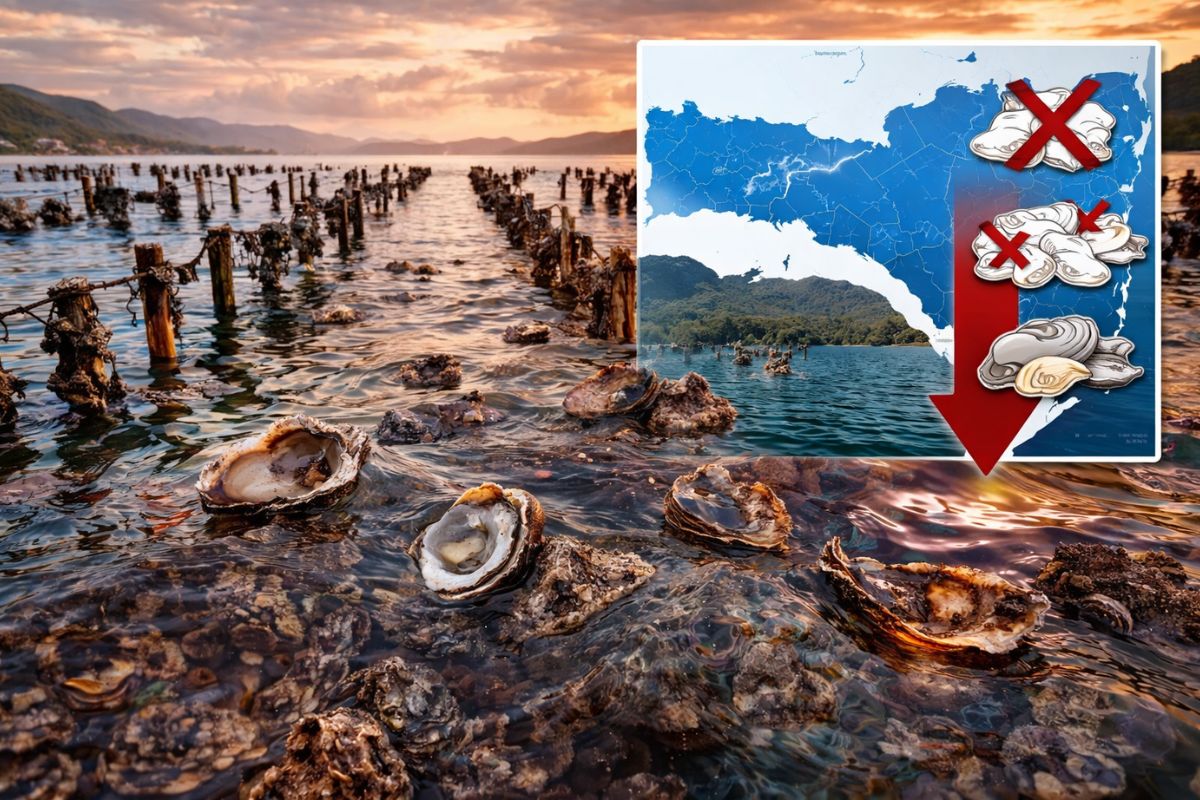
The sea water temperature rose from 28 to 34 degrees in Santa Catarina and killed up to 90% of the oysters: producers who planted over 1 million seeds lost practically everything and say that if it happens again, production is doomed to end.
-
An Indian tree that grows in the Brazilian Northeast produces an oil capable of acting against more than 200 species of pests and interrupting the insect cycle, gaining ground as a natural alternative in soybean, cotton, and vegetable crops.
-
The rise in oil prices in the Middle East is already affecting Brazilian sugar: mills in the Central-South are seeing their margins shrink just as ethanol gains strength.

Açaí Production Soars in Brazil, Generating Millions of Tons of Discarded Seeds
The growth of the açaí market over the past two decades has amplified the scale of the problem. According to data from IBGE, açaí production in Brazil jumped from about 6.7 million tons in 2014 to volumes exceeding tens of millions of tons annually in the next decade, driven by international demand and urban consumption of the fruit.

Pará accounts for approximately 90% of the national açaí production, being responsible for one of the largest recent economic expansions in Amazonian fruit cultivation. However, alongside the market growth, an environmental liability has emerged that is little discussed.
The structure of the fruit explains the problem. Only 20% to 30% of the weight of açaí corresponds to the edible pulp, while 70% to 80% of the total weight corresponds to the seed, an extremely hard and fibrous endocarp that needs to be discarded after the pulp is removed.
In practice, this means that for every ton of processed açaí, most of the volume becomes solid waste. In many Amazonian municipalities, this material ends up being discarded in open areas, riverbanks, or makeshift landfills. When accumulated in large quantities, açaí seeds can generate leachate, contaminate watercourses, and compromise urban streams.
In cities like Macapá, research released by the BORI Agency indicated that more than half of the blenders disposed of the seeds improperly, amplifying environmental impacts.
With around 1.75 million tons of açaí harvested just in Pará in 2023, and considering that approximately 85% of this volume becomes waste, the total number of discarded seeds annually in the Amazon reaches a gigantic scale.
Researcher Lina Bufalino, from the Federal Rural University of the Amazon (UFRA), describes the phenomenon as an environmental liability still without adequate disposal in many urban areas of the Amazon region.
Simple Kiln Made from Recycled Drums Transforms Açaí Seeds into Biochar
The solution developed by Moisés Mendonça started from a simple principle: creating accessible technology for family farmers using materials already available on rural properties.
During his master’s program in Soil Science at Unesp, Jaboticabal campus, the researcher traveled highways in the interior of Pará in search of equipment that could easily be adapted.
The answer appeared in something extremely common in the interior of Brazil: 200-liter metal drums discarded by industry and informally resold along the roads.
The developed system utilizes two fitted metal containers. The external 200-liter drum serves as a heating chamber. Inside, a smaller drum of approximately 100 liters is placed, fully filled with previously dried açaí seeds.

The space between the two drums is filled with pruning waste from the property, which serves as fuel for heating. When the fire is lit in the outer space, the inner chamber remains with low oxygen availability. Under these conditions, the process of pyrolysis, a thermal decomposition of biomass that transforms organic material into biochar, occurs.
In the first version of the prototype, the process took about 12 hours. With adjustments made in partnership with producers from a settlement in Castanhal, the system was refined, and the production time was reduced to 6 to 8 hours.
The research results were published in September 2024 in the Journal of Environmental Management, with participation from researchers from Unesp, USP/CENA, Federal University of Piauí, Federal University of West Pará, and California State University.
Pyrolysis Preserves Carbon and Nutrients That Would Be Lost in Common Burning
The difference between producing biochar and simply burning biomass is significant. In conventional burning—such as in open fires or traditional charcoal production—the biomass undergoes complete combustion in the presence of oxygen. In this process, almost all the carbon is released in the form of carbon dioxide.
The final residue is basically ash, containing only about 2% to 3% of the original carbon. Pyrolysis, on the other hand, occurs in an environment with little oxygen. In this case, the material does not undergo complete combustion but experiences controlled thermal decomposition.
The result is a highly porous charcoal rich in stable carbon. Studies reviewed by the journal Ciência Hoje indicate that the process can retain more than 50% of the carbon present in the original biomass.
According to Wanderley de Melo, Mendonça’s advisor at Unesp, biochar preserves important nutrients such as phosphorus, sulfur, and other essential elements for soil fertility—nutrients that would be lost in conventional burning.
Biochar Improves Water Retention and Fertility in Sandy Amazon Soils
Much of the Amazon’s soils exhibit low natural fertility. Despite the exuberance of the forest, the mineral substrate is often poor, acidic, and sandy, with low capacity to retain water and nutrients.
In Pará, where the climate alternates between six months of heavy rainfall and six months of drought, this characteristic can create instability in agricultural production. The experiment published in the Journal of Environmental Management evaluated different doses of açaí seed biochar applied to the soil.
Doses of 4, 8, 16, and 32 tons per hectare were tested, with different particle sizes. The chosen crop was black pepper, one of the important commercial crops in the Amazon region. The results showed significant gains in plant development.
The dose of 16 tons per hectare with 5 mm particles showed a significant increase in the height of the seedlings. Meanwhile, the application of 32 tons per hectare resulted in better root growth.
The experiment also recorded an increase in the soil’s water retention capacity and improvement in microbial activity, important indicators of soil health.
Biochar Also Acts as a Carbon Sequestration Technology in Soil
In addition to improving fertility, biochar has another important characteristic: it functions as a long-term carbon sequestration mechanism. Unlike common organic matter, which decomposes quickly in a tropical climate, the pyrogenic carbon present in biochar is highly stable.
Studies on the Terra Preta de Índio, Amazonian soils enriched with charcoal produced by ancient indigenous populations, indicate that this type of carbon can remain in the soil for centuries.
This means that the production of biochar can act as a negative emission technology, capturing atmospheric carbon and storing it in the soil. By transforming açaí seeds into biochar instead of letting them rot or be burned, farmers can retain more than half of the biomass’s carbon stored in the soil.
Open Technology Allows Farmers to Produce Biochar at Low Cost
One of the most important features of the project developed at IFPA is the proposal for open technology. The patents registered by the Amazon Bioinputs Laboratory are made available as open knowledge, allowing family farmers to reproduce the technology without legal barriers.
The settlement in Castanhal where the kiln was tested served as a social laboratory. The producers themselves participated in the equipment’s construction, suggested improvements, and helped adapt the system to the local reality.
The result was a simple technology, built with materials available in the region: discarded drums, pruning waste, and açaí seeds that were previously considered garbage.
Açaí Seeds Are Already Generating New Products and Businesses in the Amazon
The utilization of açaí seeds is beginning to gain new industrial and commercial uses in the Amazon. In Amapá, the company Engenho Café de Açaí produces about 12 tons per month of beverage made from roasted seeds, involving cooperatives with approximately a thousand families.

In Castanhal, a local company transforms around 50 tons of seeds into 5 to 6 tons of eco-friendly charcoal per month, a project that won third place in the Inova Amazônia 2024 award.
Votorantim Cimentos also uses açaí seeds as industrial fuel at its Primavera plant in Pará, where 64.3% of the energy used in 2024 came from waste. UFRA research studies the use of the outer fibers of the seeds in producing paper and new materials.
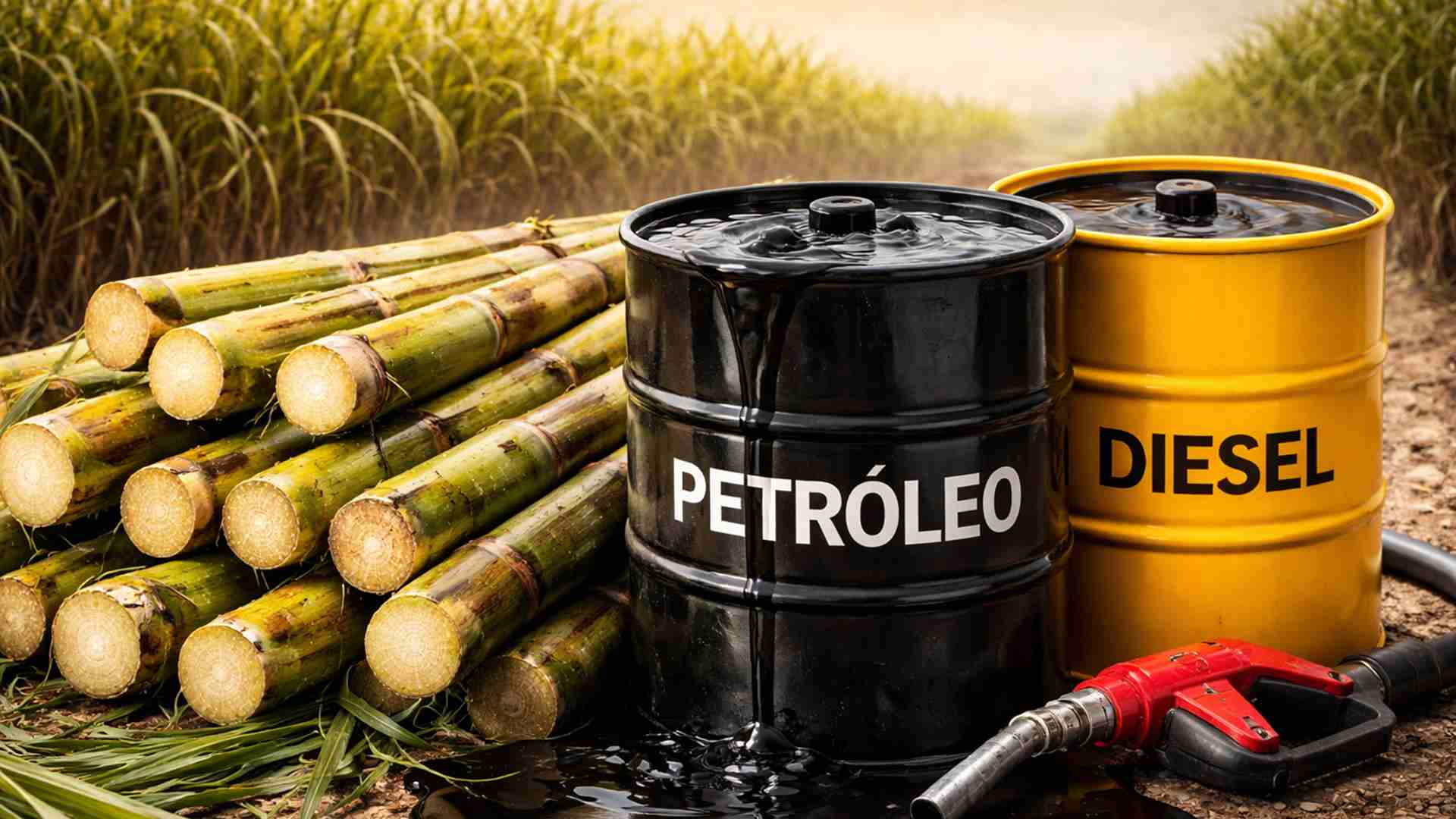
At the Federal University of Pará, the Sustenbio Energy project developed biofuels from the seeds with heating power comparable to that of gasoline, diesel, and kerosene.
A Waste That Grows With Global Açaí Consumption
With about 85% of the fruit’s weight turning into waste, the volume of available seeds grows at the same speed as global consumption of the fruit.
What Moisés Mendonça’s work demonstrated is that the starting point for transforming this environmental liability into a resource does not require sophisticated technology. Sometimes, it is enough to look at an abundant waste and ask the right question.
Because what seemed only like garbage can actually be a strategic raw material for sustainable agriculture, soil recovery, and carbon capture in the Amazon.









Pessoas abençoadas, Excelente, tudo que o planeta precisa, para continuar.
Apenas por curiosidade, pergunto: – Já foi pesquisado sobre o teor de gordura e proteína da amêndoa (interior do caroço do açaí) ? Assim como o resíduo da extração do óleo de dendê, (óleo de palma) é utilizado como alimento (ração) para o **** na época da seca, o caroço do açaí poderia também servir para extração de óleo e o resíduo para alimento dos rebanhos em épocas de seca.
Parabéns engenheiro, seus estudos são orientados por Deus, por isso veio essa ideia de aproveitar o caroço do açaí. Além de melhorar o meio ambiente, vai transformar e fonte de renda Que Deus te abençoe nesse projeto.
Que maravilloso, admiro muito pessoas com tanta sabedora e dedicação, parabens e infinitas saude, paz, e prosperidade