





 Portuguese
  English
  Spanish
  3 min of reading
  0 comments


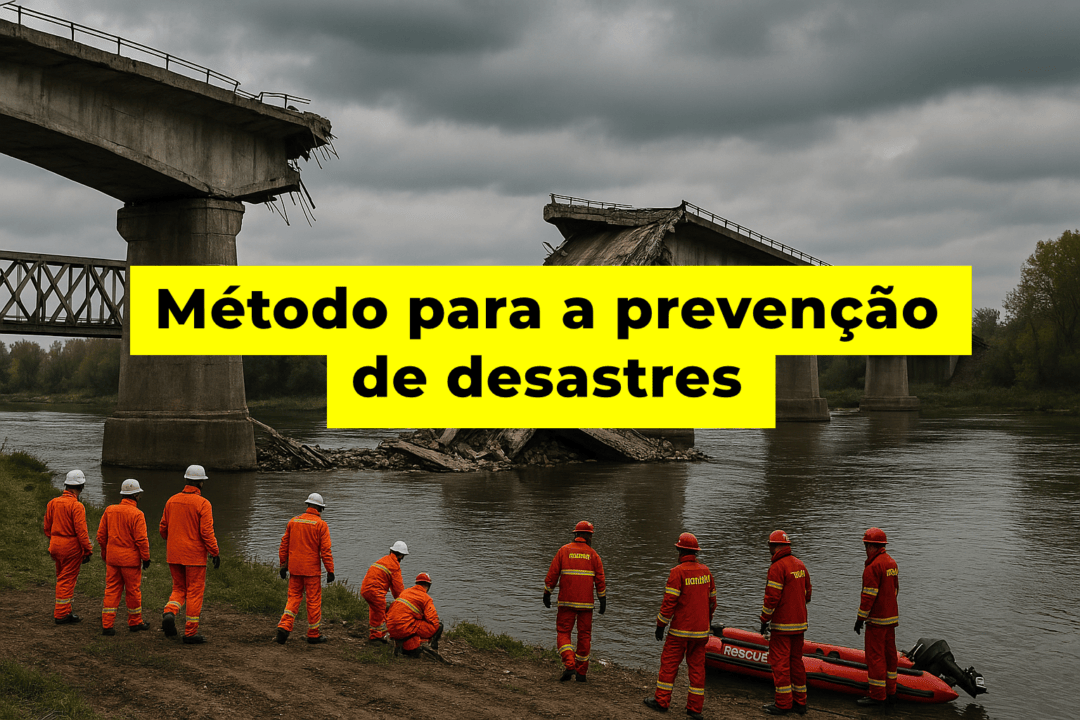
Infrastructure Safety Can Take a Leap Forward with the New System Developed by Engineers. The Technology Uses Sensors and Artificial Intelligence to Monitor in Real Time the Integrity of Bridges, Highways, and Dams, Allowing Risks to Be Detected Before They Become Disasters.
When the Francis Scott Key Bridge collapsed in Baltimore in March 2024, alarms were raised. Authorities, engineers, and experts worldwide began to wonder: how can we prevent the next tragedy? The answer may lie in the combination of inexpensive sensors and artificial intelligence.
A System That Listens to Structures
Researchers at Michigan State University created an intelligent system called MIDAS — short for Mechanics-Informed Damage Assessment of Structure. The idea is simple yet powerful: use sensors to “listen” to structures like bridges, highways, and dams. If something seems out of the ordinary, AI sends a real-time alert.
It’s like a smartwatch, but instead of measuring heartbeats, MIDAS monitors the “pulse” of large structures. It learns how a healthy structure behaves and starts to recognize early signs of damage, even if they are invisible to the naked eye.
-
The radish leaf that almost everyone throws away has more polyphenols, flavonoids, and fiber than the consumed root, and a 2025 study showed that the leaf contains compounds that protect the intestine, combat inflammation, and may inhibit the growth of cancer cells.

-
A planet that seemed to defy the laws of physics has intrigued scientists for decades, until the James Webb revealed what is really affecting Saturn’s rotation.

-
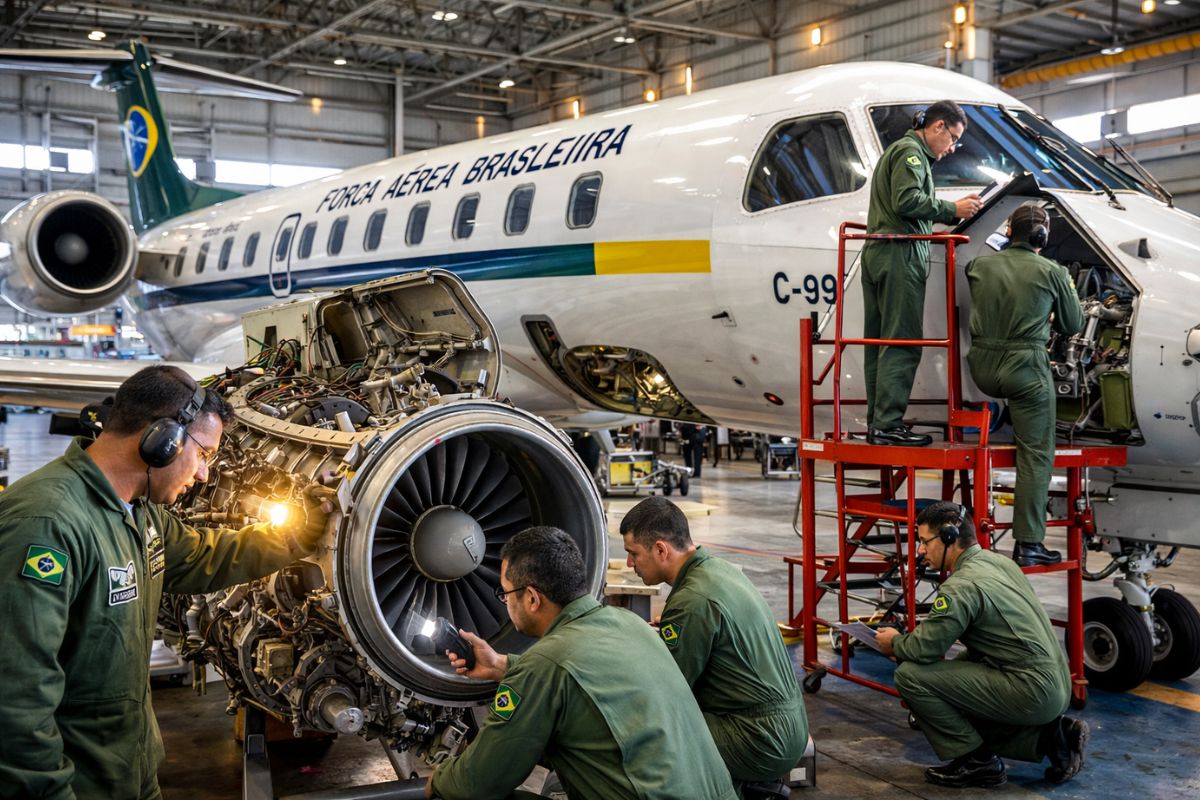
For the first time in history, the Brazilian Air Force conducted a highly complex inspection on the C-99 jet independently, without relying on foreign companies, marking a new level of logistical autonomy and operational sovereignty.
-
Beet greens that end up in the trash in many kitchens contain a high concentration of antioxidants, and a 2025 study shows that extracts may have even more potent activity when transformed into microparticles.


The Brain of the System
The difference with MIDAS is in its artificial intelligence. Unlike systems that merely analyze data, it is trained with mechanical knowledge.
This allows it to identify more subtle problems that would go unnoticed in other analyses.
According to Professor Nizar Lajnef, one of the project leaders, the idea is to create a type of “electrocardiogram” for bridges. This way, engineers can know exactly where the problem is and how severe it is before it becomes dangerous.
Install and Forget?
The system operates on a “deploy and forget” model. In other words, once installed, it runs independently, monitoring quietly.
If something happens — an earthquake, a fire, an impact — MIDAS rechecks the structure and issues immediate alerts.
This allows repairs to be made quickly, before damage evolves into a tragedy. In the case of the bridge in Baltimore, for example, the technology could have identified flaws before the accident and enabled reinforcements to the structure.
Aging Infrastructure, Tight Budgets
The United States has over 620,000 bridges. Many are old and need maintenance. But rebuilding everything is expensive. “We need an efficient way to decide what to repair first,” explains Lajnef. And that’s where MIDAS comes in.
By prioritizing the most vulnerable points, the system helps to better utilize public resources. It acts as a triage, indicating where the risk is greatest and where repairs are most urgent.
Brazil faces significant challenges in maintaining its highway bridges. With a total of 113,168 bridges, only 14,874 have been inventoried, and 12,142 have inspection records.
Of these, 1,039 are classified as being in poor or critical condition. It is estimated that approximately 42,000 bridges in the country are over 50 years old, requiring special attention due to natural wear and increased traffic.
The tragedy that occurred in December 2024, with the collapse of the Juscelino Kubitschek de Oliveira Bridge between Tocantins and Maranhão, resulting in 14 deaths, highlighted the urgency of preventive measures.
Beyond Technology
The research is also training new professionals. Doctoral candidates Xuyang Li and Mahdi Masmoudi were directly involved in the development and testing of MIDAS.
The idea is for this new generation of specialists to take the technology even further.
Another important point is the application in emergency situations. In fires like those that recently occurred in Los Angeles, MIDAS could assess the impact on roads and buildings in real time. This would facilitate quick and safe evacuations.
“We listen so that when something bad happens, we are ready,” sums up Lajnef. The goal of MIDAS is not to predict the future but to detect the first signs of a problem.
With this, preventing new disasters can stop being a race against time — and become a planned, precise, and safer response.
The research was published in Nature Communications.









Seja o primeiro a reagir!