





 Portuguese
  English
  Spanish
  4 min of reading
  0 comments


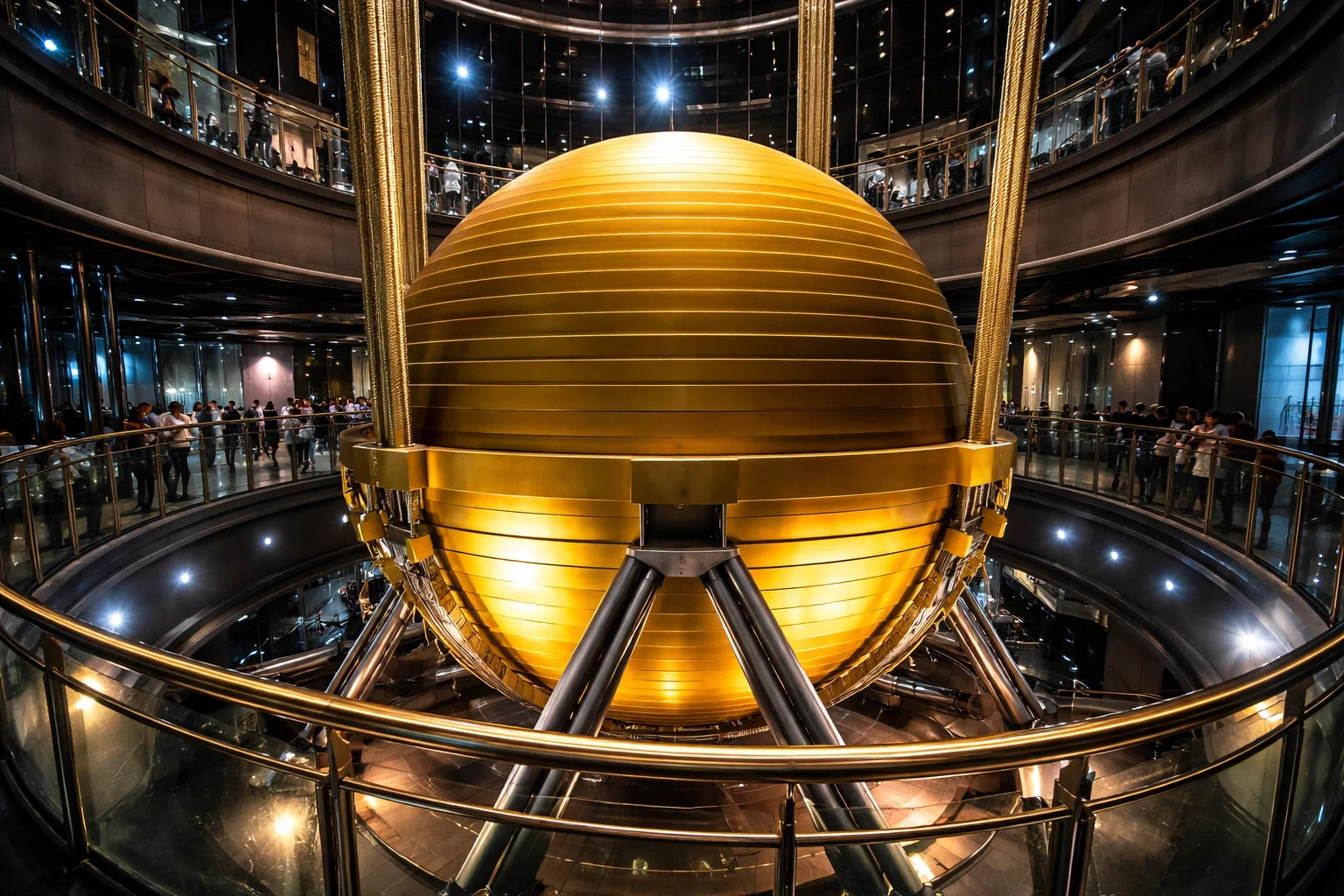
Inside Taipei 101 in Taiwan, a metal sphere weighing about 730 tons was installed between the upper floors of the building to reduce up to 40 percent of the oscillation caused by typhoons and earthquakes
Imagine a building with 508 meters in height being hit by violent winds or earthquakes. For many structures, natural forces like this pose a real risk.
In Taiwan, where earthquakes and typhoons are part of the climate reality, erecting a skyscraper of this magnitude seemed like a massive challenge for any engineering team.


It was in this scenario that one of the most curious solutions ever applied in building construction emerged. Inside the famous Taipei 101, there is a colossal metal sphere weighing about 730 tons.
-
Attracting around 250,000 people a year, a lighthouse 200 meters from the sea, on a 60-meter high cliff, on the North Sea coast in Denmark, becomes one of the most impressive examples of how nature can threaten historical buildings.

-
The narrowest house in the world is only 63 centimeters wide, but inside it can accommodate a bathroom, kitchen, bedroom, office, and even two staircases.

-
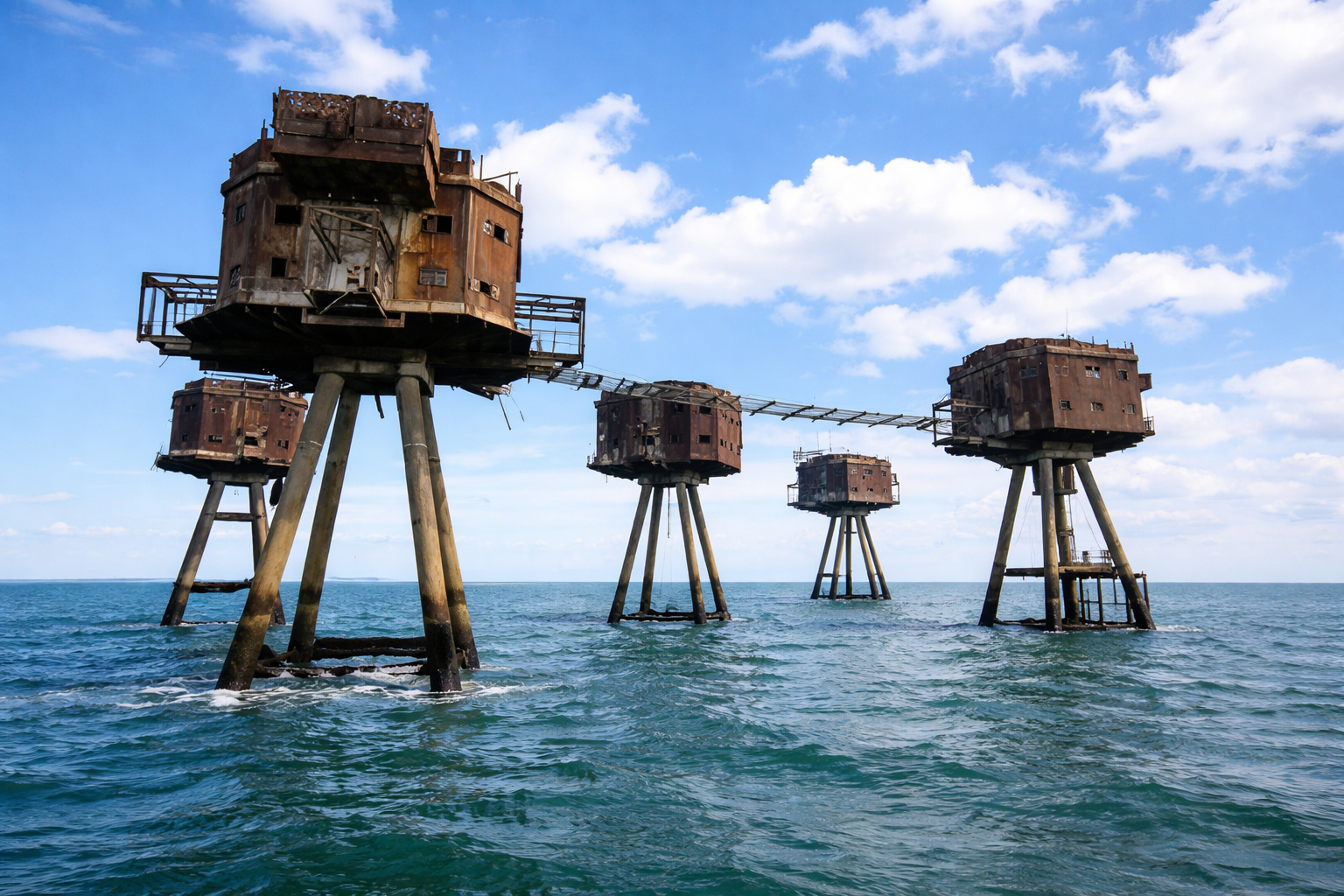
In the middle of the sea, these enormous concrete and steel structures, built by the British Navy to protect strategic maritime routes, look like they came straight out of a Star Wars movie.
-
For years, no one could cross a neighborhood in Tokyo because of the tracks, but an impressive solution changed mobility and completely transformed the local routine.


The detail is noteworthy because this sphere is not there for aesthetics. It was installed to move and help stabilize the building when nature shows its strength.
The Enormous Challenge of Building a 508-Meter Skyscraper in a Region Frequently Hit by Typhoons and Seismic Activity
Taiwan is located in a region where earthquakes occur frequently. Some are mild, others can cause considerable impacts.
At the same time, the island also faces the passage of typhoons, intense storms that bring extremely strong winds.
This scenario created a significant problem for the engineers responsible for the Taipei 101 project. The taller a building becomes, the greater the movement caused by wind or ground vibrations tends to be.
In very tall buildings, this movement can be felt by occupants on the upper floors. Without proper solutions, the sensation can generate discomfort and concern.
It was necessary to find a way to reduce this sway without compromising the colossal structure of the building.
The 730-Ton Metal Sphere That Moves Inside the Building to Neutralize Part of the Forces of Nature
The answer to this challenge came with a system known in structural engineering as a mass damper. In the case of Taipei 101, it appears in the form of a huge metal sphere suspended inside the tower.
This mechanism works as a large counterweight.
When strong winds hit the building or when an earthquake occurs, the building tends to sway slightly. At this moment, the sphere begins to move in the opposite direction.
This movement helps reduce part of the energy that makes the tower sway.
In Taipei 101, the sphere weighs approximately 730 tons and is positioned between some of the upper floors of the construction.
According to estimates from experts, the system can reduce the building’s sway by up to 40 percent in situations of extreme wind or seismic activity.
The Reason Why the Damper of Taipei 101 Became One of the Greatest Curiosities in Modern Engineering
Similar systems exist in other tall buildings around the world. However, the case of Taipei 101 stands out due to the impressive scale of the project.
It is considered that the sphere installed in the building is the largest visible spherical mass damper in the world.
It has several meters in diameter and resembles a gigantic metal ball suspended by strong cables within the structure.
Unlike many engineering equipment that are hidden, this system can be seen by visitors who go up to the observation area of the building.
The solution transformed a technical element into one of the most curious attractions of the building.
How This Engineering Solution Helps a Gigantic Skyscraper Face Violent Winds Without Transmitting a Sense of Instability
In extremely tall buildings, the wind can generate considerable forces on the structure.
Even small movements can be perceived by those on the upper floors, especially on stormy days.
The damper installed in Taipei 101 acts as a stabilizer. By moving slowly, it absorbs some of the forces acting on the tower.
This reduces the sensation of sway and helps maintain the comfort of those inside the building.
According to experts, solutions of this type have become increasingly important as skyscrapers have surpassed impressive height marks in various parts of the world.
The Impact of This Project on Skyscraper Engineering and the Search for Taller Structures
When Taipei 101 was inaugurated in 2004, it drew global attention not only for its height but also for the structural solutions adopted.
The combination of architecture and advanced engineering showed that giant constructions can exist even in regions exposed to intense natural phenomena.
Subsequent projects began to consider motion control systems as an important part of the planning of very tall buildings.
In the case of Taipei 101, the metal sphere ended up becoming a symbol of this innovation.
It represents a simple yet powerful idea. A giant counterweight capable of protecting an entire skyscraper against natural forces that would normally put structures of this size to the test.
It is precisely this kind of solution that continues to pique the curiosity of engineers, architects, and visitors from all over the globe.
This giant mechanism installed inside Taipei 101 continues to draw attention precisely because it demonstrates how engineering can transform a huge problem into a surprising solution.
If this engineering curiosity surprised you, please share your opinion in the comments. Did you already know about this gigantic system used inside a skyscraper?




-

-

2 pessoas reagiram a isso.