





 Portuguese
  English
  Spanish
  6 min of reading
  0 comments


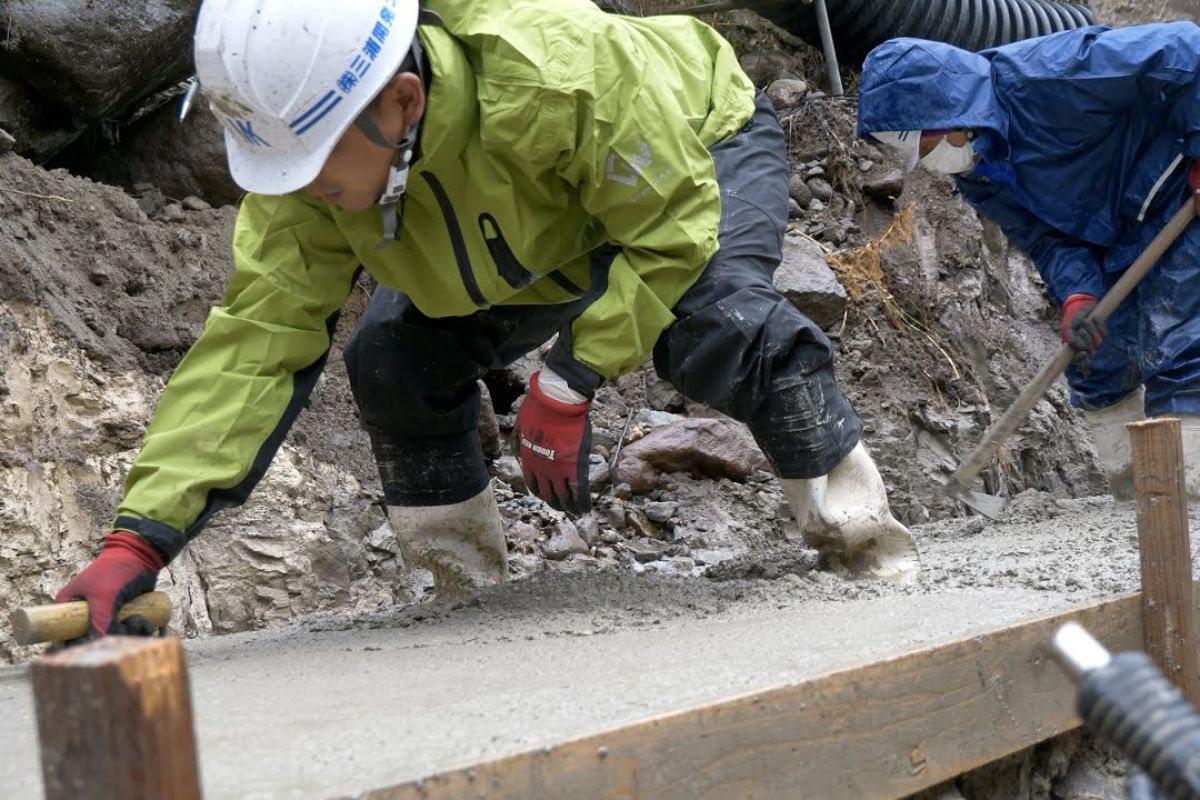
At The Construction Site, Japanese Engineers Dig The Riverbed When Detecting A Tributary Capable Of Causing Erosion, Build A Deep Dam Strip, Use Disposable Concrete For Leveling, Erect Formwork With Plastic Cones And Spacers, Vibrate The Concrete, Refill Everything And Seek To Contain Future Floods Without Interrupting The Main Flow
The Japanese engineers began the intervention when they identified that a tributary running close to the main course could accelerate erosion in the riverbed. The response was to dig deeply, create a concrete structure known as a dam strip and block the tributary’s path on the opposite side, reducing the direct impact of the current on the main bank.
At the same site, the Japanese engineers also executed maintenance measures that seem simple but are technical: formwork nailed over leveling concrete, concrete pouring with vibration, disassembly and refilling, in addition to sediment control, high-pressure cleaning, and work to contain weeds on slopes and watercourses, targeting flooding and erosion.
Diagnosis In The Riverbed And The Risk Of The Tributary

The starting point of the report is straightforward: a tributary close to the main river was deemed capable of causing erosion in the riverbed.
-
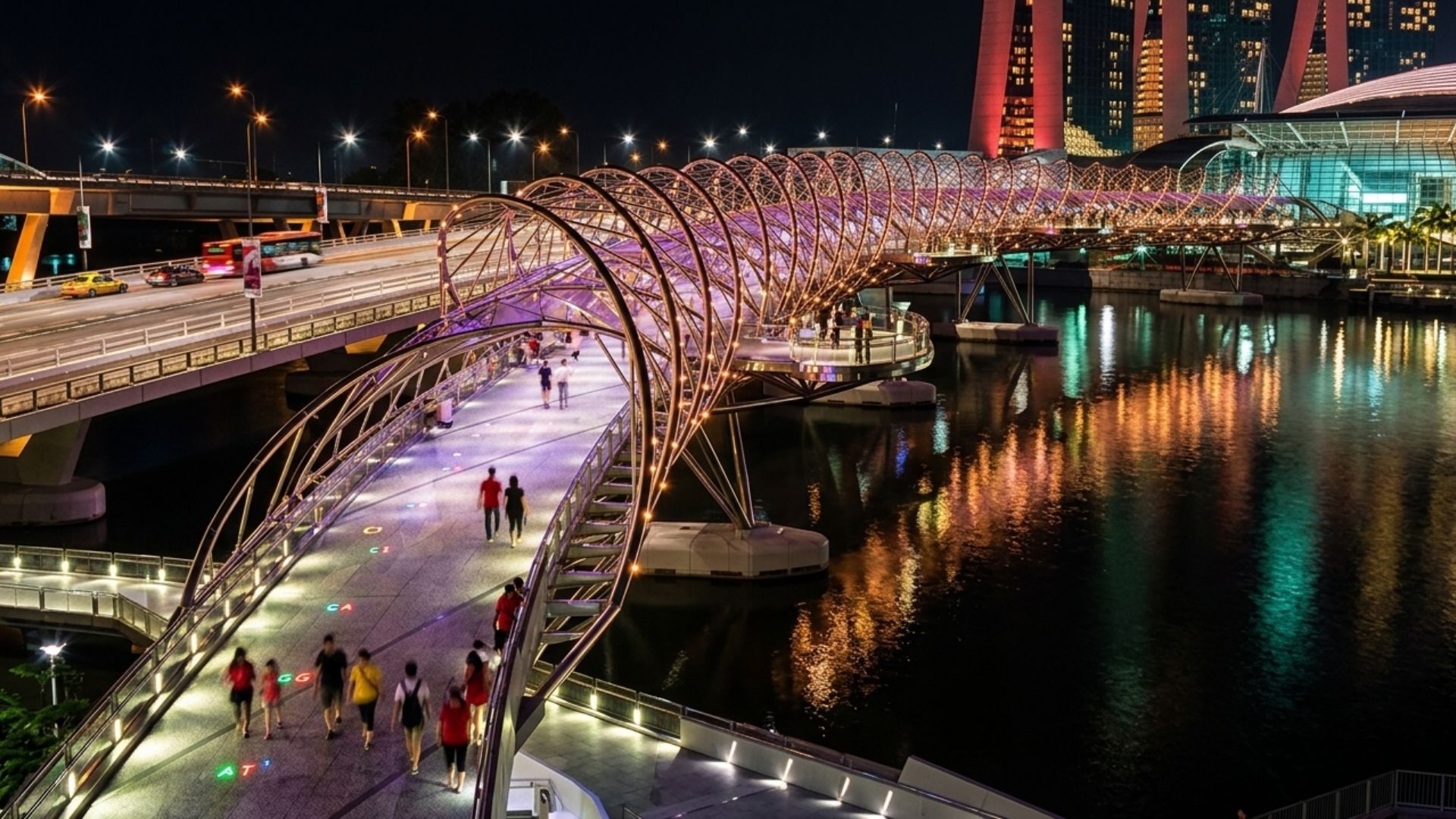
With a DNA shape, this bridge in Singapore draws attention in modern architecture and surprises tourists by transforming a simple crossing into an unforgettable visual experience in the urban heart.
-
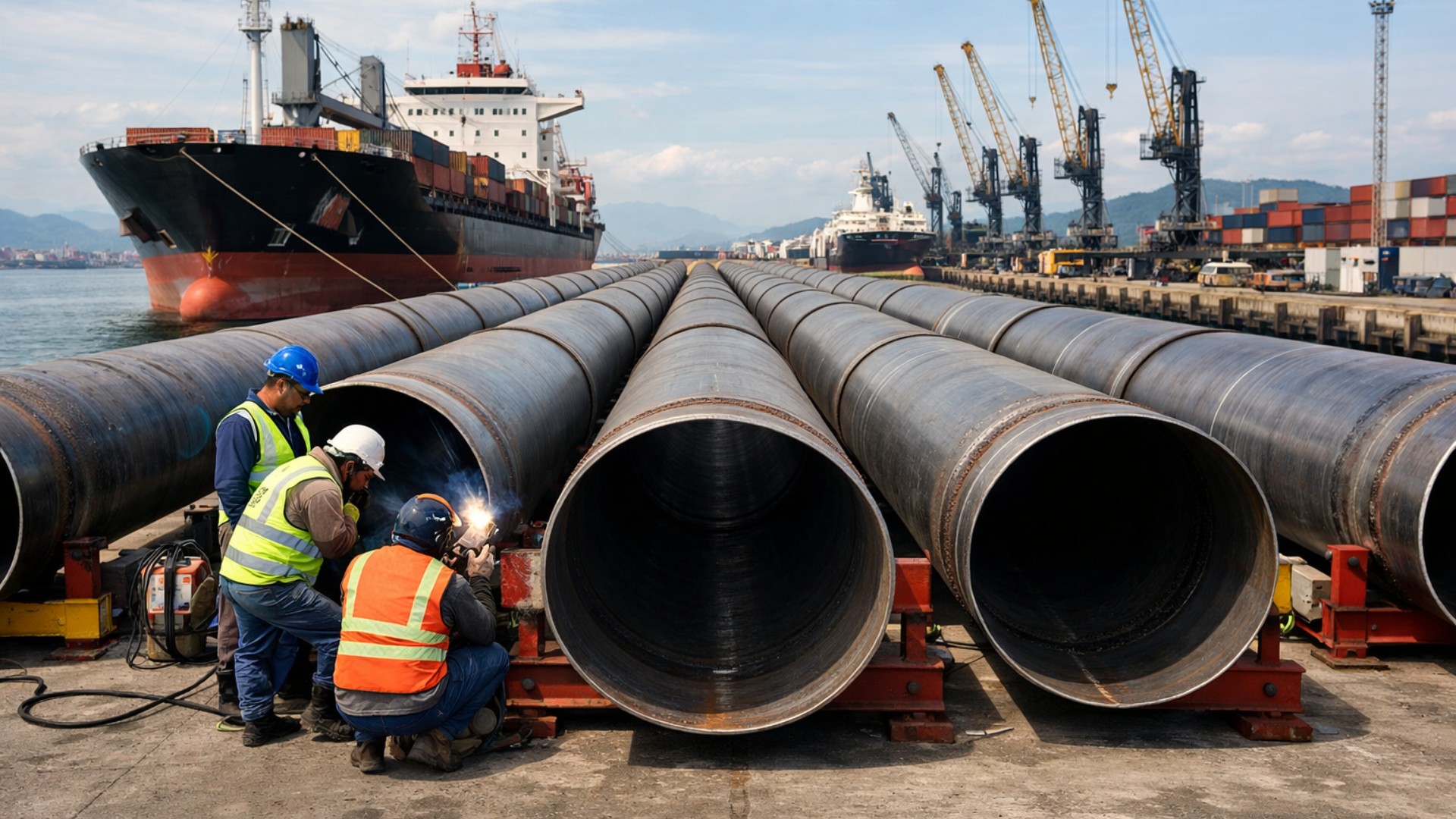
Giant underwater pipeline begins to take shape with a R$ 134.7 million project at the Port of Santos: the 1.7 km structure uses 12-meter and 700 mm pipes to supply water to 450,000 people in Guarujá.
-
A mason reveals a professional plastering technique that uses aligned guides and a 3-meter ruler to plaster an entire wall in up to 3 hours, without visible seams, with uniform thickness, perfect plumb, and a finish ready for painting without rework.

-
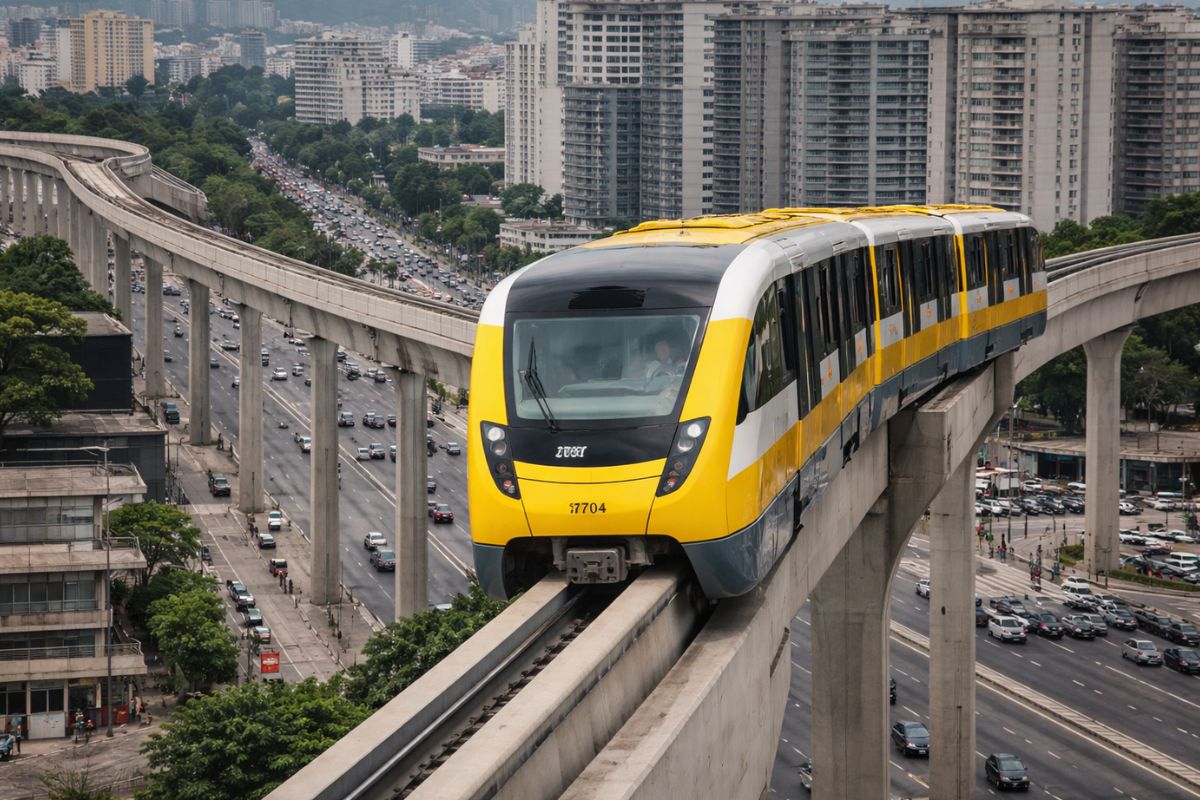
The project that was supposed to be ready for the 2014 World Cup in Brazil debuted with a 12-year delay and nearly R$ 6 billion invested: the Line 17-Gold of the São Paulo monorail opened with reduced hours and is only expected to operate fully in October.

To address this risk, the team excavated the riverbed deeply and positioned concrete structures that act as a barrier, guiding the tributary’s flow away from the main bank.
In the end, the logic is hydraulic and geometric: the tributary now flows along deep dam-like structures, and the main bank is less exposed to the lateral attack of the water, which reduces the chance of erosion and helps in preventing floods.
Leveling Concrete And The Stage Called Disposable

Before the formwork, there was the placement and leveling of the concrete leak.
This concrete was described as being used to improve the efficiency of the subsequent formwork stages and, since it does not require structural strength, it is referred to as disposable concrete.
The leveling concrete creates a regular base for the fitting and plumb of the pieces.
In practice, it prepares the ground for the formwork to work precisely, avoiding misalignments that could compromise the shape and finish of the concrete in the final structure.
Formwork With Plastic Cones, Foam, Steel Tubes And Separator
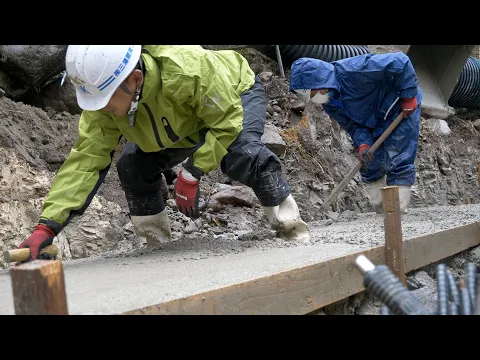

With the base concrete completed, the process moved on to the assembly of the formwork.
The processed formwork was positioned over the concrete, nailed to the fixed timbers, and aligned vertically with support stakes.
Next, the panels were connected and the formwork started to repeat the same process on the opposite side.
During the fastening, holes were made in the connected formwork to install plastic cones for reinforcement.
Foam ties were attached to the screws of these cones, and the assembly received steel tubes and a wedge-type sealing plate to tighten the clamp, preventing the formwork from deforming or shifting under the concrete pressure.
Between the two faces, the separator, a metal accessory, was placed to maintain a constant distance between opposing formworks.
In the corners, the front wood was installed to protect the concrete, reducing chipping during use and removal.
Welded Reinforcement To Withstand The Pressure Of The Concrete
After closing the mold, came the reinforcement.
The bars inserted into the concrete and the separators were welded together to increase the formwork’s capacity to withstand internal pressure during concrete pouring.
This step connects the mold’s stability to the concrete’s performance, ensuring that the planned geometry is maintained when the material is still plastic and subjected to vibration.
Concrete Pouring With Vibration, Corner Filling And Finishing
In the concrete placement, the assembled formwork was filled to form the structure.
Vibrations were used to evenly distribute the concrete, ensuring filling of the corners and avoiding voids.
Once the concrete had hardened to a certain point, the surface received a finish described as perfect.
With the pouring completed, the disassembly of the formwork included removing the plastic cone and repairing the holes left by this piece.
Refilling, Drainage Removal And The Invisible Barrier
With the dam-like structure completed, the excavated area of the riverbed was refilled.
The drainage piping installed to prevent flooding during the work was removed, marking the closure of the construction cycle on-site.
The final outcome of the report is that the tributaries now flow close to the main river but guided by deep structures, reducing interference with the main bank.
It is the idea of an invisible barrier: the concrete is buried in the riverbed, and the goal is to create a more disaster-resistant environment, including floods.
Slopes, Watercourses And The Fight Against Weeds
On another front, the report describes slopes next to the road with significant weed growth.
Local residents regularly cut the grass almost for free, but the cost and physical effort increased, leading to measures to reduce the burden.
Accumulated weeds in the watercourses were also removed.
Then, elastomer was placed between the concrete during pouring to prevent cracking.
Finally, the application of concrete for weed control covered the soil, physically blocking grass growth, reducing erosion from rainwater and preventing soil from washing into the watercourses.
For safety, the surface of the concrete was left rough to prevent slipping.
The expected effect is twofold: less manual maintenance and fewer sediments reaching the watercourses, a sensitive point in flood scenarios.
Heavy Machinery In The Riverbed, Crane And Sediment Removal
The report also details the transport of heavy machinery, loading and unloading at designated sites, and installation of accessory parts.
One example was the long arm on the hydraulic excavator, which extends the reach and allows more distant and deeper work in the riverbed.
In crane work, equipment was lifted and lowered to the riverbed.
There was grass cutting on the slopes to improve visibility, creating a path for water at the bank to avoid stagnation, and removing accumulated branches.
The removal of sediments and weeds in the river is presented as a preventive measure: sediments block the flow, raise water levels, and increase the risk of floods.
At this site, it was indicated that one kilometer of river sediments would be removed, with work repeated over several weeks.
High-Pressure Cleaning And The 10-Year Contrast
Another documented step was high-pressure washing cleaning.
The method applied a water jet perpendicular to the dirty surface, removing dirt, algae, and mold through the force of the flow.
The intermediate progress was described as a return to the brightness of 10 years ago, and the conclusion highlights the before-and-after contrast as practical evidence of the procedure’s effectiveness.
The sum of the actions shows Japanese engineers combining excavation, formwork, and concrete in the riverbed with slope maintenance, sediment removal, and technical cleaning.
The strategy is to hide the infrastructure where it needs to act, guide tributaries, reduce erosion, and lower exposure to floods without relying solely on visible works.
If your city suffers from sediment accumulation, erosion, or floods, it is worth following watercourse cleaning schedules, observing influx points, and documenting changes in the riverbed to demand well-executed interventions. In your area, have you seen Japanese engineers or local teams apply formwork and concrete in the riverbed to contain floods?









-

Uma pessoa reagiu a isso.