





 Portuguese
  English
  Spanish
  5 min of reading
  1 comment


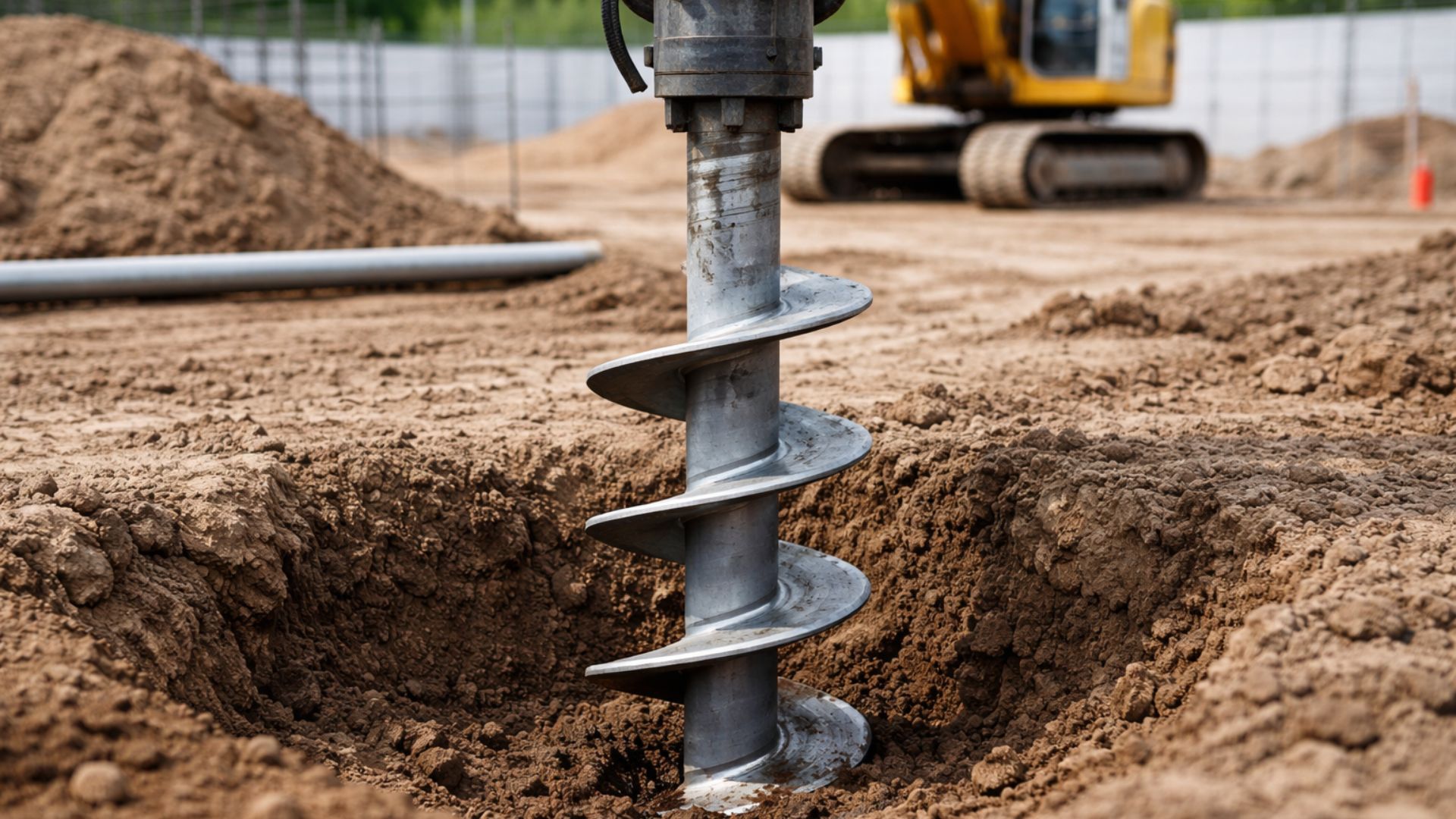


Industrialized Foundation System Advances on Job Sites by Shortening Deadlines, Reducing Excavations and Changing the Traditional Logic of Construction, with Rotation Installation, Torque Control in Field and Possibility of Releasing Workfronts on the Same Day, as Long as Project, Soil and Execution Meet Technical Requirements.
When a project schedule does not allow for weeks of waiting, an alternative is gaining traction on Brazilian job sites.
In this model, the traditional logic of digging, assembling forms, pouring concrete, and waiting for curing gives way to the installation of screw-like metallic elements, visually similar to “giant screws,” driven until reaching defined depth and resistance in the project.
This is the screw foundation, also known as screw pile or screw stake, a rotating installation system that can allow for the immediate advancement of the following stages, as long as the sizing and execution follow rigorous technical criteria.
-
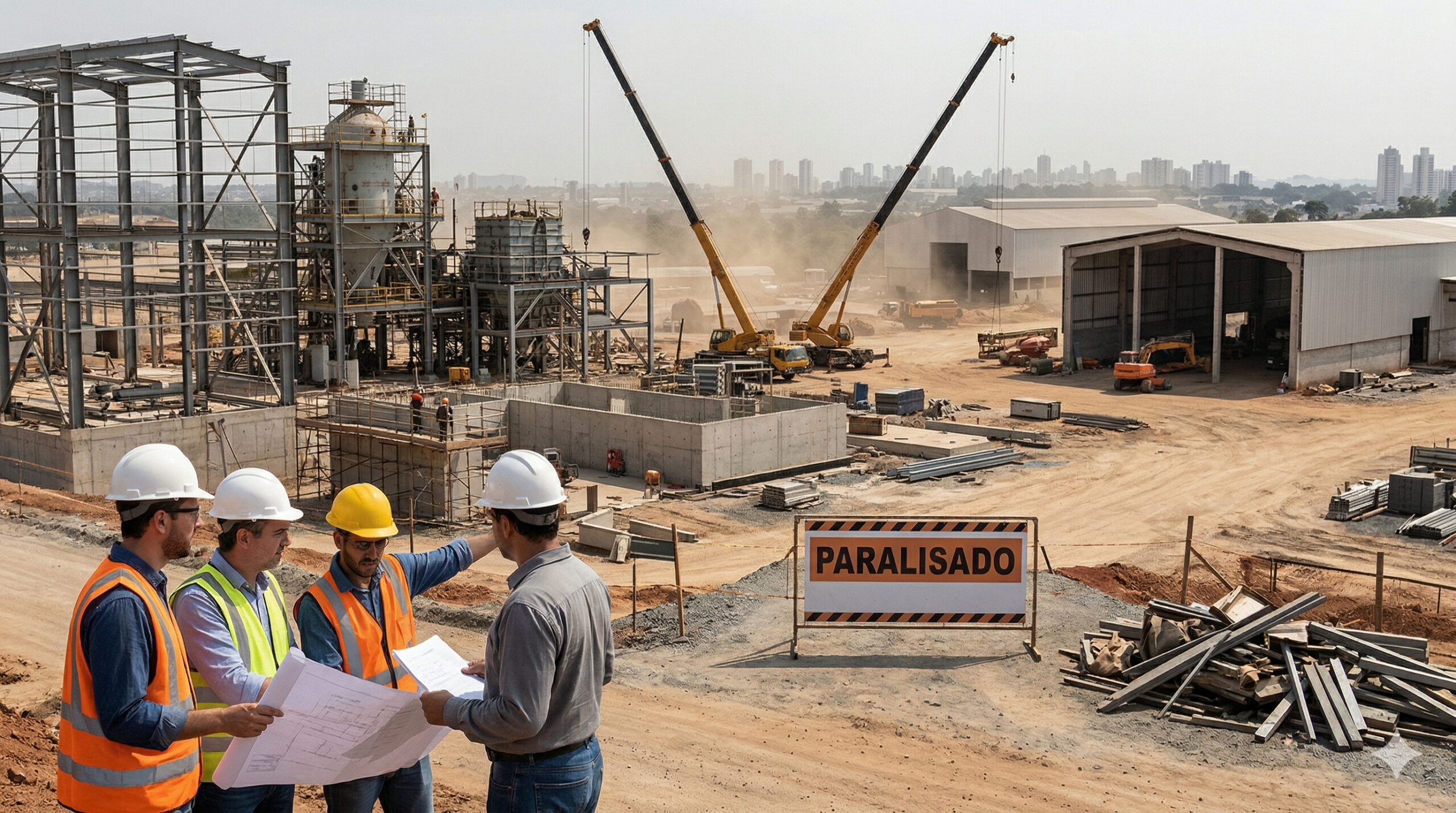
The lack of welders, electricians, and operators becomes a structural threat in 2025, with the construction industry and manufacturing already suffering from delays, cost pressures, and labor shortages in Brazil.
-
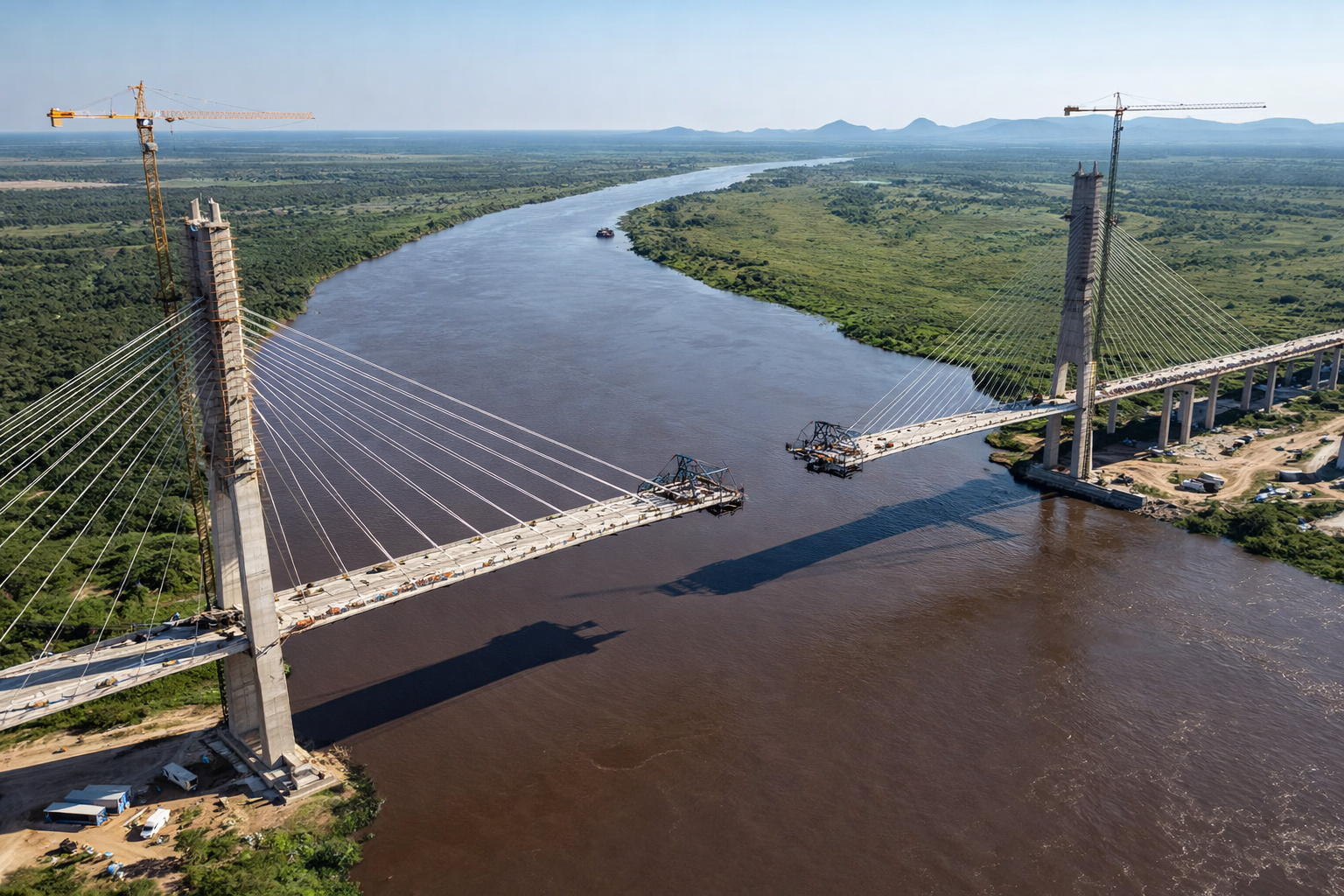
Brazil and Paraguay are just 46 meters away from a historic union on the bioceanic bridge that promises to revolutionize trade between the Atlantic and the Pacific.
-
With 55 km over the sea, a cost of US$ 20 billion, and enough steel to build 60 Eiffel Towers, China’s largest project has connected Hong Kong, Zhuhai, and Macau in a colossal bridge that defies the logic of engineering.

-
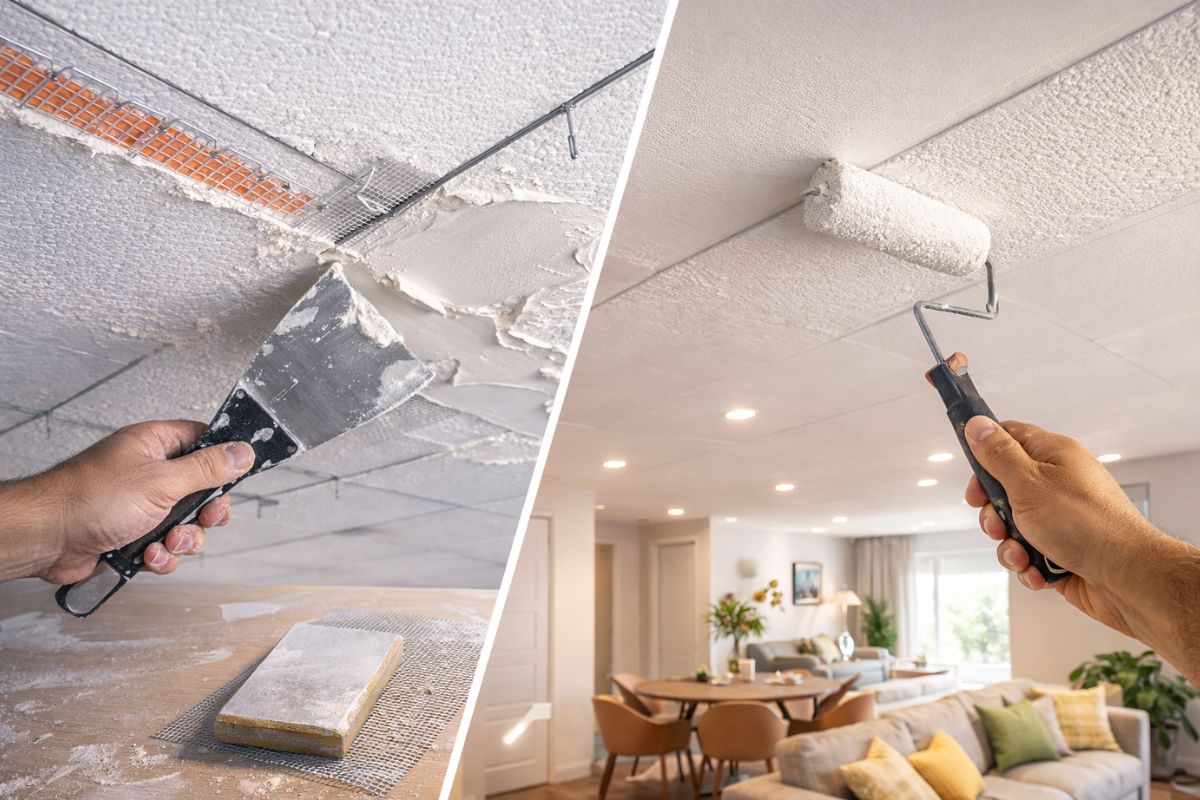
A trick with joint compound transforms a Styrofoam ceiling into a plaster-like ceiling: leveled panels, wires and mesh at the joints, sand, paint, and change the environment while spending little today.
More than a change in appearance, the method alters the way the foundation goes to work.
While concrete foundations depend on a gradual gain in resistance, with the classic reference check at 28 days, the screw foundation is a manufactured steel component that begins to function as it is installed.
This does not eliminate the need for geotechnical investigation, structural calculations, oversight, or acceptance criteria.
What changes is the sequencing of the steps until the workfront is released.
Rotation Installation Changes Job Site Dynamics
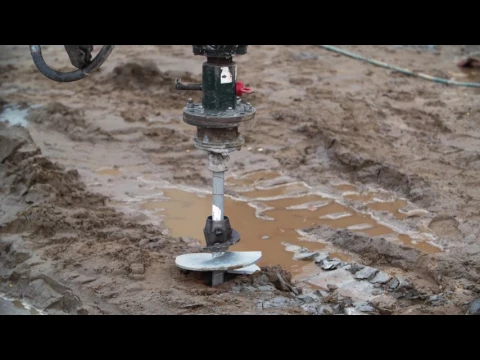
The system consists of a steel shaft to which one or more helices are welded.
These helices serve as support surfaces and, at the same time, help to guide the element into the soil during rotation.
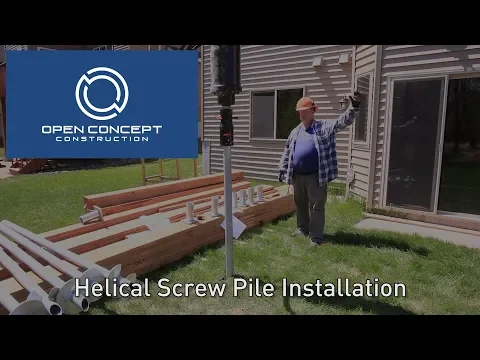

The driving is performed with equipment capable of applying controlled torque, usually attached to backhoes, drills, or compact units, depending on the size of the project and access conditions.
Since there are no impacts during installation, the method tends to produce less vibration than percussion techniques.
For this reason, it is often considered in urban areas, interventions close to existing buildings, and environments where noise and tremors need to be limited.
Load-Bearing Capacity Depends on Soil, Design and Execution Control
The idea that it is enough to screw to support a house, a shed, or a metal structure simplifies a process that, in practice, involves various engineering checks.
The load-bearing capacity of a screw pile is linked to the type of soil, the final depth, the shaft diameter, and the number and size of the helices, in addition to the rigorous execution control.
Variations in the geotechnical profile, presence of water, and ground heterogeneity directly affect the system’s performance.
In this scenario, the installation torque record assumes a significant role as field data.
In technical studies and practices adopted by a part of the market, final torque and its evolution during driving are used as indicators of the resistance mobilized during advancement.
This relationship, however, does not turn the procedure into a universal automatic test.
The validation of capacity remains conditioned to the criteria defined in the project and, when applicable, to the conduct of load tests and other checks established.
Less Excavation and Simplified Logistics
By reducing excavations and soil transportation, the screw foundation tends to simplify job site logistics.
With less earth removed, the need for storage areas decreases, along with the volume of discarded material and the operations for restoring the surroundings of the foundations.
In projects with restricted access, the possibility of working with smaller equipment also contributes to the organization of the job site.
It is from this combination of factors that the possibility of releasing the project on the same day emerges.
An element that does not depend on curing, combined with a process that has fewer intermediate steps, can expedite the initiation of assemblies, metal structures, and enclosures.
Nonetheless, the speed gain is directly linked to planning and compatibility with the structure.
Concrete Use Varies According to the Project
The adoption of screw piles does not mean eliminating concrete in all situations.
Depending on the project requirements, cap blocks, foundation beams or transition elements may be provided to ensure proper connection with the superstructure.
In lightweight metal structures, sheds, and modular systems, the use of metal heads directly connected to beams and profiles is common.
Regardless of the adopted solution, the principle remains.
Transfer the loads to the ground immediately, as long as the set is properly sized and executed.
Applications in Retrofit and Structural Reinforcement

In retrofit projects, screw foundations are often associated with the reinforcement of foundations, correction of settlements, and stabilization of existing structures.
In these situations, the differential is not just speed.
The ability to execute the service with less vibration and reduced excavations minimizes interference with occupied buildings and the immediate surroundings.
Even so, the use in reinforcement requires careful evaluation of the loads, existing pathologies, and the overall behavior of the structure.
Durability and Protection of Buried Steel
As it involves buried steel, durability depends on factors such as soil aggressiveness, moisture, presence of salts, and corrosion potential.
Protection measures may include galvanization, specific coatings, and appropriate thickness definitions.
In well-specified projects, these requirements are part of the sizing and are not treated as secondary details.
The lifespan of the system is directly related to the conditions of the environment in which the element will be installed.
Interest Grows, but Decision Follows Technical
The adoption of screw piles is increasing in projects that value industrialization, predictability, and reduction of stages.
With the growing pressure for shorter deadlines, factors such as construction time, noise, excavation, and logistics have become more significant in the final cost.
Nonetheless, the choice is not limited to replacing concrete with “giant screws.”
It involves geotechnical analysis, structural compatibility, torque control, acceptance criteria, crew qualification, and compliance with applicable regulations.
If the foundation can be installed in a few hours and allow for immediate progress of the schedule, what weighs most in the choice of method in your area: deadline, job site limitations, availability of specialized crew, or technical validation requirements?








Faltou abordar custos, apresentar comparações de valores em relação a fundação em concreto armado.