





 Portuguese
  English
  Spanish
  5 min of reading
  0 comments


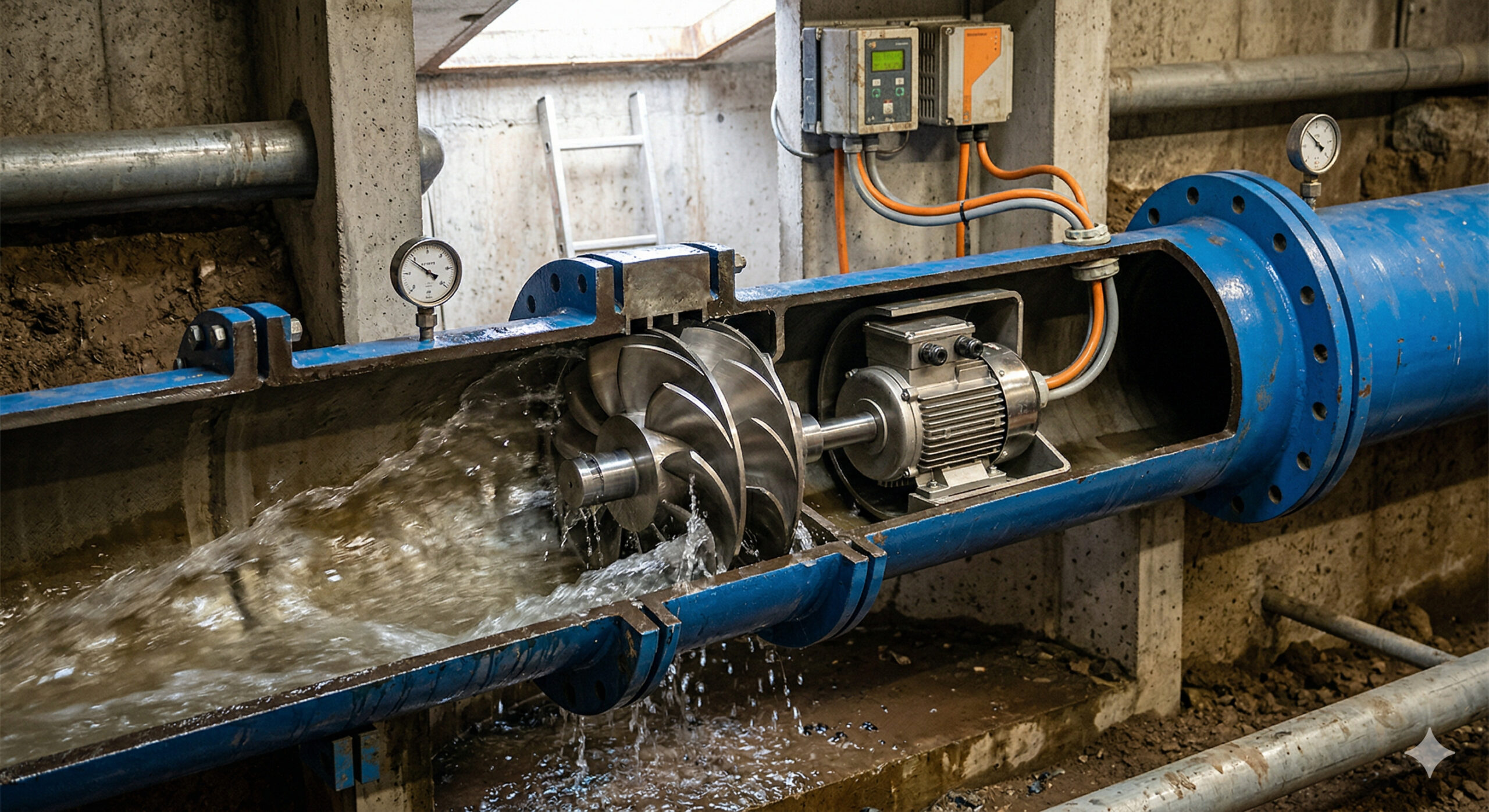
In-pipe hydropower technology generates up to 1,100 MWh per year by replacing valves with turbines in drinking water networks without affecting supply.
In 2015, a project conducted in the city of Portland, Oregon, in the United States, began to demonstrate in practice a solution that had previously been seen as conceptual. According to a technical report from Municipal Sewer & Water about the system installed by the Portland Water Bureau with Lucid Energy, the installation of turbines inside the urban pipeline began to generate electricity continuously without compromising the operation of the supply network.
The system uses a technology known as in-pipe hydropower, which consists of converting the energy from the flow and existing hydraulic pressure in distribution networks into usable electrical energy. The most relevant data is that the 200 kW unit was described as capable of generating, on average, 1,100 MWh per year in actual operation.
Replacing pressure-reducing valves with microturbines is the central point of the technology
The operation of the technology depends on a specific element present in almost all supply networks: the pressure-reducing valves, known as PRVs.
-
The U.S. Army has introduced its first new lethal grenade since the Vietnam War: the M111 kills using pressure shock waves that bounce off walls and can explode the enemy’s lungs without producing a single shard.

-
Elon Musk focused on Brazil and lowered the price of Starlink, his internet service, but the question remains: is it worth it? An expert provides a detailed analysis of the internet that promises to connect any part of Brazil.

-
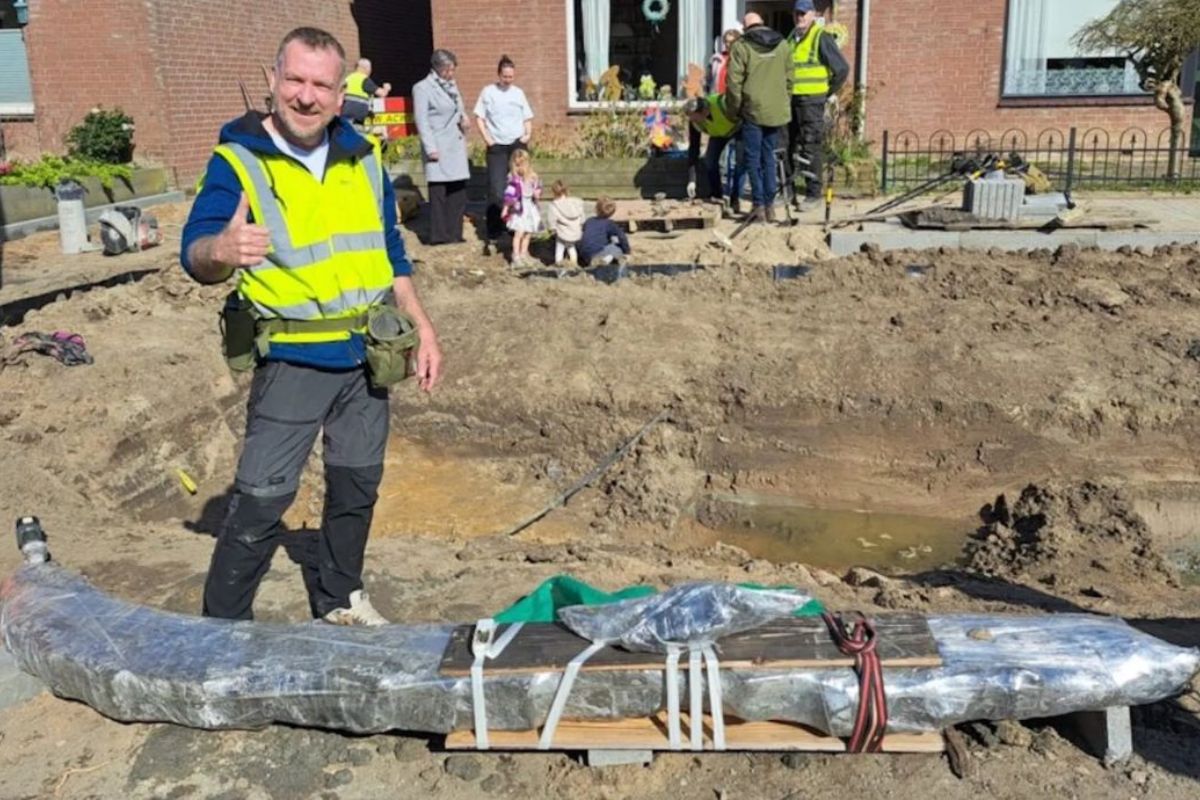
Workers were performing maintenance on the sewage system when they found a 3.2-meter beam that may be part of a 1,300-year-old Viking ship buried under the pipes since the medieval period in Europe.
-
Scientists caught a water vapor explosion on Mars exactly when it shouldn’t have happened: an unexpected dust storm launched the water to an altitude of 80 kilometers and accelerated the escape of hydrogen into space by 2.5 times.


These valves are used to control the water pressure in urban systems, especially in areas where supply occurs by gravity. When water descends from elevated reservoirs or mountainous regions, it accumulates potential energy that transforms into pressure within the pipes.
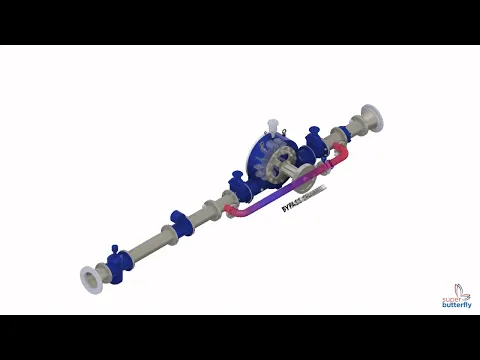

To prevent damage to the network, this pressure is artificially reduced. In the traditional model, this process represents a direct energy loss, as the energy is simply dissipated.
The in-pipe technology changes exactly this point. Instead of dissipating pressure, the system installs inline hydraulic microturbines, which perform the same control function but with a fundamental technical difference: they convert part of the hydraulic energy into mechanical rotation and, subsequently, into electricity. This mechanism transforms a point of loss in the system into a point of generation.
The Portland case proves generation exceeds 1,100 MWh per year without altering supply
The project implemented in Portland is considered one of the first successful commercial examples of the technology.
The installation was carried out in a large-diameter pipeline that transports water by gravity to urban areas. In this section, turbines from the system known as LucidPipe Power System, developed to operate directly within the pipeline, were inserted.
The operational data confirms that:
Annual generation exceeds 1,100 MWh, with an installed capacity close to 200 kW, sufficient to supply approximately 150 households. The system operates continuously, following the flow of water, without the need for external storage or regulation.
The most relevant technical point is that the water does not suffer any change in quality, as the system is completely closed and designed to meet sanitary standards for drinking water networks.
Moreover, the end consumer does not notice any difference, as generation occurs before distribution to neighborhoods.
Hydraulic operation depends on excess pressure and continuous flow in the pipes
Energy generation in this model does not depend on large volumes of water, but rather on the combination of flow and pressure.
In urban systems, especially those supplied by gravity, water often circulates with pressure above what is necessary. This pressure difference is precisely what enables the installation of turbines.
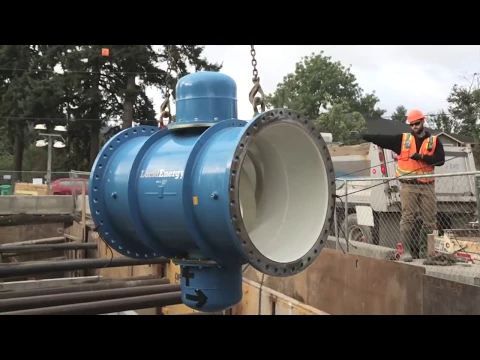
When water passes through the turbine, part of the hydraulic energy is converted into rotational movement. This movement drives an attached generator, producing electricity continuously.
The process occurs without interruptions because the flow of water in urban networks tends to be constant throughout the day, ensuring stability in generation.
This characteristic differentiates the technology from intermittent sources, such as solar and wind, making it predictable and suitable for integration with urban electrical grids.
Expansion of the technology in the United States shows commercial advancement of the model
After the Portland case, other initiatives began to test and implement similar solutions. In California, projects led by water districts and companies like InPipe Energy and Xylem started to install modular systems in urban networks, taking advantage of sections with excess pressure.
These companies developed compact turbines capable of operating in different pipe diameters, expanding application possibilities.
The technological advancement also allowed for greater efficiency in energy conversion and reduced installation costs, essential factors for economic viability. As a result, the technology has ceased to be experimental and has begun to integrate distributed generation strategies in urban environments.
Low environmental impact positions technology as an alternative to traditional hydropower
One of the main differentiators of in-pipe hydropower is its virtually non-existent environmental impact.
Unlike conventional hydropower plants, the system does not require dams, does not alter natural river courses, and does not cause flooding of areas.
Generation occurs within an existing closed system, without interference in aquatic ecosystems or the need for new large-scale construction.
This factor has been decisive for the adoption of the technology in regions where there are environmental restrictions for new energy ventures.
Technical limitations show that application depends on the network structure
Despite the potential, the technology cannot be applied in any city. Viability directly depends on the existence of excess pressure in the network and systems that operate with gravity flow.
In places where supply is predominantly done by pumping, the generation potential is reduced, as there is no excess energy available for conversion.
Additionally, the scale of generation tends to be smaller compared to large plants, positioning the technology as complementary within the energy matrix.
Urban networks are now treated as strategic energy assets
The advancement of in-pipe hydropower reveals a structural change in how cities are planned. Infrastructures that previously had a single function are now being analyzed as multifunctional platforms capable of generating additional value.
Just as railway tracks are being used for the installation of solar panels and irrigation channels are generating energy, water networks are entering this new model of energy reuse.
This movement indicates a global trend of integration between urban infrastructure and energy generation.
Water pressure stops being waste and starts generating electricity within cities
The technology of hydropower in pipelines demonstrates that part of the energy potential of cities has always been present but was not utilized.
By replacing valves with turbines, engineers transformed a point of loss into a point of continuous generation.
With proven results in actual operation, such as the case of Portland, the technology shows that it is possible to produce energy without expanding infrastructure, without significant environmental impact, and without altering the operation of urban systems.
This type of solution reinforces a clear trend: the future of energy also lies in efficiency and in utilizing what already exists within the cities themselves.





Seja o primeiro a reagir!