





 Portuguese
  English
  Spanish
  4 min of reading
  1 comment


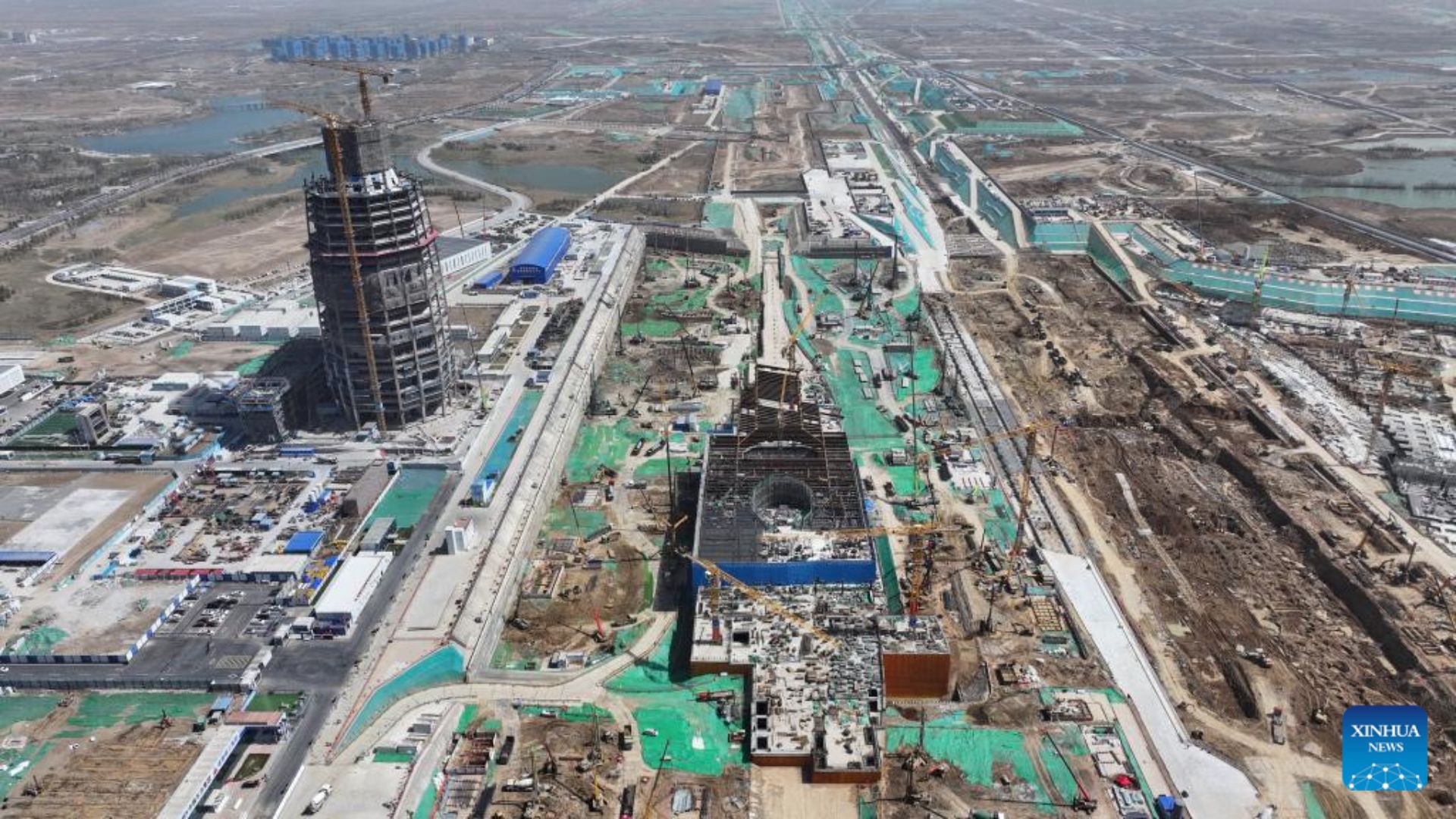

Urban Megaproject Launched in 2017 Mobilizes Over US$ 115 Billion in Hebei Province and Seeks to Redesign Beijing’s Functions with a Promise of Long-Term Planning and Strategic Regional Integration in Northern China.
China concentrates resources and planning in Xiong’an, a new urban area created in April 2017 in Hebei province, about 100 kilometers south of Beijing, with the declared mission of absorbing functions considered “non-essential” to the capital.
Presented by authorities and state media as a project of “millennial significance,” Xiong’an brings together transportation works, housing, public buildings, and underground infrastructure, in an initiative that the government associates with the reorganization of the Beijing–Tianjin–Hebei axis.
New Xiong’an Area: Strategic Location and Urban Planning
The New Xiong’an Area covers, in the original design, the counties of Xiongxian, Rongcheng, and Anxin, as well as adjacent areas, in a region that historically combined smaller cities, villages, and wetlands.
-
He started running at 66 years old, broke records at 82, and is now a subject of study for having a metabolic age comparable to that of a 20-year-old, in a case that is intriguing scientists and inspiring the world.

-
Oldest tree on the planet reappears after 130 years of searches: Wattieza, 385 million years old, was 10 meters tall and had no leaves or seeds; Gilboa fossils in New York solved the mystery in 2007.

-
A 48-square-meter house assembled in hours with 4,000 bricks made of recycled plastic that does not absorb moisture, has natural thermal insulation, and costs less than 90,000 reais in a complete kit.

-
Luciano Hang revealed that Havan’s air fleet has already accumulated more than 20,000 landings, 10,000 flight hours, and 6 million kilometers traveled, and he says that without the planes, the company would never have grown so quickly.



At the center of the region’s environmental map is the wetland system connected to Baiyangdian Lake, often cited in studies as one of northern China’s main wetland areas and a sensitive element for any accelerated urbanization.
In choosing this territory, Chinese planning sought to articulate a “ground-up” city focused on connectivity and services, while also setting ecological protection targets for the surrounding water bodies and their river corridors.
Billion-Dollar Investment and Long-Term Goals
The volume of resources associated with Xiong’an appears in distinct ways in reports and balance sheets, but data released by the Chinese press indicated, in February 2025, total investments of 835.4 billion yuan (US$ 115.45 billion).
This amount is presented as part of a long-term strategy and includes, according to the same source, urbanization of hundreds of square kilometers and expansion of built areas, focusing on administrative headquarters and public services.

The proposal to transfer activities from Beijing to the new area appears repeatedly in documents and official communications, mentioning universities, hospitals, financial institutions, and corporate headquarters as potential targets for relocation.
Transfer of Functions from Beijing and Regional Integration
Since the announcement, the Chinese government has repeatedly stated that Xiong’an should help to “alleviate” Beijing by reducing pressures related to the concentration of services and administrative structures, rather than competing with the capital in the same urban space.
The idea gained high political status by being associated with the Beijing–Tianjin–Hebei regional coordination package, with promises of logistical integration and a new design of urban functions in the northern part of the country.
Within this logic, Xiong’an has also been described by authorities as a showcase for a “green, smart, and innovative city,” linking urban development goals to environmental commitments, although the realization of these goals depends on occupancy and attracting activities.
Occupancy Challenges and Growth Pace

Construction has progressed with the participation of state-owned companies and public financing, and the Chinese government claims to have made significant progress in infrastructure and buildings, reinforcing the narrative that the plan has been put into action.
However, analyses by international media describe an implementation fraught with short-term challenges, citing doubts about pace, attracting residents, and the ability to create economic dynamism proportional to the investment already made.
In previous assessments, the topic had already appeared as a sensitive point, as the project was treated as a “millennium” by official communication, but depended on gradual transfers and consistent results.
The debate also connects to the broader economic environment, as China faces adjustments in the real estate sector and growth, factors that influence the speed at which businesses and families decide to relocate to new urban hubs.
Strategic Project and Political Impact

With Xiong’an, the central government is attempting to establish a model of urbanization guided by state planning, combining heavy construction, environmental goals, and regional integration, in an experiment aimed at reordering functions currently concentrated in Beijing.
The outcome is also under construction in institutional terms, as part of what is planned depends on decisions about relocation, job creation, and the formation of services that make everyday life work beyond buildings and avenues.
So far, public data confirm the formal creation in 2017, the territorial delimitation in Hebei, and the scale of the investment reported by Chinese sources, while the discussion about occupancy and economic return remains tied to external readings and time.








Sempre um passo à frente