





 Portuguese
  English
  Spanish
  5 min of reading
  0 comments


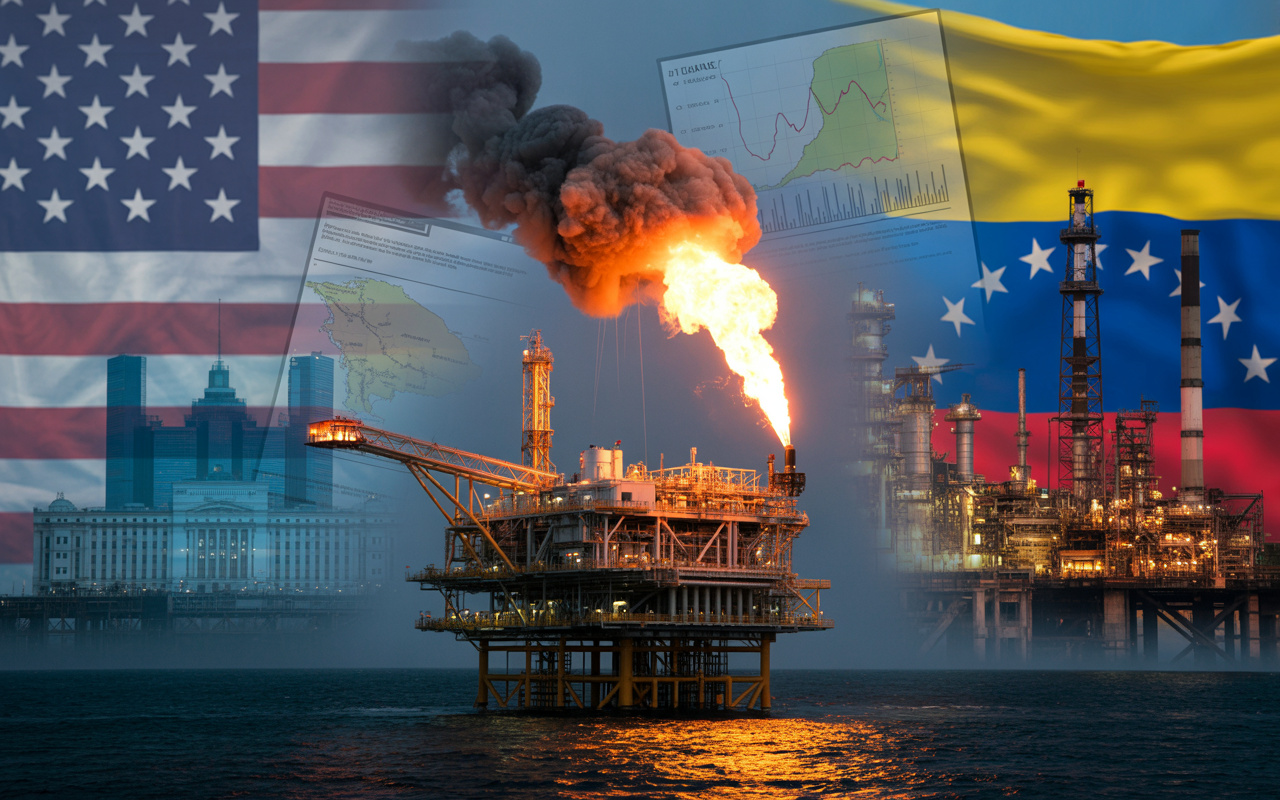
Understand Why Chevron May Make Billions Amid the Standoff Between the United States and Venezuela and What Is at Stake in the Energy Sector
For nearly two decades, Chevron’s decision to remain in Venezuela has placed the American oil company on high-risk ground, marked by international sanctions, political instability, and diplomatic clashes between Caracas and Washington. What once seemed a risky bet is beginning to reveal itself as a rare strategic position: today, Chevron is the only major global oil company with direct access to the largest known oil reserves on the planet, particularly at a time of escalating tensions between the United States and Venezuela.
This combination of the South American country’s isolation and the company’s persistence creates a scenario where, regardless of the political outcome, Chevron is likely to emerge strengthened, though not without considerable risks.
Chevron’s Unique Position in Venezuelan Oil
Currently, Chevron produces about 200,000 barrels of oil per day in joint ventures with the state-owned PDVSA. This production is almost entirely exported to refineries on the U.S. Gulf Coast, which depend on Venezuelan heavy crude to operate efficiently.
-
Switzerland joins 8 countries to alleviate the crisis of travelers stranded in the Middle East with emergency migration measures and support for repatriation.
-
Trump’s tariffs reduced trade between the US and China by up to 30% in 2025, but China did not lose; it redirected exports, cut prices, and found new markets, while Southeast Asia grew by trading with both, and Europe was squeezed between the two sides.
-
Why U.S. federal judges have increasingly blocked decisions by Donald Trump and how this wave of injunctions is reshaping the limits of presidential power.
-
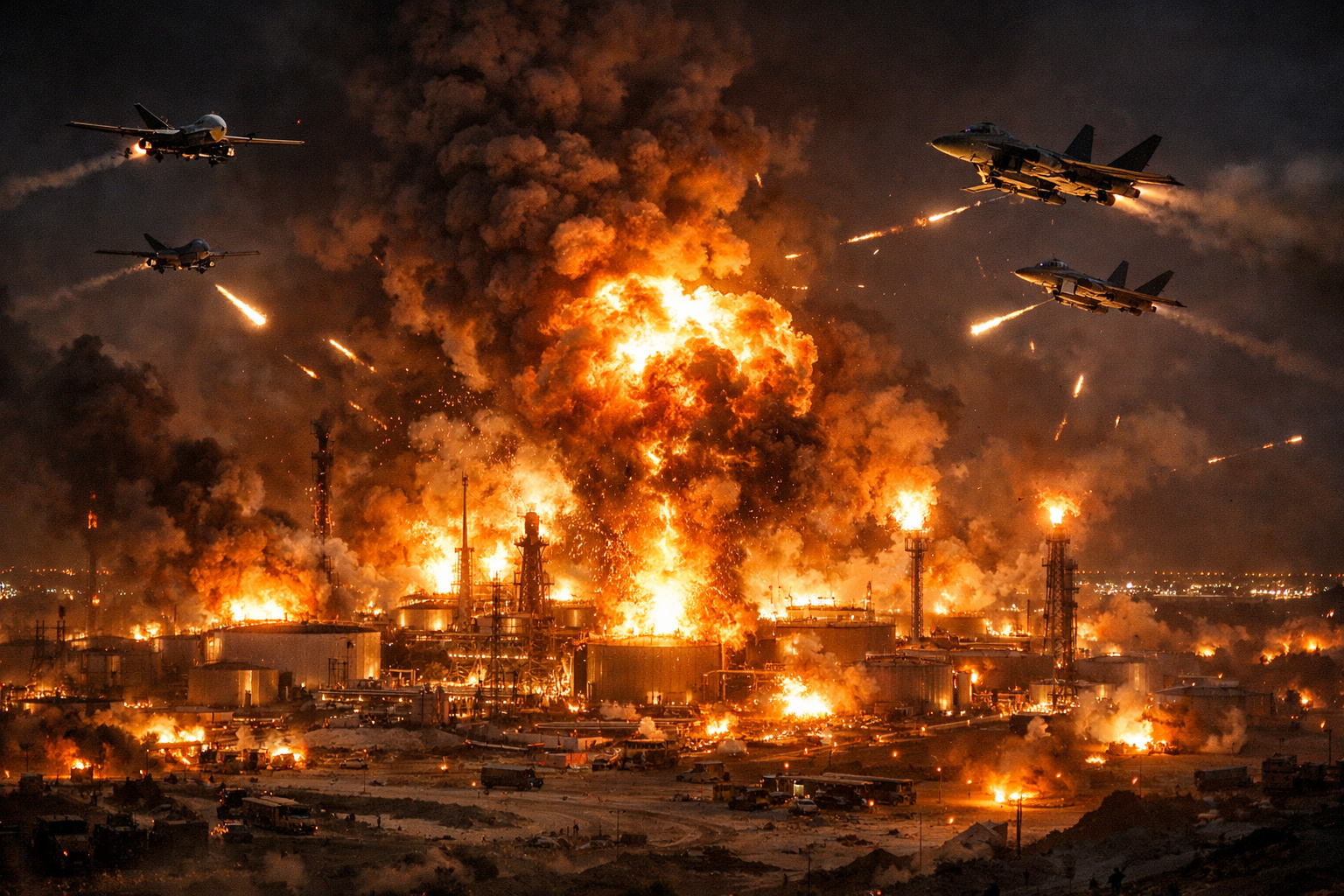
The US bombs Iran’s largest oil center and raises global tension after Trump’s explosive ultimatum with a threat of total destruction.
Shipping tracking data indicates that, by the 17th, the company was preparing to export 1 million barrels of Venezuelan oil, just one day after U.S. President Donald Trump classified Nicolás Maduro’s government as a “foreign terrorist organization.”

The contrast between political rhetoric and energy reality highlights how Chevron’s presence has become functional for both sides.
Meanwhile, the rest of the Venezuelan oil industry faces an operational collapse. The blockade imposed in the southern Caribbean limits PDVSA’s fleet operations, forcing the use of “ghost ships” toward China. This logistical bottleneck threatens to lead to the closure of wells within days, deepening the sector’s crisis.
Two Political Scenarios and Advantages in Both
Chemvron’s strategy relies on two possible scenarios, both potentially favorable to the company.
In the first, an escalation of the confrontation between the United States and Venezuela could lead to a regime change in Caracas. In that case, Chevron would be in a privileged position to lead the reconstruction of the local oil industry, leveraging its continuous presence, operational knowledge, and established relationships.
In the second scenario, a political agreement between Trump and Maduro would pave the way for increased Venezuelan oil exports as a means of generating cash for the country. Again, Chevron would be ahead, as it already operates legally under special licenses granted by the U.S. government.
In both cases, the company benefits from something rare in today’s global energy sector: access to massive reserves in a country virtually closed to foreign capital.
Real Risks: Expulsion, Sanctions, and Instability
Despite the advantages, the risk remains high. According to Bloomberg, Chevron could be expelled by either Caracas or Washington, as has happened to other major international oil companies in the past.
Venezuela has already expelled companies like Exxon Mobil and ConocoPhillips after the nationalization process initiated during Hugo Chávez’s government, which mandated majority state participation in all joint ventures.
Chevron, on the other hand, chose to remain since 1923, adapting to political changes and building a close relationship with the government.
This persistence has not been without tension. In 2018, two company employees were arrested and later released. Nevertheless, Nicolás Maduro publicly praised Chevron and expressed a desire for the company to remain in the country for “another 100 years.”
U.S. Energy Dependence and Special Licenses
The relationship between Washington and Caracas has deteriorated significantly over the last decade. Sanctions imposed by Trump during his first term were maintained by Joe Biden. However, in 2022, with soaring fuel prices following Russia’s invasion of Ukraine, the Biden administration relaxed restrictions and granted special licenses to Chevron to expand production.
This episode highlighted a sensitive point: American refineries depend on Venezuelan heavy crude, and Chevron is the main functional link in this chain. Even under strong political pressure against Maduro, the United States recognized the strategic importance of the company’s presence in the country.
Political Criticism and the Ethical Dilemma
Chevron’s operations in Venezuela are criticized from both sides of the political spectrum. In the United States, lawmakers accuse the company of channeling resources to an authoritarian regime. Senator Marco Rubio stated that companies like Chevron are, in practice, “investing billions of dollars into the regime’s coffers.”
In Venezuela, more radical sectors of Chavismo see the oil company as a symbol of American imperialism. Nevertheless, the company argues that its operations help stabilize the local and regional economy and that it strictly complies with all legal requirements imposed by the U.S. government.
Chevron executives acknowledge the political discomfort but defend a long-term view. CEO Mike Wirth was direct in commenting on the strategy: the company does not choose where natural resources are located, and abandoning countries whenever there is political disagreement would mean, in practice, exiting nearly all of the world’s relevant markets.
A Strategy Already Tested in Complex Markets
Staying in Venezuela is not an isolated case. Chevron applies a similar logic in other politically sensitive environments, such as Saudi Arabia and Kazakhstan, where high geopolitical risks coexist with strategic energy reserves.
For the company, Venezuela represents a long-term bet: a country with degraded infrastructure but with the largest oil reserves in the world, estimated at over 300 billion barrels. In a global scenario of slow energy transition and still high demand for heavy oil, this position could translate into billions in gains.
What Is Really at Stake
More than a political dispute, the standoff between the United States and Venezuela exposes an uncomfortable reality of the global energy sector: geopolitics can complicate access to resources but rarely eliminates dependence on them.
By remaining where almost everyone else has exited, Chevron has placed itself in a unique position. If the crisis worsens or if reconciliation occurs, the company is likely to be one of the biggest beneficiaries. The risk is high, but the potential reward is proportional and may redefine Chevron’s role in the global energy market for decades to come.
In the end, the strategy reveals a basic principle of oil: governments change, sanctions come and go, but those who control access to the resource continue to play a long-term game.








-

Uma pessoa reagiu a isso.