






 Portuguese
  Spanish


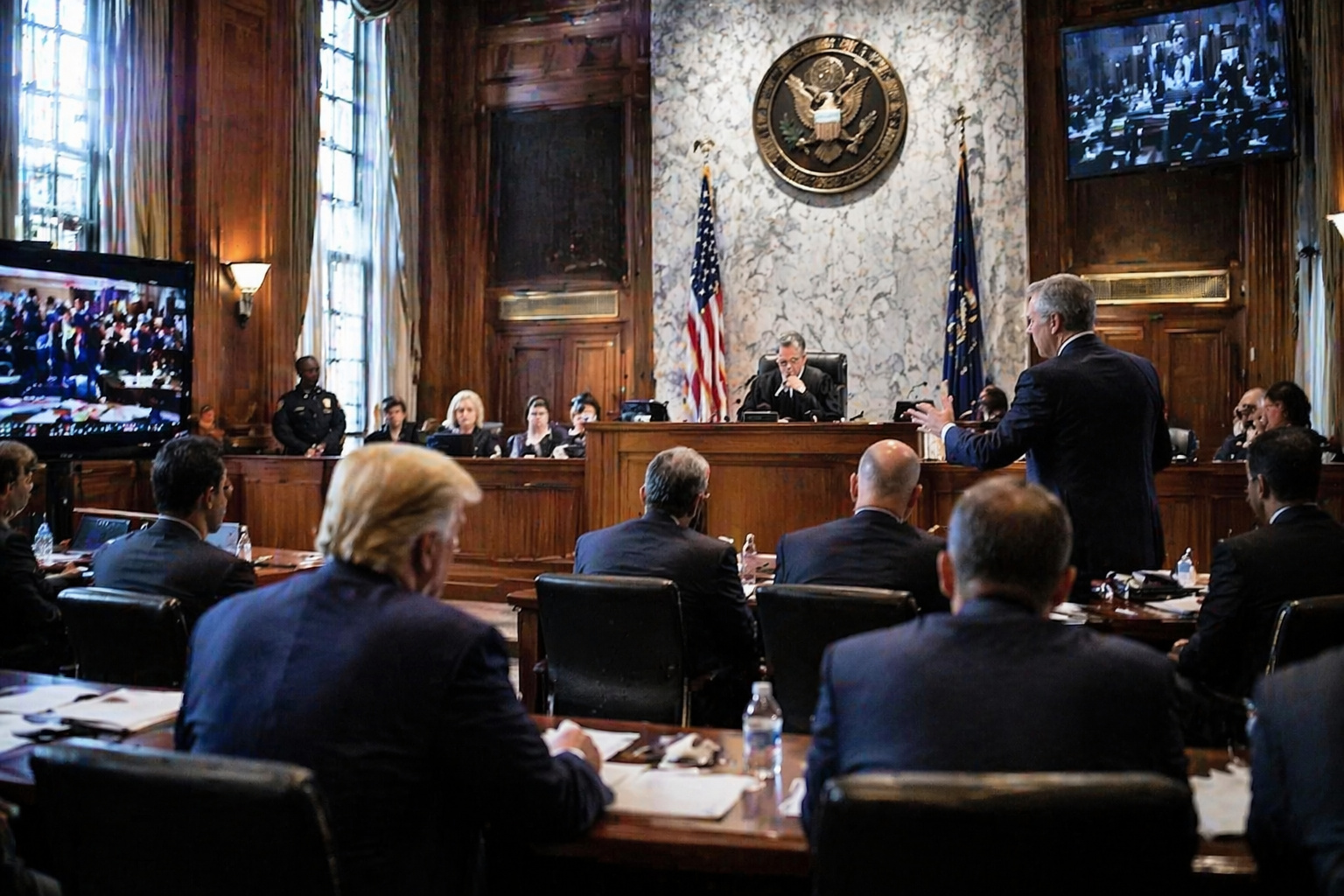

Judicial decisions intensified since 2025 show how lower courts have begun to curb executive actions and increase tensions in the United States
District court judges in the United States act as the main institutional barrier against measures from the Donald Trump administration.
According to a report published on April 6 by The Guardian, these judges block actions deemed legally weak.
Judges appointed by both Democrats and Republicans interrupt sensitive policies. They directly address issues such as immigration, tariffs, and the political use of the Department of Justice.
-
Ayatollah Ali Khamenei’s Funeral Draws 15 to 20 Million in Tehran, Calls for Revenge Against Trump After Joint Israel-U.S. Attack

-
U.S. Establishes Permanent Embassy in Jerusalem, Reigniting International Debate Over Israel’s Capital
-
The world has nearly 12,000 nuclear warheads, with the majority held by the United States and Russia; see the figures for China, France, and the United Kingdom.

-
Venezuela Faces UN Alert for Hunger, Disease, and Service Collapse After Earthquakes Cause Nearly 2,000 Deaths and $6.7 Billion in Damages


Experts and former prosecutors describe these courts as the last line of defense for the rule of law in the United States.

White House reaction intensifies institutional tension
The Executive reacts with strong political and institutional pressure. President Trump intensifies verbal attacks against federal judges.
He labels judges as corrupt and pressures Congress to take measures against them. The atmosphere in the courts becomes tense and institutionally strained.
Judicial decisions lead administration lawyers to face frequent reprimands. Criticism arises after weak arguments or inaccurate statements presented in cases.
Data shows increase in decisions against the government
Studies reinforce the scenario of confrontation between powers. A survey by Just Security shows that, since the beginning of 2025, hundreds of judicial decisions contradict government actions.
These decisions indicate arbitrary behaviors and noncompliance with previous court orders. The growing volume consolidates the Judiciary as a central actor in institutional balance.
The government frequently appeals to the Supreme Court. The administration claims that judicial decisions limit its presidential prerogatives.

Landmark cases show limits imposed on the Executive
Specific decisions highlight the direct impact of these judicial interventions. Courts suspend deportations based on interpretations deemed unconstitutional under the First Amendment.
Even with a conservative majority, the Supreme Court also imposes significant limits. One decision restricts the president’s power over tariff rates.
The scenario reveals a distributed institutional resistance among different levels of the Judiciary.
Decision in New Jersey deepens institutional crisis in 2026
An episode in New Jersey intensifies the clash between powers. Judge Matthew Brann invalidates the appointment of lawyers nominated by the president.
He considers the measure illegal and motivated by an arbitrary decision of the Executive. The institutional crisis expands within the public administration.
In April 2026, the dismissal of Attorney General Pam Bondi occurs. The U.S. press points to irregularities in the appointments as a decisive factor. The handling of the Epstein case also weighs in the decision.
Political pressure strengthens the role of the courts
Legal analysts highlight a counterproductive effect contrary to what the administration expected. Attacks on the judiciary strengthen the judges’ actions. Trial courts increase scrutiny over executive decisions.
The firm actions of these judges become an essential mechanism. The judicial system guarantees constitutional limits to presidential actions.
In light of this scenario of increasing tension between powers, to what extent will the Judiciary continue to be the main brake on executive power in the United States?


