





 Portuguese
  English
  Spanish
  6 min of reading
  0 comments


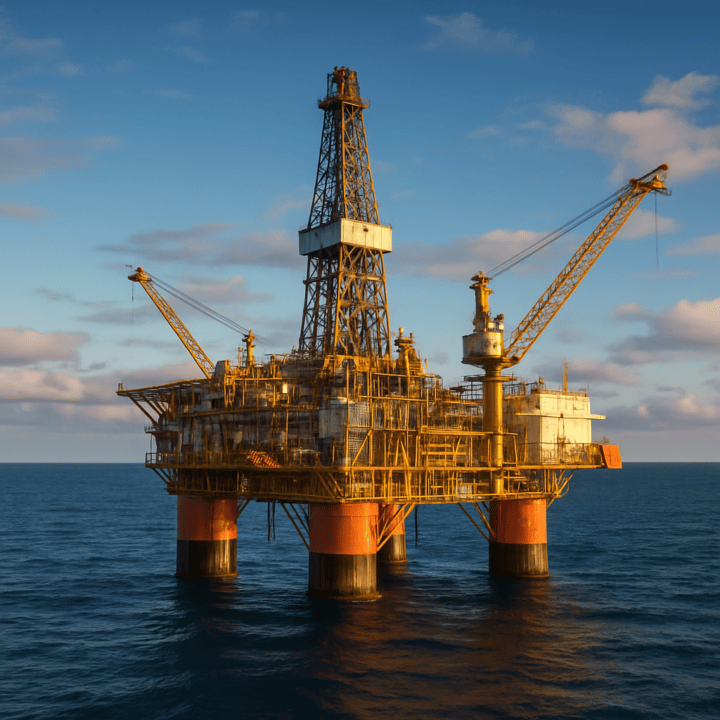
Floating Structure Houses Complex Technologies to Extract Oil Offshore with Safety, Efficiency, and Environmental Control
How Oil Platforms Work is a common question among many people, especially in countries like Brazil, where offshore oil exploration has significant economic relevance. To understand this complex process, it is necessary to explore everything from the types of platforms to the details of daily operations, the technologies involved, safety, challenges, and environmental impacts.
This comprehensive guide presents an accessible and detailed explanation of everything involving these giant structures in the middle of the ocean.
What is an Oil Platform
An oil platform is a structure designed to explore, drill, and extract oil and natural gas from the seabed. These facilities operate offshore, away from the coast, and function as true floating cities.
-
A major turn in the Justice system suspends tax increases and directly impacts oil and gas companies in Brazil by affecting costs, contracts, and financial planning, leaving uncertain what could happen to the sector if these costs had increased.
-
Brava Energia begins drilling in Papa-Terra and Atlanta and could change the game by reducing costs in oil while increasing production and strengthening competitiveness in the offshore market.
-
Petrobras surprises the world again by announcing a new discovery in the pre-salt with excellent quality oil.
-
Offshore industrial demand in Macaé skyrockets with the recovery of oil and gas and could grow by up to 396% by 2026 in the Campos Basin.

They consist of various integrated systems, with drilling equipment, processing units, accommodations, safety systems, and transportation.
The central objective is to extract the hydrocarbons present in the rocks at the ocean floor, process them, and send them to refineries on land.

Types of Oil Platforms
Fixed Platforms
Fixed platforms are structures anchored directly to the seabed and are used in relatively shallow waters, generally up to 500 meters deep. They are extremely stable and provide a solid base for operations but have high construction and installation costs.
Semi-Submersible Platforms
Semi-submersible platforms are partially submerged floating structures that are anchored by cables and can operate in much deeper waters. They are designed to maintain stability even in marine environments with strong currents and waves.
Drill Ships
Drill ships are mobile vessels that conduct exploratory drilling. They do not remain fixed in one location and are used to assess the potential of new oil fields.
FPSO (Floating Production Storage and Offloading)
FPSO is a type of adapted ship, equipped to produce, store, and transfer oil directly at sea, without the need for pipelines to the coast.
Functional Structure of a Platform
Helipad and Cranes
At the top, there is the helipad, which allows for the transport of personnel, equipment, and supplies by helicopters. The cranes are used for moving heavy loads.
Drilling Tower
The drilling tower is the heart of the operation, responsible for drilling the ocean floor until it reaches the oil reservoir. Below it, there are systems that line the wells with steel and cement pipes to ensure stability and safety.
Living Quarters
The living quarters house the workers, providing dormitories, dining rooms, laundry facilities, medical rooms, gyms, and recreational areas.
Control and Production Systems
The entire complex is connected to control and monitoring systems, with sensors and computers that record pressure, temperature, and production flow in real-time. The production systems carry out the initial separation of the oil, gas, and water that come from the wells, directing each to its appropriate destination.
How Oil Extraction at Sea Works
Drilling the Ocean Floor
The extraction process begins with drilling a well at the seabed. This process can take weeks or months, depending on the depth of the reservoir. Drilling passes through layers of rocks and sediments until it reaches the productive zone.
Lining and Installing Equipment
Next, the well is lined with pipes and cement to prevent collapses and leaks. Once the well is established, production equipment, such as valves and pumps, are installed to control the flow of oil to the surface.
Lifting and Separating Fluids
In some cases, the natural pressure of the reservoir is sufficient to lift the oil. In others, pumps or gas injection are used to facilitate the process. After extraction, the oil goes through separators that isolate the gas and water, leaving only the oil ready to be transported.
Transportation and Storage of Oil
Pipelines and Tanker Ships
On fixed platforms, oil is usually sent through pipelines to the shore, where it will be refined. On FPSOs, oil is stored on the ship itself, and later transferred to vessels called tankers, which take it to terminals on land.
Environmental Care
This transportation needs to be done with extreme care to avoid accidents and spills that could impact the environment.
Safety on Platforms
Training and Protocols
Safety on an oil platform is a constant priority. Operations involve high risks, such as fires, explosions, gas leaks, and accidents with heavy equipment. Therefore, all workers undergo specific training, evacuation drills, and the use of personal protective equipment.
Equipment and Monitoring
There are strict emergency protocols, gas monitoring, and automatic alarms. The platforms are equipped with firefighting systems, lifeboats, and satellite communication with the onshore base.
Environmental Impact and Oversight
The environmental impact is also an important concern. Although modern platforms adopt various measures to minimize damage, there are still risks of oil spills and pollution. The constant presence of vessels, underwater noise, and waste also affects marine life. Therefore, regulatory agencies and environmental organizations regularly oversee operations. The industry increasingly invests in clean technologies, environmental monitoring, and waste recycling solutions.
The Routine of Workers
Shifts and Isolation
Professionals usually follow shifts of 14 days on board followed by 14 days off, although this may vary. During this period, they live entirely on board, away from family and in an isolated environment.
Diversity of Roles
The team consists of engineers, geologists, drilling technicians, production operators, mechanics, electricians, doctors, cooks, cleaners, firefighters, and other professionals. Each role is essential for keeping the platform running safely and efficiently.
Cost and Investment
Construction and Operation
The costs involved in the construction and operation of an oil platform are extremely high. A structure can cost between $500 million and $3 billion, depending on the type, location, and technology used.
Ongoing Maintenance
In addition to the initial investment, there are ongoing costs for maintenance, transportation, salaries, food, fuel, and replacement parts. Despite this, profits are also high when wells are productive, which justifies the investments.
Importance of Brazil in the Sector
Brazil is one of the largest offshore oil producers in the world. Offshore exploration is of great importance, especially in the pre-salt basins. Petrobras leads operations with dozens of platforms scattered along the coast, primarily in the Southeast and South regions. The development of the pre-salt has brought significant technological advancements and increased national energy autonomy.
Technological Innovations in Platforms
Automation and Artificial Intelligence
Technology has radically transformed how oil platforms operate. Smart sensors, artificial intelligence, drones, underwater robots, augmented reality systems, and remote monitoring are used to improve efficiency and safety.
Sustainability and Renewable Energy
Some platforms already use renewable sources to complement their energy, such as wind turbines and solar panels, reducing dependence on diesel generators.
Challenges and Perspectives
Despite the strategic importance of oil, the sector faces challenges. Demands for renewable energy sources increase pressure on the industry to adapt. Additionally, the depletion of old wells, the high cost of new projects, and environmental requirements make operations increasingly complex.
Understanding how oil platforms work is essential for anyone looking to engage with the world of energy, engineering, and geopolitics. These giants of the sea remain fundamental to the global energy matrix, even with the advancement of renewable energies.
They are structures that combine advanced engineering, human labor, and constant surveillance to ensure that an essential resource continues to flow from nature to society safely and responsibly.









-

-

2 pessoas reagiram a isso.