





 Portuguese
  English
  Spanish
  6 min of reading
  0 comments


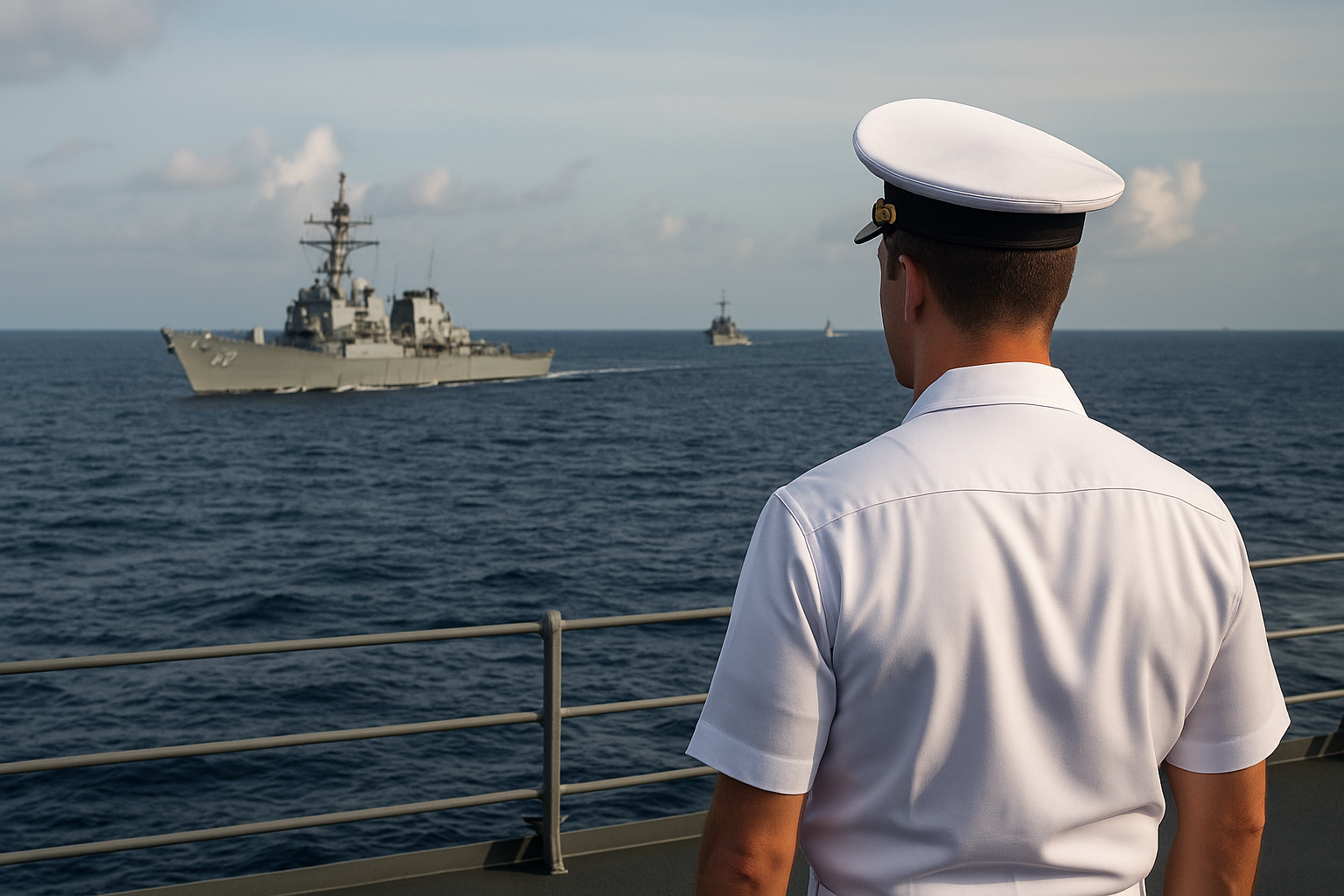
Discover The Main Requirements Of The Naval Career, Understand How Enrollment In The Brazilian Navy Works And Know The Trajectory Of Those Who Choose This Profession Full Of Tradition, Challenges And Opportunities.
The naval career has always sparked curiosity and respect from many people.
For, in addition to the imposing ships, it stands out for the discipline of the officers and the strategic role that naval forces play in protecting a country.
If you have ever wondered how to join the Navy and what is necessary for that, this complete guide will therefore clarify the main requirements of the naval career, in addition to providing a historical and cultural overview of this very important profession.
-
Neither the USA nor China: a small European nation has become one of the largest maritime powers on the planet, controlling one of the largest merchant fleets in the world with thousands of ships and dominating the global transportation of oil and strategic cargo.

-
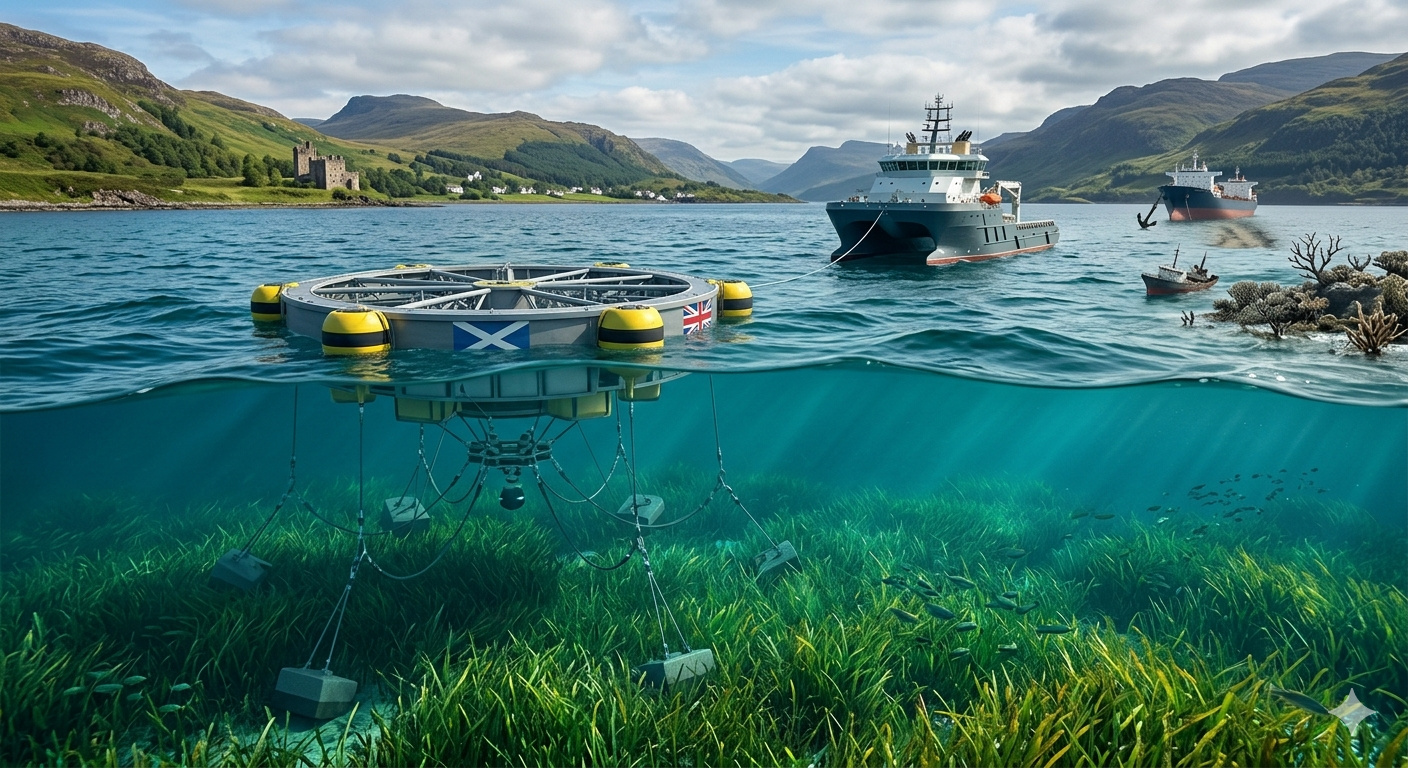
Scotland and the United Kingdom have created a new anchoring system that floats in the water without touching the seabed, after discovering that the current from a conventional anchor destroys up to 50 m² of seagrass meadow per event and that ship-damaged reefs showed no signs of recovery even ten years later.
-
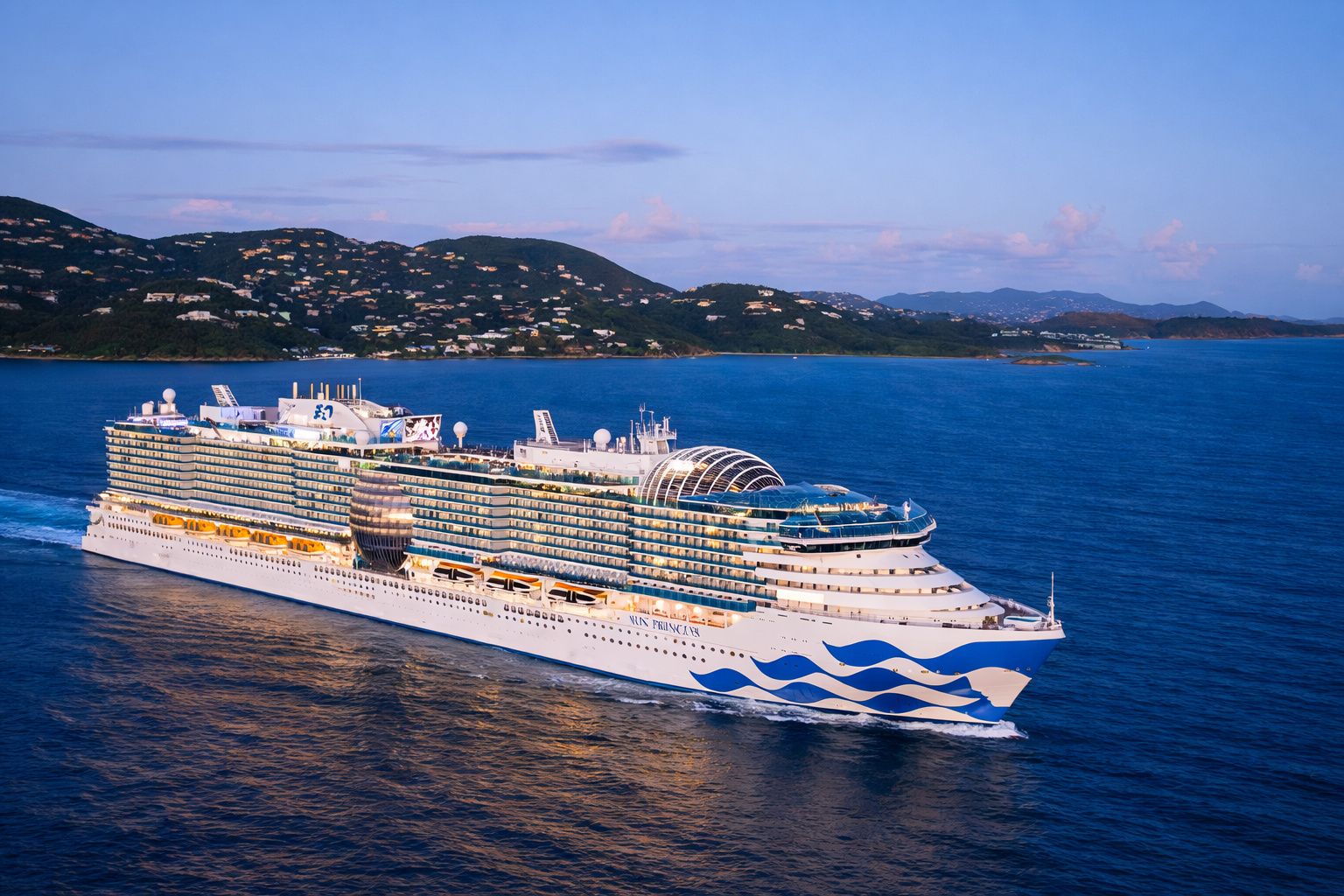
Weighing 175,500 Tons, Measuring 345 Meters Long, and With Capacity for Over 4,300 Passengers, the Sun Princess Becomes the Largest Ship Ever Built by Princess Cruises and Attracts Global Attention for Its Huge Glass Dome Inspired by Santorini’s Architecture Installed on Top of the Vessel
-
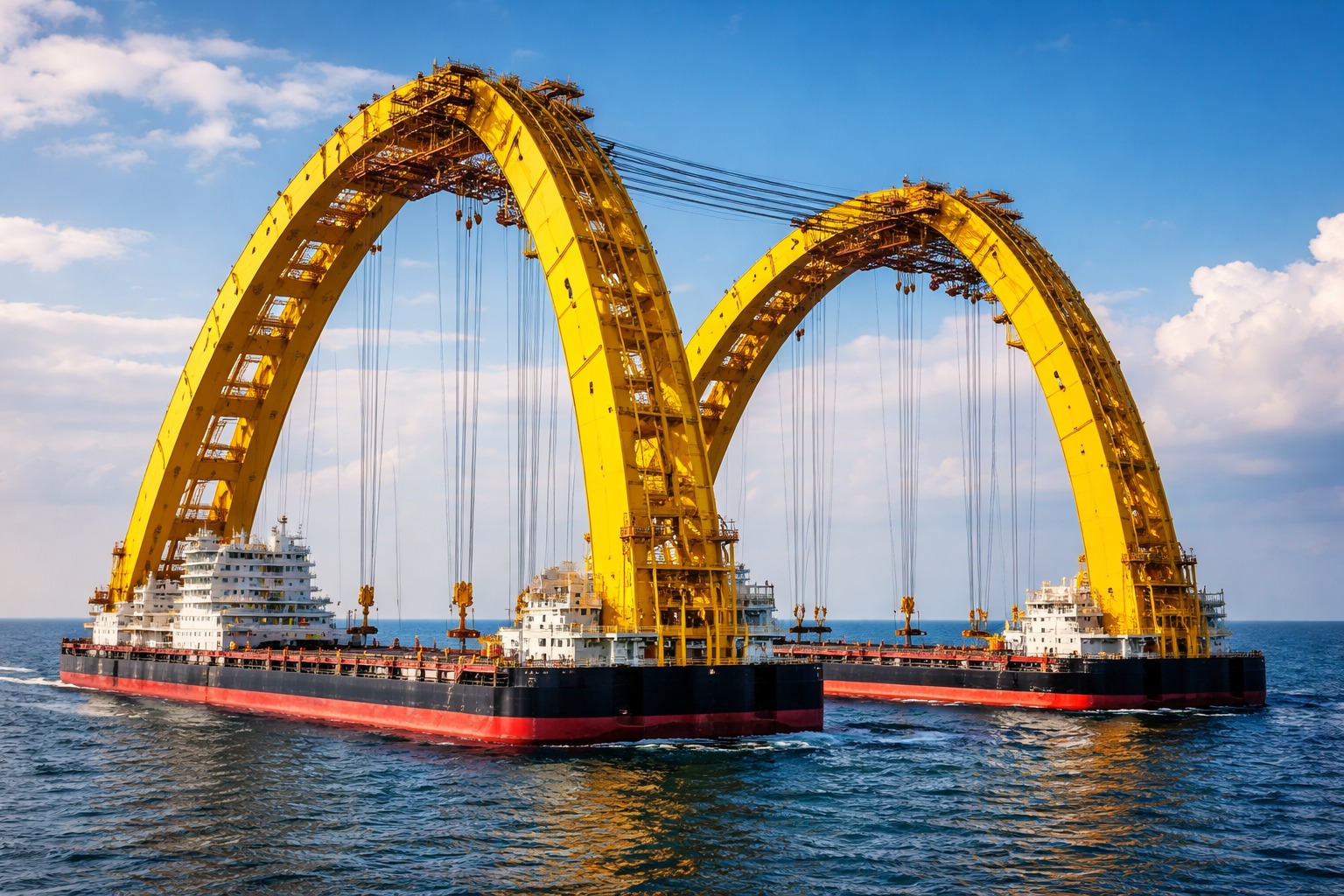
TX-10, The Colossus of The Sea: Largest Lifter Ship in The U.S., With Two Giant Barges, 73-Meter Tall Structure, and Strength to Raise 7,500 Tons of Sunken Oil Rigs

To begin with, the history of the naval forces in Brazil has its roots in the colonial period. At the time, the country was still a Portuguese colony and needed to protect its extensive coastline from invaders and pirates.
With the arrival of the Portuguese Royal Family in Brazil in 1808, the regent prince Dom João VI reorganized the naval squadron to ensure the safety of the ports and maritime routes of the territory.
This reorganization was essential for Brazil to maintain its autonomy on the waters, as detailed by the Ministry of Defense.
After the Proclamation of the Republic on November 15, 1889, the Imperial Navy transformed into the Navy of the Republic, maintaining its main mission of maritime defense.
However, the traditions and values of the institution were preserved and passed down to new generations.
Today, the Navy operates not only in military operations but also in peace missions, environmental enforcement, humanitarian support, and scientific research, according to data released by the Federal Government Portal.
Additionally, the Brazilian Navy is one of the oldest military institutions in the country, with traditions and values that endure over time.
This connection with history motivates many young people to pursue this career, not just as a job, but as a commitment to the nation.
Ways To Join And Main Requirements Of The Naval Career
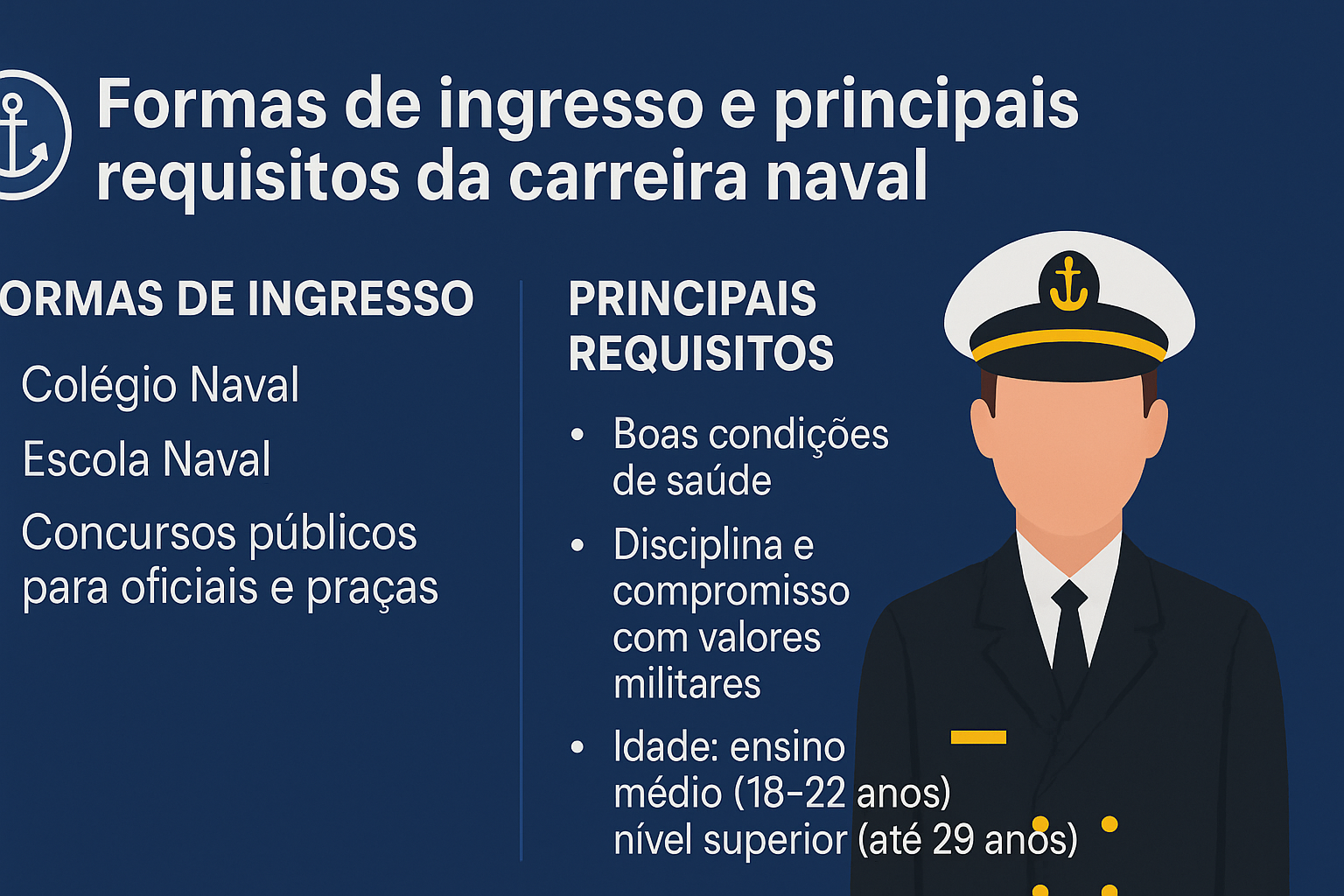
To pursue a career in the Navy, it is essential to know the requirements of the naval career, which vary according to the level of education, the intended role, and the type of entry.
In general, candidates must be in good health, possess discipline, commitment to military values, and willingness to undergo demanding training.
The naval career requires physical and mental preparation, as it involves dealing with risky situations, long periods away from family, and living in collective and hierarchical environments.
According to the official portal of the Brazilian Navy, the most common ways to join are through the Navy School, the Naval School, and public competitions for officers and enlisted personnel.
For those who have already completed higher education, there are specific competitions for entry as an officer in technical areas such as engineering, medicine, administration, among others.
Additionally, there are opportunities for candidates with a completed high school education, who can enter as enlisted personnel through competitions for sergeants, corporals, and soldiers.
Among the main requirements of the naval career, the age requirement stands out, which varies according to the entry modality.
Generally, candidates for high school should be between 18 and 22 years old.
While for professionals with higher education, the limit can reach 29 years, according to official determinations from the Ministry of Defense.
Another fundamental requirement is nationality: only native Brazilians can join as career officers, according to the Navy regulations published on the marinha.mil.br website.
The candidate must also be up to date with their electoral obligations and, in the case of men, with mandatory military service.
The Brazilian Navy has invested in inclusion and diversity programs, according to information from the Federal Government Portal, seeking to expand access for different social groups to the naval career.
Selection Process And Physical And Psychological Challenges
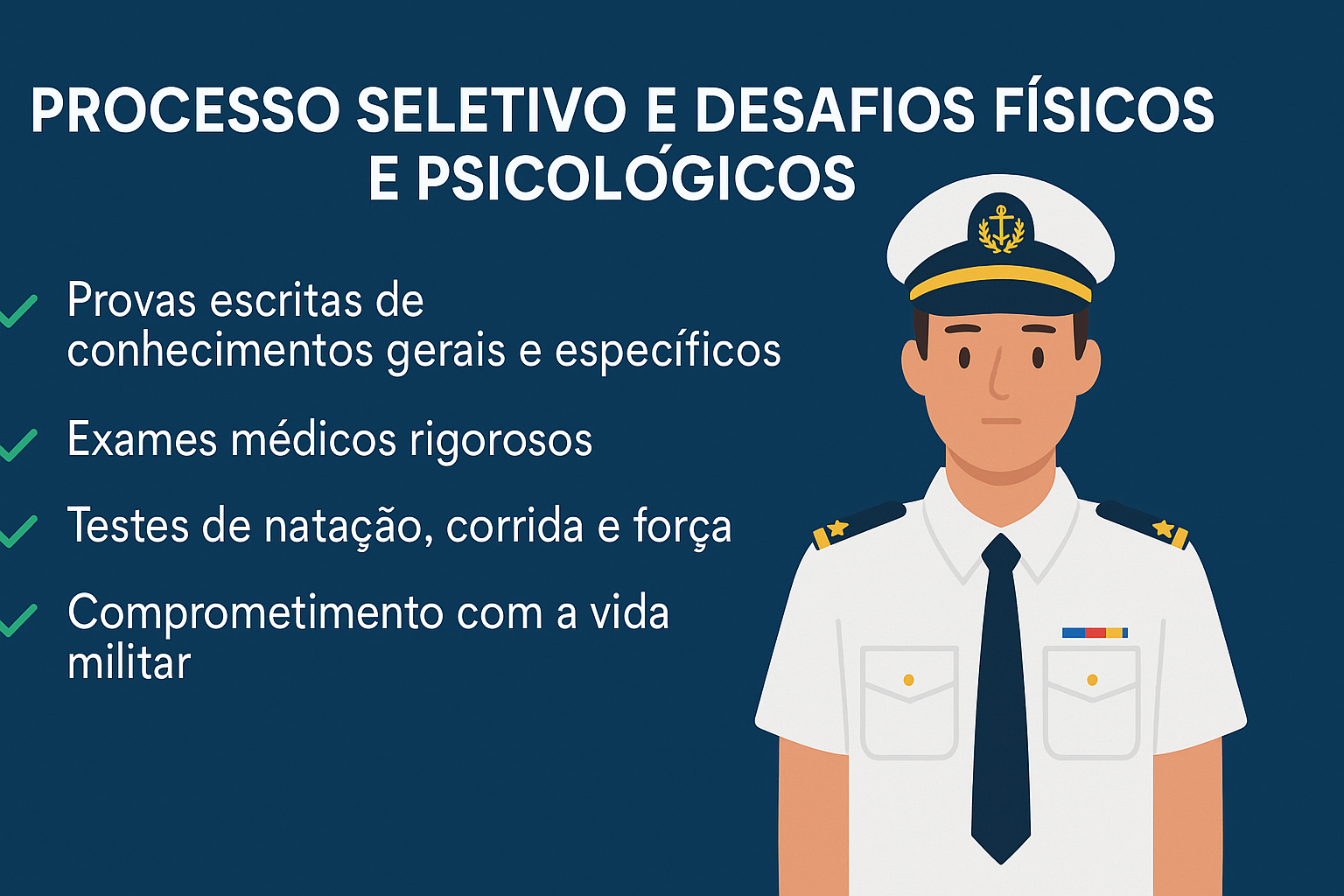
The selection process to join the Navy includes written tests on general and specific knowledge, rigorous medical exams, physical fitness tests, and psychological assessments.
The requirement for good physical performance is justified by the activities that military personnel undertake, such as prolonged embarkations, training at sea, and operational maneuvers.
Candidates must demonstrate endurance in swimming, running, and strength exercises, as life on board requires preparation for various adverse situations.
In addition to physical preparation, the Navy values commitment to military life.
Joining this career means opting for a lifestyle that requires obedience, respect for hierarchy, and constant readiness.
Thus, the training of military personnel includes the development of values such as patriotism, loyalty, discipline, courage, and teamwork.
From the first days at the training centers, the rigor of the routine prepares future professionals for the challenges of the naval career.
For those seeking temporary positions, there are limited contracts that require higher education and professional experience, according to the rules of the Ministry of Defense.
Although it does not offer stability, this modality allows contributing to national defense and gaining important experiences.
The psychological assessment aims to ensure that candidates possess emotional balance and the ability to perform under pressure, which is essential for enduring long embarkations and isolation.
Areas Of Activity, Benefits, And Ideal Profile
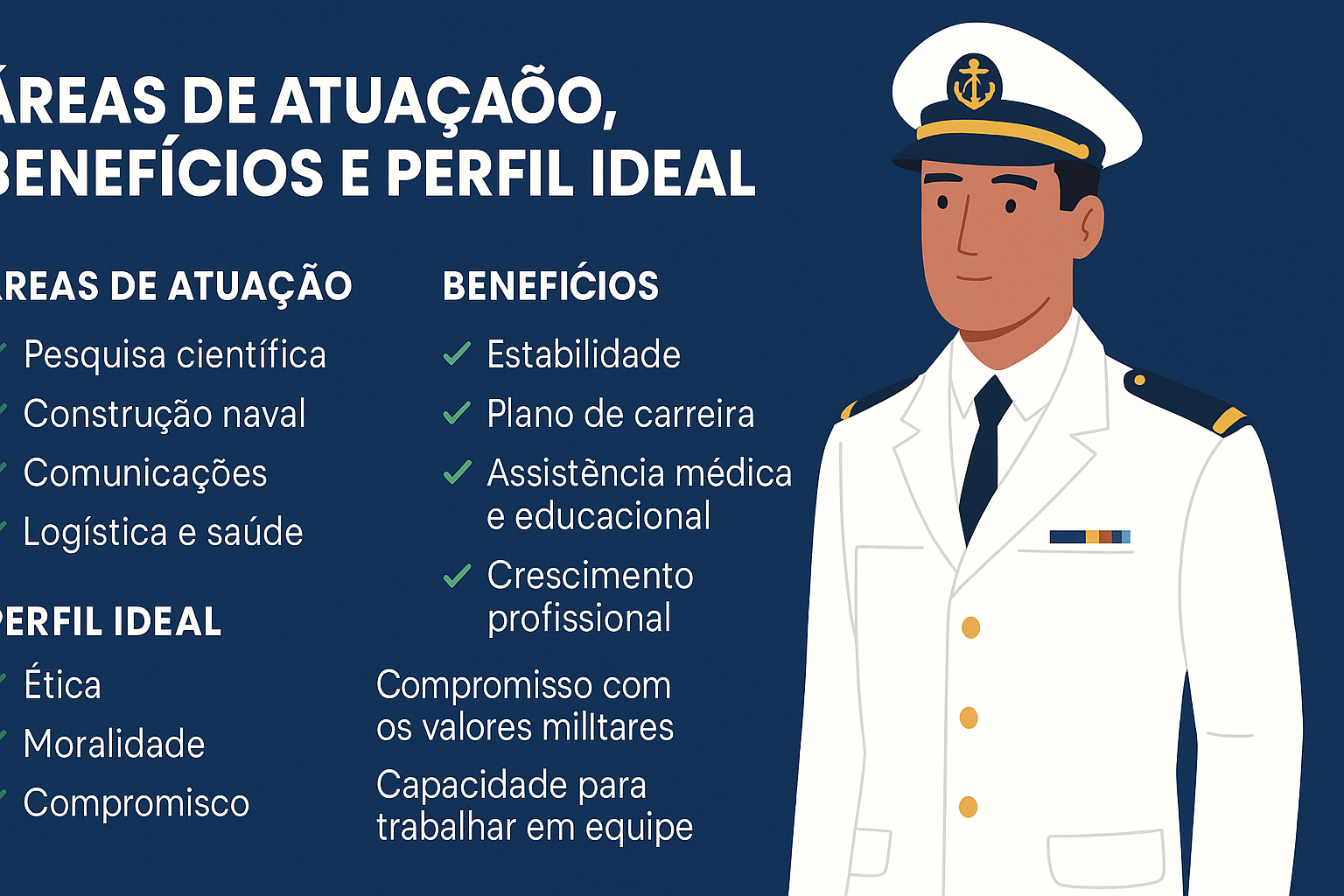
In addition to traditional defense functions, Navy professionals work in areas such as scientific research, shipbuilding, communications, logistics, and health.
The Navy maintains oceanographic research institutes and technological centers, where officers and enlisted personnel contribute to scientific advancements and innovation, according to data from the Ministry of Defense.
The military also participate in international missions under the auspices of the UN, which broadens their experiences and cultural contacts.
The naval career attracts young people due to the desire to serve the homeland, but also for benefits such as stability, career planning, competitive remuneration, medical and educational assistance, in addition to the possibility of professional growth.
Continued education, with specialization courses, languages, and leadership, stands out as a differential, as reported on the official Navy website.
On the other hand, the career demands dedication and a sense of mission. Professionals need to adapt to different regions and coexist with peers in a hierarchical environment.
The ideal profile includes ethics, morality, commitment to military values, and the ability to work as a team.
The Navy expects its members to be examples both inside and outside the institution, contributing to its positive image in society, as highlighted by the Federal Government Portal.
The Modernization Of The Navy And The Space For Women
Over the years, the Brazilian Navy has modernized and expanded its operations, including encouraging female participation.
According to official data from the Ministry of Defense, the entry of women into the Brazilian armed forces began in 1980. Since then, the Navy has gradually increased the female presence in various areas.
Today, women hold important positions in both administrative and operational roles, demonstrating how the institution keeps pace with social changes and values competence regardless of gender.
The challenges for women are significant, but the number of approved and promoted candidates grows each year, promoting greater equality of opportunities, as reported on the official Navy website.
Diversity strengthens the work environment and contributes to innovative solutions in different sectors.
In summary, the requirements of the naval career go far beyond passing a public competition.
They involve vocation, preparation, resilience, and commitment to a greater ideal.
The naval career requires sacrifices but offers many rewards for those who identify with military values and wish to contribute to the defense, sovereignty, and development of Brazil.
If you wish to pursue this path, seek to learn more about the selection processes, training courses, and the daily life of military personnel.
Being well-informed is the first step toward making a conscious decision and, who knows, starting a trajectory of pride and service in the Brazilian Navy.










Seja o primeiro a reagir!