





 Portuguese
  English
  Spanish
  3 min of reading
  3 comments


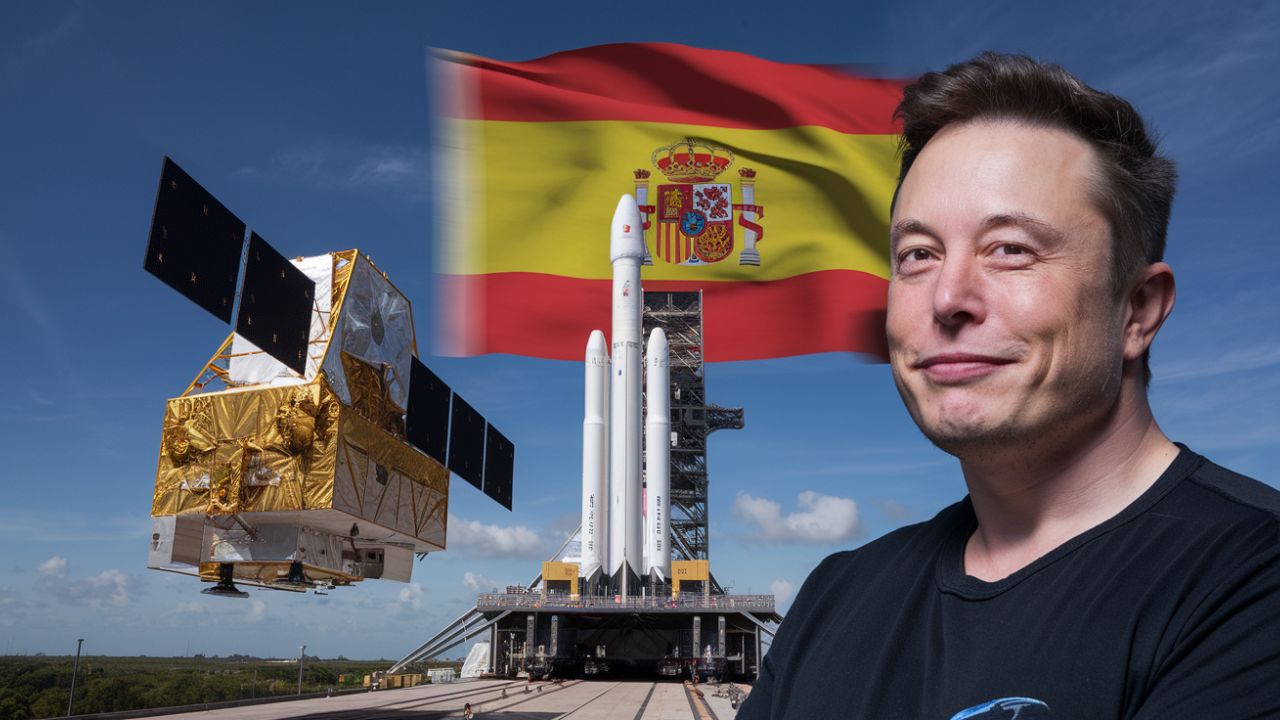


With a Launch Scheduled for January, the Spanish Satellite SpainSat NG I Will Be Carried by SpaceX’s Falcon 9 to Geostationary Orbit, Promising to Revolutionize Military and Civil Communications with Unprecedented Technology in Europe.
The SpainSat NG I, the most advanced satellite ever built by Spain, is about to be launched into orbit with the support of Musk’s SpaceX. It promises to revolutionize military and civil communications, marking a milestone in the country’s space history. But what makes this satellite so special? Let’s dive into the details.
The SpainSat NG I Satellite and Its Importance
The SpainSat NG I is not just another satellite. It was designed to operate in three frequency bands: X, Ka, and UHF, making it the first European system to integrate these technologies. This ensures secure and high-quality communications for the Spanish Armed Forces and their NATO allies.
In addition to military use, the SpainSat NG I will have benefits for society. According to Amparo Valcarce, Spain’s Secretary of State for Defense, the improvement in communication infrastructure will also positively impact citizens, allowing for more robust connectivity in critical situations.
-
Something is happening around the Earth: Inside the huge explosion of fireballs in 2026

-
A hot air bubble coming from Argentina expands over Brazil, causing thermometers to exceed 38 degrees with a thermal sensation of 40 degrees in late March, affecting 6 states at once.

-
The radish leaf that almost everyone throws away has more polyphenols, flavonoids, and fiber than the consumed root, and a 2025 study showed that the leaf contains compounds that protect the intestine, combat inflammation, and may inhibit the growth of cancer cells.

-
A planet that seemed to defy the laws of physics has intrigued scientists for decades, until the James Webb revealed what is really affecting Saturn’s rotation.

Preparations for the Big Day

The satellite is being transported from Toulouse, France, to Cape Canaveral, Florida. This journey is crucial to ensure that the equipment arrives in perfect condition. Its launch is scheduled for January 28, 2025, marking the tenth mission of SpaceX’s Falcon 9 rocket this year.
Elon Musk and SpaceX play a vital role in this operation. The Falcon 9 will take the satellite to a geostationary orbit, 36,000 km from Earth. This partnership highlights the importance of international collaboration for technological advancements in the aerospace sector.
Characteristics and Differentiators of SpainSat NG I
Standing 6.7 meters tall and weighing around 6,100 kg, the SpainSat NG I is a true colossus. It was designed to withstand the extreme conditions of space, ensuring years of reliable operation.
The satellite’s differentiator lies in its ability to operate in three distinct bands. This not only improves military communications but also opens doors for collaboration between European countries and NATO allies.
How Much Does It Cost and What Will It Return?
The SpainSat NG project required an investment of €1.3 billion. However, a return of up to €2 billion is expected, thanks to the sale of services to other countries and organizations.
Renowned companies such as Airbus, Sener, and Thales participated in the development, showcasing how Europe can lead in technology when working together.
SpainSat NG II: The Next Step in the Constellation
The SpainSat NG II, the “twin” of NG I, will be launched later in 2025, forming a constellation that will be fully operational in 2026. This advancement reinforces Spain’s commitment to leading the secure communications sector.
With the operational deployment of the SpainSat NGs, the older SpainSat and XTAR-EUR satellites will be retired. They will be moved to a safe orbit, ensuring that the new generation fully takes over their functions.







Avanço e retrocesso, com mais lixo em órbita. Até quando?
Cada vez mais elevados!
Graças à Deus, hóje a tecnológica está gigante no mundo