





 Portuguese
  English
  Spanish
  2 min of reading
  0 comments


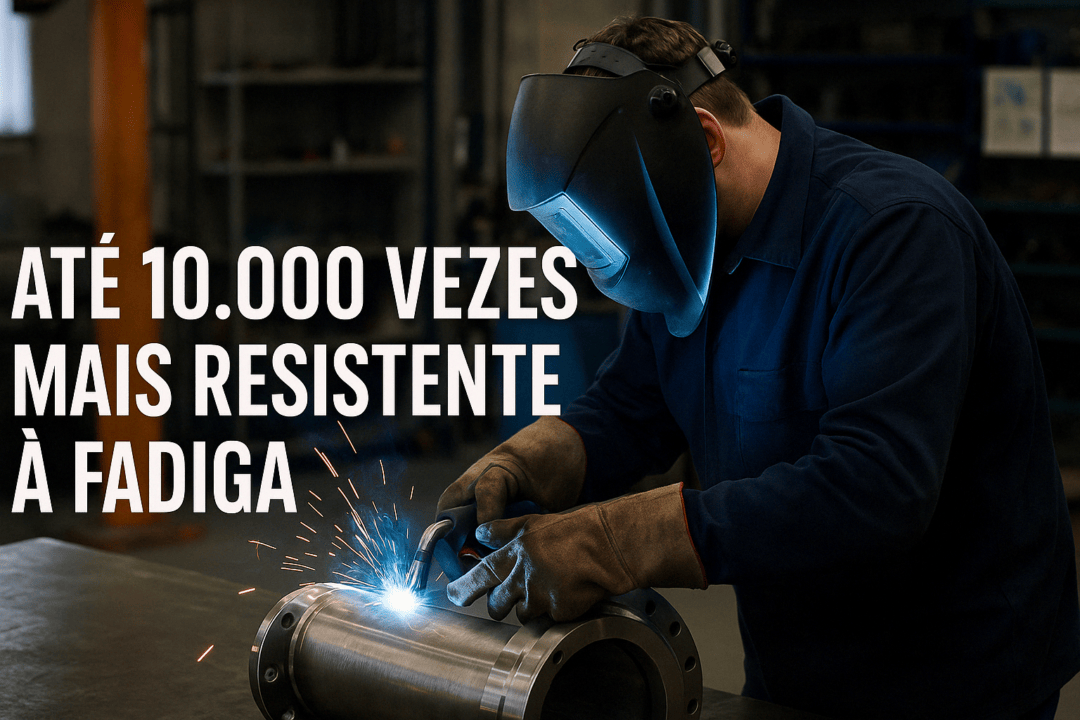
Fatigue Resistance Is A Crucial Factor For The Durability Of Metal Structures. Now, A Multidisciplinary Team Has Developed An Innovative Technique That Reinforces Stainless Steel Against This Type Of Wear. With Applications In Sectors Such As Aerospace, Energy And Infrastructure, The Method Represents An Important Advance To Increase Safety And The Lifespan Of Metal Components Subjected To Repetitive Stresses.
An Innovation In The Treatment Of Stainless Steel Could Transform Its Application In Critical Areas Such As The Aerospace Industry.
A Group Of Researchers From The Chinese Academy Of Sciences, Shandong University, And Georgia Institute Of Technology Has Developed A Twisting Technique That Dramatically Increases The Material’s Strength. The Results Were Published In The Journal Science.
Controlled Twisting Creates New Internal Structure In Stainless Steel
The Process Created By The Team Involves Subjecting The Austenitic Stainless Steel 304 To Repeated Twists, Carried Out In A Machine.
-
With a cost per shot close to zero, the DragonFire laser could change naval warfare in 2027 and provide British ships with nearly unlimited defense against drones.

-
A British startup creates tires that generate electricity in electric vehicles when passing over potholes, speed bumps, and cracks.

-
Scientists have created robots made with living cells that have their own nervous system, swim on their own, explore the environment, and self-organize without any genetic engineering, and now they want to do the same with human cells.

-
Students create a solar-powered ambulance that operates without a plug, without fuel, and still keeps medical equipment running in remote areas.


This Twisting Generates An Internal Reorganization In The Metal’s Cells, Forming A Type Of “Anti-Collision Wall” In Three Dimensions.
This New Structure Is Sub-Micrometric And, Under The Microscope, Shows A Coherent Lamellar Organization, With Ultrathin Layers Below 10 Nanometers.
According To The Researchers, These Walls Function Like Internal Springs.
They Absorb Impacts And Distribute Stress More Evenly Throughout The Metal Piece, Making The Material More Resistant To Cyclic Creep — A Type Of Fatigue Caused By Repeated Bending, Common In Structural Components.
Results Indicate Multiplied Strength
When Testing The New Material, The Team Found That Tensile Strength Increased By 2.6 Times Compared To Untreated Steel.
Additionally, The Stress Caused By The So-Called Ratchet — A Form Of Repeated Mechanical Stress — Was Reduced By Two To Four Orders Of Magnitude.
These Improvements Could Make The Treated Steel Up To 10,000 Times More Fatigue-Resistant. The Research Suggests That The New Method Could Allow The Use Of This Stainless Steel In Highly Demanding Applications, Such As In The Construction Of Parts For Aircraft Or Structures Subject To Extreme Conditions.
Potential For Use In Special Applications
The Main Gain Identified By Scientists Is The Possibility Of Prolonging The Lifespan Of Parts Subjected To Great Stresses, Reducing The Risk Of Failures.
With This Technique, Products That Previously Risked Premature Wear Can Become Safer And More Durable, Opening Up Opportunities For More Demanding And Complex Uses.







Seja o primeiro a reagir!