





 Portuguese
  English
  Spanish
  3 min of reading


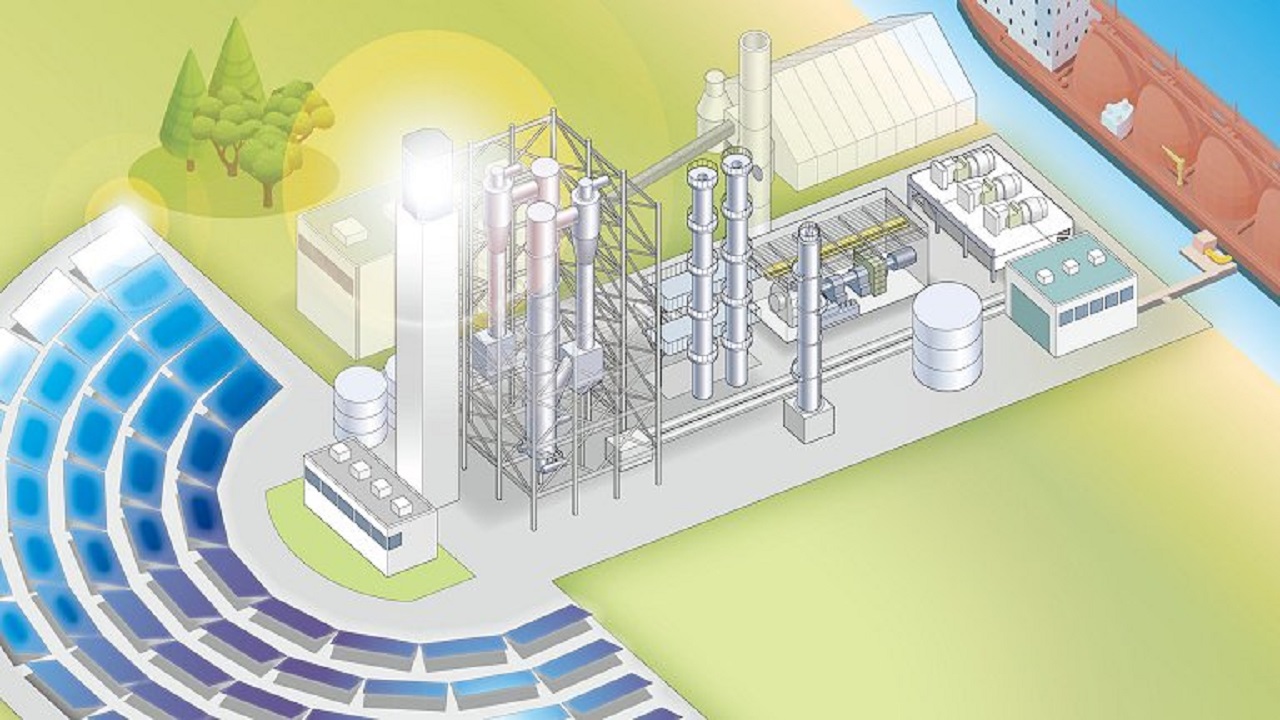
Japanese Team Is in the Final Stage of Developing a Plant That Can Produce Green Hydrogen Using Biomass and the Heat From Solar Energy, Achieving Amazing Emission Numbers That Can Be Considered the Lowest in the World
In the race to move away from fossil fuels and reduce CO2 emissions, hydrogen is considered the cleanest option of all. However, despite the fuel burning cleanly, releasing only water as a byproduct, there is still no viability for so-called solar hydrogen, meaning that the current method of producing hydrogen is energy and carbon intensive, that is, hydrogen is clean, but its production process is not always. According to Japanese professor Shutaro Takeda from Kyoto University, solar energy and biomass are strong candidates for powering the production of green hydrogen, but one of the impasses is that sunlight is very intermittent.
Read Other Related News
Biomass and Solar Energy Hydrogen Plant
The novelty is that the team led by the Japanese professor has created a new project for a green hydrogen plant that is based on fully sustainable resources, producing the lowest amount of CO2 associated to date.
The new approach uses solar energy directly for heating. This solar thermal energy is used to gasify biomass, a process that has proven to be the most effective and practical way to produce green hydrogen without a large amount of carbon being emitted.
-
The Brazilian state accelerates industrial competitiveness with a focus on the extraction of strategic minerals to boost the energy transition in Goiás.

-
Seagri’s headquarters invests in solar energy with Neoenergia Coelba and promises to cut electricity costs, highlighting a strategic advance in sustainability and energy efficiency within state public administration.

-
A Canadian retiree creates a hydroelectric system on a real river, generating energy continuously throughout the day and demonstrating how the power of water can supply a house with stability even in a simple structure.

-
Solar Pyramid draws attention by converting solar energy into million-dollar savings and repositioning the City Hall of Curitiba as an example of innovation, sustainability, and intelligent use of public resources.


This combination of two different energy systems creates a new type of green hydrogen facility that the team has named the Indirect Biomass Gasification Hydrogen Production Plant Powered by Solar Energy. In simple terms, the SABI-Hydrogen plant.
Learn How the Solar and Biomass-Powered Plant Works
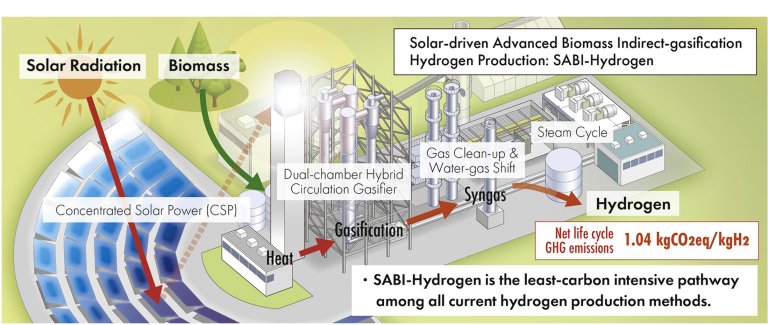
First, to effectively absorb solar energy, the researchers chose a set of spatial mirrors known as heliostats, which focus light onto a receiver at the top of a tower.
Under these conditions, a heat transfer material in the receiver can reach temperatures equivalent to 1,000 degrees Celsius. Shortly thereafter, this heat is transferred from the receiver to the gasification part of the system, where a container holding wood chips as biomass is intensely heated in the absence of oxygen.
Instead of burning through combustion, the wood chips are transformed into a gas mixture containing a large proportion of hydrogen. This mixture is called syngas or synthesis gas. Alternatively, in the absence of solar heating, such as during the night or on rainy days, the gasifier can also be conventionally heated by burning biofuels to provide heat to the system.
The Lowest Emissions Value Achieved
The team was keen to assess the overall environmental impact of their green hydrogen project based on a standard international impact assessment method known as ReCiPe2016.
The result showed that the constructed system would emit only 1.04 kg of CO2 per kg of hydrogen produced, being the lowest value among all forms of production. The professor concluded that the team’s modeling indicates that the use of solar energy and biomass from managed forests can enable the sustainable production of hydrogen with the lowest environmental impact possible.










Seja o primeiro a reagir!