





 Portuguese
  English
  Spanish
  3 min of reading
  0 comments


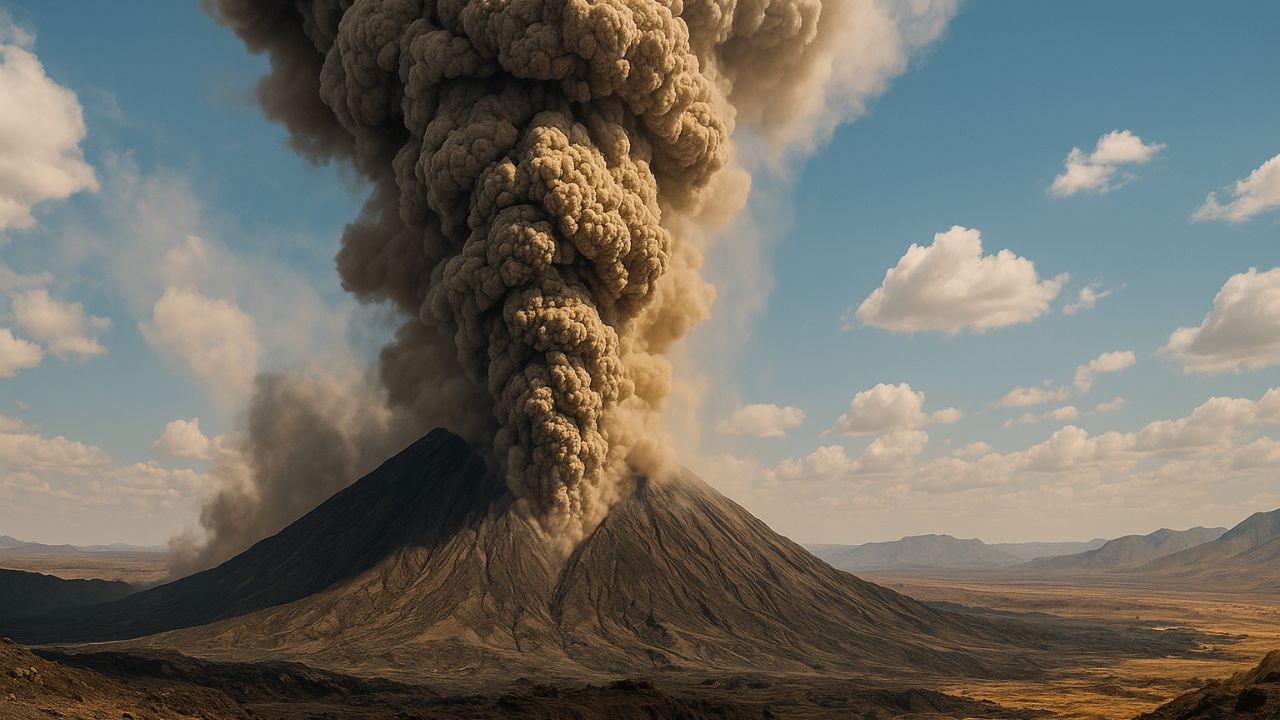
The Awakening of the Hilgub Volcano Eruption Covered Ethiopia in Ashes and Required Urgent Alerts for International Aviation After Millennia of Silence
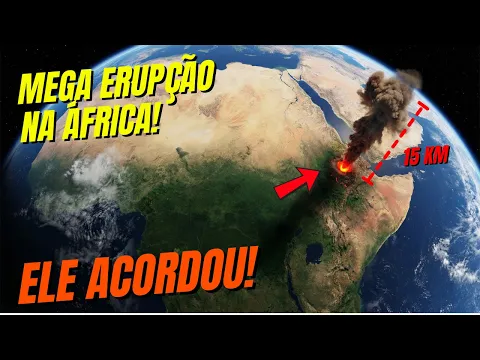
On the morning of November 23, 2025, the world turned its attention to Ethiopia, where the Hilgub volcano entered a vigorous eruption around 8:30 AM local time. Located in the remote Erta Ale mountain range, the sleeping giant surprised the scientific community and aviation authorities by launching an immense cloud of ash that reached between 10 to 15 kilometers in height.
As the Danakil region is extremely inhospitable and difficult to access, the first details came from satellite observations that detected significant emissions of sulfur dioxide and the plume’s dispersion.
This awakening marks the first recorded activity of the Hilgub volcano in the last 12,000 years, changing its geological status from “no known eruptions” to an active system with confirmed historical records.
-
Scientists use artificial intelligence to create nearly indestructible steel that does not rust and could change the way industrial energy and oil parts are produced.

-
Instead of buying new electric trucks, India is removing the diesel engines from old vehicles and installing electric propulsion for 40% of the price, and this simple idea could be the solution that polluted megacities around the world have been waiting for.

-
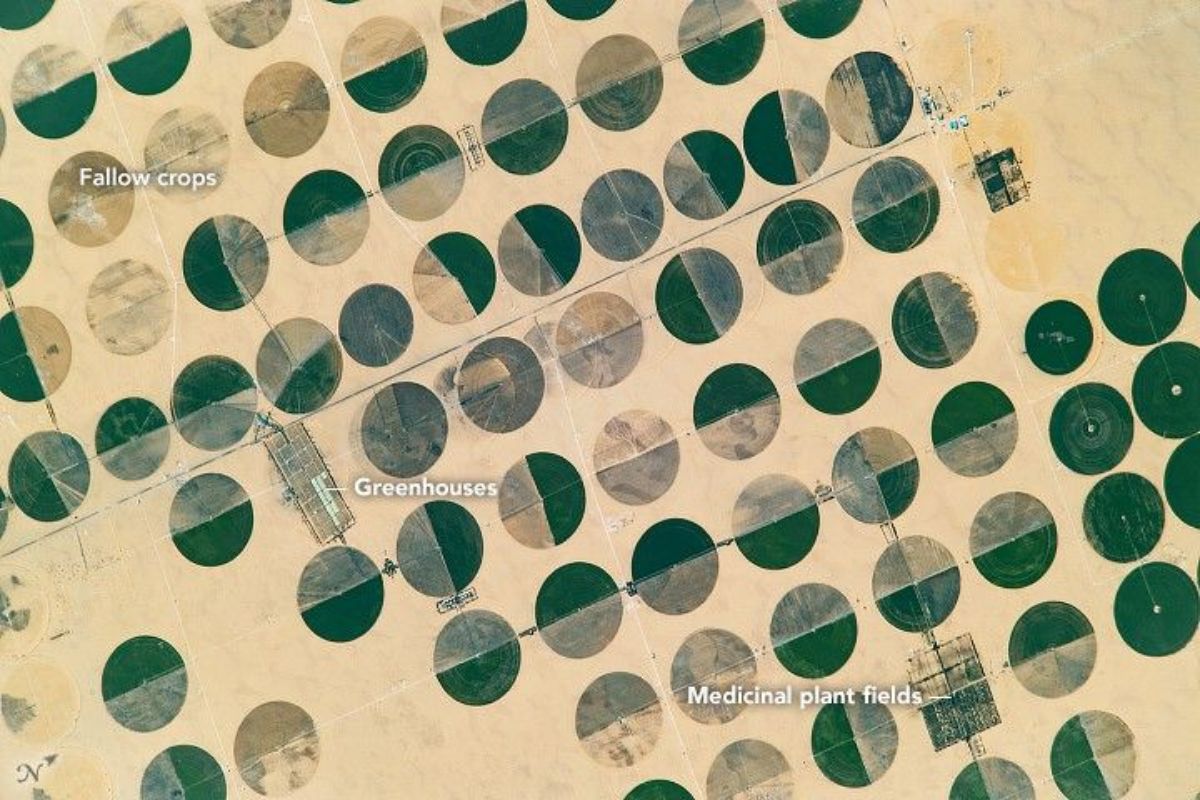
Circles in the Sahara plantations: ISS reveals Sharq El Owainat, in Egypt, irrigated by a center pivot with water from the Nubian Sandstone Aquifer, growing between 1998 and 2019, 290 km from the nearest city.
-
40% still call it a fraud: Soviets monitored Apollo, mirrors on the Moon still return lasers today and rocks confirm it; in 2026, 4 astronauts will return to lunar orbit and the race restarts against China.

A Giant in the Afar Rift
The eruption occurred in one of the most tectonically extreme zones on the planet, where the African, Arabian, and Somali plates are pulling apart.
The Hilgub volcano is the southernmost point of the Erta Ale chain and is classified as a shield volcano. Unlike classic steep cones, it has a broad, low structure formed by layers of lava that spread over time.
Before this explosion, the top of the volcano featured a graben, a block of land that has sunk between faults, and a symmetrical scoria cone about 200 meters wide.
The presence of fumaroles in the crater already indicated that the system was not dead, but rather dormant, with heat and fluids circulating internally. This geothermal breathing was the signal that, despite the lack of historical records, the magmatic system remained active.
Impacts on Aviation and Local Communities
The force of the explosion propelled volcanic ash to cruising altitudes, which had immediate consequences for aviation. The plume was carried by winds at altitude, crossing the Red Sea and reaching the southwest of the Arabian Peninsula, affecting routes over Yemen and Oman.
Several flights were diverted or canceled due to the risk that the silica particles pose to aircraft engines.
On the ground, although there are no reports of deaths at this time, the impact was felt in nearby villages. Residents reported falling ash that covered homes, crops, and pasture areas.
In an arid region like Danakil, any contamination of scarce water and vegetation becomes a critical issue for the survival of local communities.
The Science Behind the Awakening

Volcanology classifies any volcano that has erupted in the Holocene, i.e., in the last 10,000 to 12,000 years, as active.
The Hilgub volcano was on the edge of this definition, as its most recent lava flows covered sediments approximately 8,200 years old. The 2025 event confirms that long-cycle systems can spend millennia in silence before resuming explosive activity.
It is essential to understand that the awakening of this volcano does not mean it was extinct and “resurrected.” A volcano is only considered extinct when its magma source is permanently shut down, which was not the case.
The current eruption follows the volcano’s own geological clock, which operates on a timescale very different from the human one, confirming predictions made months earlier based on seismic crises in the region.
Climate Myths and the Reality of Emissions
With the magnitude of the eruption, questions arise about the impact of volcanic gases on the global climate. Although the Hilgub volcano released considerable amounts of carbon dioxide and sulfur, scientific data shows that volcanic emissions are minimal compared to human ones.
All volcanoes in the world together release a maximum of 440 million tons of CO2 per year.
In contrast, human activities emit about 37 billion tons annually. This means humanity produces 40 to 100 times more carbon dioxide than all the volcanoes on the planet combined.
Therefore, this eruption is a fascinating geological phenomenon and a local danger, but does not serve as a primary driver of global warming.
Did you know that humanity emits much more CO2 in a single day than all the volcanoes in the world combined? Let us know what you think about this information in the comments!








-

Uma pessoa reagiu a isso.