





 Portuguese
  English
  Spanish
  4 min of reading
  1 comment


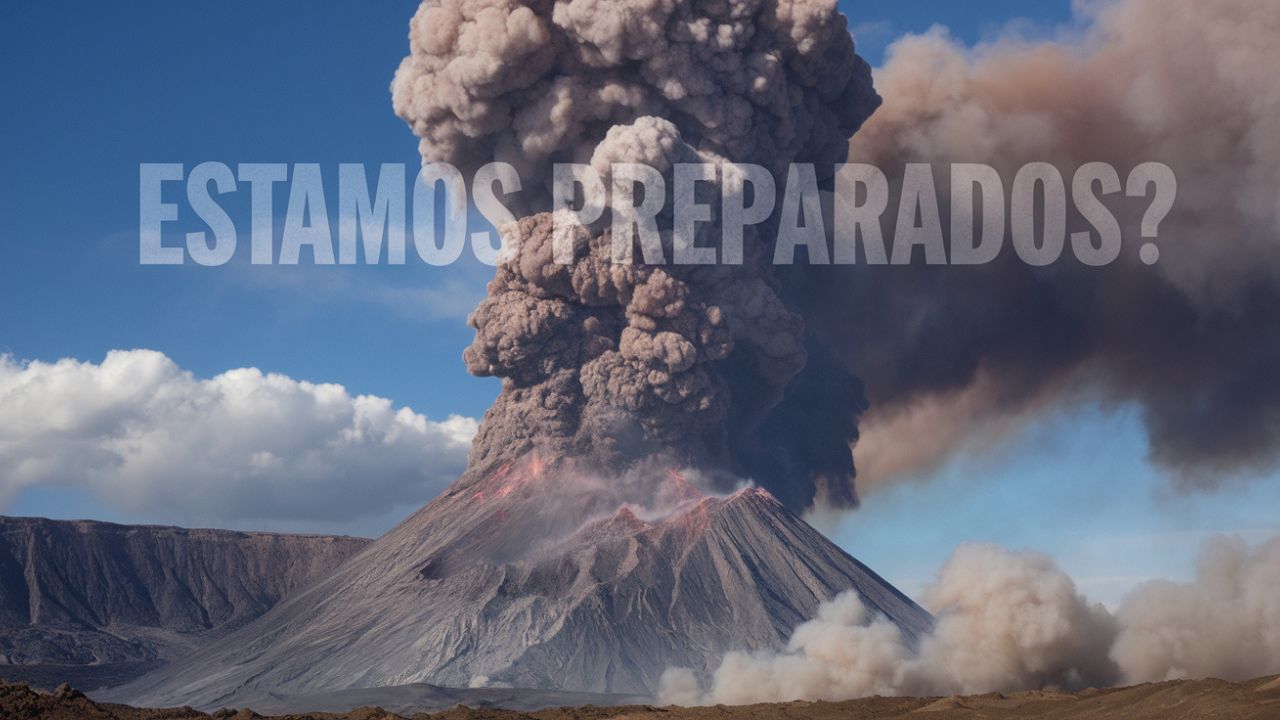


Experts Reveal That A Massive Volcanic Eruption Could Cause Immediate Destruction, Change Global Climate, And Leave Millions Homeless. Is Humanity Prepared To Face This Threat?
What would it be like to wake up one day and discover that the world is facing a volcanic eruption capable of changing the course of history? This is a real concern for scientists. A massive volcanic eruption, like the one at Mount Tambora in 1815, would not only devastate entire cities but also cause lasting global impacts. The warning is clear: it is a question of “when,” not “if.”
Over the centuries, volcanoes have shaped the Earth, creating stunning landscapes and, at times, scenes of destruction. But what if we are on the brink of a catastrophic event? Understand why this threat is so serious.
Why Is A Volcanic Eruption So Destructive?
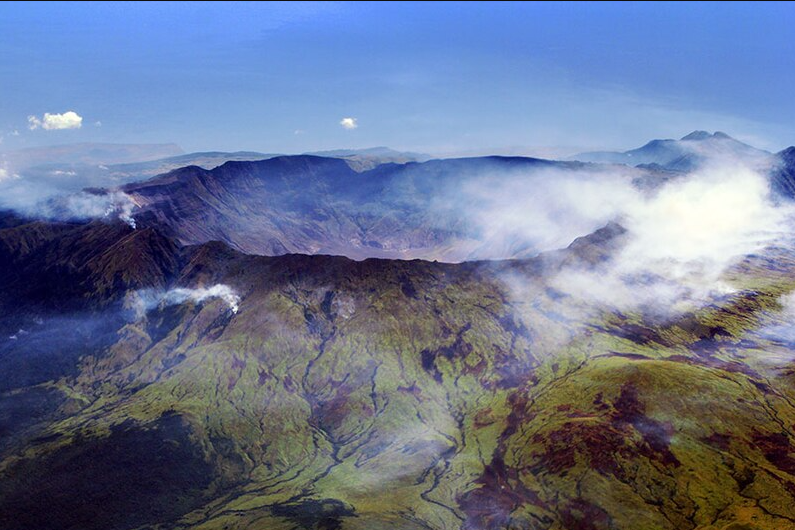
In 1815, the eruption of Mount Tambora in Indonesia was a landmark in history. This supereruption released tons of ash and gases into the atmosphere, reducing global temperatures by 1 degree Celsius. The result? A “year without a summer,” with destroyed crops, widespread famine, and cultural impacts, such as the emergence of the classic “Frankenstein.”
-
The blood of astronauts is undergoing mutations in space, coagulating too much when it shouldn’t and too little when it needs to: three recent discoveries reveal that our bodies were simply not made to live outside of Earth.

-
A startup sends robotic gloves for users to wear at home while washing dishes, folding clothes, and making coffee; every finger movement is recorded and sent back to train a domestic robot that has already learned 10 million real tasks without ever having entered a kitchen.

-
In a flooded well, archaeologists found a 1,700-year-old Roman egg that still contains clear and yolk intact inside the very thin shell.

-
Something is happening around the Earth: Inside the huge explosion of fireballs in 2026


Events of this magnitude are not common, but they are not rare either. Scientists indicate that supereruptions can occur every 600 years. What makes them so feared is the extent of their effects: from climate change to destabilizing entire economies.
How Could A Massive Eruption Impact The Modern World?
Imagine entire cities being buried by ash, lava flows, and pyroclastic flows. The disruption of production chains could cause trillion-dollar economic losses in a matter of months.
Volcanic ash not only darkens the sky but also cools the planet. This means failed crops in major agricultural powers like the U.S. and China, leading to famine and global instability.
Why Would The Impact Be More Severe Today?
The planet today is warmer and more unstable. Aerosols released by volcanoes could be dispersed more quickly, intensifying global cooling. Warmer oceans could exacerbate climate impacts.
With more than 800 million people living near active volcanoes, the number of displaced individuals would be enormous. The global interconnectedness also means that the economic and social impact would be felt by all, regardless of distance.
Potential Volcanoes
Scientists have not pointed to a specific volcano that is about to erupt, but they are closely monitoring supervolcanoes known for their destructive potential. Among the volcanoes that could cause a massive eruption are:
Yellowstone (U.S.) – Located in Yellowstone National Park, it is one of the most monitored supervolcanoes in the world. Its last major eruption occurred around 640,000 years ago.
Campi Flegrei (Italy) – Near Naples, this supervolcano has shown signs of increasing activity in recent years. Its eruption could affect millions of people in Europe.
Toba (Indonesia) – Responsible for the largest eruption in the last 100,000 years, it is believed that Toba nearly wiped out prehistoric humanity.
Taupo (New Zealand) – Its last supereruption was 26,500 years ago, and it remains one of the most dangerous active volcanoes on the planet.
Aira Caldera (Japan) – A constantly active volcano with the potential for a supereruption that could affect much of Asia.
These volcanoes possess the necessary characteristics to generate an eruption capable of causing local destruction and global climate impacts. The scientific warning is based on data indicating that we are within the expected time frame for an event of this magnitude, although it is not clear which volcano will be responsible.
How Can We Prepare For The Inevitable?
Today, we have enough technology to monitor signs of volcanic activity. Sensors and satellites can provide early warnings, but are we ready to act quickly?
Preparation includes evacuation plans, strategic food stockpiles, and international coordination. After all, in a connected world, the response needs to be global.
The power of a massive volcanic eruption reminds us that, despite all our technology, we are still small in the face of nature’s force. History has given us clear signals, but have we learned from them?





As atividades humanas; com testes nucleares subterrâneos ou nos mares; entre outras coisas; podem provocar uma atividade sísmica o que poderia acelerar uma atividade vulcânica; im terremoto; um maremoto e outras atividades da natureza; mas não naturais.
As forças da natureza podem ser provocadas; mas dificilmente seriam controladas…
Eventos de autodestruição da humanidade…