





 Portuguese
  English
  Spanish
  4 min of reading
  0 comments



Study Points to Growing Shortage of Professionals in Construction, Accelerated Advance of Artificial Intelligence, and Change of Priorities in Management, with Direct Impact on Productivity and Costs of Works.
The new edition of the “Falconi Thermometer of Construction” indicates that the shortage of qualified professionals and cost pressures keep the sector in a holding pattern.
According to the survey, six out of ten executives classify the market as lukewarm, with low prospects for acceleration in the coming months.
To get through this period, companies are intensifying the use of technology and investing in team qualification, with artificial intelligence emerging as a practical alternative in light of the unfilled positions.
-
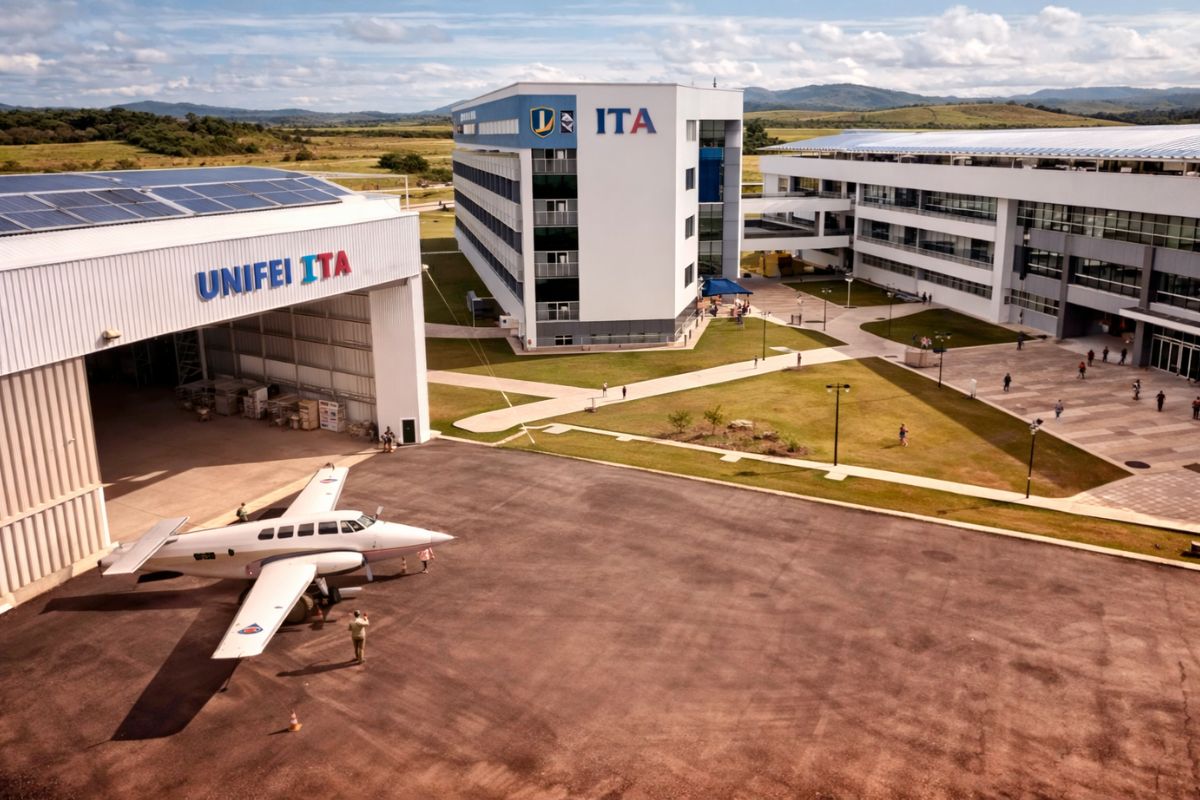
The institute that trained the greatest aerospace engineers in Brazil has just opened its first campus outside São Paulo after 75 years: ITA Ceará will have R$ 445 million, new courses in energy and systems, and classes are expected to start in 2027.
-
Luciano Hang, owner of Havan, goes to Juiz de Fora after the tragedy in February, brings R$ 1 million, hands out R$ 2,000 cards, and donates up to R$ 15,000 to victims in the region.

-
The Brazilian passport allows legal residence in dozens of countries without the need for a prior visa, and most Brazilians are unaware that they can apply for residency directly upon arriving in nations in South America, Africa, and even Europe.

-
Petrobras sends a message to Brazilian truck drivers after fuel collapse and reveals plan to have 100% domestic diesel.


Labor Shortage Pressures the Sector
Among the obstacles mentioned by interviewees, the availability of qualified labor ranks at the top of the mentions, appearing in 71% of the responses.
Next are the high interest rates (48%), the cost of materials and services (37%), and market demand (36%), which had been the main pain point in the previous study from 2023.
The lack of skilled professionals pressures deadlines and budgets, especially in technical and engineering roles.
“It is undeniable that the difficulty in attracting and retaining qualified labor delays the transformation of the sector,” says André Chaves, vice president of the Base Industry and Capital Goods unit at Falconi.
Artificial Intelligence Gains Ground in Contractors
Even with the difficult journey, there is a concrete movement to increase efficiency.
The use of AI tools in companies more than doubled in two years: it rose from 15% in 2023 to 38% in 2025.
Adoption is growing as a way to automate routines, support planning, and reduce rework amid the shortage of professionals.
Technological solutions are already part of the arsenal of some companies.
Among the most cited are BIM, CRM, and Lean Construction, which are spread to improve cost control, work visibility, and productivity.
Although digitization is advancing, executives emphasize that technology needs to be accompanied by robust processes and trained teams to deliver results.
Costs and Qualification at the Top of Priorities
On the short-term agenda, most managers intend to concentrate resources on three fronts.
The most mentioned item is improving project cost management (74%).
Next are training and (re)qualification of labor (57%) and strengthening the brand (43%).
In 2023, companies were more focused on meeting deadlines, customer experience, and industrialization, which reinforces the shift towards internal operations in 2025.
The reading is one of execution.
“More than seeking innovation for the sake of innovation, we must understand which problems are priorities to be solved, define the most appropriate solutions (with and without technology), establish robust execution standards, create monitoring routines, and align objectives between the project and corporate headquarters,” assesses Chaves.
He adds an operational alert: without preparation, technology tends to deliver less than it can.
Training as the Key to Digital Transformation
Capacity gaps slow down the value capture of digital tools.
As the Falconi executive summarizes, “Without training actions, companies run the risk of not being able to implement them effectively.”
In other words, the return on investment in AI, BIM, or lean methods depends on trained managers, monitored indicators, and disciplined field routines.
In this context, there is a growing emphasis on process standardization, monitoring routines, and integration between the project and corporate headquarters.
Companies that align technology with clear productivity, cost control, and planning goals tend to mitigate the lack of professionals and price volatility.

Expectations for Change in the Next Five Years
In addition to the immediate diagnosis, the “Thermometer” measures confidence in medium-term transformations.
More than half of the respondents consider it likely that the sector will undergo structural changes in the next five years.
The optimism regarding disruption surpasses that recorded two years earlier, indicating that, although the present is one of caution, the vision for the future includes greater modernization and efficiency gains.
The perception that construction retains traditional methods remains true.
Still, the combination of cost pressure, talent deficit, and evolving digital maturity forms a vector that could accelerate the adoption of analytical solutions, automation of routines, and industrialization of stages.
Research Details
The 2025 edition of the “Falconi Thermometer of Construction” brought together 120 executives from construction companies and developers of various sizes. Of this total, 35% hold positions as CEO, partner/owner, or director.
The collection took place between June 2 and 30, 2025, with the support of the Sienge Ecosystem during Construsummit. The questionnaire mapped perceptions of the scenario, investment priorities, and the degree of technological adoption in companies.









Seja o primeiro a reagir!