





 Portuguese
  English
  Spanish
  3 min of reading
  0 comments


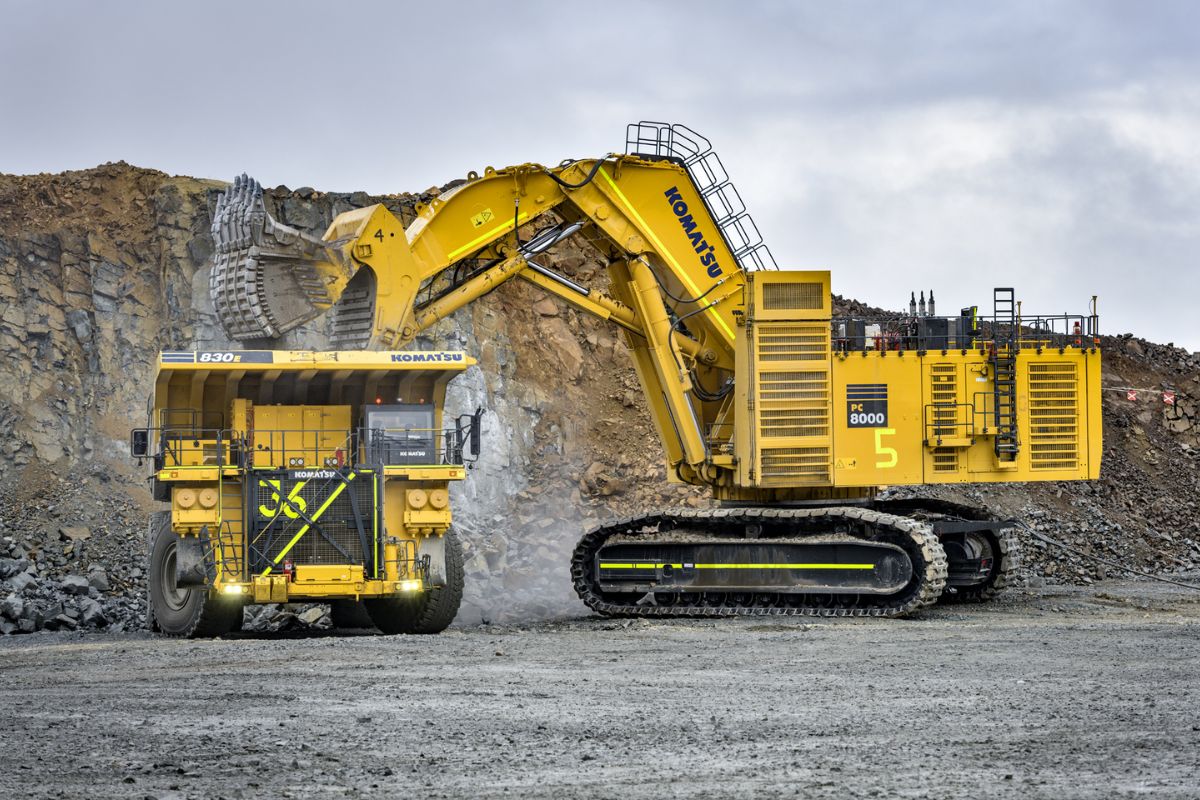
Excavator of 770 Tons Can Exceed 1,000 Liters of Diesel Per Hour in Continuous Operation, According to Technical Reports
The Komatsu PC8000 is one of the largest hydraulic excavators in the world, with a operating weight between 750 and 771 tons and a combined power of over 4,000 hp. Designed for large-scale surface mining operations, it can load trucks of up to 400 tons in just a few cycles.
Powered by two Komatsu engines of 2,010 hp each, the machine can achieve a fuel consumption that exceeds 1,000 liters of diesel per hour under maximum load. This figure is sufficient to surpass the daily consumption of a heavy load truck operating throughout the entire shift.
Technical Structure and History of the Komatsu PC8000
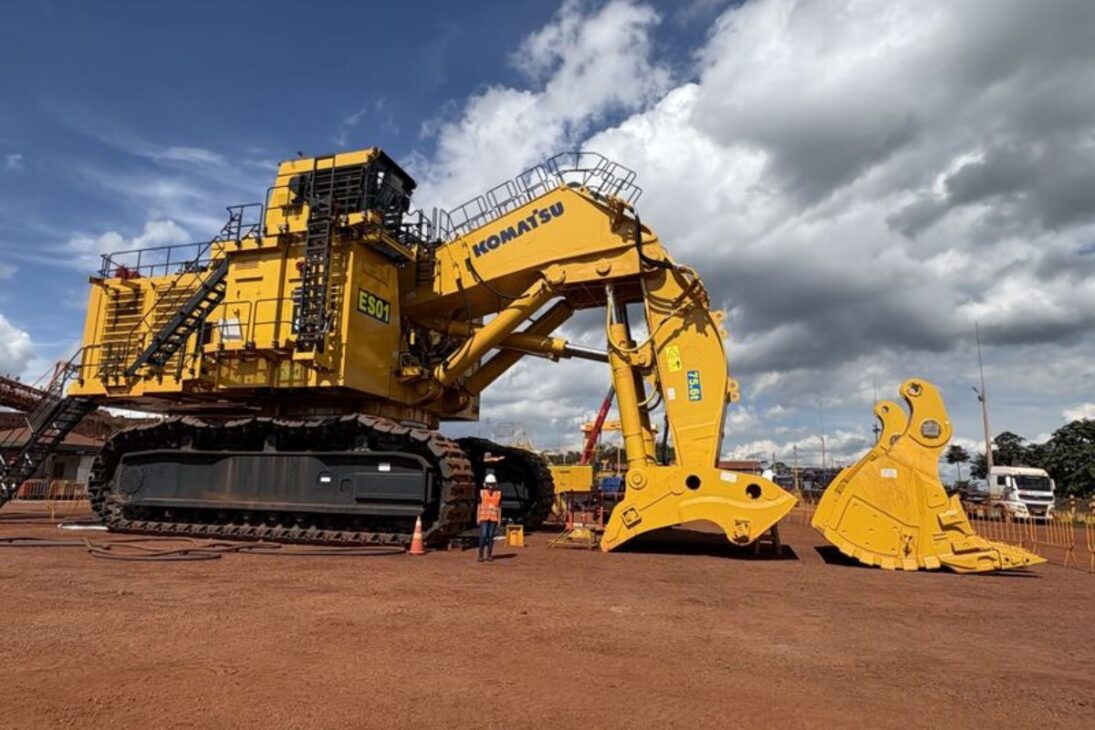
The excavator is available in the PC8000‑6 configuration (launched in 2004) and the PC8000‑11 configuration (launched between 2019 and 2021). Both have two Komatsu SDA16V160E‑2 engines, totaling 3,000 kW (approximately 4,020 hp).
-
These living root bridges and ladders are over 700 years old and help indigenous people survive in one of the rainiest regions in the world.

-
From sertanejo star to international investor: Ana Castela invests millions in a mansion in the USA, creates a themed accommodation in Orlando, and shows that the “boiadeira” also wants to grow away from the stage.

-
The 10 most stunning motorhomes in the world: a $3 million trailer with a rooftop nightclub and garage for a Ferrari, “palaces on wheels” with Italian marble, private cinema, and five-star hotel luxury for billionaires.
-
Trump wanted to spend $400 million on the White House, but the courts prohibited the million-dollar construction.

Its use is intended for severe surface mining operations, with emphasis on large mining companies like Vale and BHP. The models are fitted with shovel or backhoe buckets with a capacity of up to 42 m³, compatible with trucks ranging from 240 to 400 tons.
Fuel Consumption Impresses Operators
Reports from operators and technicians indicate that the Komatsu PC8000 can consume about 1,000 liters of diesel per hour in full operation. There are no official data from the manufacturer confirming this figure, but the estimate is considered plausible based on the power involved and real-world usage conditions.
For comparison purposes:
- A road haul truck (35 tons) consumes between 30 and 40 liters per hour
- In 10 hours, that truck would use 300 to 400 liters of diesel
- The Komatsu PC8000 reaches this consumption in less than half an hour of intense work
This difference illustrates the energy gap between industrial mining equipment and conventional commercial vehicles.
Energy Efficiency and Operational Context
Despite the high consumption, the PC8000 justifies its energy expenditure by its gross productivity: it reduces the number of cycles, moves large volumes of material per hour, and maintains high operational availability. In an open-pit mine, the cost of diesel is offset by the speed in excavating and loading large trucks.
Additionally, the PC8000‑11 model can be equipped with engines that meet the Tier 4 Final standard, with emission reductions and better thermal efficiency. Nevertheless, its operation is still restricted to locations with robust refueling infrastructure due to the fuel demand.
Comparison Between Machines and Industrial Consumption
The comparison between the Komatsu PC8000 and a regular load truck holds symbolic value: it reveals the leap in scale between mining and road transport equipment. A machine like this requires:
- Dedicated fueling tanks
- Precise logistics and supply calculations
- Continuous operation during shifts with multiple rounds
This type of equipment is only viable in high productivity environments and intense logistical planning, such as large mineral extraction projects.
The Komatsu PC8000 is a colossus of engineering, but its operation requires resources to match. Is it worth the cost for mining companies? Or do the environmental and logistical impacts outweigh the gains in scale?
Share your thoughts in the comments — especially if you work with heavy equipment or have seen one of these in action.








-

-

-

-

-

-

100 pessoas reagiram a isso.