





 Portuguese
  English
  Spanish
  4 min of reading
  0 comments


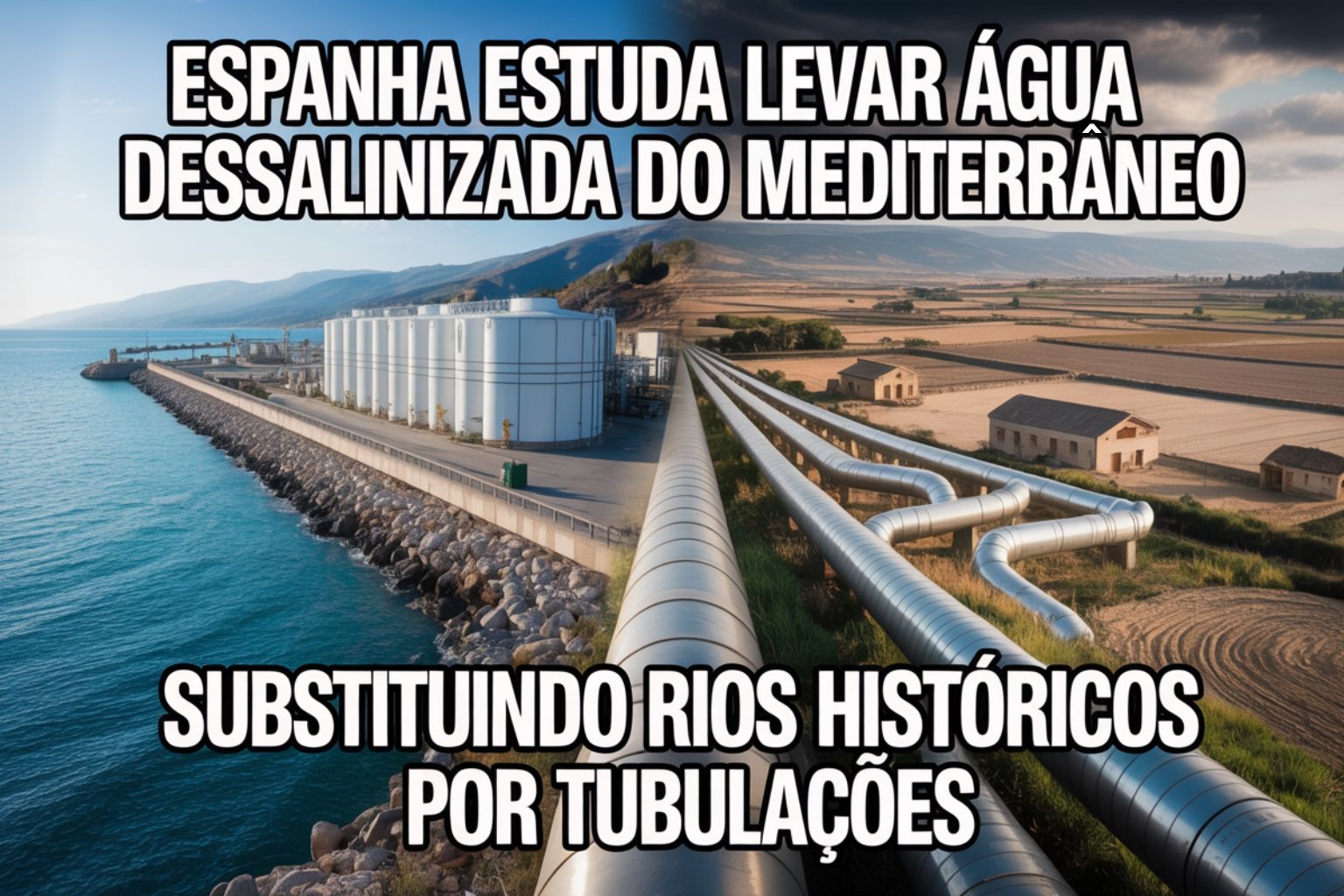
Spain Evaluates Replacing Historical Rivers With Desalinated Water Carried From The Mediterranean To Sustain Agriculture In The Interior, In An Expensive, Controversial And Technically Radical Plan.
Spain has entered an unprecedented phase in its water history. Entire agricultural regions in the interior of the country, which for centuries relied on rivers such as the Segura, the Júcar, and tributaries of the Ebro, now operate without the guarantee of sufficient natural flows. Recurring droughts, chronically low reservoirs, and pressure from urban and environmental use have pushed the country toward an extreme decision: to bring desalinated water from the Mediterranean to the fields, as a direct replacement for rivers.
This change is not theoretical. It is already underway through the AGUA Program, a set of projects that abandoned large river transfers and began to invest in coastal desalination combined with long-distance pumping. In practice, part of Spanish agriculture begins to disconnect from the natural cycle of continental freshwater.
What Is The AGUA Program And Why Did It Mark A Historical Break
The AGUA Program emerged in response to the political and environmental collapse of the old National Hydrological Plan, which envisioned large water transfers between basins. Instead of moving water from increasingly scarce rivers, the new model began to produce water directly from the sea, using desalination plants along the Mediterranean coast.
-
Students create a solar-powered ambulance that operates without a plug, without fuel, and still keeps medical equipment running in remote areas.

-
French “ghost” submarine lost in World War II reappears after more than 80 years on the seabed near the coast of Spain.
-
A simple stitch in wood with nylon thread can reduce adhesives, speed up production, and make sheets up to 4 times stronger and 14 times more difficult to break.
-
The gigantic steel shell built to contain Chernobyl for a century has been pierced by a drone, exposing a critical system and creating a hole that could cost over 500 million euros to repair.

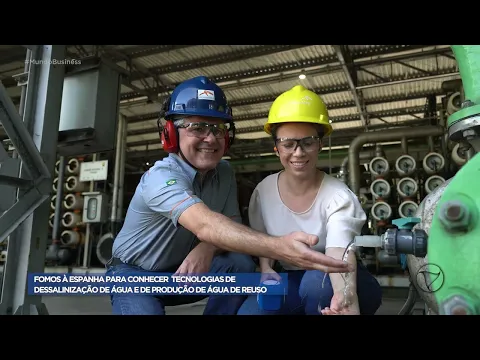

The proposal was clear: to create a theoretically unlimited water source, independent of rainfall and river regimes, capable of sustaining both cities and intensive agriculture in southeastern Spain. To achieve this, the country invested billions of euros in coastal plants, pipelines, pumping stations, and agricultural distribution networks.
The result is a system where the water used to irrigate orchards, gardens, and greenhouses does not fall from the sky nor flow in rivers, but instead arises from industrial processes.
Desalination At Agricultural Scale: Numbers That Explain The Size Of The Bet
The main plants associated with the program have individual capacities exceeding 50 to 70 million cubic meters per year, volumes comparable to those of large interior reservoirs. This water, after treatment, is mixed in some cases with local resources and sent through pipelines that cross dozens — and in some stretches, hundreds — of kilometers to agricultural areas.
The technical challenge lies not only in desalination but in continuous pumping. Many Spanish agricultural regions are at significantly higher altitudes than sea level, which requires high energy consumption to overcome the terrain. Each cubic meter irrigated comes with an embedded energy cost much greater than that of traditional river water.
Agriculture Without Rivers: How This Changes The Production Model
Historically, Spanish agriculture has been organized around rivers, canals, and aquifers. With desalination, a new model emerges: agriculture supplied by industrial infrastructure, similar to what happens in arid countries in the Middle East.
This changes everything. The price of water becomes less dependent on the weather and more dependent on the cost of energy, the efficiency of the plants, and the maintenance of infrastructure. Small farmers struggle to afford higher tariffs, while large producers and cooperatives have more capacity to absorb the cost.
In practice, desalinated water tends to reorganize the agricultural map, favoring higher value-added crops and putting pressure on traditional activities with lower margins.
The Most Controversial Point: Rivers Stop Being The Backbone Of The System
The biggest controversy of the AGUA Program is not technical but symbolic and environmental. For the first time on a large scale in Europe, historical rivers cease to be the basis of agricultural supply. They now mainly fulfill ecological, landscape, and minimal ecosystem maintenance functions, while food production migrates to “manufactured” water.
Critics warn that this creates a dangerous dependence on energy systems and may mask structural problems of excessive consumption. Proponents argue that without this break, vast agricultural areas would simply disappear.
Energy, Emissions And The Environmental Paradox
Producing seawater costs energy — a lot of energy. Although the efficiency of the plants has improved significantly, desalination remains an intensive process, with indirect impacts on emissions and the disposal of brine into the marine environment.
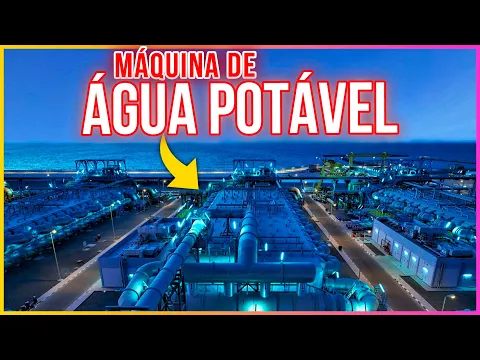
To mitigate this, Spain is trying to integrate the system with renewable sources, especially solar and wind, which are abundant in the country. Still, the paradox remains: to save agriculture in a drier climate, a solution that requires heavy industrial infrastructure is being pursued.
A Model That Anticipates The Future Of Dry Regions In Europe
What is today seen as an exception in Spain may become a precedent for other Mediterranean regions. Southern Italy, Greece, and even parts of southern France are already watching the Spanish experience closely.
As rivers become less reliable and aquifers more pressured, the question shifts from whether desalination will be used to how far European agriculture will accept disconnecting from the natural water cycle.
In Spain, this transition has already begun. And it redefines not only the water engineering of the country but also the very historical relationship between agriculture, rivers, and territory.






-

-

-

-

-

11 pessoas reagiram a isso.