






 Portuguese
  Spanish




While The World Watches, Elon Musk Puts The Starship Before The Most Risky Test In The History Of SpaceX — A Rehearsal That Could Define The Success Of Missions To The Moon And Mars
The SpaceX, company of Elon Musk, is about to star in yet another historic milestone in the development of reusable rockets. The 11th test flight of the Starship, the fifth and final one of 2025, is scheduled to occur starting on October 13, and promises to bring crucial results for the future of space exploration.
Unlike previous missions, this test will focus on fundamental improvements in atmospheric reentry and the resistance of the spacecraft’s thermal shield — points that, so far, represent the biggest challenges for SpaceX to achieve full reusability of its vehicles.
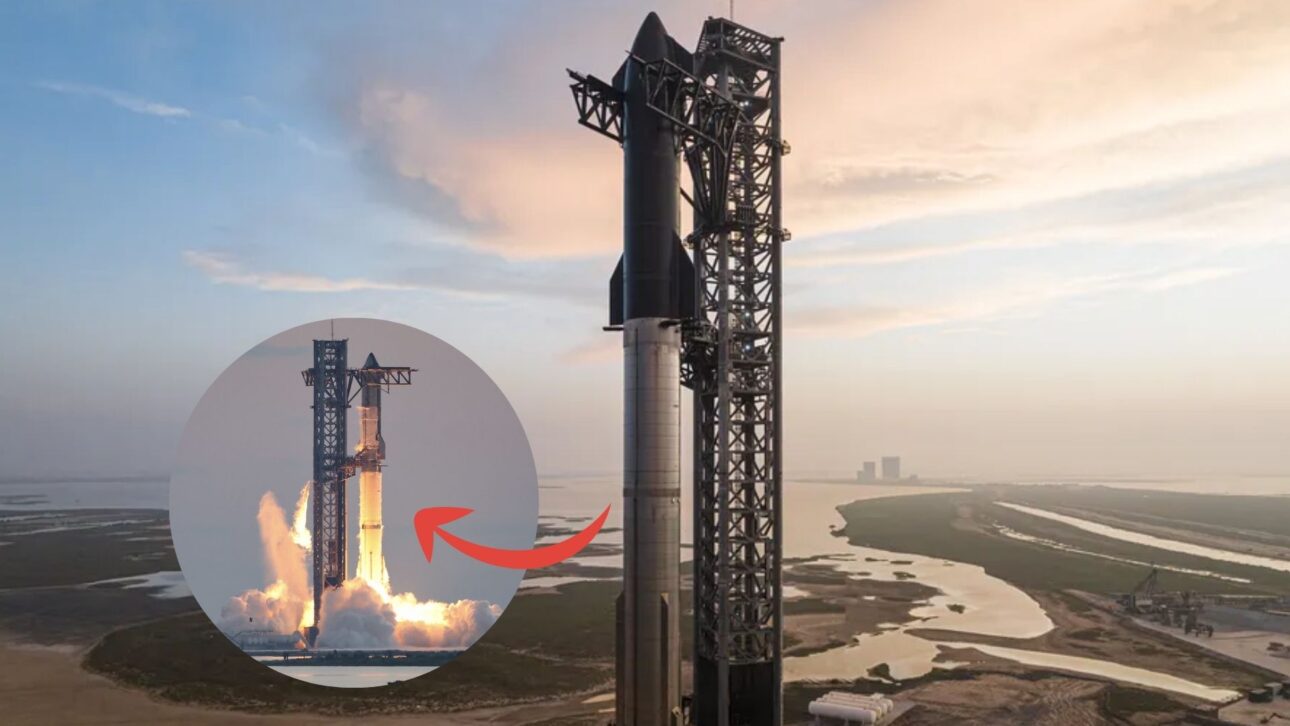
During the rehearsal, the massive Super Heavy booster will perform a controlled descent in the Gulf of Mexico, while the upper part of the Starship will continue on a suborbital flight before returning to the Indian Ocean, near the northwest of Australia. This bold maneuver will also serve as a test for the restart of the Raptor engines in space, allowing the spacecraft to adjust its trajectory before facing the extreme heat of reentry.
-
Why did a company that was already earning US$ 1 million decide to completely change its strategy? The answer begins with used bottles, worms, and an unexpected decision.

-
Where it almost never rains, residents hung giant nets in the desert mountains and started to ‘fish’ drinking water from the fog: the nets can collect thousands of liters per day directly from the mist.

-
Young people from Minas created a robot without screws or metal parts, betting on a strong and flexible structure to compete against a thousand teams in Houston and took Brazil to the top of world robotics for the first time; Sofia, 15, also made history with an unprecedented leadership award.

-
Detectorist found a 900-year-old silver coin


The information was released by Exame, based on official data from SpaceX and analyses from aerospace engineering experts. According to the material, the thermal shield of the Starship will face temperatures exceeding 1,400°C, and, this time, some of the ceramic tiles will be intentionally removed. The goal is to evaluate the spacecraft’s performance in vulnerable areas and improve the protection design for future versions.
Another innovative aspect of the test will be the new landing configuration of the Super Heavy. Instead of relying on a fixed number of engines, the rocket will use 13 Raptor engines at the beginning of the descent, progressively reducing to five and finally three in the final stage. This strategy aims to test the redundancy and control of the vehicle in different phases of landing, ensuring greater operational safety.
While engineers adjust every detail of the current generation, SpaceX is already moving forward with preparations for the Starship V3, scheduled to debut in 2026. This version, even more powerful, will be capable of reaching full Earth orbit and will allow the deployment of the new fleet of Starlink satellites, larger and more efficient.
The Starship V3 will also be the first to participate in in-orbit refueling tests, a groundbreaking procedure among vessels powered by cryogenic propellants. This technology is considered essential for future missions to the Moon and Mars, both for NASA and Musk’s ambitious plans to transform humanity into a multiplanetary civilization.
The flight on October 13, therefore, will not just be another test. It represents the watershed between the era of experiments and the beginning of actual operations of the most powerful spacecraft ever built. If everything goes as planned, the rehearsal will mark a decisive step towards the future of human space exploration.




É simplesmente incrível o avanço da engenharia aeroespacial, de forma simples pensamos que seria algo simples de resolver aumentar a resistência dos materiais para ter ligas mais fortes e com maior capacidade de condução térmica, porém o modo de propagação muda drasticamente no vácuo, um ótimo exemplo disso é a sonda que foi lançada próxima ao sol, o material dela foi feito exatamente para aguentar altas temperaturas no vácuo onde o calor se propaga mas não conduz calor de forma igual, onde temos um lado de calor extremo, e o outro o frio do vácuo extremo, engenharia é incrível