





 Portuguese
  English
  Spanish
  8 min of reading
  2 comments


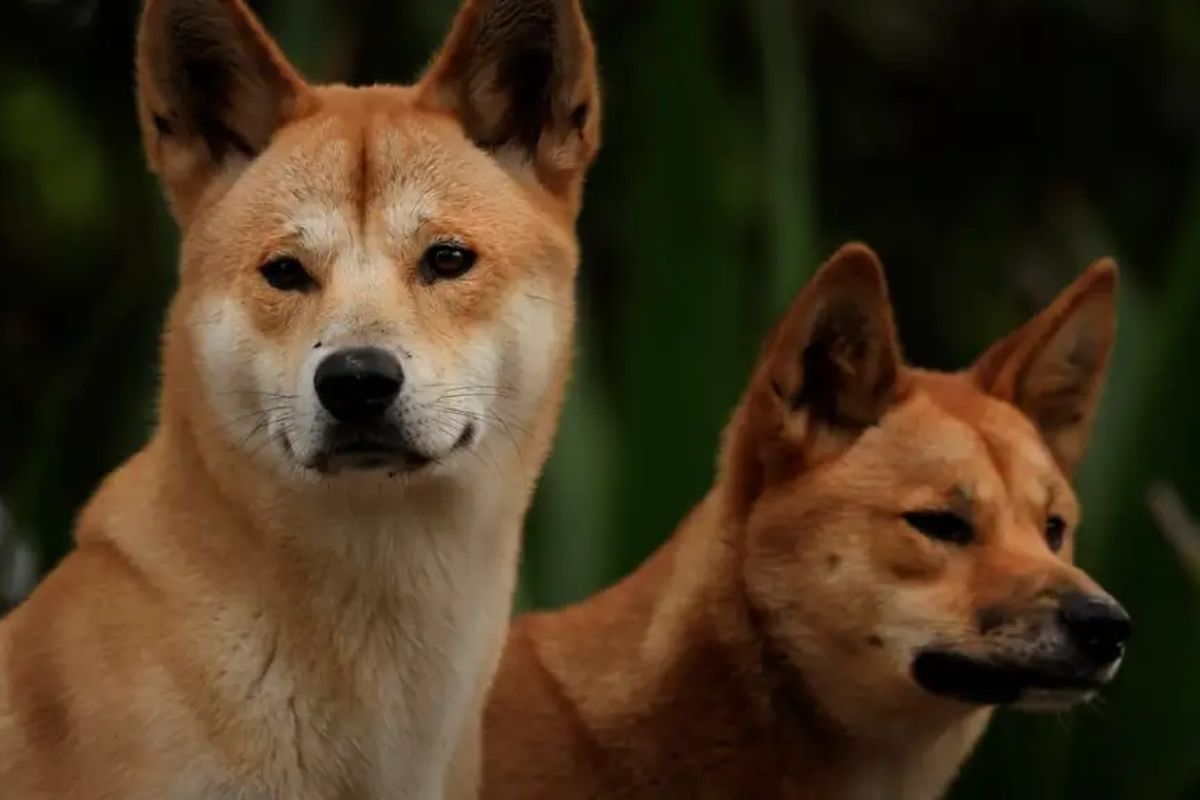


In Australia, The Dingo Is Treated As Wild Dog, But Its Origin In Asian Dogs, Group Strategic Hunting, And The Impact On Ecosystems Place The Animal At The Center Of A Conflict: Farmers Demand Control, Scientists Advocate Protection, And A Fence Has Tried To Separate Interests For More Than A Century.
In Australia, the Dingo has become a central piece of dispute between farms, parks, and research. For those looking from afar, it appears to be a dog running loose, but the Dingo carries an ambiguous origin and an adaptation that has changed ecosystems on a continental scale.
In practice, the Dingo is both a predator and a regulator. It can attack livestock and force spending on fences, management, and surveillance, but it can also reduce pests like European rabbits, domestic cats, and red foxes, influencing ecosystems when it remains and altering ecosystems when it disappears.
What Is The Dingo And Why Does It Not Fit Into A Simple Label

The Dingo is described as a “dog” that is not quite a domestic dog and not exactly a wolf.
-
In Mexico, a 3,000-year-old Maya site with the dimensions of an entire city may have been built as a colossal map of the cosmos, created to represent the order of the universe and reveal how this people organized space, time, and rituals.
-
Japan wants to build a solar ring of 10,900 kilometers on the Moon to continuously send energy to Earth.

-
Weighing almost 1 ton, with temperatures of up to 3,000°C, the ability to launch 10,000 fragments within a radius of 1 km, capable of penetrating concrete and melting steel, Turkey’s terrifying bomb emerges as one of the most destructive non-nuclear weapons ever presented.

-
After a submarine disappeared beneath the “Doomsday Glacier,” scientists announce a new monstrous machine capable of operating at 3,000 meters depth to return to the heart of the ice and investigate a threat that could raise sea levels worldwide.


The doubt arises because it is not a simple dog abandoned that has returned to the wild, but it is also not a classic “Australian wolf.”
The most cited starting point in the material is historical and biogeographical: the Dingo descends from domesticated dogs from Southeast Asia.
These dogs accompanied human groups in migrations across islands and coastlines until they reached Australia, probably brought by Austronesian navigators who passed through New Guinea around 3,500 to 4,000 years ago.
After spreading, some of these animals separated from the ancient human groups and occupied almost the entire continent, from the tropical north to the arid interior.
Living for millennia without direct influence from selective breeding helped maintain ancestral genes and a behavior closer to what is expected of a wild social canid.
In the material, this appears in two fronts: genetics and behavior.
Genetically, the Dingo is described as different from modern domestic dogs because it has not been shaped by selective breeding and maintains lower “artificial variation.”
In behavior, it organizes into groups with hierarchy, with a dominant pair that is usually the only one to reproduce.
There are also body language and communication signals that always come up when the Dingo is described: wider skull, always erect ears, thick tail, and slender body.
In communication, the Dingo is portrayed as a dog that barks less and howls more, with high-pitched howls, short barks, and growls, used to gather the group, mark territory, and express social tension.
Before Europe, The Dingo Was Already Part Of The Territory And Culture

The Dingo was already fully established in Australia long before the arrival of Europeans.
The material states that Aboriginal peoples lived alongside these animals for thousands of years, and in many regions, the Dingo was associated with symbolic functions, appearing in legends, songs, and rock paintings as a sign of strength, wisdom, and connection to the Earth.
This cultural detail does not resolve the modern conflict, but it explains why the Dingo is often treated as part of the imaginary and landscape, not just as a recent invader.
For ecosystems, this matters because the time of presence influences how ecological chains adjust to a dominant predator.
Hunting, Cooperation, And The Image Of The Dingo As A Strategist


The material highlights the Dingo as a versatile predator.
It can hunt alone, in pairs, or in coordinated packs, depending on the prey and the environment.
This flexibility is described as an advantage in a continent where food availability changes with climate, season, and region.
In collective hunts, cooperation appears as a central element: some individuals chase and tire the prey, while others position themselves ahead in ambush.
The Dingo has been described hunting emus, birds that can exceed 1.5 meters in height and weigh more than 40 kg, a scenario in which group collaboration is presented as crucial for success.
The same logic applies to prey of different sizes.
The Dingo can chase rodents and small animals, but it has also been described hunting wallabies and even kangaroos.
This breadth of prey is one of the reasons why the Dingo is treated as a dog with tactical intelligence, capable of adjusting its hunting methods to what is available.
Where The Dingo Lives In Australia And Why It Has Adapted To Almost Everything
The material describes that dingos survive in very diverse environments of Australia: Simpson Desert, tropical forests in the north, and cooler mountainous areas in the south.
This adaptation is linked to resilience, the ability to travel long distances, and the use of senses such as smell and hearing to locate prey.
From an ecological standpoint, this amplifies the effect of the Dingo on ecosystems because it is not restricted to a single habitat range.
In regions where the Dingo remains, the material suggests that it acts as a natural regulator of populations and can reduce species that are now invasive, such as European rabbits, domestic cats, and red foxes, associated with damage to native fauna.
In contrast, the material states that in areas where the Dingo has been eradicated, there have been reports of invasive explosions and collapse of ecosystems, with increasing pressure on endemic birds, small marsupials, and rare reptiles.
This sequence is a key piece of the argument that the Dingo, once seen as an invasive species, has come to be considered by many researchers as a “native” species because of the role it plays in ecosystems.
The Paradox Of Farms: The Dingo As A Threat And As Pest Control
The point of friction appears strongly in the interior of Australia.
The material describes that farmers see the Dingo as a plague and constant threat to livestock, investing in traps, culling, and, mainly, fences.
The reasoning is straightforward: an efficient predator, with the capacity to learn and adapt, represents an economic risk and a security concern for management.
At the same time, the presence of the Dingo is presented as part of the pest control that also generates environmental and, in some cases, economic harm.
European rabbits, domestic cats, and red foxes are cited as species that multiply and attack endemic birds, small marsupials, and rare reptiles when the dominant predator disappears.
This clash of interests turns the Dingo into a permanent topic of public policy.
When the decision is made to remove the predator, the goal is to protect livestock.
When the decision is made to keep the predator, the argument is to protect ecosystems. In both cases, the dispute often translates into infrastructure and rules, with the fence as the most concrete symbol.
The Dingo Fence And What It Reveals About Ecosystems Separated By A Line
The material states that the largest fence in the world was built because of dingoes.
It is called the Dingo Fence, described as having more than 5,000 km and also as a structure over 5,600 km long, created at the end of the 19th century to prevent attacks on sheep, especially on farms in Queensland and New South Wales.
The relevance is not only the size. The fence creates a division of ecosystems.
The material describes that regions north of the fence, where the Dingo still lives, exhibit greater ecological balance, while areas south of the fence face surges of invasives like foxes and cats, associated with the absence of the predator.
The fence, in this portrayal, has become a boundary between two models of ecosystems: one with Dingo and one without Dingo.
Moreover, the very existence of the fence reinforces the type of conflict that the Dingo provokes.
The predator necessitates the use of physical solutions to separate production and wildlife.
And, by separating, the fence alters ecosystems because it changes predation flows and population dynamics on a large scale.
Intelligence, Learning, And The Relation Of The Dingo With Human Infrastructure
The material describes the Dingo as a dog capable of solving problems creatively.
It has been observed pushing boxes to reach food and working in pairs to open gates and fences.
In one cited scene, a Dingo distracts the farmer while another enters the chicken coop, reinforcing the portrait of an animal that tests boundaries.
This set of behaviors feeds into two opposing interpretations.
For farms, it is a predator that learns quickly and circumvents barriers, which demands more fence, more surveillance, and more management.
For conservation, the same intelligence indicates adaptation and established ecological role.
For ecosystems, the practical result is that the presence of the Dingo tends to persist where there is space and food, even with control attempts.
Rare Attacks, High Impact, And The Azaria Case
The material states that attacks on humans are extremely rare, but when they occur, they gain great repercussion.
Fraser Island appears as an example of a tourist area that generates controversy about safety and coexistence.
The most emblematic episode mentioned occurred in 1980, when a 3-month-old baby, Azaria Chamberlain, disappeared during a camping trip.
The mother claimed that a dingo had taken her, was accused of murder, and served more than 3 years in prison.
In 1986, a jacket belonging to Azaria was found near a dingo’s den, more than 4 km from the disappearance site, and the material reports that forensic analysis confirmed that the piece belonged to the baby, leading to the mother’s release.
The official conclusion cited comes much later: in 2012, 32 years after the case, the Australian government provided a verdict officializing that the girl had been attacked and killed by dingoes.
The story was described as so striking that it spawned a movie, Evil Angels, or A Cry in the Dark, featuring Meryl Streep and Sam Neill.
The Current Risk: Hybridization With Dogs And Loss Of Dingo Identity
The material highlights that the most silent threat to the Dingo may not be the trap, but crossing with domestic dogs.
Hybridization is described as a process that dilutes the genetic material of individuals considered more “pure,” and it becomes increasingly difficult to find dingoes without recent genes from domestic dogs.
The consequence pointed out goes beyond appearance.
The material suggests that by losing genetic identity, the Dingo may lose crucial behaviors, such as rigid social structure, hunting patterns, and physical characteristics associated with wild life.
In ecosystems, this may alter the kind of predator that exists in the territory and, therefore, how prey and invasive populations are regulated.
Protection, Culling, And The Impasse Of Regulations In Australia
The material describes inconsistent conservation policies.
In some national parks, dingoes are protected by law. In other regions, especially rural areas, culling is legally permitted, even when the Dingo is described as ecologically valuable.
This lack of consensus blocks a unified strategy and keeps the conflict between conservation and agriculture ongoing.
At the same time, the material states that there is hope in science: in places where the Dingo has been reintroduced or protected, there has been a reduction in invasives, an increase in biodiversity, and recovery of degraded habitats.
The proposal to use the Dingo as an ecological engineer faces resistance from the agricultural sector but comes up whenever the debate turns to rebuilding ecosystems in collapse.
In the end, the dispute over the Dingo is rarely just about a dog.
It involves fences, rural economy, hybridization, and, above all, ecosystems in an Australia that needs to balance production and wildlife on the same map.
What Is The Acceptable Limit Between Protecting Livestock With Fences And Maintaining The Dingo To Sustain ecosystems In Australia?








No Brasil os cães já foram extintos. Os **** crescem, envelhecem e morrem, mas continuam a ser “****” e sequer conseguem ladrar, já que permanecendo “****” pela vida toda, conseguem apenas latir como qualquer **** de leão, onça, lobo, raposa entre tantos outros.
Por que anular o nome “f I l h o te” com estrelinhas?