





 Portuguese
  English
  Spanish
  5 min of reading
  5 comments


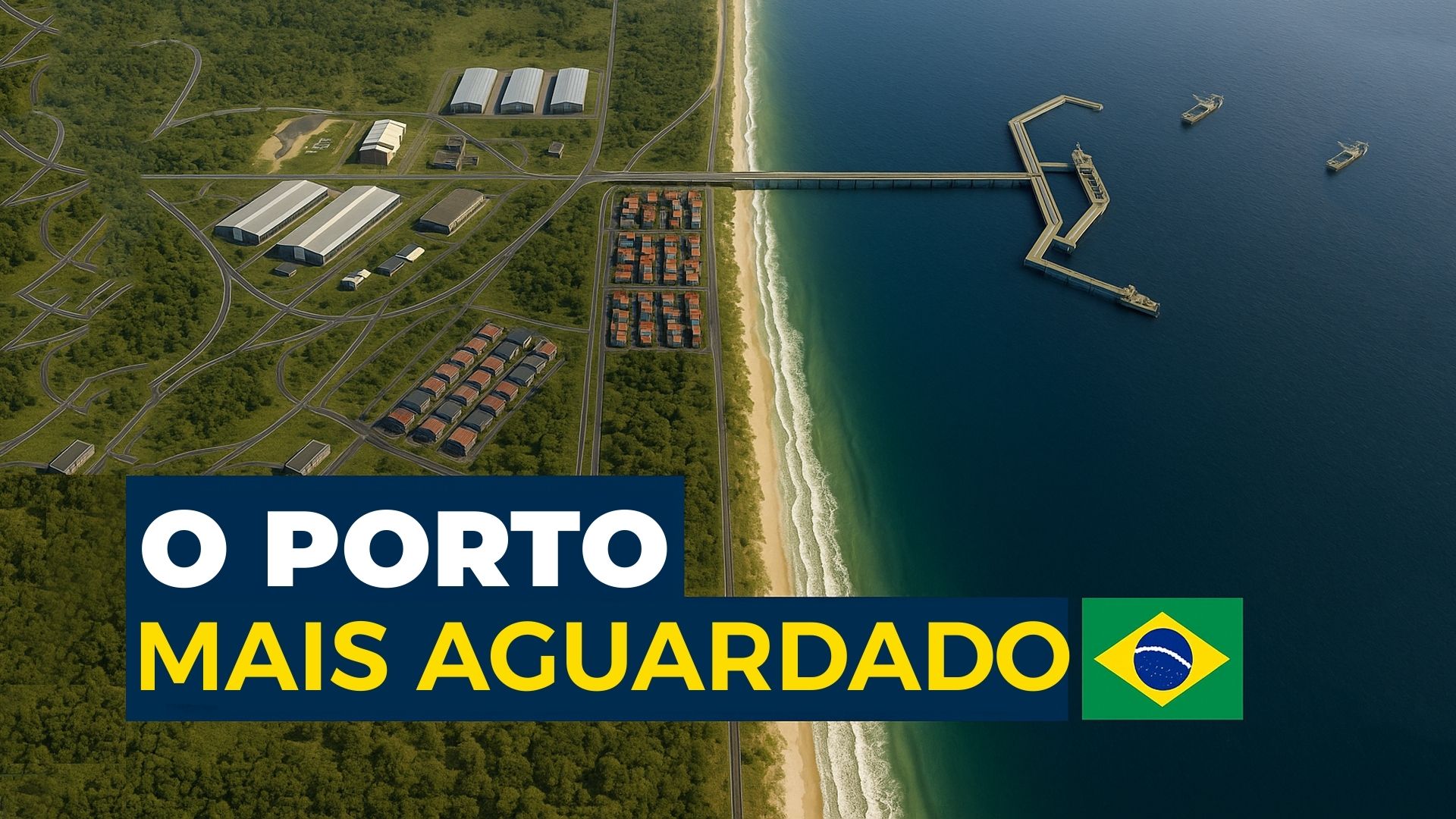


Porto Sul, in Ilhéus, Was Designed to Integrate Railway and Open Sea, with a 3.5 km Bridge and a Breakwater of Up to 1.98 km. The Project Promises to Revolutionize Logistics in the Bahia Interior but Faces Execution and Management Challenges.
The Porto Sul, in Ilhéus (BA), was conceived to operate in open sea with a 3.5 km access bridge, large-scale designed breakwater, and direct connection to the West-East Integration Railway (FIOL).
The promise is to unlock logistics in the Bahia interior and create a new export corridor.
According to Luciano Guimarães, on the Construction Time channel, it is “a logistics corridor that goes from the interior of Brazil to the sea,” integrating mine, railway, and port terminal.
-
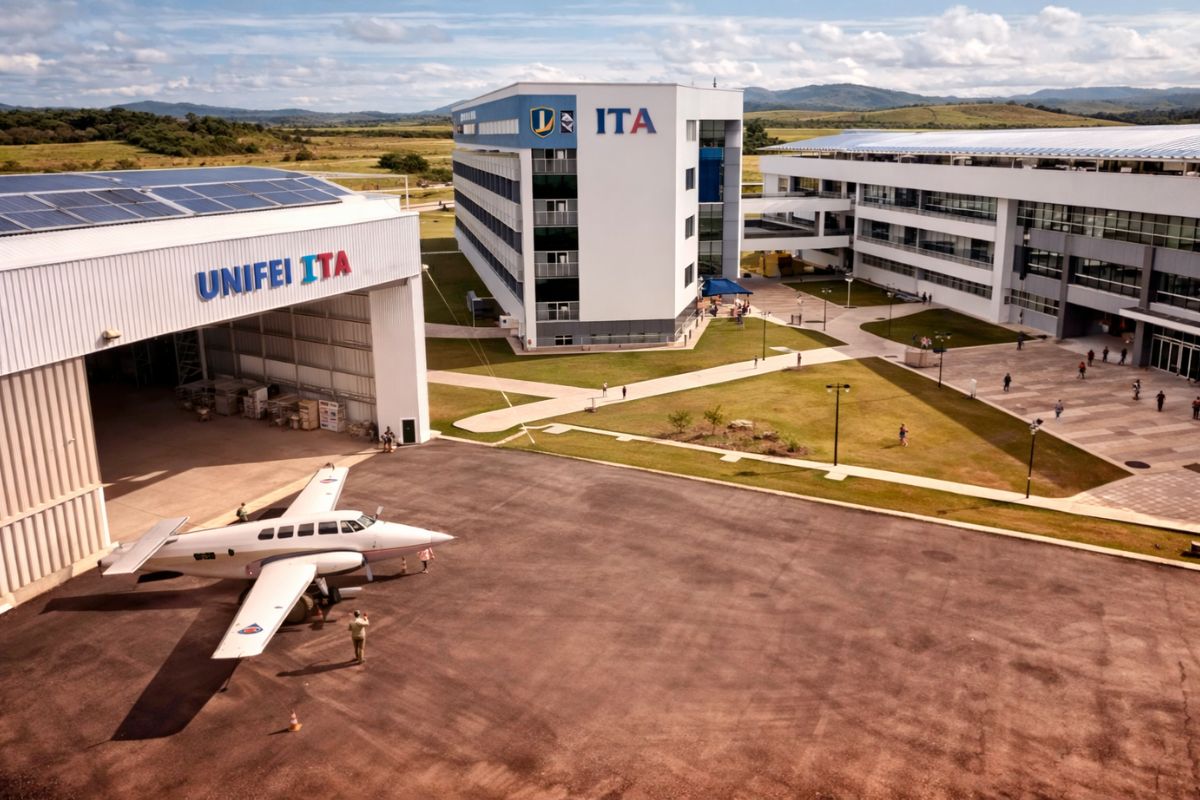
The institute that trained the greatest aerospace engineers in Brazil has just opened its first campus outside São Paulo after 75 years: ITA Ceará will have R$ 445 million, new courses in energy and systems, and classes are expected to start in 2027.
-
Luciano Hang, owner of Havan, goes to Juiz de Fora after the tragedy in February, brings R$ 1 million, hands out R$ 2,000 cards, and donates up to R$ 15,000 to victims in the region.

-
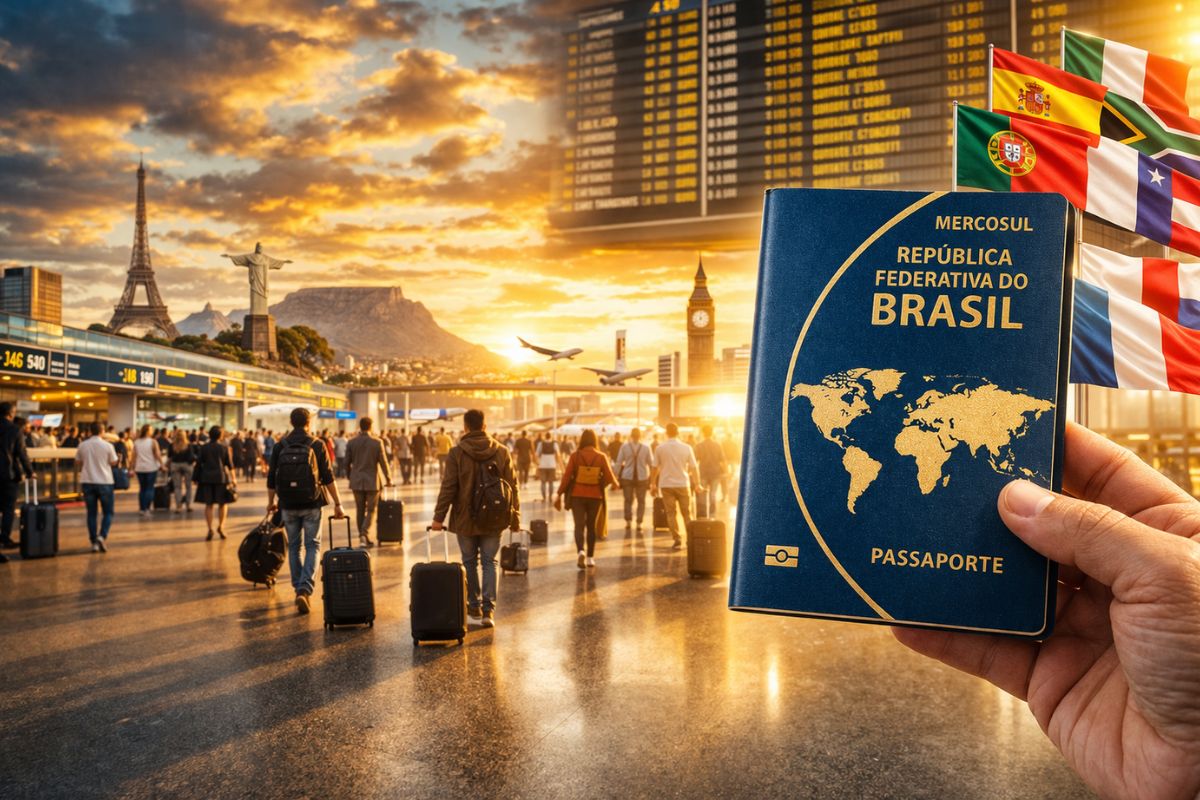
The Brazilian passport allows legal residence in dozens of countries without the need for a prior visa, and most Brazilians are unaware that they can apply for residency directly upon arriving in nations in South America, Africa, and even Europe.
-
Petrobras sends a message to Brazilian truck drivers after fuel collapse and reveals plan to have 100% domestic diesel.


Today, however, the execution is going through adjustments: the fronts connected to FIOL 1 suffered contractual stoppage in March 2025, and the federal government established, on July 1, 2025, a working group to assess the subcontracting and propose pathways for resumption.


Strategic Location of Porto Sul
The terminal is being implemented in the Aritaguá district, on the northern coast of Ilhéus, between Sambaituba and Ponta da Tulha.
As explained by Guimarães, the choice combines three rare operational conditions at the same point: natural depth to accommodate large vessels, proximity to producing hubs in western Bahia, and direct access to FIOL, reducing transshipments and travel times.
The coastal location in naturally deeper water was highlighted on the channel as a factor that minimizes recurring dredging and expands operational windows for docking in open sea.
Maritime Structure: Bridge and Breakwater
According to Construction Time, the backbone in the sea is the 3.5 km bridge that connects the back area to the docking piers, reaching the water surface with drafts designed for large vessels.
According to technical documents of the project, the offshore pier is located about 3.5 km from the coast, which explains the length of the access structure.
To protect operations, the project envisions a breakwater in open sea.
Environmental studies and EIA/RIMA completions indicate different versions over time, with solutions varying from 1.5 km to 1.98 km in total length, depending on layout and engineering revisions.
This variation was analyzed to mitigate coastal impacts and optimize costs and constructability.
Operational Reinforcement and Port Equipment
The design of Porto Sul emphasizes redundancy and continuous flow.
As highlighted by Guimarães, the berths will have fender systems and mooring dolphins sized for maneuvers in open sea.
The loading will utilize enclosed conveyor belts, a solution pointed out by him as essential to contain diffuse dust emissions and reduce occupational safety risks during the transfer of ore and grains.
On the land side, the operational reinforcement includes storage yards both covered and open, specialized warehouses, and tanks for liquid bulk.
To synchronize railway and ship, the project incorporates transshipment stations, wagon tipplers, and integrated conveyor systems, with flow control to avoid bottlenecks between railway receiving, storage, and loading.
Guimarães also emphasized the importance of road accesses — BA-001, BR-101, and BR-415 — as contingency for services and supply from behind, while the railway takes on the role of heavy volume.
History of Port Logistics in Ilhéus
The conception of Porto Sul dialogues with the logistical history of southern Bahia.
The Malhado port, inaugurated in 1971, marked the local maritime vocation but without railway integration.
According to Construction Time, the new complex is born intermodal from its origin, with FIOL at the center of the strategy to shorten paths between the producing west (ore and agribusiness) and the coast.
In 2024, Ibama inspected the social and environmental programs linked to the project, a step noted as part of the governance of licensing.
Current Situation of the Works
The terrestrial access fronts and preparations for the private terminal of BAMIN have advanced in recent years, but the dynamics changed in March 2025, when the concessionaire informed the dismantling of contracts in the section between Uruçuca and Ilhéus, directly impacting the cadence of FIOL 1 and, consequently, the synchronization with the port.
The Ministry of Transport established, on July 1, 2025, a working group to assess the contract and recommend measures to ensure the continuity of the project.
The ANTT also opened an investigation into contractual compliance.
According to the president of Bamin in an audience at the Bahia Legislative Assembly, once the entry of a new partner and the contractual rebalancing are resolved, internal estimates indicate windows of 28 to 30 months for the completion of the priority railway section and 48 months for the port plant.
Additionally, according to analyses from the Bahia productive sector, discussions are circulating about control changes or assisted takeover of the subcontracting if the current concessionaire cannot sustain the contract, a scenario also being monitored by Brasília.
What the Port Should Deliver
In the account of Construction Time, Porto Sul’s vocation is clear: to export iron ore and grains with direct railway connection, reducing logistics costs, increasing reliability, and enhancing the competitiveness of western Bahia in the international market.
He further commented that the operation was designed for high drafts and sea windows compatible with large vessels, aiming for the typical scale gain of deep-water ports.
The operational dynamic would be based on continuous railway receiving, stacking, and retrieval in the yards with humidity control, as well as shipping by shiploader in a closed circuit.
The channel also highlighted that this design seeks to reduce cycle times between train and ship, avoiding queues and equipment stops.
Comparison with Porto Central
To dimension the project, Guimarães compared Porto Sul to Porto Central (ES).
While the Central was born as a port-industry with an initial focus on liquid bulk and deep water and began Phase 1 construction at the end of 2024, Porto Sul prioritizes ore and grains with dedicated railway integration, but faces a contractual pause that needs to be resolved to resume the schedule.
They present complementary profiles, with different execution stages.
Final Challenges
From a regulatory and engineering standpoint, the critical step is to align FIOL 1 governance with the maritime terminal schedule, ensuring financing, EPC contracts, and supply chain for high complexity offshore works.
According to Construction Time, the maritime structure requires favorable sea and time windows, concrete logistics and pile driving offshore, plus integrated commissioning between railway, back area, and pier.
Once this package is overcome, the terminal will be able to fulfill its role of moving cargo from the Bahia interior at a lower cost and with greater predictability.
How should Porto Sul reconcile the contractual advancement of the railway and reorganize the offshore package to meet the deadlines expected by the market?









A BA 001 suporta o aumento de tráfego? Qual impacto na rodovia?
O BRASIL TERÁ CAPACIDADE INTELECTUAL PARA FAZER ISTO? OU É MAIS UM PONTO DE CORRUPÇÃO DO PT BAHIANO/NACIONAL?
O Brasil sempre teve capacidade técnica para encarar qualquer desafio, ainda mais com um governo que investe em Educação e Pesquisas como o atual.
Brasil tem condições de realizar esse tipo de construção. Se fosse no governo da gang do PL nãoe teríamos que submeter ao imperialismo americano.
SERA QUE O JORNALISTA SABE O QUE SIGNIFICA O TERMO INSANO, claramente inadequado para as grandes vantagens que ele mesmo descreve de tal futuro porto??